Policosanol Market Size, Share & Demand Report By Source (Sugarcane-Derived, Rice Bran-Derived, Beeswax-Derived, Wheat Germ-Derived, Others), By Application (Dietary Supplements, Functional Foods, Pharmaceuticals, Animal Nutrition, Personal Care Products), By Distribution Channel (Pharmacies, Supermarkets and Hypermarkets, Specialty Stores, Online Retail, Direct Sales), By Region & Segment Forecasts, 2026–2034
USD 3950
Market Overview
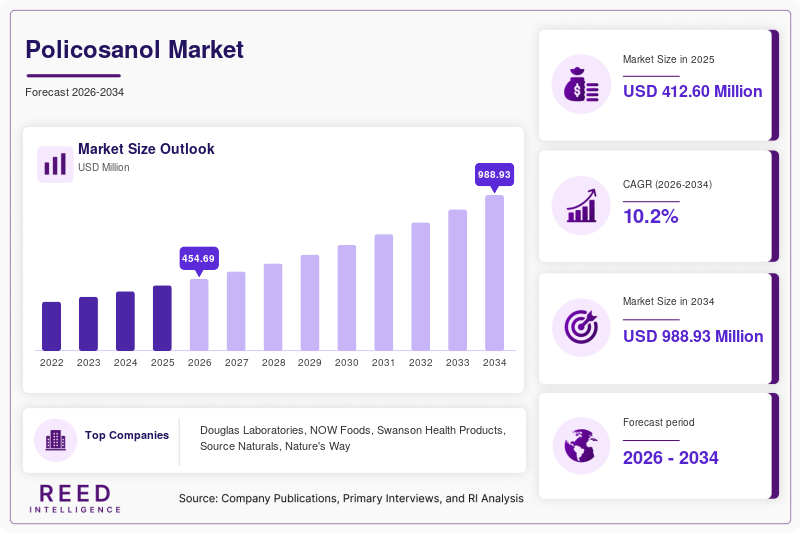
The global Policosanol Market size was valued at USD 412.6 million in 2026 and is projected to reach USD 895.4 million by 2034, expanding at a CAGR of 10.2% during the forecast period. Growing consumer preference for plant-based nutraceutical ingredients and preventive healthcare products continues to support demand across dietary supplements, pharmaceuticals, and functional food applications. Policosanol, a naturally occurring mixture of long-chain alcohols commonly extracted from sugarcane wax, rice bran, and beeswax, is increasingly used in cholesterol management products and cardiovascular wellness formulations. The rising incidence of lifestyle-related disorders, combined with increasing awareness regarding heart health and lipid management, has encouraged manufacturers to introduce innovative formulations targeting aging populations and health-conscious consumers.
The market has also benefited from expansion in e-commerce distribution and the growing influence of clean-label product trends. Nutraceutical companies are investing in research activities to improve extraction efficiency, product purity, and bioavailability. In addition, healthcare professionals and wellness brands are promoting preventive nutrition, which is strengthening consumer confidence in botanical active ingredients. Emerging economies are witnessing greater adoption of dietary supplements due to rising disposable income and urbanization. Market participants are further focusing on product differentiation through vegan capsules, organic certifications, and combination formulations containing omega-3, coenzyme Q10, and herbal extracts.
Key Highlights
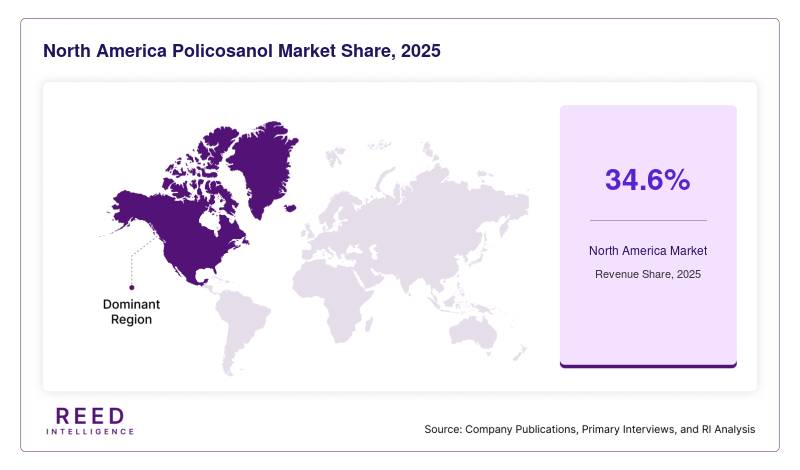
- North America dominated the market with a 34.6% share in 2025.
- Asia Pacific is expected to grow at the fastest CAGR of 11.8% during 2026–2034.
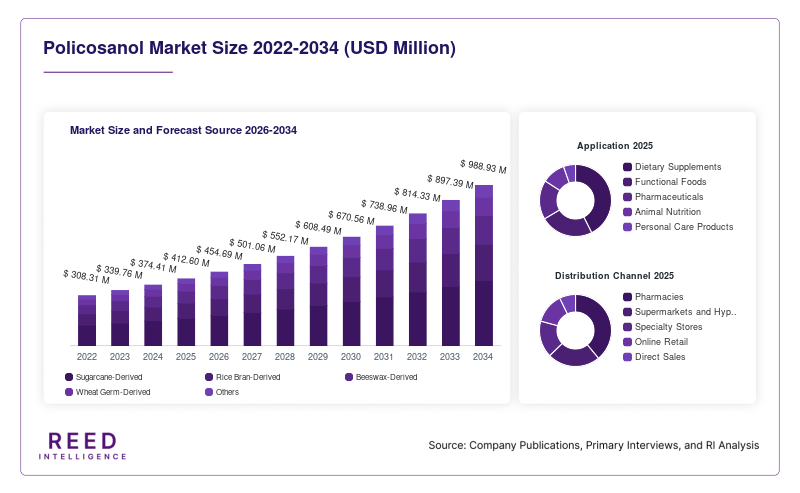
- By source, sugarcane-derived policosanol accounted for the largest share of 46.3%, while rice bran-derived products are projected to grow at a CAGR of 12.1%. By application, dietary supplements led with a 49.4% share, whereas functional foods are expected to expand at a CAGR of 11.5%.
- By distribution channel, pharmacies accounted for the largest share of 39.1%, while online retail is projected to grow at a CAGR of 13.2%. The United States remained the dominant country, with market values of USD 118 million in 2024 and USD 129 million in 2025.
Market Trends
Rising Preference for Plant-Based Nutraceutical Ingredients
The Policosanol Market is witnessing a clear shift toward plant-based and naturally sourced ingredients as consumers increasingly evaluate supplement labels and ingredient origins before purchasing health products. Sugarcane and rice bran-derived policosanol products are gaining traction because they align with clean-label and vegan dietary preferences. Manufacturers are responding by promoting organic extraction methods and reducing the use of synthetic additives in formulations. This trend is especially visible in North America and Europe, where wellness consumers prioritize preventive health products with transparent sourcing practices. The popularity of holistic nutrition and plant-derived active compounds has also encouraged functional food manufacturers to integrate policosanol into nutrition bars, beverages, and fortified foods. Increased awareness regarding cardiovascular wellness and cholesterol management has further strengthened product demand among middle-aged and elderly consumers.
Expansion of Digital Supplement Retailing Channels
Digital retailing has become an important growth trend within the Policosanol Market as consumers increasingly purchase dietary supplements through online marketplaces and direct-to-consumer platforms. E-commerce channels offer convenient access to specialized cardiovascular wellness products, subscription-based supplement programs, and detailed product comparisons. Brands are using digital marketing campaigns, health influencers, and personalized wellness recommendations to increase consumer engagement and repeat purchases. Online channels also allow smaller nutraceutical companies to expand internationally without relying heavily on traditional retail networks. The growing adoption of mobile commerce in developing economies has improved product accessibility for urban consumers seeking preventive healthcare solutions. In addition, data-driven marketing and customer feedback systems are helping manufacturers refine formulations and target specific consumer groups more effectively.
Market Drivers
Increasing Incidence of Cardiovascular and Lifestyle Disorders
The rising prevalence of cardiovascular diseases, obesity, diabetes, and cholesterol-related conditions is a major factor driving growth in the Policosanol Market. Consumers are becoming more aware of preventive healthcare practices and are actively seeking nutritional products that support lipid management and heart health. Policosanol supplements are increasingly incorporated into wellness regimens aimed at maintaining healthy cholesterol levels and supporting vascular function. Aging populations across developed economies are also contributing to sustained demand for nutraceutical products with cardiovascular benefits. Healthcare professionals and pharmacists are recommending preventive dietary supplementation more frequently, particularly for individuals with sedentary lifestyles and poor dietary habits. The growing burden of chronic diseases has encouraged governments and healthcare organizations to promote awareness campaigns focused on nutrition and preventive care.
Growing Investments in Nutraceutical Research and Product Innovation
Nutraceutical manufacturers are expanding investments in clinical studies, ingredient standardization, and advanced extraction technologies, which is supporting the commercial development of policosanol-based products. Companies are introducing enhanced formulations with improved absorption, combination ingredients, and extended-release capsules to strengthen market positioning. Research activities are also exploring the use of policosanol in broader wellness applications, including metabolic health and antioxidant support. Improved manufacturing technologies are helping suppliers achieve higher purity levels and consistent quality standards, increasing trust among healthcare practitioners and consumers. Regulatory approvals for dietary supplement commercialization in emerging markets are creating favorable conditions for product launches. As competition intensifies, manufacturers are differentiating their offerings through premium formulations, vegan capsules, and region-specific health products tailored to local consumer preferences.
Market Restraint
Limited Clinical Consensus and Regulatory Variability
Despite expanding consumer interest, the Policosanol Market faces challenges associated with inconsistent clinical findings and varying regulatory frameworks across countries. Some healthcare professionals remain cautious regarding the effectiveness of policosanol for cholesterol management due to differences in study outcomes and product formulations. This has created hesitation among certain pharmaceutical distributors and institutional healthcare providers. Regulatory standards for nutraceutical products also vary significantly between regions, leading to complexities in labeling, marketing claims, and ingredient approvals. Smaller manufacturers often struggle to comply with evolving quality and safety requirements, which can increase operational costs and delay product launches. In certain developing economies, the presence of low-quality or counterfeit supplements has negatively affected consumer confidence and intensified scrutiny from regulatory agencies. These factors may limit market penetration in highly regulated healthcare systems and slow adoption among conservative consumer groups.
Market Opportunities
Emerging Demand for Functional Foods and Fortified Beverages
The integration of policosanol into functional foods and fortified beverages presents strong growth opportunities for manufacturers operating in the Policosanol Market. Consumers are increasingly seeking convenient wellness products that combine nutritional value with preventive health benefits. Functional snacks, dairy alternatives, nutrition bars, and ready-to-drink beverages containing cardiovascular support ingredients are gaining popularity among working professionals and fitness-conscious consumers. Food and beverage companies are collaborating with nutraceutical ingredient suppliers to create differentiated product lines targeting cholesterol management and active lifestyles. The expansion of modern retail channels and premium grocery stores in emerging economies is also improving visibility for fortified food products. As consumer acceptance of functional nutrition grows, manufacturers have opportunities to diversify beyond conventional capsule and tablet formulations.
Expansion Potential Across Emerging Economies
Emerging economies in Asia Pacific, Latin America, and parts of the Middle East are creating substantial opportunities for the Policosanol Market due to rising disposable income, urbanization, and growing awareness regarding preventive healthcare. Consumers in these regions are spending more on dietary supplements and wellness products as healthcare access and digital health information improve. Governments and healthcare organizations are promoting healthy lifestyle initiatives, encouraging greater adoption of nutraceutical products. International supplement brands are expanding regional distribution networks and partnering with local manufacturers to improve affordability and product availability. E-commerce growth and mobile payment adoption are further supporting market penetration among younger consumers. Increasing demand for natural and plant-based health ingredients in these regions is expected to support long-term expansion opportunities for global and regional market participants.
Segmental Analysis
By Source
Sugarcane-derived policosanol accounted for the largest share of the global Policosanol Market in 2024, representing approximately 46.3% of total revenue. The dominance of this subsegment is linked to the widespread commercial availability of sugarcane wax and the long-standing use of sugarcane-derived formulations in cardiovascular wellness supplements. Manufacturers prefer sugarcane extraction because it offers scalable production and relatively consistent ingredient quality for nutraceutical applications. Consumers also associate sugarcane-derived products with natural and plant-based health benefits, supporting strong retail demand across pharmacies and online channels. Established clinical marketing surrounding sugarcane-based formulations has strengthened consumer familiarity, particularly in North America and parts of Europe. In addition, nutraceutical brands continue to use sugarcane-derived ingredients in premium supplement formulations due to their established market reputation and broad commercial acceptance.
Rice bran-derived policosanol is expected to register the fastest CAGR of 12.1% during the forecast period due to increasing demand for diversified plant-based ingredients and sustainable sourcing practices. Rice bran extraction aligns with growing consumer preference for environmentally responsible nutraceutical production methods. Manufacturers are investing in advanced extraction technologies to improve yield efficiency and ingredient purity while reducing processing waste. The subsegment is also benefiting from the expanding rice processing industry across Asia Pacific, where abundant raw material availability supports cost-efficient production. Health-conscious consumers are increasingly exploring alternative botanical sources that provide clean-label positioning and compatibility with vegan dietary preferences. As sustainability becomes a more important purchasing factor, rice bran-derived formulations are expected to gain stronger visibility in functional nutrition products and premium dietary supplements.
By Application
Dietary supplements represented the dominant application segment in the Policosanol Market in 2024, accounting for nearly 49.4% of total market revenue. The segment continues to benefit from growing consumer focus on preventive healthcare and cardiovascular wellness management. Capsules, tablets, and soft gels containing policosanol are widely marketed through pharmacies, health stores, and online retail platforms targeting cholesterol support and healthy aging. Consumers increasingly prefer convenient supplement formats that can be incorporated into daily wellness routines without significant lifestyle adjustments. Aging populations and rising healthcare awareness in developed economies are further contributing to stable demand for cardiovascular support supplements. In addition, supplement manufacturers are launching combination products containing policosanol with omega-3 fatty acids, coenzyme Q10, and herbal extracts to improve product differentiation and strengthen consumer appeal.
Functional foods are projected to witness the fastest CAGR of 11.5% during the forecast period due to increasing consumer preference for nutrition products that combine convenience with health benefits. Food manufacturers are integrating policosanol into fortified beverages, snack bars, dairy alternatives, and wellness-focused packaged foods targeting active consumers and aging populations. This trend is particularly visible among younger urban consumers seeking preventive health solutions through daily dietary habits rather than traditional supplement regimens. Retailers are also allocating more shelf space to fortified nutrition products as functional food categories continue to expand globally. Rising demand for clean-label and plant-based wellness products is encouraging food companies to develop innovative formulations with recognizable health ingredients. The growth of functional nutrition trends across Asia Pacific and North America is expected to accelerate commercial adoption of policosanol in mainstream food applications.
By Distribution Channel
Pharmacies held the largest share of the Policosanol Market in 2024, contributing approximately 39.1% of total revenue. The segment benefits from strong consumer trust in pharmacist recommendations and the perceived reliability of pharmacy-distributed wellness products. Consumers purchasing cholesterol management and cardiovascular support supplements often prefer pharmacies because they provide access to healthcare guidance and branded nutraceutical products with established quality standards. Large pharmacy chains in North America and Europe continue to expand their wellness and dietary supplement offerings to address increasing preventive healthcare demand. In addition, pharmacies frequently collaborate with nutraceutical brands for promotional campaigns, educational programs, and loyalty initiatives that improve consumer engagement. The presence of licensed healthcare professionals within pharmacy environments further strengthens consumer confidence in supplement efficacy and product authenticity.
Online retail is anticipated to grow at the fastest CAGR of 13.2% through 2034 due to increasing digital commerce adoption and changing consumer purchasing behavior. E-commerce platforms provide consumers with convenient access to a wide variety of nutraceutical brands, product reviews, subscription programs, and personalized wellness recommendations. Younger consumers and urban professionals increasingly prefer digital purchasing channels because of competitive pricing, home delivery convenience, and broader product availability. Supplement manufacturers are also investing heavily in direct-to-consumer business models and digital advertising strategies to improve brand visibility and customer retention. Social media marketing and influencer-driven wellness campaigns are supporting online sales growth across developed and emerging economies. As internet penetration and mobile payment adoption continue to rise globally, online retail channels are expected to become increasingly important for long-term market expansion.
Regional Analysis
North America
North America accounted for 34.6% of the global Policosanol Market in 2025 and is projected to maintain stable growth at a CAGR of 9.4% during the forecast period. The region benefits from strong consumer awareness regarding cardiovascular wellness, preventive healthcare, and dietary supplementation. The presence of established nutraceutical companies, advanced retail infrastructure, and widespread availability of plant-based supplements continues to support market expansion. Growing healthcare expenditure and demand for premium wellness products are also contributing to higher consumption levels across the United States and Canada.
The United States remained the dominant country in the regional market due to strong demand for cholesterol management supplements and rising adoption of preventive healthcare practices. Consumers increasingly prefer natural and clean-label products supported by transparent ingredient sourcing and quality certifications. One unique growth factor in the country is the rapid expansion of personalized nutrition programs that recommend targeted nutraceutical products based on consumer health profiles. Digital wellness platforms and subscription supplement services are also strengthening recurring product purchases and improving long-term customer engagement.
Europe
Europe represented 27.1% of the global Policosanol Market in 2025 and is anticipated to grow at a CAGR of 9.1% through 2034. Demand for botanical nutraceutical ingredients and functional nutrition products remains strong across the region due to increasing focus on healthy aging and preventive healthcare. Consumers in Western Europe are highly receptive to natural health supplements and sustainable ingredient sourcing. Regulatory emphasis on product quality and safety has encouraged manufacturers to invest in certified extraction processes and premium product formulations.
Germany emerged as the leading country within the European market because of its mature nutraceutical industry and strong consumer spending on wellness products. The country has experienced increasing adoption of plant-derived cholesterol support supplements among aging populations seeking preventive health solutions. A unique growth factor supporting the German market is the integration of nutraceutical products into pharmacy-led wellness programs and preventive healthcare consultations. Pharmacies and healthcare practitioners continue to play an important role in influencing supplement purchasing decisions across the country.
Asia Pacific
Asia Pacific held a 22.4% share of the global Policosanol Market in 2025 and is expected to register the fastest CAGR of 11.8% during the forecast period. Rapid urbanization, rising disposable income, and growing awareness regarding cardiovascular health are supporting strong regional demand. Consumers are increasingly adopting dietary supplements and functional nutrition products as lifestyles become more sedentary and health-conscious behavior rises. Expanding e-commerce infrastructure and digital marketing campaigns have improved product accessibility across urban and semi-urban populations.
China dominated the Asia Pacific market due to its large consumer base, expanding nutraceutical manufacturing sector, and rising healthcare expenditure. Domestic supplement brands are introducing affordable policosanol formulations targeting cholesterol management and preventive wellness. One unique growth factor in the country is the increasing popularity of traditional wellness practices combined with modern nutraceutical products. Consumers are actively purchasing products that combine botanical ingredients with scientifically marketed health benefits, creating opportunities for product innovation and premium formulations.
Middle East & Africa
The Middle East & Africa accounted for 8.1% of the global Policosanol Market in 2025 and is forecast to expand at a CAGR of 8.7% through 2034. Market growth is being supported by rising healthcare awareness, increasing demand for imported dietary supplements, and gradual improvements in retail distribution networks. Urban consumers in Gulf countries are showing stronger interest in preventive wellness products and nutritional supplementation. Expanding pharmacy chains and specialty wellness stores are also contributing to greater product availability throughout the region.
Saudi Arabia represented the leading country in the regional market because of increasing health awareness and growing expenditure on premium wellness products. Consumers are becoming more conscious of lifestyle-related conditions such as obesity and cholesterol imbalance, leading to higher supplement adoption. A unique growth factor supporting the Saudi Arabian market is the expansion of government-led healthcare diversification programs encouraging preventive health and private wellness investments. International nutraceutical companies are also increasing regional partnerships to improve distribution and brand visibility.
Latin America
Latin America captured 7.8% of the global Policosanol Market in 2025 and is projected to grow at a CAGR of 8.9% during the forecast period. The region is benefiting from rising demand for affordable nutraceutical products and growing awareness regarding preventive healthcare. Consumers are increasingly adopting plant-based supplements as interest in natural health ingredients expands across urban populations. Improvements in retail distribution and online supplement sales are further supporting product accessibility and consumer engagement.
Brazil remained the dominant country within the Latin American market due to strong consumer interest in functional nutrition and wellness supplementation. The country has witnessed steady growth in demand for cardiovascular support products among middle-income populations and aging consumers. One unique growth factor driving the Brazilian market is the expansion of domestic nutraceutical manufacturing capabilities supported by local agricultural resources and ingredient processing infrastructure. Regional manufacturers are increasingly introducing cost-effective formulations tailored to local dietary and health preferences.
Competitive Landscape
The Policosanol Market remains moderately fragmented, with global nutraceutical companies and regional supplement manufacturers competing through product quality, ingredient sourcing, pricing strategies, and distribution expansion. Leading participants are focusing on product innovation, advanced extraction technologies, and strategic partnerships with pharmacies and online retailers to strengthen market presence. Companies are also emphasizing clean-label positioning, vegan formulations, and sustainable sourcing practices to align with changing consumer preferences.
Douglas Laboratories maintained a leading market position due to its broad nutraceutical portfolio, strong healthcare practitioner network, and focus on premium supplement formulations. In 2025, the company expanded its cardiovascular wellness product range by introducing a plant-based policosanol supplement combined with coenzyme Q10 and omega-3 ingredients targeting aging consumers. Other market participants are increasingly investing in research activities and regional distribution agreements to improve product accessibility across emerging economies. Competitive intensity is expected to increase further as new entrants introduce affordable formulations and digital-first supplement brands continue to gain consumer attention.
Key Players
- Douglas Laboratories
- NOW Foods
- Swanson Health Products
- Source Naturals
- Nature's Way
- Solgar
- Herbalife Nutrition
- Pure Encapsulations
- Vitacost
- Jarrow Formulas
- Life Extension
- Healthy Origins
- Nutricost
- BioGenetics Laboratories
- Blackmores
Recent Developments
- In February 2025, NOW Foods expanded its cardiovascular wellness portfolio by launching a vegan-certified policosanol capsule line targeting cholesterol management consumers in North America.
- In August 2025, Blackmores entered a strategic distribution partnership with an Asian nutraceutical retailer to improve online availability of policosanol-based supplements across Southeast Asia.
- In January 2026, Solgar introduced a rice bran-derived policosanol formulation developed using enhanced extraction technology aimed at improving ingredient purity and bioavailability.
- In April 2026, Swanson Health Products upgraded its digital subscription platform to provide personalized supplement recommendations, including cardiovascular wellness formulations containing policosanol.
Policosanol Market Segments
Source
- Sugarcane-Derived
- Rice Bran-Derived
- Beeswax-Derived
- Wheat Germ-Derived
- Others
Application
- Dietary Supplements
- Functional Foods
- Pharmaceuticals
- Animal Nutrition
- Personal Care Products
Distribution Channel
- Pharmacies
- Supermarkets and Hypermarkets
- Specialty Stores
- Online Retail
- Direct Sales
By Region
- North America
- Europe
- APAC
- Middle East and Africa
- LATAM