Poloxamer Market Size, Share & Demand Report By Type (Poloxamer 188, Poloxamer 407, Poloxamer 338, Other Types), By Application (Pharmaceutical Formulations, Drug Delivery Systems, Personal Care and Cosmetics, Industrial Cleaning, Biotechnology Applications), By End Use (Pharmaceutical Companies, Biotechnology Companies, Research Laboratories, Cosmetic Manufacturers, Contract Manufacturing Organizations), By Region & Segment Forecasts, 2026–2034
USD 3950
Market Overview
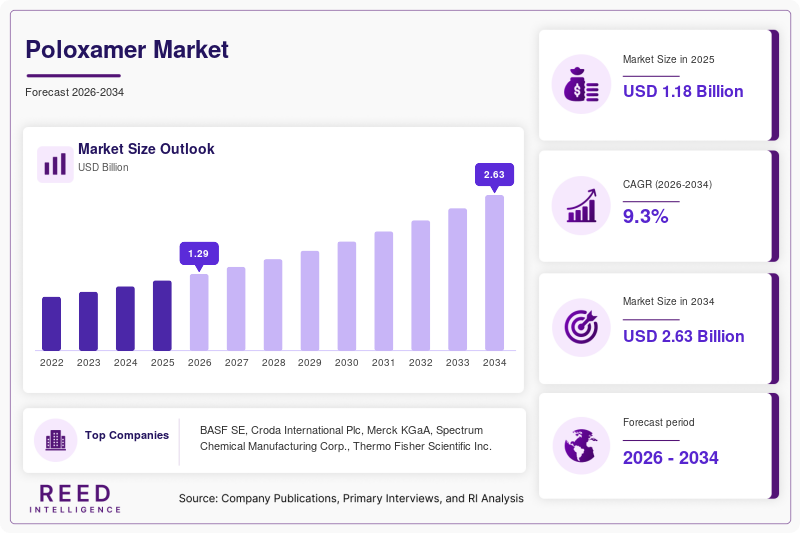
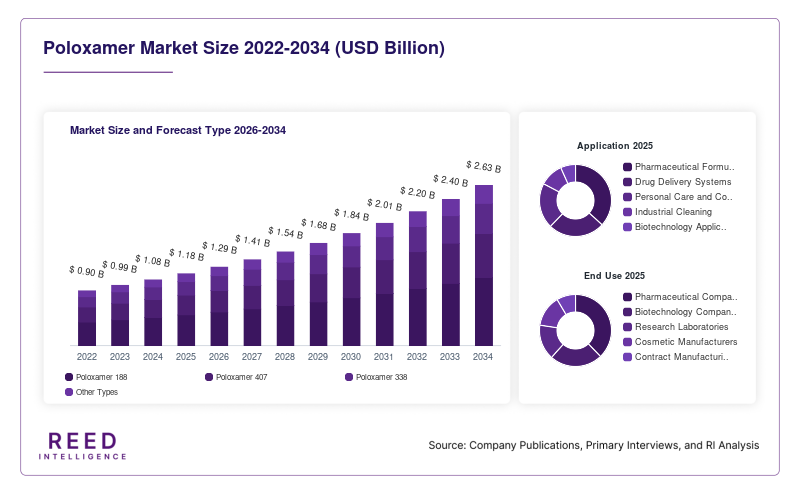
The global Poloxamer Market size was valued at approximately USD 1.18 billion in 2026 and is projected to reach nearly USD 2.41 billion by 2034, expanding at a CAGR of 9.3% during the forecast period from 2026 to 2034. Poloxamers are nonionic triblock copolymers widely used in pharmaceutical formulations, personal care products, industrial cleaners, and biotechnology applications due to their emulsifying, stabilizing, and solubilizing properties. Growing demand for advanced drug delivery systems and multifunctional excipients has strengthened the commercial adoption of poloxamer compounds across regulated industries. Increasing investments in pharmaceutical research and development have also accelerated the integration of poloxamers into injectable formulations, topical creams, ophthalmic products, and controlled-release therapeutics.
A major global factor supporting market growth is the steady expansion of the pharmaceutical manufacturing sector across developed and emerging economies. Pharmaceutical companies are increasingly utilizing high-performance excipients to improve bioavailability, stability, and patient compliance in modern drug formulations. Poloxamers are gaining attention because they provide thermal responsiveness, surfactant functionality, and compatibility with multiple active pharmaceutical ingredients. Rising healthcare expenditure, increasing biologics production, and growing demand for topical and injectable therapeutics continue to create long-term growth opportunities for manufacturers operating in the market.
Key Highlights
- North America dominated the market with a 35.4% share in 2025, while Asia Pacific is expected to grow at the fastest CAGR of 10.8% during 2026–2034.
- By type, Poloxamer 188 accounted for the largest share of 39.1%, while Poloxamer 407 is projected to grow at a CAGR of 11.1%.
- By application, pharmaceutical formulations led with a 44.6% share, whereas drug delivery systems are expected to expand at a CAGR of 11.4%.
- The United States remained the dominant country, with market values of USD 352 million in 2024 and USD 389 million in 2025.
Market Trends
Rising Adoption of Thermoresponsive Drug Delivery Formulations
The Poloxamer Market is witnessing growing demand for thermoresponsive drug delivery systems in pharmaceutical and biotechnology industries. Manufacturers are increasingly incorporating poloxamers into injectable gels, topical preparations, and sustained-release formulations due to their ability to transition from liquid to gel at controlled temperatures. This functionality supports improved drug retention and targeted therapeutic delivery. Healthcare companies are focusing on patient-friendly dosage forms that can reduce administration frequency and improve treatment efficiency. As a result, poloxamer-based hydrogels are becoming more common in ophthalmic, dermatological, and nasal drug delivery applications. Pharmaceutical firms are also investing in customized excipient technologies to improve compatibility with biologics and sensitive active ingredients, further increasing commercial interest in advanced poloxamer formulations.
Expansion of Poloxamer Use in Personal Care and Cosmetic Products
Personal care and cosmetic manufacturers are increasingly utilizing poloxamers in premium skincare, cleansing, and haircare products. The compounds are used as surfactants, emulsifiers, and stabilizers in formulations designed for gentle cleansing and enhanced texture stability. Rising consumer awareness regarding ingredient quality and product performance has encouraged cosmetic brands to adopt multifunctional excipients that improve product consistency and shelf life. Poloxamers are also being used in micellar water products, facial cleansers, and anti-aging creams because of their mild nonionic properties and compatibility with sensitive skin formulations. Growth in urban consumer spending, online beauty retail platforms, and demand for multifunctional cosmetic products is expected to support further market expansion during the forecast period.
Market Drivers
Increasing Demand for Advanced Pharmaceutical Excipients
The growing need for multifunctional pharmaceutical excipients is one of the major drivers supporting the expansion of the Poloxamer Market. Drug manufacturers are increasingly focusing on excipients that improve drug solubility, enhance bioavailability, and support controlled-release mechanisms. Poloxamers are widely preferred because they provide effective surfactant performance while maintaining compatibility with different active pharmaceutical ingredients. The rise in chronic diseases and long-term therapeutic treatments has encouraged pharmaceutical companies to invest in advanced formulation technologies that improve patient compliance and therapeutic outcomes. Additionally, regulatory approval of new injectable and topical therapies has increased the requirement for stable excipient systems, creating consistent demand for high-purity poloxamer products in both developed and emerging pharmaceutical markets.
Growth of Biotechnology and Biopharmaceutical Manufacturing
Rapid expansion of the biotechnology and biopharmaceutical sectors is contributing significantly to market growth. Biopharmaceutical manufacturers require highly functional excipients to stabilize proteins, peptides, and biologic formulations during production and storage. Poloxamers are increasingly utilized in cell culture processing, protein stabilization, and vaccine formulation because they help maintain product integrity under varying processing conditions. Increasing investment in biologics production facilities across Asia Pacific and North America has strengthened commercial demand for pharmaceutical-grade surfactants and stabilizers. In addition, rising clinical research activities involving gene therapies, monoclonal antibodies, and regenerative medicine applications are creating new growth avenues for specialized poloxamer formulations. Continuous innovation in biologic drug delivery systems is expected to sustain demand throughout the forecast period.
Market Restraint
Volatility in Raw Material Costs and Regulatory Compliance Challenges
Fluctuations in raw material pricing and strict regulatory requirements continue to limit the growth potential of the Poloxamer Market. The production of poloxamers depends heavily on petrochemical-derived raw materials, making manufacturers vulnerable to changes in crude oil prices and supply chain disruptions. Variations in production costs can reduce profit margins for suppliers, especially small and medium-sized manufacturers operating in highly competitive markets. Additionally, pharmaceutical-grade poloxamers must comply with rigorous quality standards established by health authorities and regulatory agencies. Companies are required to maintain strict purity levels, manufacturing consistency, and documentation practices, which increases operational costs and extends product approval timelines.
Regulatory complexity becomes more challenging when manufacturers attempt to enter multiple regional markets with different compliance frameworks. Product validation, toxicological testing, and stability assessments often require significant investment before commercialization. For example, companies supplying poloxamers for injectable therapies must meet advanced sterility and biocompatibility standards that can increase production expenses. Delays in regulatory approvals may also affect supply agreements with pharmaceutical companies and contract manufacturing organizations. These factors collectively create operational pressure for manufacturers while limiting rapid market expansion in price-sensitive regions.
Market Opportunities
Emerging Applications in Regenerative Medicine and Tissue Engineering
The increasing use of regenerative medicine technologies presents substantial opportunities for the Poloxamer Market. Researchers and healthcare companies are exploring poloxamer-based hydrogels and scaffolds for tissue engineering, wound healing, and stem cell delivery applications. These materials provide structural flexibility, biocompatibility, and controlled drug release characteristics that support advanced therapeutic development. Growing investments in regenerative medicine research across the United States, Japan, South Korea, and Germany are accelerating the commercialization of novel biomaterials. Healthcare providers are also seeking minimally invasive treatment methods that can improve recovery outcomes in orthopedic and dermatological procedures.
As clinical trials involving tissue repair and cellular therapies continue to expand, demand for high-performance excipients and biomaterial stabilizers is expected to rise steadily. Poloxamers are increasingly being evaluated for use in injectable gels and bioactive matrices that enhance localized treatment efficiency. Academic research institutes and biotechnology firms are collaborating to develop customized formulations for wound management and tissue regeneration applications. The long-term growth potential of regenerative healthcare solutions is likely to create strong commercial opportunities for manufacturers focused on pharmaceutical and biomedical innovation.
Expansion of Pharmaceutical Manufacturing in Emerging Economies
Emerging economies are becoming major production hubs for pharmaceuticals, creating favorable opportunities for the Poloxamer Market. Countries such as India, China, Brazil, and Indonesia are investing heavily in pharmaceutical manufacturing infrastructure to support domestic healthcare demand and export growth. Rising government support for local drug production and increasing contract manufacturing activities are strengthening the requirement for pharmaceutical excipients and formulation additives. Poloxamers are widely utilized in generic drugs, topical products, and oral formulations, making them important components within expanding pharmaceutical supply chains.
International pharmaceutical companies are also establishing partnerships with regional manufacturers to improve production capacity and reduce operational costs. This shift is increasing demand for cost-effective and high-quality excipients across developing economies. Growth in healthcare access, rising population levels, and increasing prevalence of chronic diseases are further encouraging pharmaceutical expansion in these regions. As emerging economies continue to improve manufacturing quality standards and regulatory frameworks, the commercial adoption of pharmaceutical-grade poloxamers is expected to accelerate during the forecast period.
Segmental Analysis
By Type
Poloxamer 188 accounted for the largest share of the market in 2024, contributing approximately 39.1% of total revenue. The segment maintained a strong position due to its widespread use in pharmaceutical formulations, injectable products, and biotechnological applications. Poloxamer 188 is valued for its stabilizing and emulsifying properties, which support improved drug solubility and formulation consistency. Pharmaceutical manufacturers increasingly utilize this compound in ophthalmic products, topical creams, and intravenous therapies because of its compatibility with sensitive active pharmaceutical ingredients. The segment also benefits from rising demand for high-purity pharmaceutical excipients in developed healthcare markets. In addition, the increasing production of generic medicines and hospital-based formulations has strengthened the commercial adoption of Poloxamer 188 among pharmaceutical contract manufacturers and specialty drug producers.
Poloxamer 407 is projected to register the fastest CAGR of 11.1% during the forecast period due to growing demand for thermoresponsive and controlled-release drug delivery systems. The compound is widely utilized in hydrogel formulations that transition from liquid to gel under specific temperature conditions, making it suitable for injectable therapies and localized drug delivery applications. Rising clinical research involving regenerative medicine and tissue engineering is contributing to increased adoption of Poloxamer 407 across biomedical industries. Pharmaceutical companies are also investing in advanced formulation technologies that improve patient compliance and treatment effectiveness. The increasing use of hydrogel-based systems in wound care, ophthalmology, and nasal drug delivery is expected to further accelerate segment growth over the coming years.
By Application
Pharmaceutical formulations represented the dominant application segment in 2024, accounting for nearly 44.6% of the global market share. Strong demand for stable and multifunctional excipients across oral, topical, and injectable drugs contributed significantly to segment expansion. Poloxamers are commonly utilized to improve drug solubility, emulsification, and formulation stability in various therapeutic categories. Rising prevalence of chronic diseases and increasing pharmaceutical production worldwide have supported higher consumption of pharmaceutical-grade surfactants and stabilizers. Drug manufacturers are also focusing on patient-friendly dosage forms and enhanced bioavailability solutions, which has increased the integration of poloxamers into advanced formulations. Expanding generic drug manufacturing activities in Asia Pacific and Latin America continue to create additional demand for cost-effective excipient systems.
Drug delivery systems are anticipated to witness the fastest CAGR of 11.4% during the forecast period due to increasing demand for targeted and sustained-release therapies. Poloxamers are increasingly incorporated into nanocarriers, hydrogels, and injectable delivery systems designed to improve therapeutic performance and reduce side effects. Biotechnology companies and pharmaceutical research organizations are investing in novel delivery technologies for biologics, peptides, and gene-based therapies. This trend has created substantial opportunities for advanced excipients with temperature-sensitive and surfactant capabilities. Growth in minimally invasive treatments and personalized medicine approaches is also contributing to rising adoption of innovative drug delivery systems. As healthcare providers continue to prioritize efficient therapeutic outcomes, demand for poloxamer-based delivery technologies is expected to increase steadily.
By End Use
Pharmaceutical companies accounted for the largest market share in 2024, representing approximately 48.3% of total revenue. The dominance of this segment is supported by extensive use of poloxamers in drug formulation, manufacturing, and stabilization processes. Pharmaceutical firms are increasingly investing in specialty excipients to improve product quality, bioavailability, and shelf stability. Growth in chronic disease treatment, rising biologics production, and increasing demand for injectable therapeutics have strengthened commercial consumption of pharmaceutical-grade poloxamers. Large pharmaceutical manufacturers also rely on these compounds for controlled-release formulations and topical applications across dermatology and ophthalmology sectors. Expansion of contract manufacturing services and increasing regulatory emphasis on formulation consistency continue to support long-term demand from pharmaceutical companies.
Biotechnology companies are projected to register the fastest CAGR of 10.9% during the forecast period due to rising investments in biologics, cell therapies, and advanced research applications. These companies require highly functional excipients that can stabilize proteins and improve formulation performance during development and storage processes. Poloxamers are increasingly used in cell culture systems, vaccine production, and protein-based therapeutic formulations because of their compatibility with sensitive biological materials. Growth in clinical trials involving monoclonal antibodies, gene therapies, and regenerative medicine is also creating strong demand for advanced surfactant technologies. In addition, expanding partnerships between biotechnology firms and research institutes are accelerating innovation in biomedical applications, supporting greater commercial adoption of high-performance poloxamer products.
Regional Analysis
North America
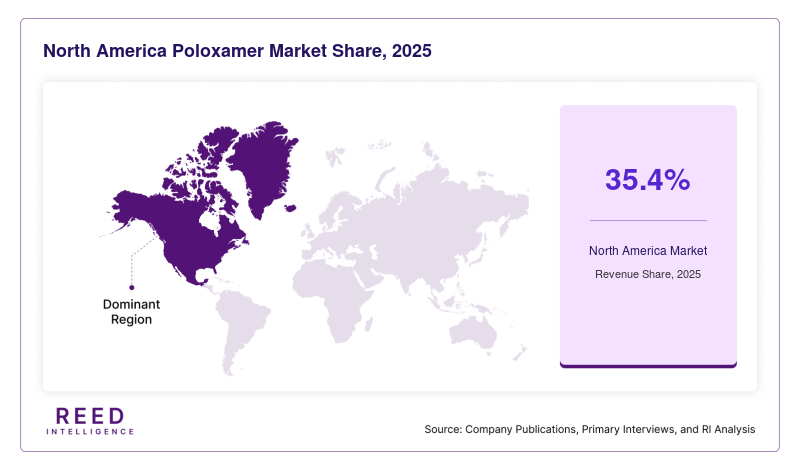
North America accounted for approximately 35.4% of the global Poloxamer Market in 2025 and maintained its position as the leading regional market. The region is expected to expand at a CAGR of 8.7% during the forecast period due to strong pharmaceutical manufacturing capabilities and high healthcare expenditure. Demand for advanced excipients and specialty surfactants remains high across the United States and Canada, particularly in biologics, injectable formulations, and dermatological therapeutics. Growing investment in biotechnology research and drug delivery technologies continues to strengthen regional demand for high-purity poloxamer products.
The United States remained the dominant country in North America due to its established pharmaceutical industry and advanced research infrastructure. Increasing adoption of biologics and specialty therapies has encouraged pharmaceutical manufacturers to incorporate multifunctional excipients into new formulations. The country is also witnessing rising investment in regenerative medicine and clinical research activities, which is supporting the use of thermoresponsive poloxamer-based hydrogels. Strong collaboration between pharmaceutical companies and biotechnology firms continues to create favorable growth conditions for domestic and international suppliers operating in the region.
Europe
Europe represented nearly 27.1% of the global Poloxamer Market in 2025 and is projected to grow at a CAGR of 8.4% through 2034. The region benefits from strong pharmaceutical production capabilities, increasing cosmetic product demand, and advanced healthcare infrastructure. European manufacturers are increasingly focusing on sustainable and high-quality excipient production to comply with evolving regulatory standards. Demand for pharmaceutical-grade surfactants has expanded steadily across Germany, France, Italy, and the United Kingdom due to rising use in injectable drugs, topical formulations, and ophthalmic therapies.
Germany emerged as the dominant country within the European market because of its strong chemical manufacturing sector and advanced pharmaceutical research activities. The country hosts several leading pharmaceutical and specialty chemical companies engaged in excipient innovation and biotechnology development. Rising investments in biomedical research and increasing demand for controlled-release formulations are contributing to greater adoption of poloxamer-based ingredients. Germany also benefits from a well-established export network that supports regional and international distribution of pharmaceutical-grade materials and specialty excipients.
Asia Pacific
Asia Pacific held approximately 23.8% of the global Poloxamer Market in 2025 and is expected to register the fastest CAGR of 10.8% during the forecast period. Rapid industrialization, expanding pharmaceutical production, and increasing healthcare investments are major factors supporting regional growth. Countries across the region are strengthening domestic drug manufacturing capabilities to meet rising healthcare demand and improve export competitiveness. In addition, growing personal care and cosmetic consumption among urban populations is contributing to rising utilization of poloxamers in skincare and cleansing formulations.
China remained the dominant country in Asia Pacific due to its large-scale pharmaceutical manufacturing base and extensive chemical production capacity. The country has increased investment in biologics production, generic drug manufacturing, and contract development services, creating strong demand for pharmaceutical excipients. Rising healthcare awareness and expanding middle-class consumer spending have also supported growth in cosmetic and personal care industries. Government initiatives aimed at improving pharmaceutical quality standards and encouraging innovation are expected to further strengthen market expansion across the country.
Middle East & Africa
The Middle East & Africa region accounted for nearly 7.2% of the global Poloxamer Market in 2025 and is forecast to grow at a CAGR of 7.6% through 2034. Growth in the region is supported by improving healthcare infrastructure, rising pharmaceutical imports, and increasing investments in local drug manufacturing. Countries within the Gulf Cooperation Council are expanding healthcare spending and encouraging pharmaceutical diversification strategies to reduce dependence on imported medicines. Demand for pharmaceutical excipients and specialty formulation additives has increased steadily as healthcare systems continue to modernize.
Saudi Arabia emerged as the leading country in the regional market due to expanding pharmaceutical manufacturing investments and supportive healthcare reforms. The government is promoting local pharmaceutical production through industrial development programs and foreign investment initiatives. Increasing demand for dermatological products, injectable therapies, and hospital-grade formulations is contributing to higher adoption of specialty excipients, including poloxamers. In addition, growth in medical tourism and healthcare infrastructure development is expected to create additional opportunities for pharmaceutical ingredient suppliers operating in the country.
Latin America
Latin America represented approximately 6.5% of the global Poloxamer Market in 2025 and is expected to expand at a CAGR of 7.9% during the forecast period. The region is experiencing steady growth in pharmaceutical production, healthcare spending, and cosmetic product consumption. Demand for affordable generic drugs and topical therapeutic products has increased significantly across Brazil, Mexico, and Argentina. Pharmaceutical companies operating in the region are increasingly adopting advanced excipients to improve formulation performance and manufacturing efficiency.
Brazil remained the dominant country within the Latin American market because of its large pharmaceutical sector and growing healthcare industry. Rising urbanization and increasing access to healthcare services have strengthened demand for pharmaceutical and personal care products. The country is also witnessing greater investment in domestic pharmaceutical manufacturing and contract production activities. Expansion of cosmetic manufacturing and increasing consumer demand for premium skincare formulations are further contributing to the commercial adoption of poloxamers across multiple industrial applications.
Competitive Landscape
The Poloxamer Market is characterized by the presence of multinational chemical manufacturers, pharmaceutical excipient suppliers, and specialty ingredient producers competing through product quality, regulatory compliance, and application-specific innovation. Companies are focusing on expanding pharmaceutical-grade production capabilities and strengthening partnerships with biotechnology and pharmaceutical firms to improve market positioning. Research and development activities remain critical as manufacturers seek to develop advanced excipient systems for controlled-release formulations, biologics stabilization, and regenerative medicine applications.
BASF SE remains one of the leading participants in the market due to its broad portfolio of specialty surfactants and pharmaceutical excipients. The company has continued to invest in formulation technologies and production capacity expansion to support growing global pharmaceutical demand. Other major companies are also emphasizing regional expansion strategies, especially across Asia Pacific and Latin America, where pharmaceutical manufacturing activities are increasing steadily. Competitive rivalry is expected to intensify further as emerging suppliers focus on cost-efficient production and customized formulation solutions.
Key Players
- BASF SE
- Croda International Plc
- Merck KGaA
- Spectrum Chemical Manufacturing Corp.
- Thermo Fisher Scientific Inc.
- Sigma-Aldrich Corporation
- Clariant AG
- Ashland Inc.
- Lubrizol Corporation
- Dow Inc.
- SEPPIC SA
- Adeka Corporation
- Otto Chemie Pvt. Ltd.
- Tokyo Chemical Industry Co., Ltd.
- Avantor Inc.
Recent Developments
- BASF SE expanded its pharmaceutical excipient manufacturing capacity in Asia to support rising regional demand for high-purity surfactants and formulation additives.
- Croda International Plc introduced advanced excipient solutions designed for biologics stabilization and temperature-sensitive drug delivery applications.
- Merck KGaA increased investment in pharmaceutical research collaborations focused on innovative hydrogel and regenerative medicine formulations utilizing specialty poloxamers.
- Several biotechnology companies initiated clinical research programs evaluating poloxamer-based hydrogels for wound care and tissue engineering applications.
- Regional pharmaceutical manufacturers in India and Brazil expanded contract manufacturing operations to increase production of topical and injectable formulations containing multifunctional excipients.
Poloxamer Market Segments
Type
- Poloxamer 188
- Poloxamer 407
- Poloxamer 338
- Other Types
Application
- Pharmaceutical Formulations
- Drug Delivery Systems
- Personal Care and Cosmetics
- Industrial Cleaning
- Biotechnology Applications
End Use
- Pharmaceutical Companies
- Biotechnology Companies
- Research Laboratories
- Cosmetic Manufacturers
- Contract Manufacturing Organizations
By Region
- North America
- Europe
- APAC
- Middle East and Africa
- LATAM