Polybenzimidazole Market Size, Share & Demand Report By Form (Fiber, Membrane, Film, Resin), By Application (Protective Apparel, Filtration, Fuel Cells, Aerospace Components), By End Use Industry (Aerospace, Energy, Industrial, Electronics), By Processing Method (Injection Molding, Compression Molding, Extrusion), By Distribution Channel (Direct Sales, Distributors) By Region & Segment Forecasts, 2025–2034
USD 3950
Market Overview
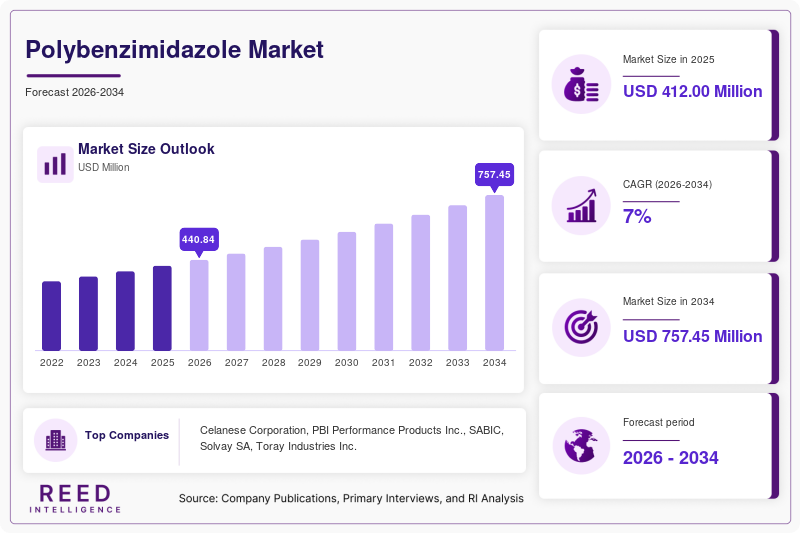
The Polybenzimidazole Market size was valued at USD 412 million in 2025 and is projected to reach USD 758 million by 2034, expanding at a CAGR of 7.0% during the forecast period (2025–2034). Polybenzimidazole (PBI) is a high-performance polymer known for exceptional thermal stability, chemical resistance, and mechanical strength. These properties have positioned PBI materials as critical components in aerospace, defense, industrial filtration, and energy applications. Growing demand for high-temperature-resistant materials in extreme operating environments continues to support market expansion.
One global factor supporting the growth of the Polybenzimidazole Market is the increasing demand for advanced materials in clean energy technologies. Fuel cells, particularly proton exchange membrane fuel cells, require durable membranes capable of withstanding high temperatures and harsh chemical environments. Polybenzimidazole-based membranes offer enhanced durability and efficiency, leading to increasing adoption in hydrogen energy systems. Additionally, industrial manufacturers are shifting toward lightweight, high-strength materials to improve operational efficiency and reduce maintenance costs, further driving demand.
Key Highlights
- North America dominated the market with 36.2% share in 2025, while Asia Pacific is projected to grow at the fastest CAGR of 8.4%.
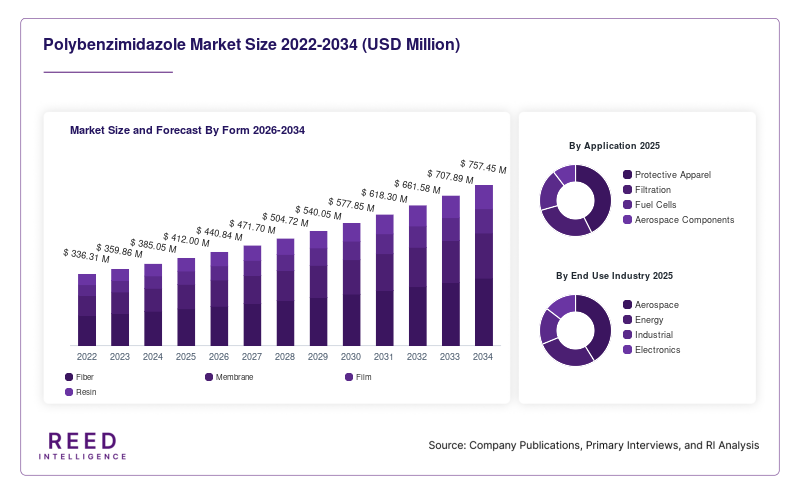
- By Form, Fiber held the leading share at 39.5%, whereas Membranes are expected to grow at 9.1% CAGR.
- By Application, Protective Apparel accounted for 31.8% share, while Fuel Cells are projected to grow at 9.6% CAGR.
- The United States remained the dominant country with USD 128 million in 2025, expected to reach USD 136 million in 2026.
Market Trends
Rising Adoption of High-Temperature Resistant Materials
Industries operating in extreme thermal environments are increasingly adopting polybenzimidazole-based materials. Aerospace components, industrial insulation systems, and filtration media require polymers capable of maintaining structural integrity at elevated temperatures. Polybenzimidazole provides exceptional thermal resistance, making it suitable for continuous operation above conventional polymer limits. Manufacturers are incorporating PBI materials in critical components to improve durability and reduce maintenance frequency. This trend is particularly visible in aerospace manufacturing and industrial processing sectors.
Expansion of Hydrogen Fuel Cell Applications
The transition toward hydrogen-based energy systems is shaping the Polybenzimidazole Market. PBI membranes are widely used in high-temperature fuel cells due to their chemical stability and proton conductivity. Governments and private organizations are investing in hydrogen infrastructure, leading to increased demand for durable fuel cell components. Polybenzimidazole membranes offer improved performance compared to conventional materials, especially in high-temperature operations. As fuel cell adoption expands across transportation and stationary power generation, this trend is expected to support sustained market growth.
Market Drivers
Growing Demand from Aerospace and Defense Industries
The aerospace and defense sectors require advanced materials capable of withstanding extreme thermal and mechanical stress. Polybenzimidazole fibers and composites offer superior heat resistance and flame-retardant properties. These characteristics make them suitable for aircraft interiors, insulation components, and protective gear. Increasing investment in aerospace manufacturing and defense modernization programs is supporting demand for high-performance polymers, thereby driving the Polybenzimidazole Market.
Expansion of Industrial Filtration Applications
Industrial filtration systems operating at high temperatures demand materials with excellent chemical resistance and dimensional stability. Polybenzimidazole fibers are widely used in filtration media for power plants, chemical processing, and waste treatment facilities. Increasing environmental regulations requiring emission control and efficient filtration systems are supporting adoption. The need for durable filtration solutions that operate in harsh environments continues to drive market growth.
Market Restraint
High Production Cost of Polybenzimidazole Materials
The high production cost of polybenzimidazole remains a key restraint in the market. Manufacturing PBI requires complex synthesis processes and specialized raw materials, leading to higher prices compared to conventional polymers. This cost factor limits adoption in price-sensitive industries and restricts large-scale applications.
Additionally, limited manufacturing capacity contributes to supply constraints. Smaller manufacturers face challenges in scaling production due to capital-intensive equipment requirements. The availability of alternative high-performance polymers, such as polyimides and aramids, also affects market penetration. These alternatives often offer competitive performance at lower costs, leading to substitution in certain applications. Consequently, high production costs continue to restrain broader adoption within the Polybenzimidazole Market.
Market Opportunities
Increasing Use in Hydrogen Energy Infrastructure
The expansion of hydrogen energy infrastructure presents a significant opportunity. Polybenzimidazole membranes are used in high-temperature fuel cells due to their thermal stability and chemical resistance. As governments promote hydrogen adoption, demand for fuel cell components will increase. Polybenzimidazole materials offer enhanced performance, making them suitable for long-term operation. This trend is expected to create new growth avenues.
Development of Advanced Composite Materials
Manufacturers are exploring polybenzimidazole-based composites for structural applications. Combining PBI with carbon fiber and other reinforcements improves mechanical strength and reduces weight. These composites are suitable for aerospace, automotive, and industrial machinery components. Research and development efforts focused on improving processing techniques are expected to enhance adoption. The development of advanced composites will expand application scope in the Polybenzimidazole Market.
Segmental Analysis
By Form
Fiber dominated the Polybenzimidazole Market with 39.5% share in 2025. These fibers were widely used in protective apparel and filtration media. High thermal resistance and mechanical strength supported demand. Industrial applications required durable materials, leading to widespread adoption.
Membranes will grow at the fastest CAGR of 9.1%. These membranes will gain traction in fuel cell applications. High-temperature proton exchange membranes will improve efficiency. Expansion of hydrogen energy infrastructure will drive growth.
By Application
Protective Apparel accounted for 31.8% share in 2025. Fire-resistant clothing and protective gear used polybenzimidazole fibers. Industrial safety regulations supported adoption. Demand from defense and firefighting applications strengthened the segment.
Fuel Cells will grow at 9.6% CAGR. High-temperature fuel cells will require durable membranes. Polybenzimidazole-based membranes will improve performance. Increased hydrogen adoption will support segment growth.
By End Use Industry
Aerospace dominated with 28.4% share in 2025. Aircraft components required high-temperature insulation. Polybenzimidazole composites improved performance. Increasing aircraft manufacturing supported demand.
Energy will grow at 8.7% CAGR. Hydrogen fuel cell adoption will expand. Power generation applications will require durable membranes. These factors will drive growth.
By Processing Method
Injection Molding held 34.6% share in 2025. This method supported manufacturing of complex components. Industrial equipment applications relied on molded parts. Established processing infrastructure supported adoption.
Compression Molding will grow at 8.5% CAGR. This technique will enable high-strength composite manufacturing. Aerospace and industrial applications will increase demand.
By Distribution Channel
Direct Sales accounted for 42.1% share in 2025. Manufacturers supplied bulk materials to industrial clients. Long-term contracts supported growth. Direct engagement improved customization.
Distributors will grow at 7.8% CAGR. Expanding regional distribution networks will improve accessibility. Small manufacturers will rely on distributors.
Regional Analysis
North America
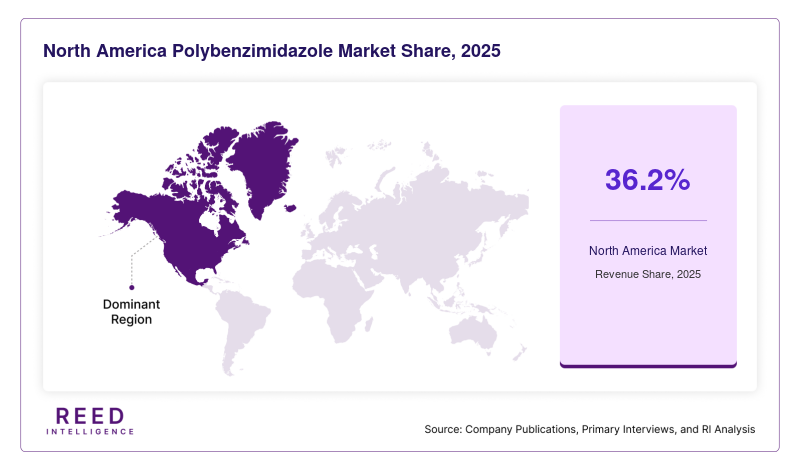
North America accounted for 36.2% of the Polybenzimidazole Market share in 2025. The region benefited from strong demand across aerospace, defense, and energy sectors. High investment in advanced material research supported adoption. The market in North America will expand at a CAGR of 6.5% during 2025–2034. Growing deployment of hydrogen fuel cells and industrial filtration systems will drive future demand. Additionally, the presence of established polymer manufacturers contributed to steady market growth.
The United States dominated the regional market due to increasing adoption of high-performance materials in aerospace manufacturing. Aircraft component manufacturers integrated polybenzimidazole fibers in insulation and protective systems. The country also experienced growth in hydrogen fuel cell development. Government-supported research programs encouraged innovation in polymer materials. These factors collectively supported the country’s dominance in the region.
Europe
Europe held 24.8% share in 2025 and is projected to grow at a CAGR of 6.8%. The region demonstrated steady adoption of polybenzimidazole materials across industrial filtration and energy sectors. Stringent emission regulations encouraged the use of high-temperature filtration systems. Demand for durable materials in chemical processing industries also contributed to growth.
Germany emerged as the dominant country within Europe. The country’s strong industrial manufacturing base supported demand for advanced polymers. Automotive and energy industries increasingly adopted polybenzimidazole-based components. Research initiatives focusing on hydrogen energy systems further boosted demand. These factors supported sustained growth in the regional market.
Asia Pacific
Asia Pacific captured 21.3% share in 2025 and is expected to grow at the fastest CAGR of 8.4%. The region’s growth will be supported by expanding industrial manufacturing and increasing investment in energy infrastructure. Rising demand for high-performance materials in electronics and chemical processing industries will drive adoption.
China dominated the regional market due to large-scale industrial production. The country experienced growing demand for high-temperature filtration materials. Expansion of fuel cell development programs also contributed to market growth. Increased manufacturing capacity for advanced polymers supported regional expansion.
Middle East & Africa
The Middle East & Africa held 8.9% share in 2025 and will expand at a CAGR of 6.2%. The market growth will be supported by increasing industrialization and energy sector investments. Demand for durable filtration systems in petrochemical processing will encourage adoption.
Saudi Arabia dominated the regional market. The country invested in petrochemical processing facilities requiring high-temperature-resistant materials. Polybenzimidazole fibers were used in filtration applications. These developments supported regional growth.
Latin America
Latin America accounted for 8.8% share in 2025 and is projected to grow at a CAGR of 6.9%. Industrial expansion and increasing energy projects will support demand. Adoption of high-performance materials in manufacturing sectors will contribute to growth.
Brazil emerged as the dominant country. The country experienced demand from industrial filtration applications. Growth in chemical processing industries supported polybenzimidazole usage. These factors contributed to market expansion.
Competitive Landscape
The Polybenzimidazole Market is moderately consolidated, with leading players focusing on expanding production capacity and developing advanced applications. Companies are investing in research to enhance polymer performance and broaden application areas. Strategic partnerships with aerospace and energy companies remain key growth strategies.
Celanese Corporation emerged as a market leader due to its extensive polybenzimidazole product portfolio. The company recently expanded its high-performance polymer production to support fuel cell membrane demand. Other companies are focusing on advanced composite materials and industrial filtration applications. Market participants are strengthening distribution networks to expand global presence. Continuous innovation and product development will shape competition during the forecast period.
Key Players List
- Celanese Corporation
- PBI Performance Products Inc.
- SABIC
- Solvay SA
- Toray Industries Inc.
- Mitsubishi Chemical Group
- BASF SE
- Teijin Limited
- Evonik Industries AG
- DuPont de Nemours Inc.
- Hexcel Corporation
- Ensinger GmbH
- Arkema Group
- RTP Company
- Victrex plc
Recent Developments
- 2024: Celanese expanded polybenzimidazole polymer production capacity.
- 2024: Toray Industries developed advanced PBI fiber for filtration applications.
- 2023: Solvay introduced high-temperature PBI composite materials.
- 2023: SABIC partnered with energy firms for fuel cell membrane development.
- 2023: Mitsubishi Chemical launched PBI-based industrial filtration media.
Polybenzimidazole Market Segments
By Form
- Fiber
- Membrane
- Film
- Resin
By Application
- Protective Apparel
- Filtration
- Fuel Cells
- Aerospace Components
By End Use Industry
- Aerospace
- Energy
- Industrial
- Electronics
By Processing Method
- Injection Molding
- Compression Molding
- Extrusion
By Distribution Channel
- Direct Sales
- Distributors
By Region
- North America
- Europe
- APAC
- Middle East and Africa
- LATAM