Polycystic Kidney Disease Treatment Market Size, Share & Demand Report By Drug Class (Vasopressin Receptor Antagonists, mTOR Inhibitors, ACE Inhibitors, Others), By Treatment Type (Pharmacological Therapy, Dialysis, Kidney Transplant, Gene Therapy), By Disease Type (ADPKD, ARPKD), By Distribution Channel (Hospital Pharmacies, Retail Pharmacies, Online Pharmacies), By Region & Segment Forecasts, 2025–2034
USD 3950
Market Overview
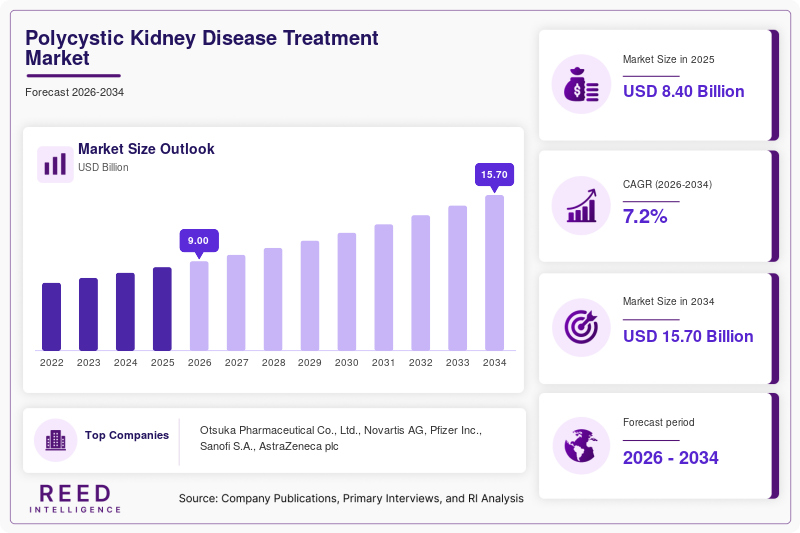
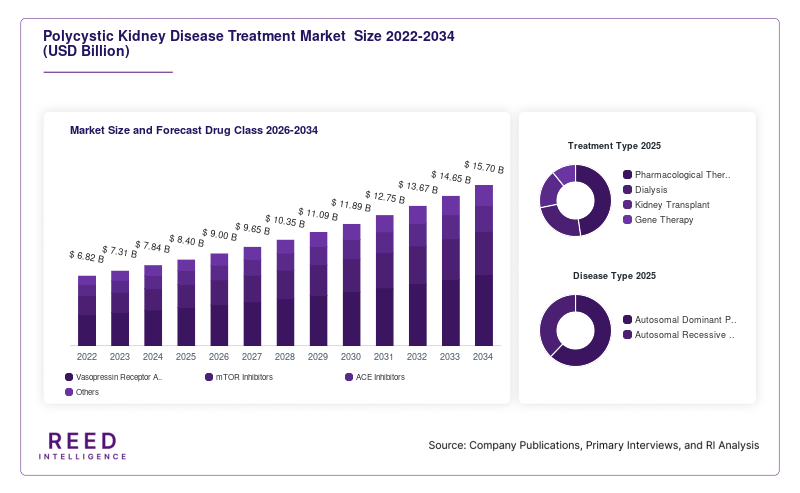
The Polycystic Kidney Disease Treatment Market size was valued at approximately USD 8.4 billion in 2025 and is projected to reach USD 15.7 billion by 2034, expanding at a CAGR of 7.2% during the forecast period (2025–2034). The market growth is primarily supported by the increasing global burden of chronic kidney disorders, coupled with rising awareness and diagnosis rates of autosomal dominant polycystic kidney disease (ADPKD) and autosomal recessive polycystic kidney disease (ARPKD).
A major global factor driving the expansion of the Polycystic Kidney Disease Treatment Market is the advancement in precision medicine and targeted therapeutics. Pharmaceutical companies are increasingly investing in disease-modifying therapies, which aim to slow cyst progression and preserve kidney function, thereby improving long-term patient outcomes. This shift from symptomatic management to targeted intervention has significantly contributed to market growth.
Key Highlights
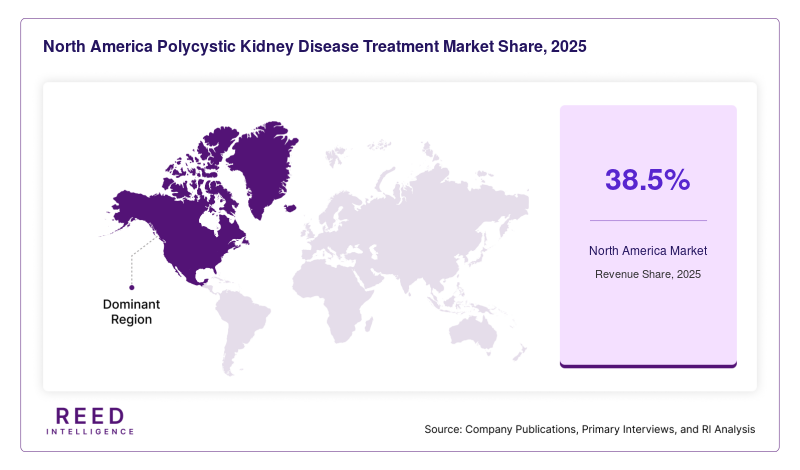
- North America dominated the market with a 38.5% share in 2025, while Asia Pacific is expected to register the fastest CAGR of 8.4% through 2034.
- By drug class, vasopressin receptor antagonists led with a 42% share, whereas mTOR inhibitors are anticipated to grow at a CAGR of 9.1%.
- By treatment type, pharmacological therapy accounted for 63% share, while gene therapy is projected to expand at a CAGR of 10.3%.
- The U.S. remained the dominant country, with market values of USD 2.9 billion in 2025 and USD 3.1 billion in 2026.
Market Trends
Shift Toward Disease-Modifying Therapies
The Polycystic Kidney Disease Treatment Market is witnessing a gradual transition from conventional symptomatic treatments to disease-modifying therapies. Traditionally, management focused on blood pressure control and pain relief. However, recent developments emphasize slowing cyst growth and delaying renal failure. The introduction of targeted drugs has encouraged early intervention strategies, transforming treatment protocols and enhancing patient adherence. This trend is expected to reshape clinical approaches and increase demand for advanced therapeutics.
Growing Integration of Genetic Testing and Personalized Medicine
Another significant trend in the Polycystic Kidney Disease Treatment Market is the integration of genetic diagnostics into routine care. Genetic testing enables early identification of at-risk individuals and helps tailor treatment strategies based on disease progression patterns. Personalized medicine approaches are gaining traction, especially in developed regions, where healthcare systems support advanced diagnostics. This trend is contributing to improved clinical outcomes and driving innovation in drug development pipelines.
Market Drivers
Increasing Prevalence of Chronic Kidney Disorders
The rising incidence of chronic kidney diseases globally has been a primary driver for the Polycystic Kidney Disease Treatment Market. Lifestyle changes, aging populations, and genetic predisposition have contributed to a growing patient pool. As awareness increases, more individuals are undergoing diagnostic screening, leading to higher treatment adoption rates. This expanding patient base continues to drive consistent demand for therapeutic solutions.
Advancements in Drug Development and Clinical Research
Ongoing advancements in pharmaceutical research have significantly boosted the Polycystic Kidney Disease Treatment Market. Increased funding for clinical trials and strong pipelines of innovative drugs have accelerated product approvals. Biopharmaceutical companies are focusing on novel mechanisms of action, improving efficacy while reducing side effects. These developments are enhancing treatment accessibility and encouraging healthcare providers to adopt newer therapies.
Market Restraint
High Cost of Treatment and Limited Accessibility
One of the major challenges in the Polycystic Kidney Disease Treatment Market is the high cost associated with advanced therapies. Disease-modifying drugs and emerging biologics often come with significant price tags, limiting their accessibility in low- and middle-income regions. Additionally, long-term treatment requirements further increase the financial burden on patients and healthcare systems.
Limited reimbursement policies in several countries also restrict the widespread adoption of newer therapies. In many regions, healthcare infrastructure constraints and lack of specialized care centers hinder timely diagnosis and treatment. These factors collectively slow down market penetration, particularly in developing economies. Addressing affordability and improving healthcare access remain critical for sustained market growth.
Market Opportunities
Expansion of Gene and Cell-Based Therapies
The emergence of gene and cell-based therapies presents a promising opportunity in the Polycystic Kidney Disease Treatment Market. These therapies aim to correct underlying genetic mutations, offering long-term or potentially curative solutions. As research progresses and regulatory pathways become clearer, the adoption of such innovative treatments is expected to increase. This opportunity could significantly transform the treatment landscape over the forecast period.
Untapped Potential in Emerging Markets
Emerging economies present substantial growth opportunities for the Polycystic Kidney Disease Treatment Market. Increasing healthcare investments, improving diagnostic capabilities, and rising awareness are driving demand in these regions. Governments are focusing on expanding healthcare coverage and infrastructure, enabling better access to treatment. Market players are also entering these regions through strategic partnerships and localized production, further supporting growth.
Segmental Analysis
By Drug Class
Vasopressin receptor antagonists dominated the Polycystic Kidney Disease Treatment Market in 2025, accounting for 42% of the total share. Their ability to slow cyst growth and delay disease progression made them a preferred treatment option among healthcare providers. High clinical efficacy and increasing physician adoption supported their leading position.
mTOR inhibitors are projected to be the fastest-growing subsegment, with a CAGR of 9.1% through 2034. Their role in targeting cellular pathways involved in cyst formation offers promising therapeutic potential. Ongoing research and clinical trials will enhance their adoption in the coming years.
By Treatment Type
Pharmacological therapy held the largest share of 63% in 2025 within the Polycystic Kidney Disease Treatment Market. The widespread availability of medications and established treatment protocols contributed to its dominance. Patients and healthcare providers prefer drug-based therapies due to ease of administration and proven outcomes.
Gene therapy is expected to register the fastest growth, with a CAGR of 10.3% during the forecast period. Advances in genetic engineering and increasing investment in research will drive its adoption. This approach offers the potential for long-term disease management by addressing underlying genetic causes.
By Disease Type
Autosomal dominant polycystic kidney disease (ADPKD) accounted for 78% of the market share in 2025. Its higher prevalence compared to ARPKD contributed to its dominance. Increased awareness and early diagnosis further supported treatment demand.
Autosomal recessive polycystic kidney disease (ARPKD) is projected to grow at a CAGR of 8.7%. Improvements in pediatric healthcare and early detection techniques will drive growth. Increasing research focus on rare diseases will also support this segment.
By Distribution Channel
Hospital pharmacies dominated the Polycystic Kidney Disease Treatment Market with a 55% share in 2025. Their direct access to patients and availability of specialized medications supported their leading position. Strong integration with healthcare systems further enhanced their role.
Online pharmacies are expected to grow at a CAGR of 9.5% during the forecast period. Increasing digitalization and convenience of home delivery services will drive adoption. Expanding e-commerce platforms in healthcare will support this growth.
Regional Analysis
North America
North America accounted for 38.5% of the Polycystic Kidney Disease Treatment Market share in 2025 and will expand at a CAGR of 6.8% during the forecast period. The region’s established healthcare infrastructure and high diagnosis rates supported its leading position. Strong presence of pharmaceutical companies and advanced research facilities contributed to consistent market growth.
The United States dominated the regional market due to high healthcare spending and early adoption of advanced therapies. The presence of specialized nephrology centers and favorable reimbursement frameworks supported widespread treatment access. Continuous investment in research and development further strengthened the country’s leadership.
Europe
Europe held a 27.2% share of the Polycystic Kidney Disease Treatment Market in 2025 and will grow at a CAGR of 6.9% through 2034. The region benefited from increasing awareness programs and well-established healthcare systems. Government initiatives promoting early diagnosis contributed to steady demand.
Germany emerged as the dominant country, supported by its strong pharmaceutical industry and emphasis on clinical research. The country’s focus on healthcare innovation and patient-centric care models enhanced treatment adoption rates. Additionally, collaborations between research institutions and pharmaceutical companies supported market expansion.
Asia Pacific
Asia Pacific captured 21.8% of the Polycystic Kidney Disease Treatment Market share in 2025 and will register the fastest CAGR of 8.4% during the forecast period. Rapid urbanization and improving healthcare infrastructure played a significant role in regional growth. Increasing awareness and diagnosis rates also contributed to expanding market demand.
China dominated the region due to its large patient population and growing healthcare investments. Government initiatives aimed at improving access to healthcare services and expanding insurance coverage supported market development. Rising focus on domestic pharmaceutical production further accelerated growth.
Middle East & Africa
The Middle East & Africa region accounted for 6.3% of the Polycystic Kidney Disease Treatment Market in 2025 and will grow at a CAGR of 6.5% through 2034. The region’s growth was supported by gradual improvements in healthcare infrastructure and increasing government initiatives.
Saudi Arabia led the regional market due to its investments in healthcare modernization and expansion of specialized treatment facilities. The country’s focus on improving patient care and increasing awareness contributed to higher diagnosis and treatment rates.
Latin America
Latin America held a 6.2% share of the Polycystic Kidney Disease Treatment Market in 2025 and will expand at a CAGR of 6.7% during the forecast period. The region experienced steady growth driven by improving healthcare access and rising awareness.
Brazil dominated the regional market due to its large population and expanding healthcare system. Government efforts to enhance healthcare services and increase funding for chronic disease management supported market growth. Growing private sector participation also contributed to improved treatment availability.
Competitive Landscape
The Polycystic Kidney Disease Treatment Market is moderately competitive, with several global and regional players focusing on research and product development. Leading companies are investing in clinical trials and strategic collaborations to strengthen their market presence.
Otsuka Pharmaceutical Co., Ltd. is a key market leader, known for its targeted therapies in kidney disease treatment. The company recently expanded its research pipeline with new drug candidates aimed at improving long-term outcomes for patients with polycystic kidney disease.
Other prominent players include Novartis AG, Pfizer Inc., Sanofi S.A., and AstraZeneca plc. These companies focus on innovation, partnerships, and geographic expansion to maintain competitiveness. Increasing emphasis on personalized medicine and advanced therapeutics continues to shape the competitive landscape.
Key Players List
- Otsuka Pharmaceutical Co., Ltd.
- Novartis AG
- Pfizer Inc.
- Sanofi S.A.
- AstraZeneca plc
- Roche Holding AG
- AbbVie Inc.
- Bristol-Myers Squibb Company
- Merck & Co., Inc.
- Teva Pharmaceutical Industries Ltd.
- Bayer AG
- Amgen Inc.
- GlaxoSmithKline plc
- Eli Lilly and Company
- Johnson & Johnson
Recent Developments
- Increasing focus on innovation and strategic collaborations among key market players
- Initiation of advanced clinical trials targeting disease progression pathways
- Growing partnerships between biotechnology firms and research institutions to develop gene-based therapies
- Rising regulatory approvals for new drugs, improving treatment accessibility in developed regions
- Expansion of companies into emerging markets through distribution agreements and localized manufacturing
- Increasing investment in digital health technologies for better patient monitoring and treatment adherence
Polycystic Kidney Disease Treatment Market Segments
Drug Class
- Vasopressin Receptor Antagonists
- mTOR Inhibitors
- ACE Inhibitors
- Others
Treatment Type
- Pharmacological Therapy
- Dialysis
- Kidney Transplant
- Gene Therapy
Disease Type
- Autosomal Dominant Polycystic Kidney Disease (ADPKD)
- Autosomal Recessive Polycystic Kidney Disease (ARPKD)
Distribution Channel
- Hospital Pharmacies
- Retail Pharmacies
- Online Pharmacies
By Region
- North America
- Europe
- APAC
- Middle East and Africa
- LATAM