Polymer Surge Arrester Market Size, Share & Demand Report By Type (Distribution Class, Intermediate Class, Station Class), By Voltage Rating (Low Voltage, Medium Voltage, High Voltage), By Application (Power Transmission & Distribution, Industrial Electrical Systems, Renewable Energy Infrastructure), By End-Use Industry (Utilities, Industrial Manufacturing, Transportation Infrastructure, Energy & Power Generation) By Region & Segment Forecasts, 2022–2034
USD 3950
Market Overview
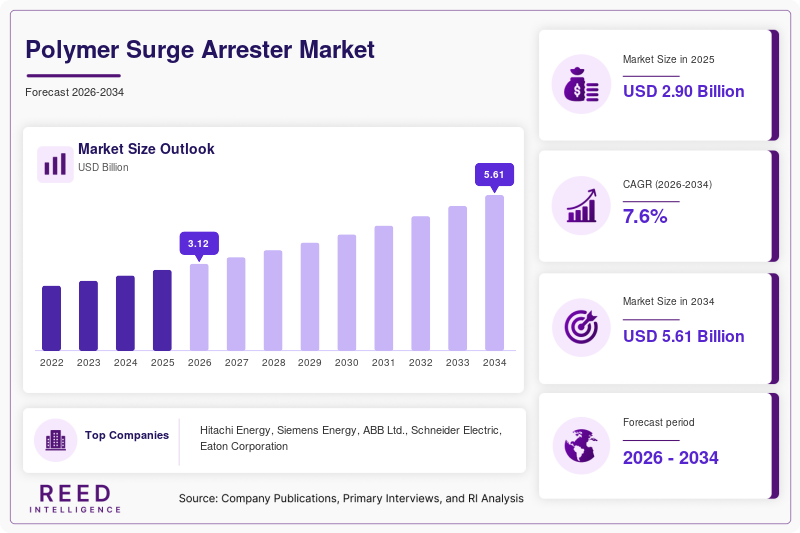
The Polymer Surge Arrester Market size was valued at approximately USD 2.9 billion in 2024 and is projected to reach USD 5.6 billion by 2033, expanding at a compound annual growth rate (CAGR) of 7.6% from 2025 to 2033. Polymer surge arresters are widely used in electrical power systems to protect transmission lines, transformers, and substations from voltage surges caused by lightning strikes or switching operations. Their lightweight structure, superior insulation properties, and resistance to environmental stress have contributed to increasing adoption across modern power networks.
A significant global factor supporting the growth of the Polymer Surge Arrester Market is the ongoing modernization of electricity transmission and distribution infrastructure. Governments and utilities across emerging and developed economies are upgrading aging grid networks to improve power reliability and integrate renewable energy systems. Polymer-based surge arresters offer enhanced mechanical strength and flexibility compared to porcelain-based alternatives, making them suitable for harsh climatic conditions and high-voltage applications. As power networks become more complex with distributed generation and digital grid technologies, demand for efficient surge protection devices continues to rise.
Key Highlights
- Asia Pacific dominated the Polymer Surge Arrester Market with approximately 39% share in 2025, while Latin America is expected to register the fastest growth at a CAGR of 8.4% through 2033.
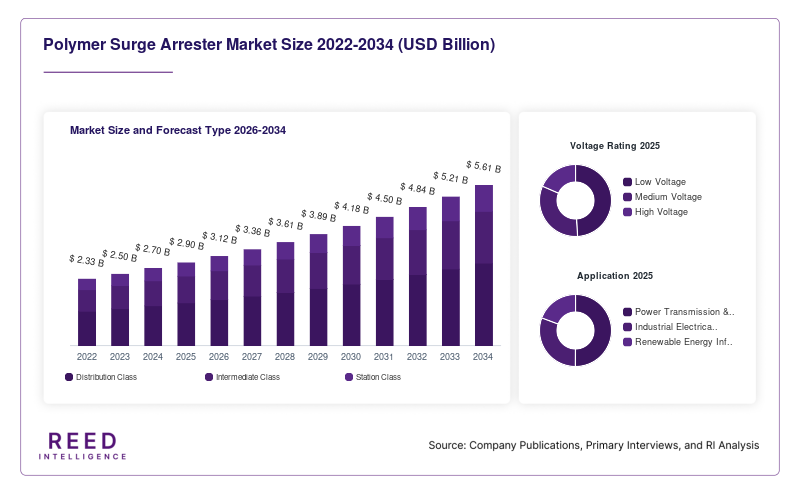
- Within segmentation, distribution class arresters held the largest share at around 46% in 2024, while intermediate class arresters are projected to grow fastest at a CAGR of 8.1%.
- The power transmission & distribution application segment accounted for the leading share of nearly 52%, while renewable energy infrastructure is expected to expand at a CAGR of 8.7%.
- China remained the dominant country, with its Polymer Surge Arrester Market valued at USD 640 million in 2024 and estimated to reach USD 690 million in 2025.
Market Trends
Rising Adoption of Polymer Housed Arresters in Modern Grid Infrastructure
One prominent trend shaping the Polymer Surge Arrester Market is the transition from porcelain-based surge arresters to polymer-housed alternatives. Utilities and grid operators increasingly prefer polymer housings due to their improved mechanical durability, lighter weight, and resistance to pollution and moisture. These features reduce installation complexity and maintenance requirements, particularly in coastal or industrial regions with harsh environmental conditions. The shift toward compact substation designs and modular power equipment has further strengthened demand for polymer surge arresters across both high-voltage and medium-voltage networks.
Integration with Renewable Energy and Distributed Power Systems
Another significant trend influencing the Polymer Surge Arrester Market is the growing deployment of renewable energy infrastructure such as wind farms and solar photovoltaic installations. Renewable plants are often located in remote regions exposed to lightning activity and voltage fluctuations. Polymer surge arresters help protect sensitive electrical equipment including inverters, transformers, and grid interconnection systems. As renewable energy capacity continues to expand globally, the requirement for advanced surge protection solutions is expected to increase. This trend also aligns with the expansion of decentralized energy networks, microgrids, and energy storage systems, all of which require effective overvoltage protection.
Market Drivers
Expansion of Global Power Transmission Networks
The expansion of electricity transmission and distribution networks is a major driver for the Polymer Surge Arrester Market. Rapid urbanization, industrial growth, and rising electricity demand have encouraged governments to invest in new power infrastructure projects. Surge arresters play a critical role in protecting high-voltage equipment from transient overvoltage events. Polymer-based arresters are widely used in new transmission lines and substations due to their durability and insulation properties. As emerging economies continue to expand their electrical grids to support population growth and industrial activities, demand for polymer surge arresters is expected to increase.
Increasing Investments in Smart Grid Technology
The transition toward smart grids and digital power systems is another key factor driving market growth. Smart grids incorporate advanced monitoring and control technologies that require stable and reliable electrical infrastructure. Voltage surges can disrupt communication systems, sensors, and digital controllers used in these networks. Polymer surge arresters help maintain grid stability by providing effective protection against transient overvoltage. Utilities implementing automated grid technologies are therefore integrating modern surge protection equipment, which supports long-term growth of the Polymer Surge Arrester Market.
Market Restraint
High Initial Installation and Testing Costs
One notable restraint affecting the Polymer Surge Arrester Market is the relatively high initial cost associated with installation and testing of advanced surge protection systems. Polymer surge arresters require strict quality standards, specialized manufacturing processes, and comprehensive testing procedures to ensure reliability in high-voltage environments. These factors contribute to higher upfront procurement costs compared to conventional protection components.
Utilities operating in budget-constrained environments may delay infrastructure upgrades or opt for lower-cost alternatives. Smaller grid operators, particularly in developing regions, sometimes prioritize essential power equipment such as transformers and switchgear rather than surge protection systems. Additionally, installation of surge arresters often involves system design modifications, skilled technical labor, and periodic testing to maintain compliance with electrical safety standards.
The cost factor may also influence replacement cycles for existing equipment. Many utilities continue using legacy porcelain arresters for extended periods before transitioning to polymer-based solutions. This gradual replacement process can slow market adoption in some regions. However, long-term benefits such as reduced maintenance requirements and improved operational reliability are expected to offset initial costs over time.
Market Opportunities
Growth of Renewable Energy Infrastructure
The expansion of renewable energy installations presents a significant opportunity for the Polymer Surge Arrester Market. Wind turbines, solar farms, and hybrid power plants operate in environments that are often exposed to lightning strikes and voltage disturbances. Surge arresters are essential components for protecting electrical systems within these facilities. As countries accelerate the deployment of renewable power projects to meet energy transition goals, demand for polymer-based surge protection devices is expected to increase across both utility-scale and distributed energy systems.
Electrification of Transportation and Charging Infrastructure
Another emerging opportunity for the Polymer Surge Arrester Market lies in the electrification of transportation. Electric vehicle charging networks, rail electrification systems, and urban transit infrastructure rely on stable electrical supply networks. Voltage surges can damage charging stations, converters, and power electronics. Polymer surge arresters provide protective solutions for these systems by preventing overvoltage damage. As governments expand EV charging infrastructure and electrified transportation corridors, the need for advanced surge protection devices is likely to grow, creating additional opportunities for manufacturers operating in the global market.
Segmental Analysis
By Type
The distribution class surge arrester segment held the dominant share of approximately 46% in 2024 within the Polymer Surge Arrester Market. Distribution class arresters are widely used in medium-voltage electrical networks to protect transformers, switchgear, and distribution lines from transient voltage surges. Their extensive use across residential and commercial electricity distribution systems contributed to their leading share. Utilities rely on these devices to ensure continuous power supply and prevent equipment damage caused by lightning strikes or switching operations.
The intermediate class surge arrester segment is projected to grow at the fastest CAGR of about 8.1% through 2033. These arresters are designed for higher energy absorption capacity compared to distribution class devices. They are typically installed in substations and industrial power systems where electrical equipment operates under elevated voltage conditions. Increasing deployment of high-capacity electrical infrastructure will likely support the adoption of intermediate class polymer surge arresters. Their ability to handle higher energy levels and provide reliable protection for critical equipment will contribute to accelerated growth in this segment.
By Voltage Rating
The medium-voltage segment accounted for the largest share of approximately 42% in 2024 in the Polymer Surge Arrester Market. Medium-voltage surge arresters are widely used in distribution networks and industrial electrical systems. They protect electrical equipment operating within voltage ranges typically found in urban power distribution infrastructure. The widespread deployment of medium-voltage networks across cities and industrial zones supported the strong market presence of this segment.
The high-voltage segment is expected to grow at a CAGR of about 7.9% during the forecast period. High-voltage surge arresters are installed in transmission lines and large substations that carry electricity across long distances. Expansion of cross-border transmission networks and interconnection projects will likely increase demand for high-voltage surge protection equipment. These arresters provide enhanced energy handling capability and are designed to operate reliably in high-stress electrical environments, which will contribute to steady growth in this segment.
By Application
The power transmission and distribution segment held the largest share of nearly 52% in 2024. Surge arresters are essential components in transmission lines, substations, and distribution networks to protect electrical equipment from overvoltage events. Utilities rely heavily on these devices to maintain grid reliability and minimize power outages caused by lightning or switching surges. The extensive size of global transmission and distribution networks contributed to the dominant share of this application segment.
The renewable energy infrastructure segment is expected to expand at a CAGR of around 8.7% through 2033. Renewable energy installations often operate in open environments that are exposed to lightning activity. Wind turbines, solar photovoltaic plants, and associated grid interconnection systems require surge protection to prevent damage to electrical equipment. As renewable energy capacity continues to increase globally, polymer surge arresters will likely be deployed more frequently in renewable energy facilities, supporting strong growth within this application segment.
Regional Analysis
North America
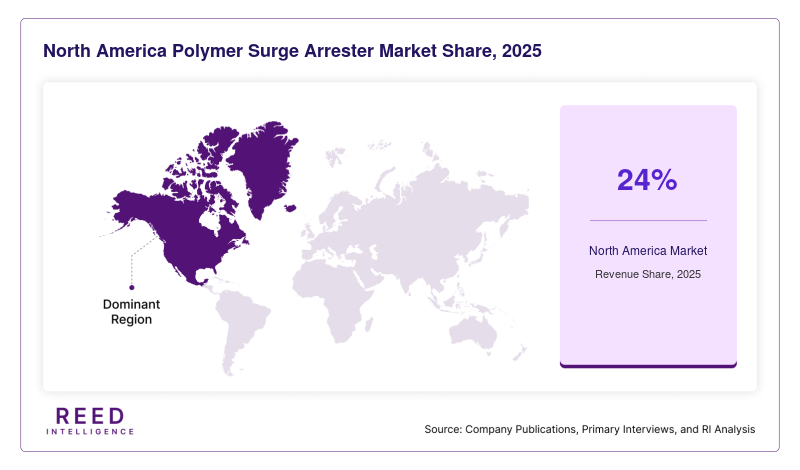
North America accounted for approximately 24% of the Polymer Surge Arrester Market share in 2025 and was characterized by stable demand across power utilities and infrastructure projects. The region will likely expand at a CAGR of around 6.8% between 2025 and 2033. Growth in this region is associated with modernization of electrical transmission infrastructure and upgrades to aging grid systems. Power utilities in the United States and Canada have been gradually replacing legacy electrical protection components with advanced polymer surge arresters to improve grid reliability.
The United States dominated the regional market, supported by continuous upgrades in power distribution networks. The country has a large installed base of aging electrical infrastructure that requires modernization to maintain reliability. Utility companies have been implementing large-scale substation refurbishment programs and grid reinforcement projects to accommodate increasing electricity demand. Polymer surge arresters are widely adopted in these upgrades because they offer improved performance in high-voltage environments and require less maintenance compared to older technologies. The focus on grid resilience and disaster preparedness also contributes to steady demand for surge protection equipment across the United States.
Europe
Europe represented around 22% of the Polymer Surge Arrester Market share in 2025 and is expected to grow at a CAGR of approximately 6.9% during the forecast period. The region has a well-developed electricity infrastructure and strong regulatory standards related to power system reliability. European utilities continue to integrate modern surge protection devices within transmission and distribution networks to maintain operational stability.
Germany emerged as the leading country within the region due to its extensive energy infrastructure and industrial sector. The country’s electrical grid supports large manufacturing facilities, transportation systems, and commercial complexes that require consistent voltage protection. Germany’s focus on maintaining grid reliability and upgrading substations has supported demand for polymer surge arresters. Utilities have implemented advanced monitoring systems and protection equipment across their networks to reduce the risk of equipment damage caused by voltage spikes. The presence of leading electrical equipment manufacturers within Europe also contributes to steady technological innovation in surge protection solutions.
Asia Pacific
Asia Pacific held the largest share of the Polymer Surge Arrester Market at approximately 39% in 2025 and will likely expand at a CAGR of 7.9% through 2033. Rapid urbanization, industrialization, and electricity demand growth across several Asian economies have contributed to significant expansion of power transmission infrastructure. Governments across the region are investing heavily in grid expansion and modernization projects to support economic development and population growth.
China represented the dominant country in the regional market due to its large-scale electricity network and ongoing infrastructure development. The country has invested significantly in new high-voltage transmission lines and substations to support expanding energy consumption across industrial and urban centers. Polymer surge arresters are widely used in these installations to protect critical electrical components from voltage disturbances. Additionally, China’s extensive manufacturing ecosystem enables domestic production of surge protection equipment, supporting cost-effective deployment across the national grid.
Middle East & Africa
The Middle East & Africa accounted for roughly 9% of the Polymer Surge Arrester Market share in 2025 and will likely register a CAGR of around 7.2% during the forecast period. The region’s electricity infrastructure is undergoing expansion to meet rising energy demand and support economic diversification initiatives. Surge protection devices are increasingly integrated into new power generation and transmission facilities to improve system stability.
Saudi Arabia led the regional market due to large-scale investments in energy infrastructure. The country has been expanding its electricity network to support industrial projects, urban development, and new energy initiatives. Surge protection equipment is widely installed in substations and transmission lines to maintain reliability in harsh environmental conditions. Polymer surge arresters are particularly suitable for desert climates because they offer resistance to contamination and environmental stress. These characteristics make them a preferred choice for electrical utilities across the region.
Latin America
Latin America represented approximately 6% of the Polymer Surge Arrester Market share in 2025 and is expected to record the fastest regional growth with a CAGR of 8.4% between 2025 and 2033. Electricity infrastructure development and grid expansion initiatives have contributed to rising demand for surge protection equipment across the region. Several countries are upgrading aging transmission networks and improving power reliability for industrial and residential consumers.
Brazil dominated the Latin American market, supported by large-scale energy infrastructure projects. The country operates one of the largest electricity networks in the region, supplying power across vast geographic areas. Transmission lines often extend through regions exposed to lightning activity and environmental stress, increasing the need for effective surge protection systems. Polymer surge arresters are widely deployed in transmission substations and distribution networks to safeguard electrical equipment from voltage spikes. Brazil’s continued investment in energy infrastructure is expected to support long-term growth of the Polymer Surge Arrester Market.
Competitive Landscape
The Polymer Surge Arrester Market features a mix of global electrical equipment manufacturers and specialized surge protection providers. Market participants focus on product innovation, reliability improvements, and strategic partnerships with utility companies.
Hitachi Energy is widely recognized as a leading participant in the market due to its extensive portfolio of high-voltage surge protection solutions. The company continues to expand its product offerings with advanced polymer-housed arresters designed for modern transmission networks. A recent development includes the introduction of improved surge arrester technology designed to enhance reliability in high-voltage power systems.
Other prominent players in the market include Siemens Energy, ABB, Schneider Electric, and Eaton Corporation. These companies invest in research and development to improve surge arrester performance and support evolving power grid requirements. Collaboration with utilities and infrastructure developers remains a common strategy for strengthening market presence.
Key Players
- Hitachi Energy
- Siemens Energy
- ABB Ltd.
- Schneider Electric
- Eaton Corporation
- General Electric
- Hubbell Power Systems
- CG Power and Industrial Solutions
- TE Connectivity
- Toshiba Energy Systems
Recent Developments
- Hitachi Energy introduced upgraded polymer-housed surge arresters designed for high-voltage transmission networks.
- Siemens Energy expanded its surge protection product portfolio for modern substation applications.
- ABB introduced advanced polymer surge arresters aimed at improving electrical grid reliability.
- Eaton Corporation launched improved surge protection devices for industrial power systems.
- Schneider Electric expanded its surge protection solutions for energy infrastructure and digital grid systems.
Polymer Surge Arrester Market Segments
Type
- Distribution Class
- Intermediate Class
- Station Class
Voltage Rating
- Low Voltage
- Medium Voltage
- High Voltage
Application
- Power Transmission & Distribution
- Industrial Electrical Systems
- Renewable Energy Infrastructure
End-Use Industry
- Utilities
- Industrial Manufacturing
- Transportation Infrastructure
- Energy & Power Generation
Distribution Channel
- Direct Sales
- Electrical Equipment Distributors
- Online Procurement Platforms
By Region
- North America
- Europe
- APAC
- Middle East and Africa
- LATAM