Polymyositis Market Size, Share Demand Report By Treatment Type (Corticosteroids, Immunosuppressants, Biologics, Others), By Diagnosis Method (Blood Tests, Imaging Techniques, Muscle Biopsy, Electromyography), By End-Use (Hospitals, Specialty Clinics, Research Institutes, Others), By Region & Segment Forecasts, 2026–2034
USD 3950
Market Overview
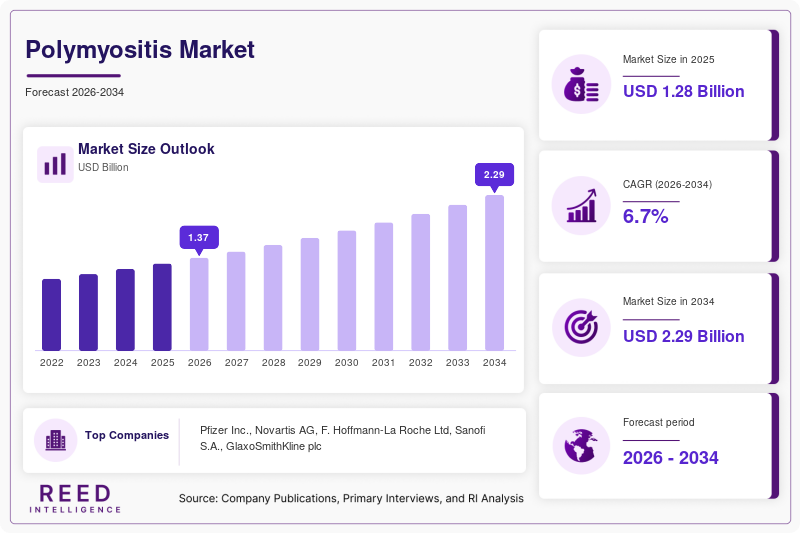
The global Polymyositis Market size was valued at approximately USD 1.28 billion in 2026 and is projected to reach USD 2.15 billion by 2034, expanding at a compound annual growth rate (CAGR) of 6.7% during the forecast period. The market growth is largely supported by increasing awareness of rare autoimmune disorders and advancements in diagnostic capabilities, which have improved early detection rates. Additionally, improved access to specialty care and immunosuppressive therapies has contributed to a steady rise in treatment adoption across both developed and emerging regions.
A key global factor driving the market is the expansion of healthcare infrastructure combined with increased funding for rare disease research. Governments and private organizations are investing in early diagnosis programs and biologics research, which is enhancing treatment accessibility and fostering innovation in targeted therapies. This trend is particularly evident in regions with strong regulatory support for orphan drug development, encouraging pharmaceutical companies to focus on niche autoimmune conditions such as polymyositis.
Key Highlights
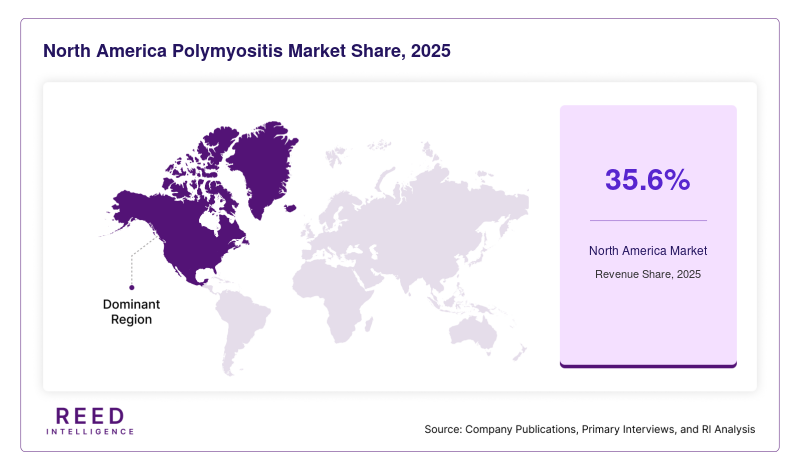
- North America dominated the market with a 35.6% share in 2025.
- Asia Pacific is expected to grow at the fastest CAGR of 8.9% during 2026–2034.
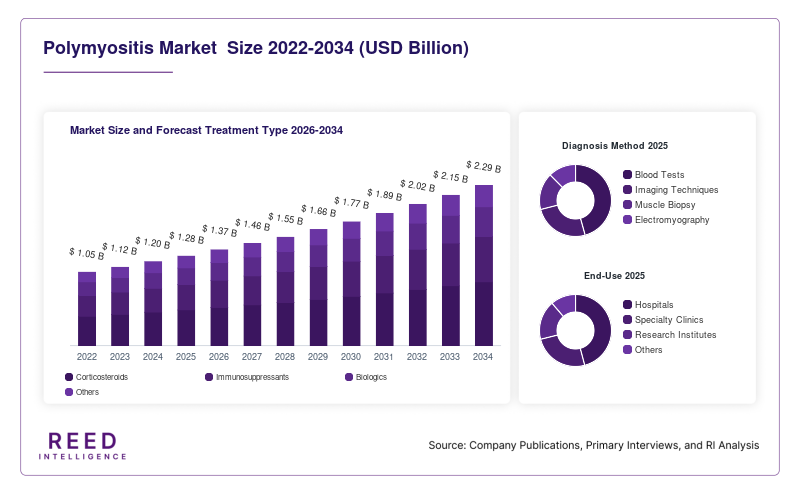
- By treatment type, corticosteroids accounted for the largest share of 42.3%, while biologics are projected to grow at a CAGR of 9.8%.
- By diagnosis method, blood tests led with a 39.1% share, whereas imaging techniques are expected to expand at a CAGR of 8.4%.
- The United States remained the dominant country, with market values of USD 520 million in 2024 and USD 565 million in 2025.
Market Trends
Rising adoption of biologics and targeted therapies
The polymyositis market is witnessing a gradual shift toward biologics and targeted immunotherapies. Traditional treatments such as corticosteroids remain widely used; however, their long-term side effects have encouraged clinicians to adopt alternative therapeutic approaches. Biologics that modulate immune system responses are gaining traction due to their ability to provide sustained disease control with fewer adverse effects. Pharmaceutical companies are investing in monoclonal antibodies and cytokine inhibitors designed specifically for inflammatory myopathies. This trend is further supported by regulatory incentives for orphan drugs, accelerating product development pipelines and improving patient outcomes across advanced healthcare systems.
Increasing integration of advanced diagnostic technologies
Another significant trend shaping the polymyositis market is the growing use of advanced diagnostic tools, including MRI, electromyography, and autoantibody testing. These technologies enable earlier and more accurate diagnosis, reducing misdiagnosis rates associated with muscle weakness disorders. Healthcare providers are increasingly adopting integrated diagnostic protocols that combine clinical assessment with imaging and laboratory tests. This approach enhances treatment planning and helps monitor disease progression more effectively. Moreover, the availability of digital health platforms and AI-assisted diagnostics is improving patient tracking and data analysis, which is expected to support long-term market growth by enhancing clinical efficiency and patient management.
Market Drivers
Growing prevalence of autoimmune disorders and aging population
The increasing prevalence of autoimmune diseases worldwide is a major factor driving the polymyositis market. Although polymyositis is considered a rare condition, its incidence is rising due to improved diagnostic awareness and reporting mechanisms. Additionally, the global aging population is more susceptible to autoimmune conditions, including inflammatory myopathies. Older individuals often present with complex health conditions, requiring continuous monitoring and treatment. This demographic shift is increasing demand for specialized therapies and long-term disease management solutions. As healthcare systems adapt to address chronic and rare diseases, the polymyositis market is expected to experience sustained growth across multiple regions.
Expansion of healthcare expenditure and rare disease funding
Rising healthcare expenditure and increased funding for rare diseases are significantly contributing to market expansion. Governments and healthcare organizations are allocating resources to support research, clinical trials, and patient assistance programs. This financial backing is encouraging pharmaceutical companies to invest in innovative treatments for polymyositis. Furthermore, reimbursement policies for rare disease therapies are improving in several countries, making treatments more accessible to patients. The establishment of rare disease registries and support networks is also enhancing awareness and early diagnosis. These developments collectively create a favorable environment for market growth and encourage continued innovation in treatment approaches.
Market Restraint
High cost of treatment and limited patient pool
One of the primary challenges in the polymyositis market is the high cost associated with treatment, particularly biologics and advanced immunotherapies. These therapies often require long-term administration, leading to significant financial burden on patients and healthcare systems. Additionally, the rarity of polymyositis limits the overall patient pool, reducing the commercial viability for large-scale pharmaceutical investments. This can result in slower drug development and limited availability of treatment options in certain regions. In developing countries, inadequate reimbursement frameworks and limited healthcare infrastructure further restrict access to advanced therapies. For example, patients in low-income regions may rely solely on corticosteroids due to affordability constraints, which may not provide optimal long-term outcomes. This cost barrier continues to impact market expansion despite technological advancements.
Market Opportunities
Development of personalized medicine approaches
The emergence of personalized medicine presents a strong opportunity for the polymyositis market. Advances in genomics and biomarker research are enabling tailored treatment strategies based on individual patient profiles. Personalized therapies can improve treatment effectiveness and reduce adverse effects, enhancing overall patient outcomes. Pharmaceutical companies are increasingly focusing on precision medicine approaches to differentiate their products and address unmet clinical needs. This shift is expected to drive innovation in drug development and create new revenue streams within the market. As healthcare systems adopt precision-based treatment models, demand for customized therapies is likely to increase significantly.
Expansion in emerging markets with improving healthcare access
Emerging economies offer substantial growth potential for the polymyositis market due to improving healthcare infrastructure and rising awareness of rare diseases. Countries in Asia Pacific and Latin America are investing in diagnostic capabilities and expanding access to specialty care. Government initiatives aimed at strengthening healthcare systems and increasing insurance coverage are facilitating patient access to advanced treatments. Additionally, international collaborations and partnerships are helping to introduce innovative therapies in these regions. As awareness campaigns and screening programs expand, early diagnosis rates are expected to improve, driving market growth in previously underserved areas.
Segmental Analysis
By Treatment Type
Corticosteroids represented the dominant subsegment in 2024, accounting for approximately 42.3% of the polymyositis market share. These drugs are widely used as first-line therapy due to their effectiveness in reducing inflammation and controlling disease symptoms. Their affordability and availability make them a preferred choice, particularly in developing regions. Physicians often prescribe corticosteroids in combination with immunosuppressants to enhance treatment outcomes. Despite the emergence of advanced therapies, corticosteroids remain a cornerstone in polymyositis management due to their established clinical efficacy and widespread acceptance.
Biologics are expected to be the fastest-growing subsegment, with a projected CAGR of 9.8% during the forecast period. Growth is driven by increasing demand for targeted therapies that offer improved safety and efficacy profiles. Biologics work by modulating specific components of the immune system, reducing disease activity with fewer side effects compared to traditional treatments. Pharmaceutical companies are investing heavily in research and development to introduce innovative biologic therapies. This trend is expected to drive significant growth in this segment as healthcare providers adopt more advanced treatment approaches.
By Diagnosis Method
Blood tests held the largest share of the polymyositis market in 2024, accounting for approximately 39.1%. These tests are commonly used to detect elevated muscle enzymes and autoantibodies, providing critical information for diagnosis. Their accessibility and cost-effectiveness make them a standard diagnostic tool in both developed and developing regions. Blood tests are often used in conjunction with other diagnostic methods to confirm the presence of polymyositis and assess disease severity.
Imaging techniques, including MRI, are projected to be the fastest-growing subsegment, with a CAGR of 8.4%. These methods provide detailed visualization of muscle inflammation and damage, enabling accurate diagnosis and monitoring of disease progression. Advances in imaging technology are improving diagnostic accuracy and reducing the need for invasive procedures such as muscle biopsies. The increasing adoption of imaging techniques is expected to drive growth in this segment as healthcare providers seek more precise diagnostic tools.
By End-Use
Hospitals accounted for the largest share of the polymyositis market in 2024, representing approximately 46.7%. Hospitals serve as primary centers for diagnosis, treatment, and management of polymyositis, offering access to specialized healthcare professionals and advanced medical equipment. Patients often require comprehensive care, including diagnostic testing, medication management, and monitoring, which is readily available in hospital settings.
Specialty clinics are expected to be the fastest-growing subsegment, with a CAGR of 7.6%. These clinics focus on autoimmune and neuromuscular disorders, providing targeted care and personalized treatment plans. The growing number of specialty clinics and increasing patient preference for focused care are driving growth in this segment. Additionally, these clinics often collaborate with research institutions, contributing to advancements in treatment and patient management.
Regional Analysis
North America
North America held the largest share of the polymyositis market in 2025, accounting for approximately 35.6% of global revenue, and is expected to grow at a CAGR of 6.3% through 2034. The region benefits from advanced healthcare infrastructure, high awareness of rare diseases, and strong regulatory support for orphan drug development. The presence of leading pharmaceutical companies and extensive research initiatives further contributes to market growth. Additionally, favorable reimbursement policies and access to specialized treatment centers ensure widespread adoption of advanced therapies.
The United States dominates the North American market due to its robust healthcare system and significant investment in research and development. A unique growth factor in the country is the presence of well-established rare disease networks and patient advocacy groups, which promote early diagnosis and treatment access. These organizations play a critical role in raising awareness and supporting clinical research, thereby accelerating market expansion.
Europe
Europe accounted for a substantial share of the polymyositis market in 2025, contributing around 27.4%, and is projected to grow at a CAGR of 6.1% during the forecast period. The region benefits from strong government support for rare disease research and well-structured healthcare systems. Increasing adoption of biologics and advanced diagnostic tools is also driving market growth. Additionally, collaborations between research institutions and pharmaceutical companies are fostering innovation in treatment development.
Germany leads the European market due to its advanced healthcare infrastructure and high investment in medical research. A unique growth factor in the country is the strong emphasis on early diagnosis through integrated healthcare systems. This approach enables timely intervention and improves patient outcomes, contributing to sustained market growth across the region.
Asia Pacific
Asia Pacific is expected to witness the fastest growth in the polymyositis market, with a CAGR of 8.9% from 2026 to 2034, while holding a 20.8% share in 2025. The region’s growth is driven by improving healthcare infrastructure, increasing awareness of autoimmune diseases, and rising healthcare expenditure. Governments are actively investing in diagnostic capabilities and expanding access to specialty care, which is enhancing treatment adoption rates.
China dominates the Asia Pacific market due to its large population and growing healthcare investments. A unique growth factor in the country is the rapid expansion of hospital networks and diagnostic facilities in urban and semi-urban areas. This development is improving early detection rates and increasing access to advanced therapies, supporting overall market growth.
Middle East & Africa
The Middle East & Africa region accounted for approximately 8.1% of the polymyositis market in 2025 and is expected to grow at a CAGR of 5.4% through 2034. Market growth is supported by gradual improvements in healthcare infrastructure and increasing awareness of rare diseases. Government initiatives aimed at enhancing healthcare access are also contributing to the adoption of diagnostic and treatment services.
Saudi Arabia leads the market in this region due to its ongoing healthcare modernization efforts. A unique growth factor is the government’s focus on expanding specialized medical centers and investing in advanced diagnostic technologies. These initiatives are improving patient access to care and supporting the growth of the polymyositis market.
Latin America
Latin America held a 8.1% share of the polymyositis market in 2025 and is projected to grow at a CAGR of 6.0% during the forecast period. The region is experiencing increased awareness of autoimmune diseases and improvements in healthcare systems. Expanding insurance coverage and government support for rare disease treatment are contributing to market growth.
Brazil dominates the Latin American market due to its large healthcare system and growing investment in medical research. A unique growth factor in the country is the increasing number of public-private partnerships aimed at improving access to advanced therapies. These collaborations are enhancing treatment availability and supporting market expansion.
Competitive Landscape
The polymyositis market is characterized by moderate competition, with several established pharmaceutical companies focusing on rare autoimmune disorders. Key players are investing in research and development to introduce innovative therapies and expand their product portfolios. The market leader is Pfizer Inc., which has a strong presence in immunology and continues to invest in biologics research. A recent development includes the expansion of its autoimmune disease pipeline, targeting inflammatory myopathies with novel therapeutic approaches.
Other major companies are adopting strategies such as mergers, acquisitions, and partnerships to strengthen their market position. Collaboration with research institutions and healthcare providers is also a common approach to accelerate drug development and improve patient outcomes. As the market evolves, competition is expected to intensify, with companies focusing on innovation and strategic expansion.
Key Players
- Pfizer Inc.
- Novartis AG
- F. Hoffmann-La Roche Ltd
- Sanofi S.A.
- GlaxoSmithKline plc
- Bristol Myers Squibb
- Johnson & Johnson
- AbbVie Inc.
- Merck & Co., Inc.
- AstraZeneca plc
- Amgen Inc.
- Eli Lilly and Company
- Takeda Pharmaceutical Company Limited
- Biogen Inc.
- UCB S.A.
Recent Developments
- Several pharmaceutical companies have increased investment in biologics research targeting autoimmune diseases, including polymyositis, to enhance treatment efficacy.
- A leading biotech firm initiated a clinical trial for a novel monoclonal antibody designed to treat inflammatory myopathies, showing promising early results.
- Healthcare organizations have launched awareness campaigns and screening programs aimed at improving early diagnosis and treatment access for rare diseases, contributing to market growth.
Polymyositis Market Segments
Treatment Type
- Corticosteroids
- Immunosuppressants
- Biologics
- Others
Diagnosis Method
- Blood Tests
- Imaging Techniques
- Muscle Biopsy
- Electromyography
End-Use
- Hospitals
- Specialty Clinics
- Research Institutes
- Others
By Region
- North America
- Europe
- APAC
- Middle East and Africa
- LATAM