Polypropylene Waxes Market Size, Share & Demand Report By Type (Homopolymer Polypropylene Wax, Modified Polypropylene Wax), By Application (Coatings, Adhesives, Inks, Plastics Processing), By End-Use Industry (Packaging, Automotive, Construction, Textiles, Others), By Region & Segment Forecasts, 2025–2034
USD 3950
Market Overview
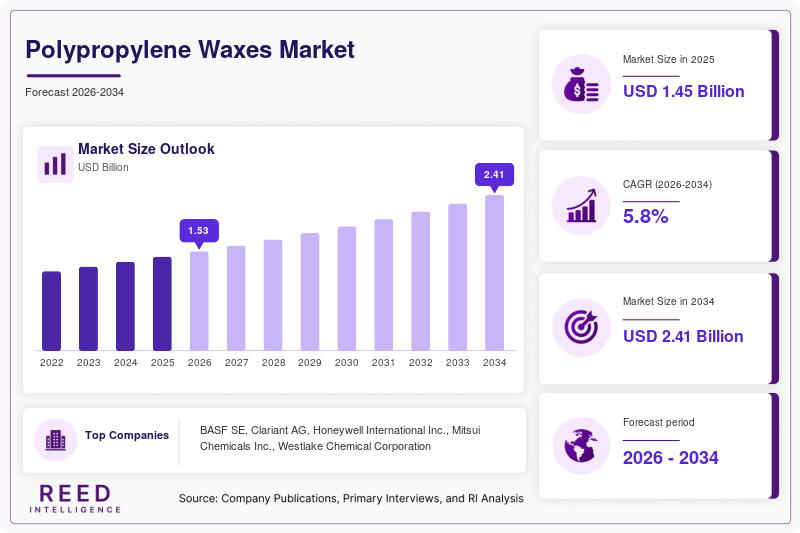
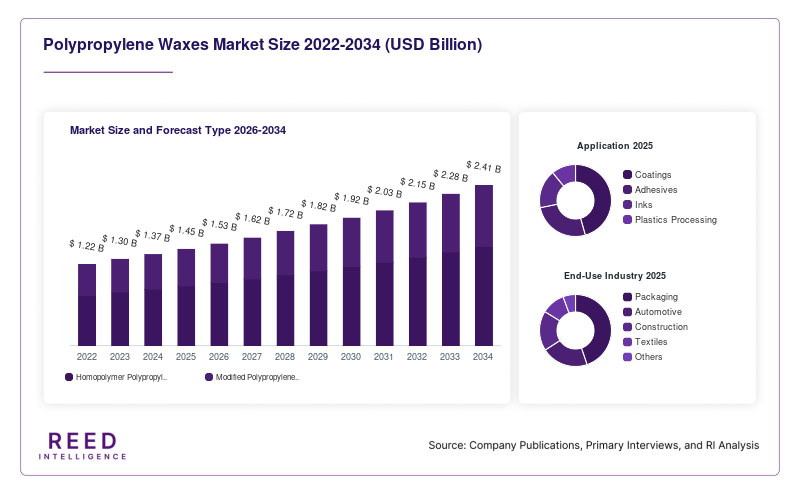
The global Polypropylene Waxes Market size is witnessing steady expansion driven by increasing applications across coatings, adhesives, plastics, and inks. In 2025, the market size is estimated at approximately USD 1.45 billion, and it is projected to reach around USD 1.58 billion in 2026. Over the forecast period from 2025 to 2034, the market is expected to grow at a compound annual growth rate (CAGR) of 5.8%, reaching nearly USD 2.45 billion by 2034. This growth trajectory reflects rising industrial consumption, technological improvements in polymer processing, and growing demand for high-performance additives.
Polypropylene waxes are widely used as dispersing agents, lubricants, and processing aids due to their excellent chemical resistance, low viscosity, and thermal stability. These properties make them essential in industries such as packaging, automotive, construction, and textiles. The increasing use of polypropylene waxes in environmentally friendly coatings and inks is also contributing to their demand. As sustainability becomes a key priority, manufacturers are focusing on low-VOC formulations, where polypropylene waxes play a critical role.
Key Highlights
- Market size projected to reach USD 2.45 billion by 2034
- CAGR of 5.8% from 2025 to 2034
- Strong demand from coatings, plastics, and packaging industries
- Increasing focus on sustainable and low-emission formulations
- Rapid growth in emerging markets driving consumption
Market Trends
Increasing Adoption of Sustainable and Eco-Friendly Formulations
The shift toward sustainable industrial practices is influencing the polypropylene waxes market significantly. Manufacturers are increasingly focusing on developing environmentally friendly wax formulations with reduced volatile organic compound (VOC) emissions. These waxes are being used in water-based coatings and inks, which are gaining traction due to regulatory pressures and consumer awareness. The demand for recyclable and biodegradable packaging materials is also contributing to the use of polypropylene waxes that support eco-friendly production processes. This trend is particularly strong in developed regions where stringent environmental regulations encourage the use of green additives. As sustainability becomes a core business strategy, companies are investing in research and development to create high-performance waxes with minimal environmental impact.
Rising Use in Advanced Polymer Processing Technologies
The growing complexity of polymer applications is driving the adoption of polypropylene waxes in advanced processing technologies. Industries are increasingly using these waxes to improve dispersion, reduce friction, and enhance processing efficiency in polymer compounding. The demand for lightweight and durable materials in automotive and aerospace sectors is accelerating this trend. Polypropylene waxes are also being used in 3D printing materials and engineered plastics, where precision and performance are critical. As manufacturers adopt automation and advanced extrusion techniques, the need for high-quality additives is increasing. This trend is expected to continue as industries prioritize efficiency, product quality, and innovation in polymer processing.
Market Drivers
Growth in Packaging and Plastics Industry
The rapid expansion of the global packaging and plastics industry is a major driver for the polypropylene waxes market. Polypropylene waxes are extensively used in plastic processing to improve surface properties, reduce friction, and enhance mold release. With the increasing demand for flexible and rigid packaging solutions, especially in food and beverage sectors, the need for high-performance additives is rising. The growth of e-commerce has further accelerated packaging demand, creating opportunities for polypropylene wax manufacturers. Additionally, the shift toward lightweight and durable packaging materials is increasing the use of polypropylene-based products. As a result, polypropylene waxes are becoming essential components in achieving the desired quality and performance in packaging applications.
Increasing Demand from Coatings and Adhesives Applications
Polypropylene waxes are widely used in coatings and adhesives due to their ability to improve scratch resistance, gloss, and durability. The growing construction and automotive industries are driving the demand for high-performance coatings, which in turn boosts the consumption of polypropylene waxes. These waxes are also used in hot melt adhesives, where they enhance viscosity control and bonding strength. The rise in infrastructure development and renovation activities is further supporting market growth. In addition, the increasing adoption of water-based coatings is creating new opportunities for polypropylene waxes, as they help improve dispersion and stability. This driver is expected to remain strong throughout the forecast period.
Market Restraint
Volatility in Raw Material Prices
One of the primary challenges faced by the polypropylene waxes market is the volatility in raw material prices. Polypropylene waxes are derived from petrochemical feedstocks, making them highly dependent on crude oil prices. Fluctuations in oil prices can significantly impact production costs and profit margins for manufacturers. This volatility creates uncertainty in pricing strategies and affects long-term supply contracts. For instance, sudden increases in crude oil prices can lead to higher costs for polypropylene wax production, which may be passed on to end users, reducing demand. Additionally, supply chain disruptions and geopolitical factors can further exacerbate price instability. This restraint poses a challenge for market growth, especially for small and medium-sized manufacturers who may struggle to absorb cost fluctuations.
Market Opportunities
Expansion in Emerging Economies
Emerging economies present significant growth opportunities for the polypropylene waxes market. Rapid industrialization, urbanization, and infrastructure development in countries across Asia Pacific, Latin America, and Africa are driving demand for plastics, coatings, and adhesives. These industries rely heavily on polypropylene waxes for improved performance and efficiency. Governments in these regions are investing in manufacturing and construction sectors, creating a favorable environment for market expansion. Additionally, the rising middle-class population and increasing consumer spending are boosting demand for packaged goods, further supporting market growth. As companies expand their presence in these regions, they can tap into new customer bases and increase market share.
Development of High-Performance Specialty Waxes
The growing demand for customized and high-performance materials is creating opportunities for the development of specialty polypropylene waxes. Manufacturers are focusing on producing waxes with specific properties such as enhanced thermal stability, improved compatibility, and superior dispersion. These specialty waxes are used in advanced applications such as engineering plastics, high-end coatings, and specialty inks. The increasing use of automation and precision manufacturing is driving the need for such tailored solutions. Companies that invest in research and development to create innovative products can gain a competitive edge in the market. This opportunity is expected to drive innovation and open new application areas for polypropylene waxes.
Segmental Analysis
By Type
The homopolymer polypropylene wax segment dominated the market in 2024, accounting for approximately 55% of the total share. These waxes are widely used due to their high crystallinity, excellent hardness, and superior thermal stability. They are commonly used in coatings, inks, and plastic processing applications where durability and performance are critical. The demand for homopolymer waxes is driven by their cost-effectiveness and versatility. Industries prefer these waxes for applications requiring consistent quality and performance. Additionally, their compatibility with various polymers makes them suitable for a wide range of applications, further supporting their dominance in the market.
The modified polypropylene wax segment is expected to be the fastest-growing, with a CAGR of 6.7% during the forecast period. These waxes are chemically modified to enhance properties such as adhesion, dispersion, and compatibility. The growing demand for high-performance materials in advanced applications is driving this segment. Modified waxes are increasingly used in specialty coatings, adhesives, and engineering plastics. Their ability to meet specific application requirements makes them highly desirable. As industries focus on innovation and product differentiation, the demand for modified polypropylene waxes is expected to rise significantly.
By Application
The coatings segment held the largest market share in 2024, accounting for around 40%. Polypropylene waxes are extensively used in coatings to improve scratch resistance, gloss, and durability. The growth of the construction and automotive industries is driving demand for high-performance coatings. These waxes also enhance the stability and dispersion of pigments, making them essential in coating formulations. The increasing adoption of water-based coatings is further supporting the growth of this segment. As industries prioritize quality and performance, the demand for polypropylene waxes in coatings is expected to remain strong.
The adhesives segment is projected to be the fastest-growing, with a CAGR of 6.3%. Polypropylene waxes are used in hot melt adhesives to improve viscosity control and bonding strength. The growth of the packaging and woodworking industries is driving demand for adhesives. These waxes help enhance the performance and efficiency of adhesive formulations. The increasing use of automated packaging systems is also contributing to the growth of this segment. As demand for high-performance adhesives increases, the use of polypropylene waxes is expected to rise.
By End-Use Industry
The packaging industry dominated the market in 2024, accounting for approximately 38% share. The increasing demand for flexible and rigid packaging solutions is driving the use of polypropylene waxes. These waxes improve the surface properties and durability of plastic packaging materials. The growth of e-commerce and changing consumer preferences are further supporting this segment. Packaging manufacturers are focusing on improving product quality and performance, which increases the demand for polypropylene waxes.
The automotive industry is expected to be the fastest-growing segment, with a CAGR of 6.5%. Polypropylene waxes are used in automotive coatings and plastic components to enhance durability and appearance. The demand for lightweight and high-performance materials is driving this segment. As the automotive industry adopts advanced materials and technologies, the use of polypropylene waxes is expected to increase. This growth is further supported by the rising production of vehicles in emerging markets.
Regional Analysis
North America
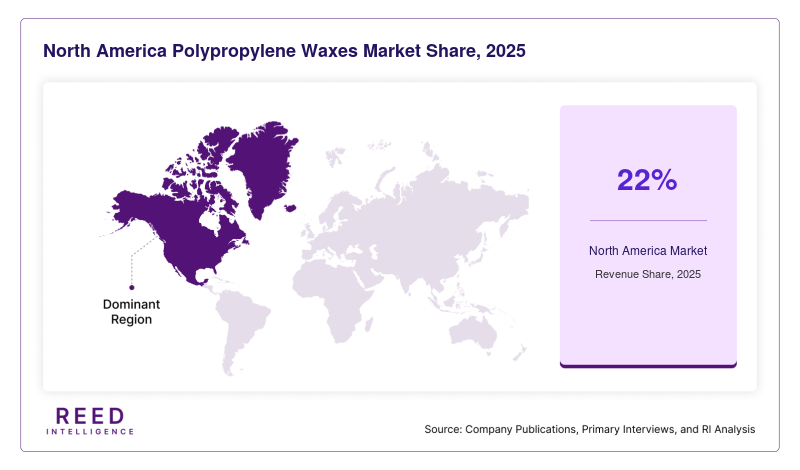
North America accounted for approximately 22% of the global polypropylene waxes market share in 2025 and is expected to grow at a CAGR of 5.2% during the forecast period. The region’s growth is supported by strong demand from the packaging, automotive, and coatings industries. The presence of established manufacturing infrastructure and technological advancements further contribute to market expansion. Increasing adoption of sustainable materials and strict environmental regulations are also influencing market dynamics.
The United States dominates the North American market due to its advanced industrial base and high consumption of plastics and coatings. A key growth factor in the region is the increasing use of polypropylene waxes in eco-friendly coatings and adhesives. The shift toward water-based formulations and low-emission products is driving demand for high-performance wax additives.
Europe
Europe held around 20% market share in 2025 and is projected to grow at a CAGR of 5.0% through 2034. The region is characterized by stringent environmental regulations and a strong focus on sustainability. These factors are driving the adoption of polypropylene waxes in green coatings and recyclable packaging materials. The presence of leading chemical manufacturers also supports market growth.
Germany is the dominant country in the European market, driven by its robust automotive and manufacturing sectors. A unique growth factor in the region is the increasing demand for high-performance coatings in the automotive industry. Polypropylene waxes are used to enhance durability and finish, making them essential in automotive applications.
Asia Pacific
Asia Pacific is the largest market, accounting for approximately 35% of global share in 2025, and is expected to grow at a CAGR of 6.5%. Rapid industrialization, urbanization, and population growth are driving demand for plastics, packaging, and coatings. The region’s strong manufacturing base and increasing investments in infrastructure are key growth drivers.
China leads the Asia Pacific market due to its extensive manufacturing sector and high demand for plastic products. A major growth factor is the expansion of the packaging industry, particularly in e-commerce. The increasing use of polypropylene waxes in flexible packaging applications is boosting market growth.
Middle East & Africa
The Middle East & Africa region accounted for around 10% market share in 2025 and is expected to grow at a CAGR of 5.6%. The region’s growth is driven by increasing construction activities and rising demand for coatings and adhesives. Investments in industrial development are also supporting market expansion.
Saudi Arabia is the dominant country in this region, supported by its strong petrochemical industry. A unique growth factor is the availability of raw materials, which supports local production of polypropylene waxes. This reduces dependency on imports and enhances market growth.
Latin America
Latin America held approximately 13% market share in 2025 and is projected to grow at a CAGR of 5.4%. The region’s growth is supported by increasing demand for packaging and construction materials. Economic development and rising consumer demand are key drivers.
Brazil dominates the Latin American market due to its large industrial base and growing packaging industry. A key growth factor is the increasing demand for flexible packaging solutions. Polypropylene waxes are widely used in these applications, driving market expansion.
Competitive Landscape
The polypropylene waxes market is moderately fragmented, with several global and regional players competing based on product quality, innovation, and pricing. The top five companies account for a significant share of the market, focusing on expanding their product portfolios and strengthening their distribution networks.
One of the leading players is a global chemical company that has established a strong presence through continuous innovation and strategic partnerships. The company focuses on developing high-performance waxes for advanced applications. A recent development includes the launch of a new range of modified polypropylene waxes designed for eco-friendly coatings. Other key players are also investing in research and development to enhance product performance and meet evolving industry requirements. Competitive strategies such as mergers, acquisitions, and collaborations are commonly adopted to strengthen market position.
Key Players List
- BASF SE
- Clariant AG
- Honeywell International Inc.
- Mitsui Chemicals Inc.
- Westlake Chemical Corporation
- Innospec Inc.
- Trecora Resources
- Euroceras Sp. z o.o.
- SCG Chemicals Co., Ltd.
- Lubrizol Corporation
- Sasol Limited
- Coschem Inc.
- Marcus Oil & Chemical
- Paramelt B.V.
- Baker Hughes Company
Recent Developments
- A leading manufacturer introduced a new line of low-VOC polypropylene waxes for sustainable coatings applications in 2024.
- A major chemical company expanded its production capacity in Asia Pacific to meet rising demand from the packaging industry.
- A global player announced a strategic partnership with a coatings manufacturer to develop high-performance wax-based additives.
Polypropylene Waxes Market Segments
Type
- Homopolymer Polypropylene Wax
- Modified Polypropylene Wax
Application
- Coatings
- Adhesives
- Inks
- Plastics Processing
End-Use Industry
- Packaging
- Automotive
- Construction
- Textiles
- Others
By Region
- North America
- Europe
- APAC
- Middle East and Africa
- LATAM