Polysorbate Market Size, Share & Demand Report By Type (Polysorbate 20, Polysorbate 40, Polysorbate 60, Polysorbate 80), By Application (Pharmaceuticals, Food & Beverage, Cosmetics & Personal Care, Industrial), By End-Use Industry (Food Industry, Healthcare & Biotechnology, Cosmetics Industry, Chemical Industry), By Region & Segment Forecasts, 2026–2034
USD 3950
Market Overview
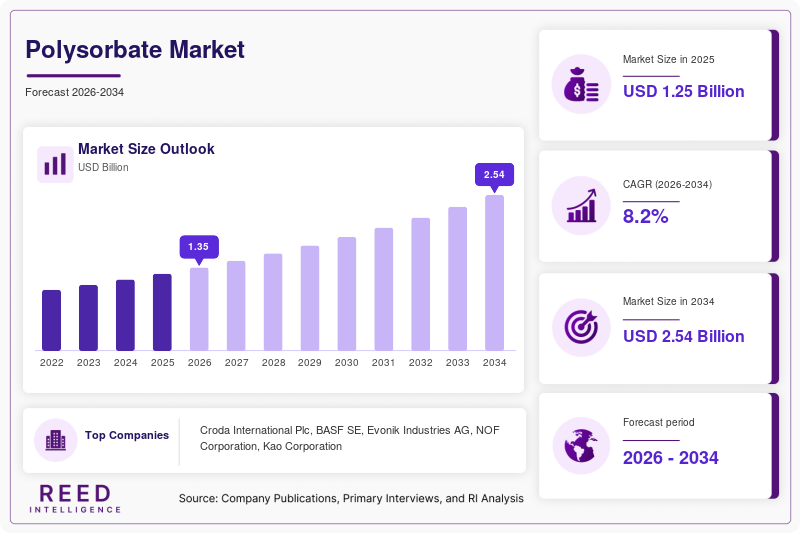
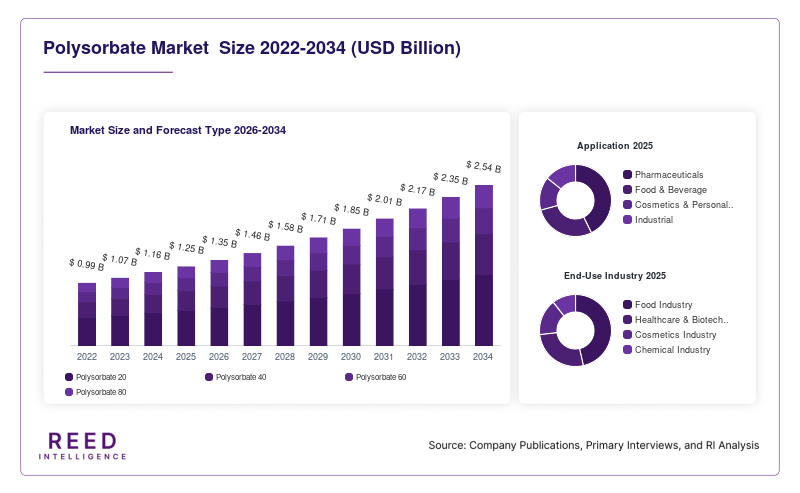
The global Polysorbate Market size was valued at approximately USD 1.25 billion in 2026 and is projected to reach USD 2.35 billion by 2034, expanding at a CAGR of 8.2% during the forecast period (2026–2034). Polysorbates are widely used as emulsifiers, stabilizers, and solubilizers across pharmaceutical, food, and cosmetic industries. Their ability to improve product consistency and shelf life has positioned them as a critical ingredient in multiple end-use sectors. The rising demand for processed food, coupled with increasing pharmaceutical production, continues to create a steady consumption base globally.
A key global factor supporting market growth is the expansion of biologics and injectable drug formulations. Polysorbates play a vital role in stabilizing protein-based drugs and preventing aggregation, which has become increasingly important with the growing pipeline of biosimilars and vaccines. This trend is especially evident in emerging economies, where healthcare infrastructure improvements are driving pharmaceutical manufacturing capacity.
Key Highlights
- North America dominated the market with a 35.1% share in 2025.
- Asia Pacific is expected to grow at the fastest CAGR of 9.6% during 2026–2034.
- By type, Polysorbate 80 accounted for the largest share of 42.8%.
- while Polysorbate 20 is projected to grow at a CAGR of 8.9%.
- By application, pharmaceuticals led with a 46.3% share, whereas cosmetics are expected to expand at a CAGR of 9.1%.
- The United States remained the dominant country, with market values of USD 420 million in 2024 and USD 455 million in 2025.
Market Trends
Increasing demand for clean-label and multifunctional ingredients
The shift toward clean-label products is influencing formulation strategies across food and personal care industries. Manufacturers are focusing on ingredients that offer multiple functional benefits, such as emulsification and stabilization, while maintaining compliance with regulatory standards. Polysorbates are increasingly being optimized to align with these demands, particularly in low-fat food formulations and premium skincare products. This trend is encouraging producers to refine manufacturing processes and enhance product purity. As consumer awareness grows, companies are also investing in transparency and labeling practices, further driving the adoption of high-quality polysorbate variants in global markets.
Growth of biologics and advanced drug delivery systems
The expansion of biologics has significantly increased the use of polysorbates in pharmaceutical applications. These compounds help maintain protein stability and improve drug efficacy in injectable formulations. With advancements in drug delivery technologies, including targeted therapies and sustained-release systems, the demand for reliable excipients has grown steadily. Polysorbates are being integrated into complex formulations that require consistent performance under varying conditions. This trend is further supported by rising investments in biotechnology and the increasing number of clinical trials focused on biologic drugs, creating long-term growth opportunities for the market.
Market Drivers
Expansion of the pharmaceutical and biotechnology sector
The rapid growth of the pharmaceutical and biotechnology industries is a primary driver of the Polysorbate Market. Increasing demand for vaccines, monoclonal antibodies, and biosimilars has led to higher consumption of stabilizing agents such as polysorbates. These compounds play a critical role in maintaining drug stability during storage and transportation. Additionally, regulatory emphasis on product safety and efficacy has encouraged manufacturers to adopt high-purity excipients. As pharmaceutical companies continue to expand production capacities and invest in research, the demand for polysorbates is expected to rise consistently across both developed and emerging markets.
Rising consumption of processed and convenience foods
The growing preference for ready-to-eat and packaged food products is driving the demand for emulsifiers and stabilizers. Polysorbates are widely used in bakery, dairy, and confectionery products to improve texture and extend shelf life. Urbanization and changing lifestyles have increased the consumption of convenience foods, particularly in developing economies. Food manufacturers are leveraging polysorbates to maintain product quality while meeting large-scale production requirements. This trend is further supported by the expansion of retail networks and e-commerce platforms, which are increasing the availability of processed food products globally.
Market Restraint
Regulatory scrutiny and concerns over ingredient safety
Despite their widespread use, polysorbates face regulatory scrutiny due to concerns about potential health effects and environmental impact. Regulatory agencies in various regions have established strict guidelines regarding permissible usage levels, particularly in food and pharmaceutical applications. Compliance with these regulations can increase production costs and limit market entry for smaller manufacturers. Additionally, growing consumer awareness about synthetic additives has led to a shift toward natural alternatives, which may hinder market growth. For example, some food producers are exploring plant-based emulsifiers to replace synthetic compounds, creating competitive pressure for polysorbate manufacturers.
Market Opportunities
Development of bio-based and sustainable alternatives
The increasing focus on sustainability presents significant opportunities for innovation in the Polysorbate Market. Manufacturers are exploring bio-based raw materials and environmentally friendly production processes to reduce their carbon footprint. The development of sustainable polysorbate variants can help companies align with regulatory requirements and consumer preferences. This shift is particularly relevant in Europe and North America, where environmental regulations are more stringent. Companies investing in green chemistry and renewable feedstocks are likely to gain a competitive advantage, as demand for eco-friendly ingredients continues to grow across industries.
Expansion in emerging markets and industrial applications
Emerging economies offer substantial growth opportunities due to rapid industrialization and increasing demand for consumer goods. The expansion of pharmaceutical manufacturing, food processing, and cosmetics production in regions such as Asia Pacific and Latin America is driving the need for polysorbates. Additionally, these compounds are finding new applications in industrial sectors, including lubricants and coatings. As local manufacturers scale up production and adopt advanced technologies, the demand for high-performance emulsifiers is expected to increase. This creates opportunities for global players to expand their presence and establish strategic partnerships in developing markets.
Segmental Analysis
By Type
Polysorbate 80 emerged as the dominant subsegment, accounting for approximately 42.8% of the market share in 2024. Its widespread use in pharmaceutical formulations, particularly in injectable drugs, has contributed to its leading position. Polysorbate 80 offers excellent solubilizing properties, making it suitable for stabilizing complex formulations. Additionally, its compatibility with a wide range of active ingredients has increased its adoption across multiple industries. The food and cosmetics sectors also utilize this variant for its emulsification capabilities, further supporting its market dominance.
Polysorbate 20 is expected to be the fastest-growing subsegment, with a projected CAGR of 8.9% during the forecast period. Its increasing use in personal care products, such as skincare and haircare formulations, is driving growth. The rising demand for mild and non-irritating ingredients has encouraged manufacturers to adopt Polysorbate 20 in cosmetic applications. Additionally, its effectiveness in flavor and fragrance solubilization has expanded its use in the food industry. This combination of factors is expected to support sustained growth for this subsegment.
By Application
The pharmaceutical segment dominated the market, holding a share of 46.3% in 2024. Polysorbates are essential in drug formulations, particularly for biologics and vaccines, where they help maintain stability and efficacy. The increasing prevalence of chronic diseases and the growing demand for advanced therapies have driven the expansion of this segment. Pharmaceutical companies are continuously investing in research and development, which has increased the need for high-quality excipients. This trend is expected to maintain the segment’s leading position over the forecast period.
The cosmetics segment is anticipated to grow at the fastest CAGR of 9.1% during the forecast period. The rising demand for skincare and personal care products is a key driver of this growth. Polysorbates are widely used in cosmetic formulations to improve texture and stability. Additionally, the increasing focus on premium and multifunctional products has encouraged manufacturers to incorporate advanced emulsifiers. The expansion of e-commerce and changing consumer preferences are further supporting the growth of this segment.
By End-Use Industry
The food and beverage industry held the largest share, accounting for approximately 38.7% in 2024. Polysorbates are widely used in bakery, dairy, and processed food products to enhance texture and extend shelf life. The growing demand for convenience foods and ready-to-eat meals has significantly increased the consumption of emulsifiers. Additionally, the expansion of the global food supply chain has created a steady demand for stable and high-quality ingredients, reinforcing the dominance of this segment.
The healthcare and biotechnology segment is expected to register the fastest growth, with a CAGR of 9.3% during the forecast period. The increasing focus on biologics and personalized medicine is driving demand for specialized excipients. Polysorbates play a critical role in maintaining the stability of protein-based drugs, making them essential in advanced therapies. As research in biotechnology continues to expand, the demand for high-performance ingredients is expected to rise, supporting the growth of this segment.
Regional Analysis
North America
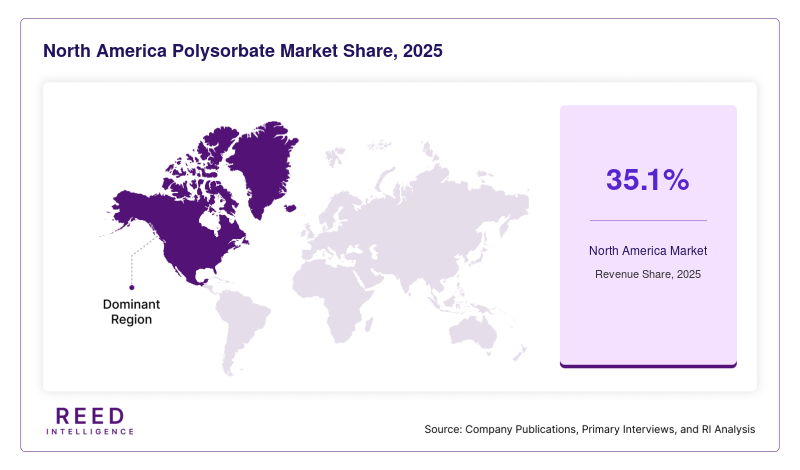
North America accounted for a significant share of the Polysorbate Market, holding approximately 35.1% in 2025. The region is expected to grow at a CAGR of 7.8% during the forecast period. Strong demand from the pharmaceutical and food industries continues to support market expansion. The presence of established manufacturers and advanced research facilities has contributed to the development of high-quality polysorbate products. Additionally, increasing investments in biotechnology and drug development are driving the adoption of specialized excipients across the region.
The United States dominates the North American market, driven by its well-developed healthcare infrastructure and robust pharmaceutical industry. A unique growth factor is the increasing number of biologics approvals, which require high-performance stabilizers. This trend is encouraging manufacturers to enhance production capabilities and invest in advanced formulation technologies, ensuring consistent demand for polysorbates.
Europe
Europe held a market share of approximately 27.4% in 2025 and is projected to grow at a CAGR of 7.6% through 2034. The region’s stringent regulatory framework ensures high product quality and safety standards, which has influenced the adoption of premium-grade polysorbates. The food and cosmetics industries are key contributors to market growth, with increasing demand for emulsifiers in processed foods and personal care products.
Germany remains the dominant country in the European market, supported by its strong manufacturing base and technological expertise. A unique growth factor is the region’s emphasis on sustainability, which is driving the development of eco-friendly polysorbate formulations. Companies are investing in green production processes to meet regulatory requirements and consumer expectations.
Asia Pacific
Asia Pacific is the fastest-growing region, with a projected CAGR of 9.6% during the forecast period and a market share of 24.3% in 2025. Rapid industrialization, urbanization, and population growth are key factors driving demand. The expansion of pharmaceutical manufacturing and food processing industries has significantly increased the consumption of polysorbates across the region.
China leads the Asia Pacific market, benefiting from large-scale production capacities and government support for industrial growth. A unique growth factor is the increasing domestic demand for healthcare products, which is encouraging local manufacturers to invest in advanced excipient production. This trend is expected to sustain long-term market growth.
Middle East & Africa
The Middle East & Africa region accounted for approximately 6.2% of the market in 2025 and is expected to grow at a CAGR of 7.1%. The region is witnessing gradual growth due to increasing investments in healthcare and food processing sectors. Rising urbanization and improving economic conditions are contributing to higher consumption of processed foods and pharmaceutical products.
Saudi Arabia is the dominant country in this region, driven by its expanding healthcare infrastructure and industrial diversification efforts. A unique growth factor is the government’s focus on local manufacturing, which is encouraging the establishment of pharmaceutical production facilities. This is expected to boost demand for polysorbates in the coming years.
Latin America
Latin America held a market share of around 7.0% in 2025 and is projected to grow at a CAGR of 7.4% during the forecast period. The region’s growth is supported by increasing demand for processed foods and personal care products. Economic development and improving distribution networks are enhancing market accessibility and product availability.
Brazil dominates the Latin American market, supported by its large consumer base and growing industrial sector. A unique growth factor is the expansion of the food and beverage industry, which relies heavily on emulsifiers for product stability. This trend is expected to drive steady demand for polysorbates across the region.
Competitive Landscape
The Polysorbate Market is moderately consolidated, with several global and regional players competing on product quality, pricing, and innovation. Leading companies are focusing on expanding production capacities and investing in research to develop advanced formulations. Strategic partnerships and mergers are also common, as companies aim to strengthen their market presence and enhance distribution networks.
Croda International Plc is recognized as a leading player in the market, driven by its strong product portfolio and focus on innovation. The company has recently expanded its manufacturing capabilities to meet the growing demand for pharmaceutical-grade polysorbates. Other key players are also investing in sustainable production processes and exploring new applications to maintain competitiveness. The market is expected to witness increased competition as new entrants focus on niche applications and emerging markets.
Key Players List
- Croda International Plc
- BASF SE
- Evonik Industries AG
- NOF Corporation
- Kao Corporation
- Clariant AG
- Lubrizol Corporation
- Stepan Company
- Solvay S.A.
- Lonza Group AG
- Vantage Specialty Chemicals
- Mohini Organics Pvt. Ltd.
- Gujarat Chemicals
- KLK OLEO
- Oxiteno
Recent Developments
- A major manufacturer expanded its production facility in Asia to increase supply capacity for pharmaceutical-grade polysorbates.
- A leading company introduced a bio-based polysorbate variant aimed at reducing environmental impact and meeting sustainability goals.
- Strategic collaboration between two industry players focused on developing high-purity excipients for advanced drug formulations.
Polysorbate Market Segments
Type
- Polysorbate 20
- Polysorbate 40
- Polysorbate 60
- Polysorbate 80
Application
- Pharmaceuticals
- Food & Beverage
- Cosmetics & Personal Care
- Industrial
End-Use Industry
- Food Industry
- Healthcare & Biotechnology
- Cosmetics Industry
- Chemical Industry
By Region
- North America
- Europe
- APAC
- Middle East and Africa
- LATAM