Portable Patient Isolation Market Size, Share & Demand Report By Product Type (Negative Pressure Isolation Units, Positive Pressure Isolation Units, Advanced Airborne Isolation Chambers), By Application (Emergency Medical Services Transport, Air Ambulance Transport, Disaster Response Operations), By End User (Hospitals and Healthcare Facilities, Emergency Medical Service Providers, Military and Defense Medical Units), By Region & Segment Forecasts, 2026–2034
USD 3950
Market Overview
The global Portable Patient Isolation Market size was valued at approximately USD 425 million in 2026 and is projected to reach USD 945 million by 2034, expanding at a CAGR of 10.5% during 2026–2034. The market continues to gain momentum due to increasing preparedness initiatives for infectious disease outbreaks, rising demand for safe patient transport systems, and growing investments in emergency healthcare infrastructure across developed and developing economies.
Portable patient isolation systems are specialized containment units designed to transport individuals with contagious diseases while minimizing exposure risks to healthcare personnel, emergency responders, and the public. These systems have become increasingly important across hospitals, military medical units, air ambulance services, disaster response agencies, and public health organizations. The need for rapid deployment of infection-control equipment has strengthened procurement activities among healthcare institutions seeking to improve readiness against future biological threats.
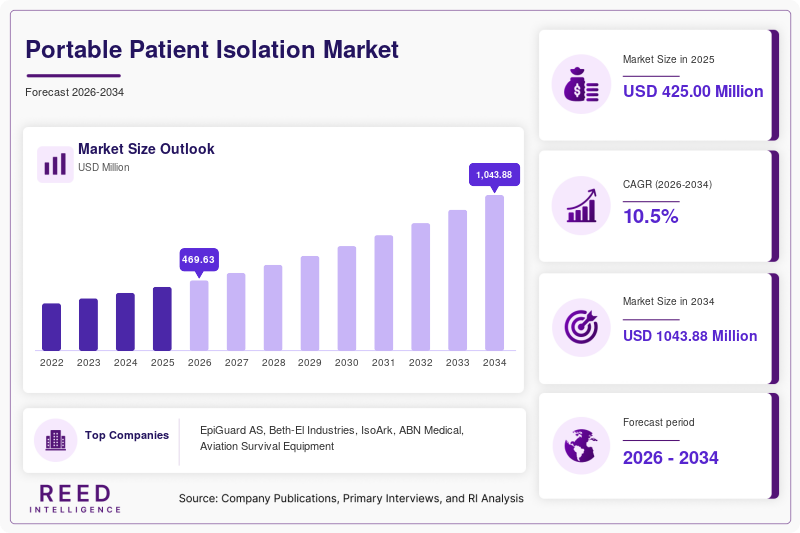
Key Highlights
- North America dominated the market with a 36.8% share in 2025.
- while Asia Pacific is expected to grow at the fastest CAGR of 11.9% during 2026–2034.
- By product type, Negative Pressure Isolation Units accounted for the largest share of 44.2%.
- while Advanced Airborne Isolation Chambers are projected to grow at a CAGR of 12.6%.
- By application, Hospital Patient Transport led with a 48.5% share.
- whereas Emergency Medical Services Transport is expected to expand at a CAGR of 12.1%.
- By end-user, Hospitals and Healthcare Facilities represented the largest share of 52.7%.
- while Military and Defense Medical Units are forecast to grow at a CAGR of 12.8%.
- The United States remained the dominant country, with market values of USD 148 million in 2024 and USD 162 million in 2025.
Market Trends
Growing Integration of Advanced Filtration and Monitoring Technologies
A notable trend shaping the Portable Patient Isolation Market is the integration of advanced filtration systems and digital monitoring capabilities. Manufacturers are increasingly incorporating high-efficiency particulate air filtration technologies, pressure monitoring sensors, and automated airflow management systems into portable isolation equipment. These innovations improve containment performance while reducing operational complexity for healthcare personnel. Enhanced monitoring features allow real-time tracking of internal pressure conditions, battery status, and filtration performance, supporting safer patient transport. As healthcare organizations prioritize infection control and operational efficiency, demand for technologically advanced isolation systems continues to increase. The trend is particularly visible among tertiary hospitals, emergency transport operators, and government health agencies seeking reliable containment solutions for both routine preparedness and emergency response scenarios.
Expansion of Preparedness Programs Across Civilian and Military Healthcare Networks
Another significant trend involves the expansion of preparedness programs among civilian healthcare systems and military medical organizations. Public health agencies are strengthening stockpiles of emergency medical equipment to improve readiness for future outbreaks, biological incidents, and humanitarian emergencies. Portable patient isolation systems are becoming standard components of emergency response inventories because of their flexibility and rapid deployment capabilities. Military healthcare networks are also increasing procurement to support field medical operations and international deployment missions. Growing collaboration between healthcare providers, emergency management agencies, and defense organizations is creating a broader customer base for manufacturers. This trend is expected to support long-term demand as preparedness planning becomes a permanent component of healthcare infrastructure development worldwide.
Market Drivers
Increasing Focus on Infection Prevention During Patient Transportation
The growing emphasis on infection prevention during patient transportation is a major factor driving market expansion. Healthcare providers face increasing pressure to reduce the risk of disease transmission during the movement of patients between healthcare facilities, airports, emergency response centers, and specialized treatment units. Portable patient isolation systems provide a practical solution by creating a controlled environment that protects both patients and healthcare personnel. The rising incidence of infectious diseases and heightened awareness of healthcare-associated infections have accelerated adoption. Governments and healthcare organizations are implementing stricter infection-control protocols, leading to increased procurement of portable containment solutions. The ability of these systems to support safe transport in both routine and emergency situations continues to strengthen market demand across multiple healthcare settings.
Rising Investments in Emergency Healthcare and Disaster Response Infrastructure
Growing investments in emergency healthcare infrastructure are creating favorable conditions for market growth. Governments worldwide are allocating substantial funding toward emergency preparedness programs, disaster response capabilities, and public health resilience initiatives. Portable patient isolation systems are increasingly included in emergency medical inventories because they support rapid deployment during outbreaks, natural disasters, and humanitarian crises. Healthcare facilities are also modernizing emergency departments and transport capabilities to improve readiness for high-risk situations. Funding programs supporting healthcare modernization and emergency response equipment procurement are encouraging adoption across hospitals, military units, and specialized transport providers. As healthcare systems seek to strengthen resilience against future biological threats, demand for portable isolation technologies is expected to remain strong throughout the forecast period.
Market Restraint
High Acquisition and Maintenance Costs Limiting Wider Adoption
One of the primary challenges affecting the Portable Patient Isolation Market is the relatively high cost associated with acquisition, maintenance, and periodic replacement of critical system components. Advanced portable isolation units incorporate specialized filtration technologies, durable containment materials, battery-powered airflow systems, and monitoring equipment, all of which contribute to elevated purchase prices. Smaller hospitals, regional healthcare facilities, and budget-constrained emergency service providers often face difficulties in allocating sufficient resources for large-scale procurement. In addition, ongoing maintenance requirements, replacement of filtration elements, staff training expenses, and periodic system testing increase total ownership costs. These financial considerations can delay purchasing decisions and limit adoption in cost-sensitive markets. For example, healthcare facilities in developing regions may prioritize essential diagnostic or treatment equipment over specialized containment solutions. Although long-term benefits related to infection control and preparedness are significant, cost barriers continue to represent a challenge for broader market penetration, particularly among smaller healthcare organizations with limited capital budgets.
Market Opportunities
Expansion of Healthcare Infrastructure in Emerging Economies
Emerging economies present substantial opportunities for market participants as governments invest heavily in healthcare infrastructure development. Countries across Asia Pacific, Latin America, and parts of the Middle East are expanding hospital networks, upgrading emergency medical services, and strengthening public health preparedness capabilities. These investments create favorable conditions for adoption of portable patient isolation systems. Increasing awareness of infection-control requirements and growing concern regarding cross-border disease transmission are encouraging healthcare authorities to incorporate advanced containment solutions into procurement programs. Manufacturers that establish regional partnerships, local distribution networks, and customized product offerings are likely to benefit from expanding demand. As healthcare modernization initiatives continue, emerging markets are expected to become important contributors to future industry revenue growth.
Development of Next-Generation Lightweight and Modular Systems
The development of lightweight, modular, and highly portable isolation systems represents another attractive growth opportunity. Healthcare providers increasingly seek solutions that can be rapidly deployed across diverse environments, including ambulances, aircraft, hospitals, and temporary treatment facilities. Manufacturers investing in advanced materials, compact designs, and modular architecture can address evolving customer requirements more effectively. Lightweight systems improve operational efficiency and reduce transportation challenges, while modular configurations enhance flexibility for different patient scenarios. Integration of digital monitoring, remote diagnostics, and energy-efficient power systems may further increase product value. These innovations are expected to attract healthcare organizations seeking modern containment technologies that balance performance, portability, and operational convenience, thereby creating new revenue opportunities for industry participants.
Segmental Analysis
By Product Type
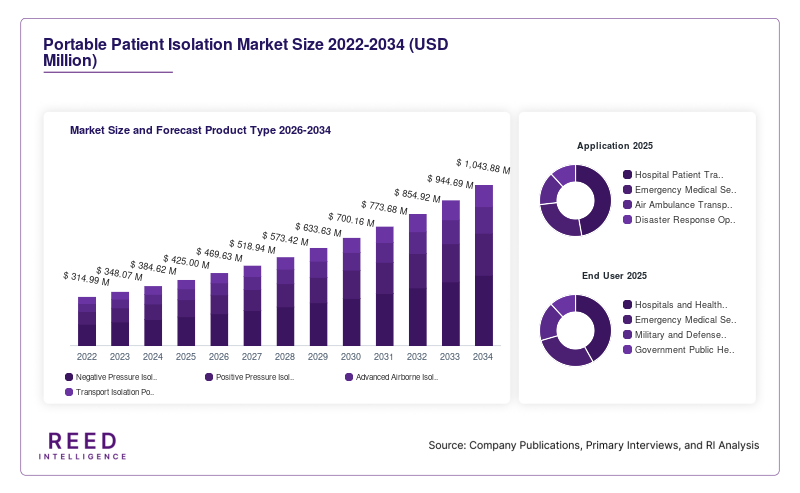
Negative Pressure Isolation Units dominated the product type segment and accounted for approximately 44.2% of the market share in 2024. These systems are widely utilized because they provide reliable containment of airborne pathogens while maintaining controlled airflow conditions. Hospitals, emergency transport providers, and public health agencies frequently deploy negative pressure units during infectious disease incidents. Their proven effectiveness in reducing transmission risks has contributed to strong market acceptance. Demand remains particularly high among healthcare institutions that prioritize comprehensive infection-control measures. The ability to support transportation through ambulances, aircraft, and hospital corridors further enhances their practical value. Continued investments in healthcare preparedness and infection prevention initiatives are expected to sustain the leadership position of this subsegment throughout the forecast period.
Advanced Airborne Isolation Chambers represent the fastest-growing subsegment and are projected to expand at a CAGR of 12.6% between 2026 and 2034. Growth is primarily driven by increasing demand for enhanced patient protection, advanced filtration capabilities, and improved operational efficiency. Manufacturers are introducing next-generation designs featuring lightweight construction, digital monitoring systems, and optimized airflow management. These innovations improve usability while maintaining high containment performance standards. Healthcare organizations increasingly favor advanced chambers because they offer greater flexibility across multiple transport environments. Growing emphasis on preparedness planning and emergency response readiness is also contributing to adoption. As technology continues to evolve, advanced airborne isolation chambers are expected to capture a larger share of future market revenues.
By Application
Hospital Patient Transport emerged as the dominant application segment, accounting for approximately 48.5% of total market revenue in 2024. Hospitals frequently require secure movement of infectious patients between departments, treatment areas, and specialized care units. Portable patient isolation systems support these requirements by minimizing exposure risks and maintaining controlled containment environments. Rising implementation of infection-control protocols has encouraged healthcare facilities to integrate these systems into routine operational procedures. Demand is particularly strong among large hospitals, tertiary care centers, and specialized infectious disease treatment facilities. The increasing focus on patient safety, staff protection, and regulatory compliance continues to strengthen the market position of hospital patient transport applications.
Emergency Medical Services Transport is expected to register the fastest growth rate, with a projected CAGR of 12.1% through 2034. Emergency responders increasingly require portable containment solutions capable of supporting rapid deployment during outbreaks, disasters, and critical patient transfers. Growing investments in emergency healthcare infrastructure and ambulance modernization programs are creating favorable conditions for adoption. Portable isolation technologies enhance responder safety while enabling effective patient management during transportation. Public health agencies are also incorporating these systems into emergency preparedness inventories to improve readiness for future health crises. Rising demand for rapid-response medical capabilities and enhanced infection-control measures is expected to accelerate growth within this application segment.
By End User
Hospitals and Healthcare Facilities held the largest share of the Portable Patient Isolation Market in 2024, representing approximately 52.7% of total revenue. These institutions are primary users of isolation systems due to their responsibility for managing infectious patients and maintaining safe healthcare environments. Hospitals increasingly invest in specialized containment equipment to strengthen infection-control capabilities and comply with evolving healthcare standards. The growing prevalence of infectious disease threats has further encouraged procurement activities. Large healthcare networks often maintain dedicated inventories of portable isolation systems to support emergency preparedness initiatives. Continuous investments in healthcare infrastructure and patient safety programs are expected to reinforce the dominance of this end-user category throughout the forecast period.
Military and Defense Medical Units are projected to be the fastest-growing end-user subsegment, expanding at a CAGR of 12.8% during 2026–2034. Defense organizations increasingly recognize the importance of advanced containment solutions for field operations, humanitarian missions, and international deployments. Portable isolation systems provide essential capabilities for managing infectious disease risks in challenging operational environments. Rising defense healthcare budgets and growing emphasis on force health protection are supporting procurement activities. Military agencies also value the portability and flexibility of these systems for rapid deployment scenarios. As defense organizations continue strengthening medical preparedness strategies, demand from military and defense medical units is expected to increase significantly.
Regional Analysis
North America
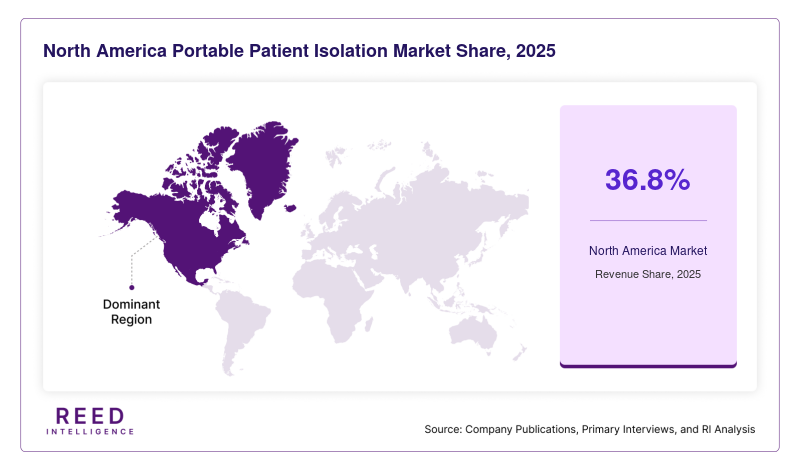
North America accounted for approximately 36.8% of the global Portable Patient Isolation Market in 2025, making it the largest regional market. The region benefits from advanced healthcare infrastructure, strong emergency response capabilities, and substantial public health investments. Government agencies and healthcare providers continue to strengthen preparedness strategies, supporting steady demand for portable isolation technologies. The regional market is projected to expand at a CAGR of 9.8% through 2034 as healthcare systems prioritize infection prevention and emergency readiness.
The United States remains the dominant country within the region due to significant healthcare spending and extensive adoption of advanced medical technologies. A unique growth factor is the presence of established federal preparedness programs that maintain strategic inventories of emergency medical equipment. Continuous investment in disaster response capabilities and hospital preparedness initiatives supports sustained procurement activity across healthcare institutions and emergency service organizations.
Europe
Europe represented approximately 28.6% of global market revenue in 2025 and continues to demonstrate stable growth prospects. Strong regulatory frameworks related to healthcare safety and infection control support market expansion across the region. Healthcare providers increasingly invest in specialized containment solutions to enhance preparedness for infectious disease events. The market is forecast to register a CAGR of 9.6% during the assessment period, supported by modernization initiatives across healthcare systems.
Germany leads the European market due to its advanced healthcare infrastructure and significant investments in medical preparedness programs. A unique growth factor is the region's emphasis on cross-border healthcare coordination and emergency response collaboration. These initiatives encourage procurement of standardized containment technologies that can be deployed across multiple healthcare networks and emergency transport systems.
Asia Pacific
Asia Pacific held approximately 22.4% of the global market in 2025 and is expected to record the fastest growth rate during the forecast period. Rapid healthcare infrastructure development, increasing healthcare expenditure, and expanding emergency response capabilities contribute to regional demand. Governments across the region are investing in preparedness measures aimed at strengthening resilience against infectious disease outbreaks. The market is projected to expand at a CAGR of 11.9% through 2034.
China remains the dominant country within Asia Pacific, supported by extensive healthcare investments and growing focus on public health preparedness. A unique growth factor is the rapid expansion of healthcare infrastructure in both urban and secondary cities. Increasing procurement of emergency medical equipment by hospitals and public health agencies is creating substantial opportunities for portable patient isolation system manufacturers operating in the region.
Middle East & Africa
The Middle East & Africa accounted for approximately 6.1% of global market revenue in 2025. Although relatively smaller in size, the region is witnessing gradual adoption of advanced healthcare technologies and emergency preparedness equipment. Governments are increasing investments in healthcare modernization projects aimed at improving service quality and emergency response capabilities. The regional market is anticipated to grow at a CAGR of 10.3% during the forecast period.
Saudi Arabia represents the leading country market due to ongoing healthcare transformation programs and significant investments in medical infrastructure. A unique growth factor is the growing emphasis on large-scale public event preparedness and emergency healthcare planning. These initiatives encourage healthcare providers and government agencies to strengthen medical response capabilities through procurement of advanced containment and patient transport solutions.
Latin America
Latin America captured approximately 6.1% of the global Portable Patient Isolation Market in 2025. Market growth is supported by improving healthcare infrastructure and increasing awareness of infection prevention practices. Governments and healthcare institutions are gradually enhancing preparedness capabilities to address future public health emergencies. The regional market is expected to register a CAGR of 10.1% through 2034 as healthcare modernization efforts continue.
Brazil remains the dominant country within the region owing to its large healthcare sector and expanding investment in emergency medical services. A unique growth factor is the increasing focus on strengthening healthcare access across geographically diverse regions. Portable isolation systems provide practical solutions for safe patient transportation across remote locations, supporting growing demand among healthcare providers and emergency response organizations.
Competitive Landscape
The Portable Patient Isolation Market is moderately consolidated, with several established manufacturers competing through product innovation, strategic partnerships, and geographic expansion initiatives. Market participants focus on enhancing filtration performance, reducing equipment weight, and improving operational efficiency to strengthen competitive positioning.
Among leading companies, EpiGuard AS maintains a strong market presence due to its extensive product portfolio and established relationships with healthcare organizations and emergency response agencies. The company continues to invest in advanced containment technologies designed for both civilian and military applications.
Other significant participants include Beth-El Industries, IsoArk, ABN Medical, and Aviation Survival Equipment. These companies compete by developing specialized transport isolation solutions tailored for hospitals, ambulance operators, air medical services, and defense organizations.
A notable recent development involved the introduction of a next-generation lightweight isolation chamber featuring enhanced filtration efficiency and integrated digital monitoring capabilities. Similar product launches across the industry highlight the growing emphasis on technology-driven differentiation. Strategic collaborations with healthcare institutions and government agencies also remain common as manufacturers seek to expand market reach and strengthen long-term revenue opportunities.
Key Players
- EpiGuard AS
- Beth-El Industries
- IsoArk
- ABN Medical
- Aviation Survival Equipment
- Bioseal Technologies
- TSE Industries
- HDT Global
- Cristanini S.p.A.
- Bluedot Medical
- EGO Zlin
- MediSafe International
- Envair Technology
- Barrier Isolation Systems
- Patient Isolation Systems Ltd.
Recent Developments
- EpiGuard AS introduced an upgraded portable isolation transport system with enhanced airflow management and extended battery performance for long-duration patient transfers.
- Beth-El Industries expanded its emergency medical containment portfolio through the launch of a lightweight isolation chamber designed for ambulance and helicopter transport operations.
- IsoArk announced a strategic collaboration with healthcare preparedness organizations to support deployment of advanced containment systems for emergency response programs.
- HDT Global expanded manufacturing capacity to address increasing demand from defense and emergency healthcare customers.
- ABN Medical introduced a modular patient isolation platform featuring improved portability and simplified maintenance requirements
Portable Patient Isolation Market Segments
Product Type
- Negative Pressure Isolation Units
- Positive Pressure Isolation Units
- Advanced Airborne Isolation Chambers
- Transport Isolation Pods
Application
- Hospital Patient Transport
- Emergency Medical Services Transport
- Air Ambulance Transport
- Disaster Response Operations
End User
- Hospitals and Healthcare Facilities
- Emergency Medical Service Providers
- Military and Defense Medical Units
- Government Public Health Agencies
By Region
- North America
- Europe
- APAC
- Middle East and Africa
- LATAM