Potassium Lactate Market Size, Share & Demand Report By Type (Liquid Potassium Lactate, Powder Potassium Lactate), By Application (Food & Beverage, Pharmaceuticals, Personal Care), By End-Use Industry (Food Processing, Healthcare, Cosmetics & Personal Care), By Region & Segment Forecasts, 2025–2034
USD 3950
Market Overview
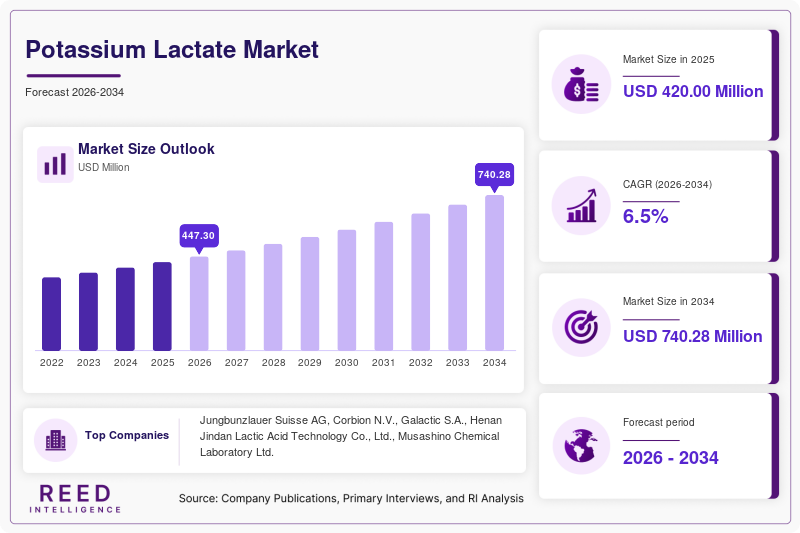
The Potassium Lactate Market size is estimated at USD 420 million, rising to approximately USD 445 million in 2026. Over the forecast period from 2025 to 2034, the market is projected to reach USD 780 million, growing at a compound annual growth rate (CAGR) of 6.5%. This consistent growth trajectory reflects the rising demand for safe, multifunctional additives that meet both regulatory and consumer expectations.
One of the primary growth factors is the rising demand for natural and clean-label food ingredients. Potassium lactate is widely used as a preservative and antimicrobial agent in processed meats, ready-to-eat meals, and dairy products. As consumers become more health-conscious, manufacturers are shifting away from synthetic additives toward safer, naturally derived alternatives. This transition is expected to accelerate demand across developed and emerging markets.
Key Highlights
- The Potassium Lactate Market is projected to grow from USD 420 million in 2025 to USD 780 million by 2034. This steady expansion reflects increasing demand across multiple industries and consistent adoption in global markets.
- The market is expected to register a CAGR of 6.5% during the forecast period. This growth rate indicates stable long-term development supported by rising industrial applications and consumer demand.
- Strong demand from food preservation and clean-label product segments continues to drive market growth. Manufacturers are increasingly shifting toward safer, natural additives to meet regulatory and consumer expectations.
- Applications in pharmaceuticals and personal care industries are expanding steadily. Potassium lactate is gaining traction due to its multifunctional properties, including pH regulation and moisturizing benefits.
Market Trends
Rising Adoption of Clean-Label and Natural Preservatives
The shift toward clean-label products is a defining trend in the Potassium Lactate Market. Consumers are increasingly scrutinizing ingredient labels and preferring products with recognizable and natural components. Potassium lactate, derived from lactic acid fermentation, aligns well with this demand. Food manufacturers are replacing synthetic preservatives with potassium lactate to enhance product appeal without compromising safety or shelf life. This trend is particularly evident in developed markets where regulatory bodies and consumers emphasize transparency and product integrity. As a result, manufacturers are reformulating their offerings to include potassium lactate, thereby boosting its adoption across multiple food categories.
Expansion of Functional Food and Beverage Applications
Another notable trend is the growing use of potassium lactate in functional foods and beverages. As consumers seek products that offer additional health benefits, manufacturers are incorporating ingredients that support hydration, electrolyte balance, and digestive health. Potassium lactate serves as an electrolyte source and pH stabilizer, making it suitable for sports drinks, fortified beverages, and dietary supplements. This trend is gaining momentum in regions with increasing health awareness and fitness culture. The integration of potassium lactate into innovative product formulations is expected to create new growth avenues and diversify its application landscape.
Market Drivers
Growth of the Processed Food Industry
The rapid expansion of the processed food industry is a key driver for the Potassium Lactate Market. Urbanization, busy lifestyles, and rising disposable incomes have increased the demand for ready-to-eat and convenience foods. These products require effective preservation solutions to maintain quality and safety during storage and transportation. Potassium lactate is widely used due to its antimicrobial properties and ability to enhance shelf life without altering taste. Food manufacturers rely on this compound to meet regulatory standards and reduce spoilage. As the global processed food sector continues to expand, the demand for potassium lactate is expected to rise accordingly.
Increasing Demand for Food Safety and Shelf-Life Extension
Food safety concerns are driving the adoption of potassium lactate across the food industry. With stricter regulations and heightened awareness of foodborne illnesses, manufacturers are prioritizing ingredients that ensure product safety. Potassium lactate inhibits the growth of harmful bacteria, making it an essential component in meat and poultry processing. Its effectiveness in extending shelf life also reduces food waste, which is a growing concern globally. This dual benefit of safety and sustainability is encouraging manufacturers to incorporate potassium lactate into their formulations, thereby supporting market growth.
Market Restraint
Fluctuating Raw Material Prices and Production Costs
One of the primary restraints affecting the Potassium Lactate Market is the volatility in raw material prices and production costs. Potassium lactate is derived from lactic acid, which in turn is produced through fermentation processes involving agricultural feedstocks such as corn or sugar. Fluctuations in agricultural output, climate conditions, and supply chain disruptions can significantly impact raw material availability and pricing. This variability creates challenges for manufacturers in maintaining consistent production costs and profit margins.
Additionally, the fermentation and purification processes required to produce high-quality potassium lactate involve specialized equipment and energy-intensive operations. Smaller manufacturers may find it difficult to compete due to high capital investment requirements. For example, during periods of raw material shortages, companies may need to adjust pricing strategies or reduce production volumes, which can affect market stability. This restraint may limit the growth potential of the market, particularly in cost-sensitive regions.
Market Opportunities
Growth in Emerging Markets
Emerging economies present significant growth opportunities for the Potassium Lactate Market. Rapid urbanization, increasing population, and changing dietary habits are driving demand for processed and packaged foods in regions such as Asia Pacific and Latin America. As consumers in these regions adopt modern lifestyles, the need for food preservation solutions is increasing. Potassium lactate offers an effective and safe option for extending shelf life, making it attractive for local manufacturers. Additionally, improving regulatory frameworks and rising awareness of food safety standards are expected to support market expansion in these regions.
Innovation in Pharmaceutical and Personal Care Applications
The expanding use of potassium lactate in pharmaceutical and personal care applications presents another promising opportunity. In the pharmaceutical sector, it is used in intravenous solutions and electrolyte formulations, supporting patient hydration and recovery. In personal care products, potassium lactate acts as a humectant and pH regulator, enhancing skin hydration and product stability. As demand for multifunctional and sustainable ingredients grows, manufacturers are investing in research and development to explore new applications. This innovation is expected to create additional revenue streams and strengthen the market’s growth outlook.
Segmental Analysis
By Type
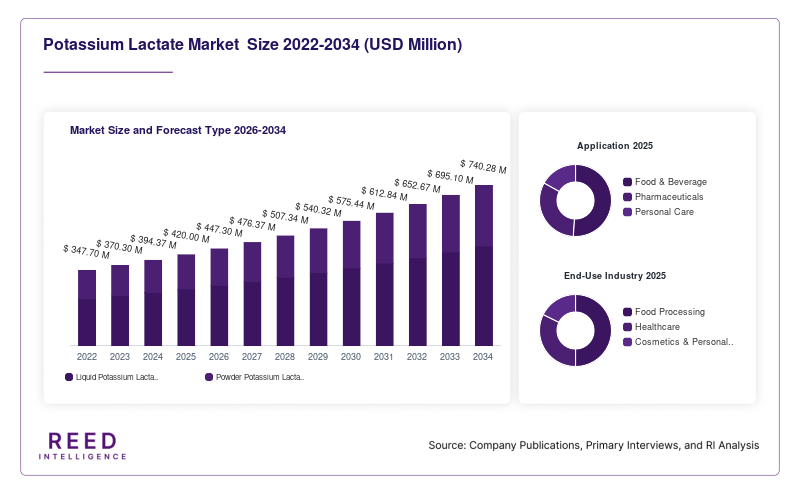
The liquid potassium lactate segment dominated the market in 2024, accounting for approximately 65% of the total share. Its widespread use in food processing applications is a key factor contributing to its dominance. Liquid formulations are easy to incorporate into various food products, providing uniform distribution and effective preservation. They are commonly used in meat processing, dairy products, and ready-to-eat meals. The convenience and efficiency offered by liquid potassium lactate make it a preferred choice among manufacturers, supporting its strong market position.
The powder potassium lactate segment is expected to be the fastest-growing, with a CAGR of 7.2% during the forecast period. This growth is driven by its increasing use in dry food products and dietary supplements. Powder formulations offer longer shelf life and ease of storage, making them suitable for various applications. The rising demand for functional foods and supplements is further supporting the growth of this segment.
By Application
The food and beverage segment held the largest share in 2024, accounting for nearly 70% of the market. Potassium lactate is widely used as a preservative and flavor enhancer in processed foods. Its ability to inhibit microbial growth and extend shelf life makes it essential in meat, poultry, and dairy products. The growing demand for convenience foods is further driving the adoption of potassium lactate in this segment.
The pharmaceutical segment is expected to grow at the fastest rate, with a CAGR of 6.8%. This growth is driven by the increasing use of potassium lactate in medical formulations and electrolyte solutions. Its role in maintaining fluid balance and supporting patient recovery is contributing to its growing demand in the healthcare sector.
By End-Use
The food processing industry dominated the market in 2024, accounting for over 60% of total revenue. The widespread use of potassium lactate in preserving processed foods and ensuring safety standards is a key factor driving this segment. The increasing demand for packaged and ready-to-eat foods is further supporting growth.
The personal care industry is projected to be the fastest-growing segment, with a CAGR of 7.0%. This growth is driven by the rising demand for skincare and cosmetic products that use natural and multifunctional ingredients. Potassium lactate’s moisturizing and pH-regulating properties make it a valuable component in personal care formulations.
Regional Analysis
North America
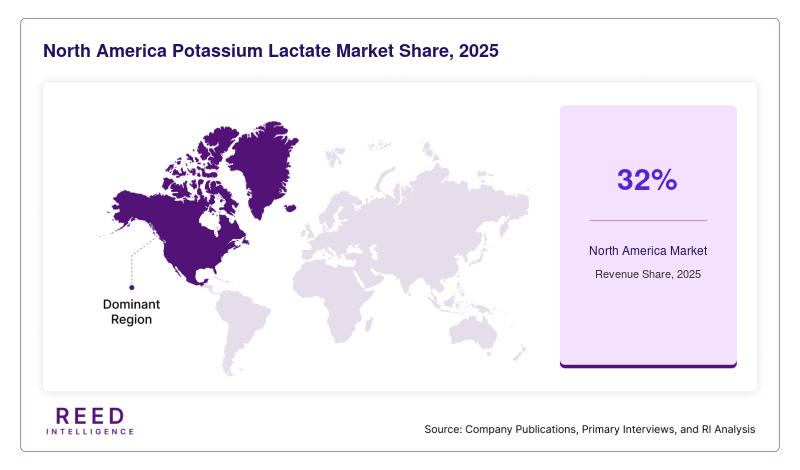
North America held a significant share of the Potassium Lactate Market in 2025, accounting for approximately 32% of global revenue. The region is expected to grow at a CAGR of 5.8% during the forecast period. Strong demand from the processed food industry and stringent food safety regulations are key factors driving market growth. The presence of established food processing companies and advanced distribution networks further supports market expansion across the region.
The United States dominates the regional market due to its well-developed food and beverage industry. A unique growth factor is the increasing adoption of clean-label products, which is encouraging manufacturers to replace synthetic preservatives with potassium lactate. This shift is supported by consumer awareness and regulatory guidelines, making the country a major contributor to regional growth.
Europe
Europe accounted for around 25% of the global market share in 2025 and is projected to grow at a CAGR of 5.5% through 2034. The region’s strong regulatory framework and emphasis on food quality and safety are key drivers. Increasing demand for organic and natural food products is also contributing to market growth.
Germany leads the European market due to its robust food processing sector. A unique growth factor is the region’s focus on sustainability and environmentally friendly production methods. This has led to increased adoption of bio-based ingredients such as potassium lactate, supporting market expansion.
Asia Pacific
Asia Pacific is the fastest-growing region, with a market share of 28% in 2025 and a projected CAGR of 7.5%. Rapid urbanization, population growth, and rising disposable incomes are driving demand for processed foods and beverages. The region’s expanding manufacturing base further supports market growth.
China dominates the Asia Pacific market due to its large-scale food production industry. A unique growth factor is the increasing demand for convenience foods among urban consumers. This trend is driving the adoption of effective preservatives like potassium lactate, boosting regional growth.
Middle East & Africa
The Middle East & Africa region held a market share of approximately 8% in 2025 and is expected to grow at a CAGR of 5.2%. The region is witnessing gradual growth due to increasing investments in food processing and infrastructure development. Rising awareness of food safety is also contributing to market expansion.
Saudi Arabia is a key contributor to the regional market. A unique growth factor is the increasing reliance on imported and packaged foods, which require effective preservation solutions. This is driving demand for potassium lactate in the region.
Latin America
Latin America accounted for around 7% of the global market share in 2025 and is projected to grow at a CAGR of 5.9%. The region’s growing food processing industry and increasing consumer demand for packaged foods are key growth drivers.
Brazil dominates the regional market due to its strong agricultural base and expanding food industry. A unique growth factor is the rising export of processed food products, which requires extended shelf life and quality maintenance, thereby increasing the use of potassium lactate.
Competitive Landscape
The Potassium Lactate Market is moderately consolidated, with several key players competing on product quality, pricing, and innovation. Leading companies are focusing on expanding their product portfolios and enhancing production capabilities to meet growing demand. Strategic partnerships, mergers, and acquisitions are common strategies used to strengthen market presence.
A leading player in the market is Jungbunzlauer Suisse AG, known for its extensive range of bio-based ingredients. The company has recently invested in expanding its production capacity to meet increasing demand for potassium lactate. Other major players are also focusing on research and development to introduce advanced formulations and improve product performance. The competitive landscape is characterized by continuous innovation and efforts to meet evolving consumer and regulatory requirements.
Key Players
- Jungbunzlauer Suisse AG
- Corbion N.V.
- Galactic S.A.
- Henan Jindan Lactic Acid Technology Co., Ltd.
- Musashino Chemical Laboratory Ltd.
- Foodchem International Corporation
- Fengchen Group Co., Ltd.
- Shandong Baisheng Biotechnology Co., Ltd.
- Vigon International LLC
- Parchem Fine & Specialty Chemicals
- Spectrum Chemical Manufacturing Corp.
- Merck KGaA
- Tokyo Chemical Industry Co., Ltd.
- Dr. Paul Lohmann GmbH & Co. KGaA
- Hawkins Inc.
Recent Developments
- In 2024, Jungbunzlauer expanded its production facility to increase potassium lactate output and meet rising global demand.
- In 2023, Corbion N.V. introduced a new range of clean-label preservation solutions incorporating potassium lactate for the food industry.
- In 2024, Galactic S.A. invested in research and development to enhance the functionality of potassium lactate in pharmaceutical applications.
Potassium Lactate Market Segments
Type
- Liquid Potassium Lactate
- Powder Potassium Lactate
Application
- Food & Beverage
- Pharmaceuticals
- Personal Care
End-Use Industry
- Food Processing
- Healthcare
- Cosmetics & Personal Care
By Region
- North America
- Europe
- APAC
- Middle East and Africa
- LATAM