Povidone Iodine Market Size, Share, Demand Report By Product Form (Solutions, Ointments, Scrubs, Swabs & Wipes), By Application (Surgical Antisepsis, Wound Care, Skin Disinfection, Veterinary Use), By End-Use (Hospitals, Clinics, Home Healthcare, Veterinary Clinics), By Region & Segment Forecasts, 2026–2034
USD 3950
Market Overview
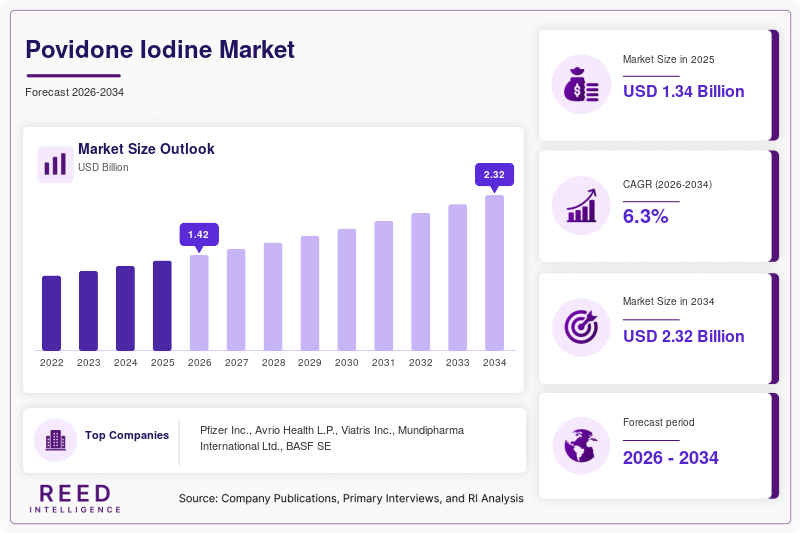
The Povidone Iodine Market size is projected to reach USD 1.42 billion in 2026 and is expected to attain USD 2.31 billion by 2034, expanding at a CAGR of 6.3% during the forecast period (2026–2034). The market growth is primarily supported by the increasing reliance on broad-spectrum antiseptic agents across healthcare facilities, particularly in infection prevention protocols and surgical care hygiene practices. Rising surgical volumes, expansion of hospital infrastructure in emerging economies, and heightened awareness regarding hospital-acquired infections have collectively strengthened demand for povidone iodine-based formulations.
A key global factor supporting market expansion is the sustained emphasis on infection control standards in healthcare systems worldwide. Regulatory bodies and health organizations continue to reinforce antiseptic usage in pre-operative and post-operative procedures, thereby encouraging consistent adoption of povidone iodine solutions, scrubs, and ointments.
Key Highlights
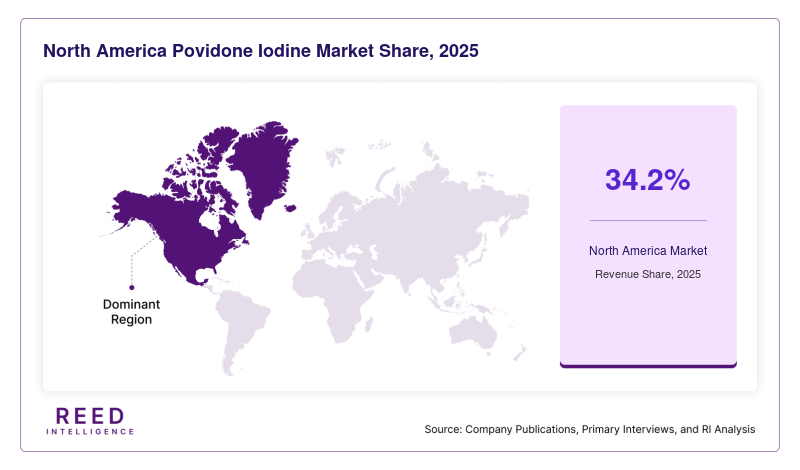
- North America dominated the market with a 34.2% share in 2025.
- Asia Pacific is expected to grow at the fastest CAGR of 11.2% during 2026–2034.
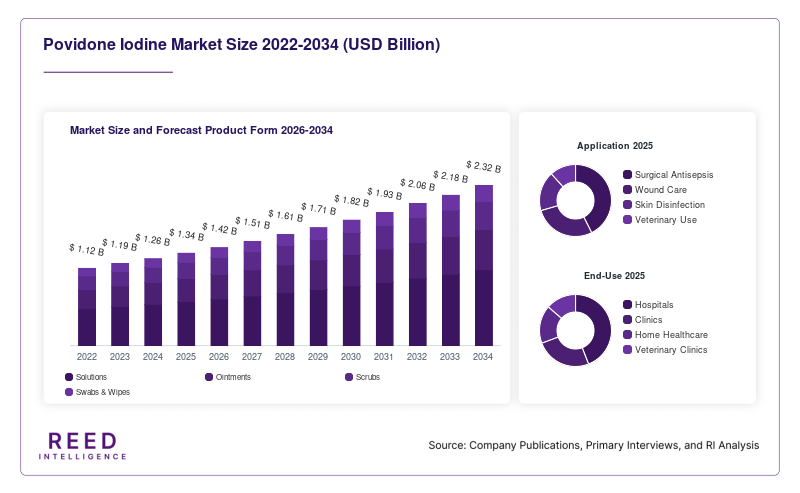
- By product form, solutions accounted for the largest share of 41.6%, while ointments are projected to grow at a CAGR of 10.9%.
- By application, surgical antisepsis led with a 39.8% share, whereas wound care applications are expected to expand at a CAGR of 11.5%.
- The United States remained the dominant country, with market values of USD 510 million in 2024 and USD 560 million in 2025.
Market Trends
Expansion of Surgical and Wound Care Applications
The Povidone Iodine Market is witnessing a consistent expansion in surgical and wound care applications across hospitals and ambulatory surgical centers. The compound’s broad-spectrum antimicrobial properties make it suitable for pre-surgical skin preparation and post-operative wound management. Increasing surgical procedures globally, especially orthopedic, cardiovascular, and general surgeries, has reinforced its usage. Additionally, rising cases of chronic wounds such as diabetic foot ulcers and pressure injuries have further supported demand. Healthcare providers continue to integrate povidone iodine into standardized wound care protocols due to its affordability and effectiveness against bacteria, fungi, and viruses, making it a reliable antiseptic solution in clinical settings.
Growing Preference for Over-the-Counter Antiseptic Products
Another notable trend in the Povidone Iodine Market is the rising availability and consumption of over-the-counter antiseptic formulations. Retail pharmacies and online healthcare platforms are increasingly offering povidone iodine solutions in consumer-friendly packaging for minor cuts, burns, and skin infections. This trend is supported by growing self-care awareness and increasing healthcare accessibility in urban and semi-urban regions. Manufacturers are focusing on diversified packaging formats such as sprays, gels, and wipes to enhance convenience. The growing inclination toward home-based first-aid treatments, especially after global health awareness initiatives, continues to expand the consumer base beyond institutional healthcare settings.
Market Drivers
Rising Incidence of Hospital-Acquired Infections
The increasing prevalence of hospital-acquired infections (HAIs) is a major factor driving the Povidone Iodine Market. Healthcare facilities are under continuous pressure to reduce infection rates, which has led to widespread adoption of effective antiseptic solutions. Povidone iodine is widely used for pre-operative skin disinfection, catheter site care, and surgical hand scrubs due to its proven antimicrobial efficacy. As healthcare systems focus on improving patient safety outcomes, infection control protocols are being strictly enforced. This has led to consistent procurement of povidone iodine-based products across hospitals, clinics, and diagnostic centers globally.
Expansion of Healthcare Infrastructure in Emerging Economies
The rapid expansion of healthcare infrastructure in developing regions is significantly contributing to market growth. Countries in Asia Pacific, Latin America, and parts of the Middle East are investing heavily in new hospitals, primary healthcare centers, and surgical facilities. This expansion has increased demand for essential antiseptic agents, including povidone iodine. Government healthcare programs and rising medical tourism activities are also strengthening product adoption. Additionally, increased training of healthcare professionals in infection prevention practices ensures sustained usage of povidone iodine in clinical workflows, supporting long-term market expansion.
Market Restraint
Availability of Alternative Antiseptic Solutions
The Povidone Iodine Market faces a notable restraint due to the growing availability of alternative antiseptic agents such as chlorhexidine, hydrogen peroxide, and alcohol-based disinfectants. These alternatives are often preferred in certain clinical applications due to their longer residual activity or faster action profiles. Some healthcare institutions are shifting toward combination antiseptic protocols, reducing sole dependency on povidone iodine. Additionally, product differentiation among antiseptics creates competitive pressure, limiting market penetration in highly regulated hospital environments where standardized procurement policies are in place.
Market Opportunities
Increasing Demand in Veterinary and Animal Healthcare
One significant opportunity in the Povidone Iodine Market is its expanding application in veterinary medicine. Povidone iodine is widely used for treating wounds, surgical preparation, and infection control in animals. The growing livestock industry and increasing pet care expenditure are driving demand for effective and affordable antiseptics in veterinary clinics. As awareness of animal health and hygiene increases, especially in commercial farming, povidone iodine is being adopted as a standard disinfectant. This diversification into animal healthcare opens new revenue streams for manufacturers.
Development of Advanced Formulations and Delivery Systems
Another opportunity lies in the development of advanced povidone iodine formulations with improved stability and targeted delivery mechanisms. Manufacturers are investing in hydrogel-based dressings, slow-release formulations, and combination products that enhance therapeutic performance. These innovations aim to reduce skin irritation while maintaining antimicrobial efficacy. The integration of povidone iodine into advanced wound care products is gaining traction in modern healthcare systems. Such advancements are expected to broaden clinical applications and strengthen product differentiation in a competitive market landscape.
Segmental Analysis
Product Form Segment
Within the product form segment, povidone iodine solutions accounted for approximately 41.6% share in 2024. Their widespread use in surgical preparation, wound cleansing, and general antiseptic applications makes them a preferred choice across healthcare settings. Hospitals and clinics continue to rely on liquid formulations due to ease of application and cost-effectiveness. Strong institutional procurement practices further support dominance in this category.
Ointments represent the fastest-growing subsegment, projected to expand at a CAGR of 10.9% during the forecast period. Growth is driven by increasing demand in wound care management and dermatological applications. Their ability to provide sustained antimicrobial protection and improved patient comfort is contributing to higher adoption in both clinical and home care settings.
Application Segment
Surgical antisepsis accounted for 39.8% share of the Povidone Iodine Market in 2024. The segment benefits from high surgical volumes and strict infection prevention protocols across hospitals. Povidone iodine remains a standard pre-operative antiseptic agent due to its broad-spectrum efficacy and reliability in reducing microbial contamination during procedures.
Wound care applications are expected to grow at a CAGR of 11.5%, driven by increasing chronic wound cases and diabetic population growth. The rising need for effective wound management solutions in aging populations further supports segment expansion. Integration into advanced wound dressings is also enhancing clinical acceptance.
End-Use Segment
Hospitals represented the dominant end-use segment with a 46.2% share in 2024. Their high patient inflow, surgical procedures, and strict hygiene standards contribute to consistent demand for povidone iodine products. Institutional procurement systems ensure continuous supply across departments, reinforcing segment dominance.
Home healthcare is emerging as the fastest-growing segment, expanding at a CAGR of 10.7%. Increasing preference for self-care treatments and rising awareness of infection prevention at home are key drivers. Easy availability of antiseptic products through retail channels is supporting this growth.
Regional Analysis
North America
North America accounted for approximately 34.2% share of the Povidone Iodine Market in 2025 and is projected to grow at a steady CAGR during the forecast period. Strong healthcare infrastructure, high surgical volumes, and strict infection control regulations support market stability in the region. The presence of advanced hospitals and outpatient surgical centers further reinforces demand for antiseptic solutions, including povidone iodine-based products.
The United States dominates the regional landscape, driven by extensive surgical procedures and high awareness of infection prevention protocols. A key growth factor includes continuous upgrades in hospital hygiene standards and strong adoption of evidence-based antiseptic practices across healthcare institutions.
Europe
Europe holds a significant share in the Povidone Iodine Market, supported by well-established healthcare systems and regulatory emphasis on patient safety. The region accounted for around 27% market share in 2025, with moderate growth expected during the forecast period. Rising geriatric population and increasing surgical interventions contribute to steady demand.
Germany leads the regional market, supported by advanced medical infrastructure and strong pharmaceutical manufacturing capabilities. A major growth factor is the increasing focus on reducing hospital-acquired infection rates through standardized antiseptic protocols.
Asia Pacific
Asia Pacific is expected to grow at the fastest CAGR of 11.2% during 2026–2034, driven by expanding healthcare access and rising medical expenditure. The region is witnessing rapid growth in hospital construction and surgical procedures, particularly in India, China, and Southeast Asia.
China remains a dominant contributor, supported by large-scale healthcare reforms and increased public health investments. A key growth factor includes rising awareness of infection control practices across both urban and rural healthcare facilities.
Middle East & Africa
The Middle East & Africa region is experiencing gradual growth in the Povidone Iodine Market, accounting for nearly 8.5% share in 2025. Increasing healthcare infrastructure development and rising government healthcare spending are supporting demand.
Saudi Arabia leads the regional market, driven by hospital modernization programs and expansion of tertiary care facilities. Growth is further supported by increasing adoption of advanced infection prevention standards.
Latin America
Latin America holds a moderate share of the market, with Brazil and Mexico being key contributors. The region accounted for approximately 9% share in 2025, with steady growth expected over the forecast period.
Brazil dominates the regional landscape due to expanding healthcare services and increasing surgical procedures. A key growth factor includes rising investments in public healthcare infrastructure and improved access to antiseptic products.
Competitive Landscape
The Povidone Iodine Market features a moderately consolidated structure with the presence of several global and regional manufacturers. Key players include major pharmaceutical and healthcare companies focusing on product innovation, distribution expansion, and regulatory compliance. Companies are investing in advanced formulations and sterile packaging solutions to enhance product safety and usability.
A leading company in the market has recently expanded its production capacity in Asia to meet rising demand for antiseptic products in emerging economies. Strategic collaborations with healthcare distributors and hospital networks continue to strengthen competitive positioning across global markets.
Key Players
- Pfizer Inc.
- Avrio Health L.P.
- Viatris Inc.
- Mundipharma International Ltd.
- Niche Generics Ltd.
- BASF SE
- Cardinal Health Inc.
- Betadine (Purdue Products L.P.)
- Seton Healthcare Group plc
- PDI Healthcare
- Recipharm AB
- Medline Industries LP
- Johnson & Johnson Services Inc.
- Sun Pharma Industries
- GlaxoSmithKline plc
Recent Developments
- A major pharmaceutical manufacturer expanded its antiseptic production facility in India to increase supply capacity for povidone iodine formulations across Asia Pacific markets.
- A global healthcare company introduced a hydrogel-based povidone iodine dressing designed for improved wound healing and reduced skin irritation in chronic wound patients.
- Several regional players have launched retail-focused povidone iodine spray products targeting home healthcare users, improving accessibility in emerging consumer markets.
Povidone Iodine Market Segments
Product Form
- Solutions
- Ointments
- Scrubs
- Swabs & Wipes
Application
- Surgical Antisepsis
- Wound Care
- Skin Disinfection
- Veterinary Use
End-Use
- Hospitals
- Clinics
- Home Healthcare
- Veterinary Clinics
By Region
- North America
- Europe
- APAC
- Middle East and Africa
- LATAM