Prader Willi Syndrome Therapeutics Market Size, Share Demand Report By Treatment Type (Growth Hormone Therapy, Gene Therapy, Symptomatic Treatment), By Drug Class (Hormonal Drugs, Central Nervous System Agents, Others), By Distribution Channel (Hospital Pharmacies, Retail Pharmacies, Online Pharmacies) By Region & Segment Forecasts, 2026–2034
USD 3950
Market Overview
The Prader Willi Syndrome Therapeutics Market size was valued at USD 1.35 billion in 2026 and is projected to reach USD 3.12 billion by 2034, expanding at a CAGR of 11.1% during the forecast period (2026–2034). The market growth is primarily supported by increasing awareness of rare genetic disorders and the growing emphasis on early diagnosis and multidisciplinary treatment approaches. Governments and healthcare organizations worldwide are actively promoting rare disease registries and funding orphan drug development, which has accelerated innovation in Prader Willi syndrome (PWS) therapeutics.
Additionally, advancements in genetic research and hormone-based therapies have improved patient outcomes, thereby strengthening the demand for targeted treatment options. Pharmaceutical companies are investing in clinical trials to develop novel therapies addressing hyperphagia, obesity, and behavioral challenges associated with PWS, further expanding the market landscape.
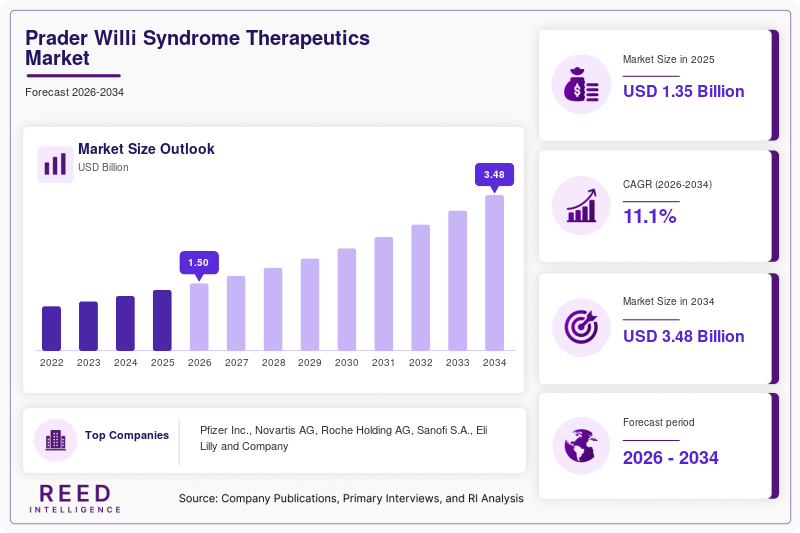
Key Highlights:
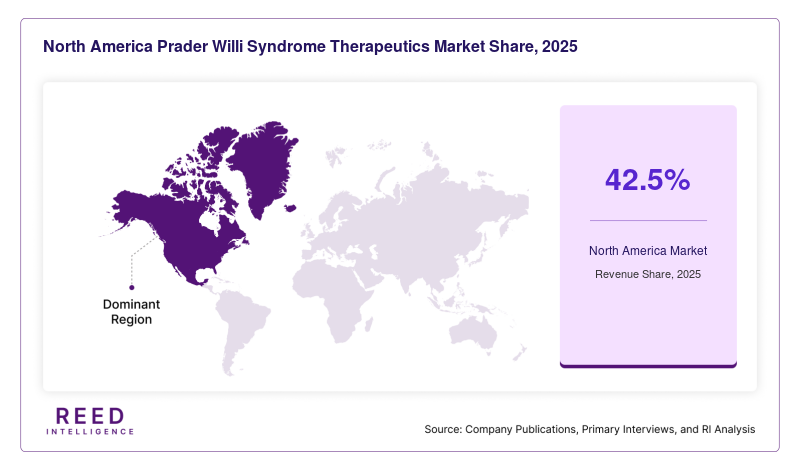
- North America dominated the market with a 42.5% share in 2025, while Asia Pacific is projected to register the fastest CAGR of 13.6% during the forecast period.
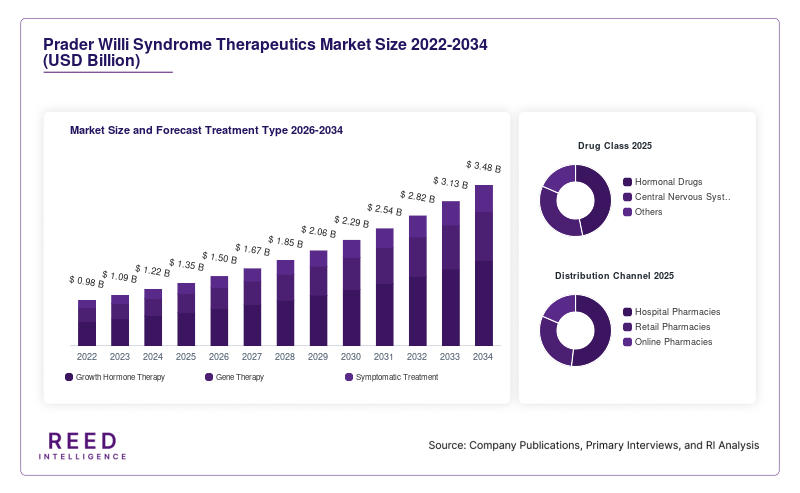
- Growth hormone therapy was the leading subsegment by treatment type with a 48.2% share in 2025, while gene therapy is expected to be the fastest-growing subsegment with a CAGR of 14.8%.
- Hospital pharmacies led the distribution channel segment with a 51.7% share in 2025, whereas online pharmacies are anticipated to grow at a CAGR of 12.9%.
- The U.S. market was valued at USD 520 million in 2024 and USD 575 million in 2025, reflecting steady growth driven by strong clinical research activity.
Market Trends
Increasing Adoption of Targeted and Hormonal Therapies
The Prader Willi Syndrome Therapeutics Market is witnessing a shift toward targeted and hormone-based treatments, particularly growth hormone therapies that address growth deficiencies and metabolic complications. These therapies have become a standard of care, supported by clinical evidence demonstrating improved physical development and reduced obesity risk. Additionally, emerging therapies focusing on appetite regulation and neuroendocrine pathways are gaining traction, reflecting a broader trend toward precision medicine. Pharmaceutical companies are increasingly developing therapies tailored to specific genetic and hormonal imbalances associated with PWS, thereby enhancing treatment efficacy.
Expansion of Orphan Drug Development Programs
Another notable trend shaping the Prader Willi Syndrome Therapeutics Market is the expansion of orphan drug development initiatives. Regulatory agencies are providing incentives such as tax credits, fast-track approvals, and extended exclusivity to encourage innovation in rare disease therapeutics. This has led to a surge in clinical trials targeting PWS, particularly for managing hyperphagia and behavioral symptoms. Biotech firms are collaborating with research institutions to accelerate drug discovery and commercialization. The growing pipeline of orphan drugs is expected to diversify treatment options and improve accessibility, contributing to long-term market growth.
Market Drivers
Rising Prevalence and Improved Diagnosis of Rare Genetic Disorders
The increasing identification of Prader Willi syndrome cases is a significant driver of the Prader Willi Syndrome Therapeutics Market. Advances in genetic testing technologies have enabled early and accurate diagnosis, which is critical for effective disease management. Healthcare providers are increasingly adopting screening programs for newborns and children exhibiting symptoms of PWS. This has expanded the patient pool and increased demand for therapeutic interventions. Improved diagnostic capabilities also facilitate timely treatment initiation, leading to better clinical outcomes and sustained market growth.
Growing Investment in Research and Development
Substantial investments in research and development activities are fueling innovation in the Prader Willi Syndrome Therapeutics Market. Pharmaceutical and biotechnology companies are focusing on developing novel therapies that target the underlying genetic and hormonal mechanisms of PWS. Funding from government agencies and private organizations is supporting clinical trials and drug development initiatives. Strategic collaborations between industry players and academic institutions are accelerating the pace of innovation. This increased focus on R&D is expected to result in the introduction of advanced therapeutic options, thereby driving market expansion.
Market Restraints
High Cost of Treatment and Limited Accessibility
One of the primary challenges in the Prader Willi Syndrome Therapeutics Market is the high cost associated with treatment, particularly for long-term hormone therapies and emerging biologics. Growth hormone therapy, which is widely used in managing PWS, requires continuous administration over several years, leading to significant financial burden on patients and healthcare systems. Additionally, advanced therapies such as gene-based treatments and novel biologics are often priced at a premium due to their complexity and limited patient population.
Limited reimbursement policies in certain regions further restrict access to these treatments, especially in low- and middle-income countries. The lack of specialized healthcare infrastructure and trained professionals also hinders effective disease management in underserved areas. These factors collectively limit market penetration and create disparities in treatment availability. Addressing cost-related challenges and improving access to affordable therapies remain critical for the sustainable growth of the market.
Market Opportunities
Development of Gene-Based and Novel Therapeutics
The emergence of gene-based therapies presents a significant opportunity in the Prader Willi Syndrome Therapeutics Market. Advances in genetic engineering and molecular biology are enabling the development of therapies that target the root cause of PWS. These innovative treatments have the potential to provide long-term or permanent solutions, reducing the need for lifelong management. Biotech companies are actively exploring gene editing and RNA-based approaches, which could transform the treatment landscape and open new revenue streams for market players.
Expansion in Emerging Markets
Emerging economies offer substantial growth opportunities for the Prader Willi Syndrome Therapeutics Market. Increasing healthcare expenditure, improving diagnostic infrastructure, and rising awareness of rare diseases are driving demand in these regions. Governments are implementing policies to support rare disease treatment and encourage pharmaceutical investments. Market players are expanding their presence through strategic partnerships and distribution networks to tap into these untapped markets. This expansion is expected to enhance accessibility and contribute to overall market growth.
Segmental Analysis
By Treatment Type
Growth hormone therapy dominated the Prader Willi Syndrome Therapeutics Market with a 48.2% share in 2025, owing to its widespread use in improving growth, body composition, and metabolic outcomes in patients. Its established clinical efficacy and inclusion in standard treatment protocols have reinforced its leading position.
Gene therapy is expected to be the fastest-growing subsegment, registering a CAGR of 14.8% during the forecast period. The growth is attributed to its potential to address the underlying genetic cause of PWS, offering long-term therapeutic benefits and reducing dependency on lifelong treatments.
By Drug Class
Hormonal drugs accounted for the largest share of the Prader Willi Syndrome Therapeutics Market in 2025, supported by the extensive use of growth hormone therapies. These drugs have been widely adopted due to their proven effectiveness in managing key symptoms of PWS.
Central nervous system agents are anticipated to grow at the fastest CAGR of 13.2%, driven by increasing focus on managing behavioral and psychological symptoms associated with PWS. Ongoing research into appetite-regulating drugs is expected to boost this segment.
By Route of Administration
Injectable therapies dominated the market in 2025 with a significant share, primarily due to the administration requirements of growth hormone treatments. The reliability and effectiveness of injectable formulations have contributed to their widespread adoption.
Oral therapies are projected to grow at a CAGR of 12.5%, driven by patient preference for non-invasive treatment options and ongoing development of oral formulations targeting PWS symptoms.
By Distribution Channel
Hospital pharmacies led the Prader Willi Syndrome Therapeutics Market with a 51.7% share in 2025, as most treatments require prescription and medical supervision. The availability of specialized care in hospital settings has supported this dominance.
Online pharmacies are expected to grow at the fastest CAGR of 12.9%, driven by increasing digitalization and convenience in accessing medications. The expansion of e-commerce platforms in healthcare is further supporting this growth.
By End User
Hospitals dominated the market in 2025, accounting for the largest share due to their role in diagnosis, treatment initiation, and long-term management of PWS patients. Multidisciplinary care provided in hospital settings has strengthened this segment.
Home care settings are projected to grow at a CAGR of 11.8%, driven by the increasing preference for at-home treatment and monitoring. Advances in telemedicine and remote patient management are supporting this shift.
Regional Analysis
North America
North America accounted for 42.5% of the Prader Willi Syndrome Therapeutics Market share in 2025 and is expected to grow at a CAGR of 10.4% during the forecast period. The region’s dominance was supported by advanced healthcare infrastructure and strong adoption of innovative therapies.
The United States remained the dominant country due to its robust clinical research ecosystem and high awareness of rare diseases. The presence of leading pharmaceutical companies and favorable regulatory frameworks has facilitated rapid drug development and approval processes.
Europe
Europe held a 27.3% share of the Prader Willi Syndrome Therapeutics Market in 2025 and is projected to grow at a CAGR of 10.1% from 2026 to 2034. The region benefited from comprehensive healthcare systems and government support for rare disease treatment.
Germany emerged as the leading country, driven by its well-established healthcare infrastructure and strong emphasis on research and innovation. National policies supporting orphan drug development have further strengthened market growth.
Asia Pacific
Asia Pacific captured 18.6% of the Prader Willi Syndrome Therapeutics Market in 2025 and is anticipated to grow at the fastest CAGR of 13.6% during the forecast period. Rapid economic development and increasing healthcare investments are key factors driving regional growth.
China dominated the regional market due to its large patient population and expanding healthcare infrastructure. Government initiatives aimed at improving rare disease diagnosis and treatment have significantly boosted market expansion.
Middle East & Africa
The Middle East & Africa region held a 6.2% share of the Prader Willi Syndrome Therapeutics Market in 2025 and is expected to grow at a CAGR of 9.2%. The market is gradually expanding due to improving healthcare facilities and increasing awareness of genetic disorders.
Saudi Arabia led the region, supported by government investments in healthcare infrastructure and initiatives to enhance rare disease management. The country’s focus on modernizing its healthcare system has contributed to market growth.
Latin America
Latin America accounted for 5.4% of the Prader Willi Syndrome Therapeutics Market share in 2025 and is projected to grow at a CAGR of 9.8% during the forecast period. The region is experiencing gradual growth due to improving access to healthcare services.
Brazil emerged as the dominant country, driven by its expanding healthcare sector and increasing focus on rare disease treatment. Government programs aimed at improving diagnosis and treatment accessibility have supported market development.
Competitive Landscape
The Prader Willi Syndrome Therapeutics Market is characterized by the presence of established pharmaceutical companies and emerging biotechnology firms focusing on rare disease treatments. Key players are investing in research and development to expand their product portfolios and strengthen their market position.
One leading company in the market is Pfizer Inc., which has been actively involved in developing hormone-based therapies. The company recently expanded its clinical research initiatives to explore new treatment options for rare genetic disorders, including PWS.
Other prominent players are focusing on strategic collaborations, mergers, and acquisitions to enhance their capabilities and accelerate drug development. The competitive landscape is expected to remain dynamic, with increasing emphasis on innovation and pipeline expansion.
Key Players List
- Pfizer Inc.
- Novartis AG
- Roche Holding AG
- Sanofi S.A.
- Eli Lilly and Company
- Amgen Inc.
- Ipsen Pharma
- Takeda Pharmaceutical Company Limited
- Novo Nordisk A/S
- Rhythm Pharmaceuticals Inc.
- Soleno Therapeutics Inc.
- Zafgen Inc.
- Aeterna Zentaris Inc.
- OPKO Health Inc.
- Teva Pharmaceutical Industries Ltd.
h2>Recent Developments
- 2025: A leading biotech firm initiated a Phase III clinical trial for a novel therapy targeting hyperphagia in PWS patients.
- 2024: A pharmaceutical company received regulatory approval for an expanded indication of growth hormone therapy in pediatric PWS patients.
- 2024: Strategic collaboration between biotech and academic institutions accelerated research on gene-based therapies.
- 2023: Launch of a digital health platform to support remote monitoring of PWS patients.
- 2023: Increased funding initiatives for rare disease research boosted clinical trial activity globally.
Prader Willi Syndrome Therapeutics Market Segments
Treatment Type
- Growth Hormone Therapy
- Gene Therapy
- Symptomatic Treatment
Drug Class
- Hormonal Drugs
- Central Nervous System Agents
- Others
Distribution Channel
- Hospital Pharmacies
- Retail Pharmacies
- Online Pharmacies
By Region
- North America
- Europe
- APAC
- Middle East and Africa
- LATAM