Pranlukast Market Size, Share & Demand Report By Formulation Type (Tablets, Capsules, Oral Suspensions, Others), By Application (Asthma Treatment, Allergic Rhinitis Treatment, Bronchitis Management, Others), By Distribution Channel (Hospital Pharmacies, Retail Pharmacies, Online Pharmacies, Drug Stores), By Region & Segment Forecasts, 2026–2034
USD 3950
Market Overview
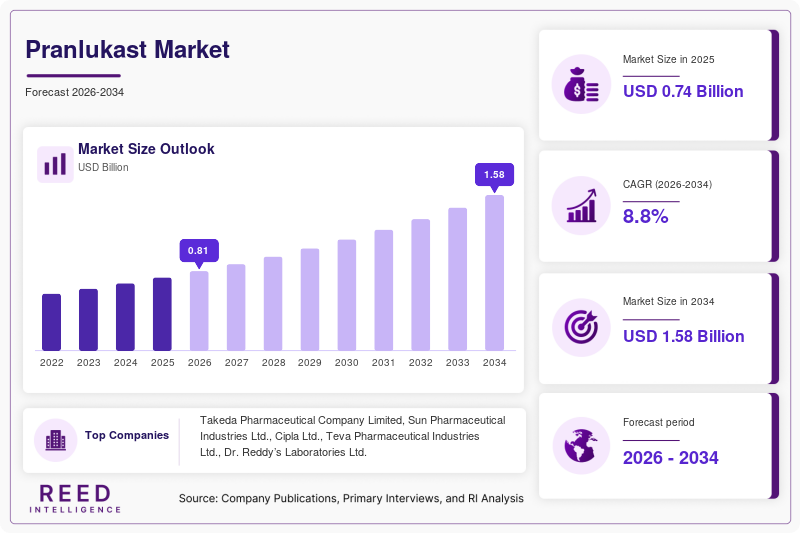
The global Pranlukast Market size was valued at USD 0.7426 billion in 2026 and is projected to reach USD 1.46 billion by 2034, expanding at a CAGR of 8.8% during the forecast period from 2026 to 2034. The market is gaining momentum due to the increasing prevalence of chronic respiratory diseases, particularly asthma and allergic rhinitis, across both developed and emerging economies. Pranlukast, a leukotriene receptor antagonist widely prescribed for asthma management and allergy-related respiratory conditions, continues to witness stable demand owing to its effectiveness in reducing inflammation and improving airway function.
The growing burden of urban pollution and rising exposure to airborne allergens have significantly supported market expansion in recent years. Rapid industrialization, increasing vehicle emissions, and changing climatic conditions have contributed to higher incidences of respiratory complications, especially among pediatric and elderly populations. In addition, healthcare systems across several countries are increasing investments in long-term respiratory disease management, encouraging the adoption of anti-inflammatory medications such as Pranlukast. The availability of generic formulations and ongoing research focused on combination therapies are also creating a favorable environment for market growth.
Key Highlights
- North America dominated the market with a 36.4% share in 2025.
- Asia Pacific is expected to grow at the fastest CAGR of 10.9% during 2026–2034. By formulation type, tablets accounted for the largest share of 52.1%, while oral suspension formulations are projected to grow at a CAGR of 11.3%.
- By application, asthma treatment led with a 58.7% share, whereas allergic rhinitis treatment is expected to expand at a CAGR of 10.6%.
- By distribution channel, hospital pharmacies held the leading share of 44.9%, while online pharmacies are projected to grow at a CAGR of 12.1%. Japan remained the dominant country, with market values of USD 148 million in 2024 and USD 162 million in 2025.
Market Trends
Rising Adoption of Combination Respiratory Therapies
The increasing adoption of combination respiratory therapies is shaping the growth trajectory of the Pranlukast Market. Healthcare providers are increasingly prescribing multi-drug treatment approaches for patients with moderate to severe asthma in order to improve symptom control and reduce hospitalization rates. Pranlukast is being integrated with inhaled corticosteroids and bronchodilators as part of comprehensive disease management programs. This trend is particularly evident in countries with advanced respiratory care infrastructure where physicians focus on long-term disease monitoring and personalized treatment strategies. The growing awareness regarding the benefits of combination therapy in reducing airway inflammation and improving pulmonary function has accelerated prescription rates. Pharmaceutical companies are also expanding clinical research activities to evaluate improved efficacy and patient adherence through combination treatment approaches.
Expansion of Generic Pharmaceutical Manufacturing
The expansion of generic pharmaceutical manufacturing is another notable trend influencing the Pranlukast Market. Patent expirations and supportive regulatory policies in several countries have encouraged regional manufacturers to introduce cost-effective generic versions of Pranlukast. This has increased product accessibility in price-sensitive markets across Asia Pacific, Latin America, and parts of the Middle East & Africa. Generic competition has also encouraged pricing optimization, allowing healthcare providers to include Pranlukast in broader respiratory treatment programs. In addition, improvements in pharmaceutical manufacturing technologies and quality control standards have strengthened the credibility of generic products among physicians and patients. The increasing role of contract manufacturing organizations in pharmaceutical production is further supporting supply chain efficiency and market penetration.
Market Drivers
Increasing Prevalence of Asthma and Allergic Disorders
The growing prevalence of asthma and allergy-related respiratory disorders is a major factor driving the Pranlukast Market. Urbanization, environmental pollution, tobacco exposure, and changing lifestyles have contributed to increasing respiratory complications among both adults and children. According to healthcare industry estimates, asthma cases are rising steadily in densely populated urban regions where poor air quality continues to affect respiratory health. Pranlukast is widely prescribed due to its anti-inflammatory properties and its ability to reduce bronchial constriction associated with allergic reactions. Healthcare organizations are also conducting awareness programs focused on early diagnosis and long-term disease management, which is improving prescription volumes. The increasing number of respiratory care clinics and pulmonary specialists in emerging economies is further supporting treatment accessibility.
Growth in Healthcare Expenditure and Pharmaceutical Access
Rising healthcare expenditure and improving pharmaceutical access are supporting the expansion of the Pranlukast Market. Governments in several countries are strengthening healthcare infrastructure and expanding insurance coverage for chronic disease management. This has increased patient access to prescription medications used in respiratory treatment. Public health initiatives focused on reducing the burden of asthma-related hospital admissions are also contributing to higher demand for preventive therapies such as Pranlukast. In addition, pharmaceutical distributors are strengthening supply chain networks to improve product availability in rural and semi-urban healthcare centers. The rapid growth of online pharmacy platforms and telehealth consultations is further improving prescription accessibility. As healthcare systems continue to prioritize affordable respiratory treatment solutions, market demand for Pranlukast is expected to remain stable throughout the forecast period.
Market Restraint
Availability of Alternative Respiratory Therapies
The availability of alternative respiratory therapies remains a key challenge for the Pranlukast Market. Patients and healthcare providers often have access to multiple treatment options, including inhaled corticosteroids, biologics, antihistamines, and bronchodilators that may provide faster symptom relief or broader therapeutic benefits depending on disease severity. Several advanced biologic therapies designed for severe asthma management are gaining popularity in developed healthcare markets due to their targeted treatment capabilities. This competitive environment may limit prescription preference for Pranlukast in certain patient groups. In addition, varying regulatory approval timelines and reimbursement limitations in some countries can affect market penetration. Generic competition has also created pricing pressure among manufacturers, reducing profit margins and increasing operational challenges. Some patients may experience mild side effects such as gastrointestinal discomfort or headaches, which can influence treatment adherence over long-term use. Healthcare providers increasingly evaluate treatment effectiveness based on personalized patient response, leading to selective use of Pranlukast in respiratory care protocols.
Market Opportunities
Expansion in Emerging Healthcare Markets
Emerging healthcare markets present strong growth opportunities for the Pranlukast Market. Countries across Asia Pacific, Latin America, and parts of Africa are experiencing improvements in healthcare infrastructure, pharmaceutical distribution, and respiratory disease diagnosis rates. Governments are increasing investments in public healthcare systems and introducing programs focused on chronic disease treatment accessibility. As awareness regarding asthma management improves, demand for affordable oral medications such as Pranlukast is expected to increase significantly. Pharmaceutical companies are also expanding partnerships with regional distributors and local manufacturers to strengthen market presence in underserved areas. The growing middle-class population and rising healthcare spending in emerging economies are further creating opportunities for sustained market growth over the coming years.
Development of Pediatric and Personalized Formulations
The development of pediatric and personalized formulations is creating additional opportunities within the Pranlukast Market. Respiratory disorders among children are increasing due to environmental allergies, viral infections, and urban pollution exposure. Pharmaceutical companies are focusing on flavored oral suspensions and low-dose formulations designed specifically for pediatric patients to improve treatment compliance and ease of administration. In addition, advancements in personalized medicine are encouraging the development of tailored respiratory treatment approaches based on patient-specific inflammatory profiles. Research activities related to precision respiratory therapy are expected to create opportunities for optimized Pranlukast formulations with improved efficacy and safety profiles. These innovations may support broader adoption across specialized respiratory care settings and pediatric treatment programs.
Segmental Analysis
By Formulation Type
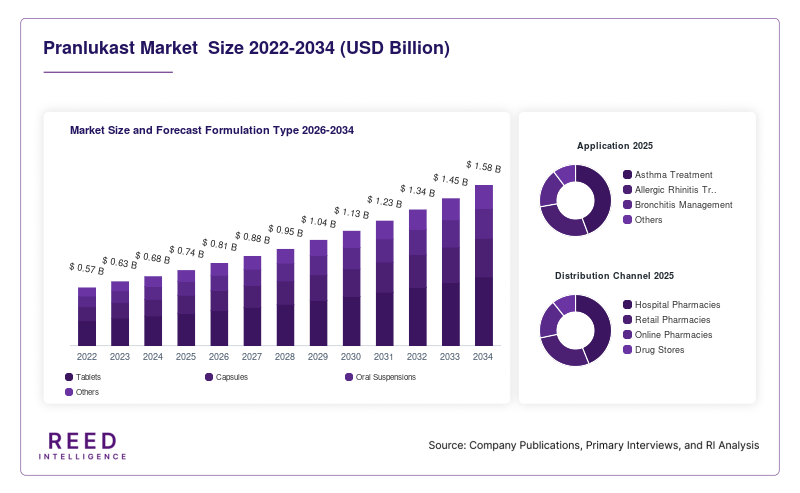
Tablets represented the dominant subsegment within the formulation type category, accounting for 52.1% of the market share in 2024. Tablet formulations continue to maintain strong demand due to their ease of administration, longer shelf life, and cost-effective manufacturing process. Physicians frequently prescribe tablets for long-term asthma management because they provide convenient dosing and high patient compliance among adult populations. Pharmaceutical companies are also prioritizing tablet-based generic production to support broader market penetration in both developed and emerging economies. In addition, the availability of multiple dosage strengths allows healthcare providers to personalize treatment based on patient severity levels. Strong distribution through hospital and retail pharmacy channels further contributes to the continued dominance of tablet formulations within the global Pranlukast Market.
Oral suspension formulations are projected to witness the fastest growth, expanding at a CAGR of 11.3% during the forecast period. The growth of this subsegment is primarily driven by increasing demand for pediatric respiratory treatments and improved medication adherence among elderly patients who experience difficulty swallowing tablets. Pharmaceutical companies are introducing flavored formulations and advanced packaging solutions to improve patient convenience and treatment acceptance. Growing awareness regarding childhood asthma management is also supporting prescription demand for oral suspensions across pediatric healthcare settings. In emerging economies, expanding access to child-focused respiratory care programs is expected to strengthen adoption rates further. The increasing emphasis on personalized dosing flexibility is encouraging manufacturers to invest in liquid respiratory formulations.
By Application
Asthma treatment accounted for the largest share within the application segment, contributing 58.7% of total market revenue in 2024. The dominance of this subsegment is linked to the growing prevalence of chronic asthma cases globally and the increasing focus on preventive respiratory disease management. Pranlukast is widely used to reduce airway inflammation and minimize the frequency of asthma attacks, making it an important component of long-term treatment protocols. Healthcare providers increasingly recommend anti-inflammatory oral medications alongside inhaled therapies for moderate asthma cases. In addition, rising urban pollution and exposure to environmental allergens have increased the demand for effective asthma management solutions. Pharmaceutical manufacturers continue to strengthen product availability through hospital networks and retail pharmacy partnerships, supporting steady segment growth.
Allergic rhinitis treatment is expected to register the fastest CAGR of 10.6% through 2034. Seasonal allergies and pollution-related respiratory irritation are becoming more common across urban regions, increasing demand for anti-allergic respiratory medications. Patients are increasingly seeking convenient oral therapies that can reduce nasal inflammation and improve breathing comfort during allergy seasons. The rising prevalence of pollen allergies and environmental sensitivity among younger populations is further supporting segment expansion. Pharmaceutical companies are also promoting awareness regarding the connection between allergic rhinitis and chronic asthma complications, encouraging early treatment adoption. In addition, healthcare providers are integrating Pranlukast into broader allergy management programs aimed at reducing long-term respiratory discomfort and improving patient quality of life.
By Distribution Channel
Hospital pharmacies held the leading position in the distribution channel segment, accounting for 44.9% of the market share in 2024. The dominance of this subsegment is supported by the large volume of respiratory prescriptions generated through hospitals and specialized pulmonary care centers. Patients diagnosed with moderate to severe asthma often receive treatment consultations and medication recommendations directly through hospital networks, supporting strong pharmacy sales. Hospital pharmacies also benefit from reliable pharmaceutical supply agreements and direct access to branded as well as generic Pranlukast products. In addition, healthcare professionals prefer hospital-based dispensing systems for chronic respiratory disease management due to improved patient monitoring and treatment compliance. Expanding healthcare infrastructure in emerging economies is further contributing to the growth of hospital pharmacy distribution channels.
Online pharmacies are projected to grow at the fastest CAGR of 12.1% during the forecast period due to increasing digital healthcare adoption and rising consumer preference for convenient medication purchasing options. The expansion of e-commerce healthcare platforms has significantly improved access to respiratory medications in urban and semi-urban areas. Online pharmacies provide benefits such as home delivery, prescription refill reminders, and discounted pricing, which are encouraging patients to shift toward digital purchasing channels. Telemedicine consultations are also contributing to the growth of online pharmaceutical sales by simplifying the prescription process. In addition, younger consumers are increasingly adopting digital healthcare services for long-term disease management, supporting sustained growth for online pharmacy distribution models within the Pranlukast Market.
Regional Analysis
North America
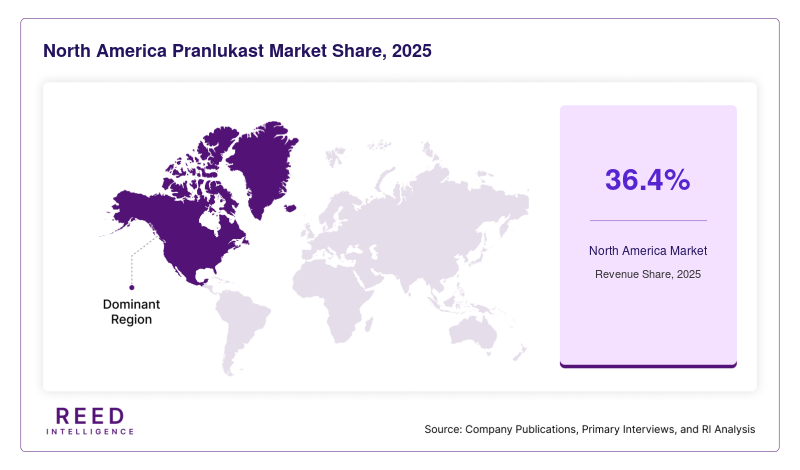
North America accounted for the largest share of the Pranlukast Market in 2025, representing 36.4% of global revenue. The region is projected to expand at a CAGR of 7.9% during the forecast period due to the high prevalence of chronic respiratory diseases and well-established healthcare infrastructure. Increasing awareness regarding preventive asthma treatment and favorable reimbursement systems continue to support medication adoption. Pharmaceutical companies in the region are also investing in advanced respiratory care solutions and patient education programs, contributing to consistent prescription demand for anti-inflammatory therapies such as Pranlukast.
The United States remained the dominant country in North America due to strong healthcare expenditure and a large patient population suffering from asthma and allergic rhinitis. A key growth factor in the country is the rising adoption of telemedicine and digital prescription services, which have improved access to respiratory medications across urban and suburban populations. In addition, increasing research collaborations between pharmaceutical companies and respiratory healthcare institutions are supporting the development of improved treatment protocols. Canada is also witnessing gradual growth due to increasing awareness regarding long-term respiratory disease management.
Europe
Europe held a substantial share of the Pranlukast Market in 2025 and is expected to register a CAGR of 7.4% through 2034. The region benefits from strong healthcare accessibility, advanced pharmaceutical regulations, and increasing awareness regarding allergy-related respiratory disorders. Several European countries are implementing public healthcare initiatives focused on reducing hospitalization rates associated with uncontrolled asthma. Demand for oral respiratory medications remains stable due to patient preference for convenient treatment approaches and growing support for preventive respiratory care. In addition, expanding generic pharmaceutical manufacturing is contributing to broader product availability across regional markets.
Germany dominated the European market due to its advanced pharmaceutical industry and extensive respiratory disease treatment infrastructure. A unique growth factor supporting the German market is the increasing focus on environmental health monitoring and air pollution reduction initiatives, which are improving awareness regarding respiratory disease prevention. The country also benefits from strong healthcare insurance coverage and a high rate of specialist consultations for asthma management. France and the United Kingdom are witnessing steady growth due to rising respiratory allergy cases and increasing adoption of long-term anti-inflammatory treatment plans.
Asia Pacific
Asia Pacific is expected to witness the fastest growth in the Pranlukast Market, with a projected CAGR of 10.9% during 2026–2034. The region is experiencing rapid urbanization, increasing pollution levels, and a growing burden of respiratory diseases among large population groups. Healthcare infrastructure improvements and rising pharmaceutical manufacturing capabilities are supporting market expansion. Governments across several countries are also introducing healthcare reforms aimed at improving treatment accessibility for chronic respiratory conditions. The increasing availability of generic Pranlukast formulations at competitive prices is further contributing to market growth.
Japan remained the dominant country within Asia Pacific due to its strong pharmaceutical industry and established respiratory care framework. A major growth factor in Japan is the increasing aging population, which is more vulnerable to chronic respiratory diseases and allergy-related complications. The country also has high healthcare awareness and significant adoption of long-term disease management therapies. China and India are emerging as high-potential markets due to rising healthcare expenditure, improving diagnosis rates, and growing pharmaceutical distribution networks. Expanding urban populations in these countries are expected to increase demand for respiratory medications over the forecast period.
Middle East & Africa
The Middle East & Africa region is gradually expanding within the Pranlukast Market and is forecast to grow at a CAGR of 6.8% through 2034. Increasing investments in healthcare infrastructure and improving pharmaceutical supply chains are contributing to regional growth. Respiratory diseases linked to desert dust exposure, industrial emissions, and urban air pollution are becoming more common in several countries. Governments and healthcare organizations are focusing on expanding access to essential respiratory medications and strengthening disease awareness programs. The growth of private healthcare facilities is also improving treatment accessibility across urban centers.
Saudi Arabia emerged as the dominant country in the Middle East & Africa market due to rising healthcare modernization efforts and increasing respiratory disease awareness. A unique factor driving market growth in the country is the expansion of government-supported healthcare digitization initiatives, which are improving prescription management and patient monitoring systems. The United Arab Emirates is also witnessing increasing demand for respiratory therapeutics due to urbanization and changing environmental conditions. In Africa, South Africa is gradually strengthening pharmaceutical distribution networks, supporting improved access to respiratory medications in key metropolitan areas.
Latin America
Latin America represented a developing regional market for Pranlukast in 2025 and is projected to grow at a CAGR of 7.1% during the forecast period. Rising healthcare awareness and increasing diagnosis rates for asthma and allergic rhinitis are supporting regional market expansion. Governments in several Latin American countries are improving access to affordable medications through public healthcare initiatives and pharmaceutical partnerships. Demand for oral anti-inflammatory respiratory treatments is increasing among urban populations where pollution and environmental allergens continue to affect respiratory health. Expanding retail pharmacy networks are also improving medication accessibility.
Brazil remained the leading country in the Latin American Pranlukast Market due to its large population base and expanding healthcare infrastructure. A unique growth factor supporting the Brazilian market is the increasing penetration of community healthcare programs focused on chronic respiratory disease prevention and treatment adherence. The country is also experiencing rising investment in domestic pharmaceutical manufacturing, which is improving local medication availability. Mexico and Argentina are witnessing gradual growth due to improving healthcare coverage and increasing physician awareness regarding preventive respiratory therapies.
Competitive Landscape
The Pranlukast Market is moderately consolidated, with a combination of multinational pharmaceutical companies and regional generic manufacturers competing across major healthcare markets. Companies are focusing on product portfolio expansion, pricing strategies, regional distribution partnerships, and respiratory therapy research to strengthen their market presence. Manufacturers are also investing in generic drug development to improve accessibility in cost-sensitive markets while maintaining regulatory compliance and production quality standards.
Takeda Pharmaceutical Company Limited remains a leading participant in the market due to its established respiratory treatment portfolio and strong presence across Asia Pacific. The company continues to focus on strategic collaborations and product distribution enhancements to maintain competitive positioning. In recent developments, several pharmaceutical companies have expanded their respiratory drug manufacturing capabilities to address growing global demand for anti-inflammatory asthma treatments. Sun Pharmaceutical Industries Ltd., Cipla Ltd., Teva Pharmaceutical Industries Ltd., and Dr. Reddy’s Laboratories are also strengthening market competition through generic product launches and regional expansion initiatives.
Key Players
- Takeda Pharmaceutical Company Limited
- Sun Pharmaceutical Industries Ltd.
- Cipla Ltd.
- Teva Pharmaceutical Industries Ltd.
- Dr. Reddy’s Laboratories Ltd.
- Viatris Inc.
- Lupin Limited
- Aurobindo Pharma Limited
- Glenmark Pharmaceuticals Ltd.
- Torrent Pharmaceuticals Ltd.
- Hikma Pharmaceuticals PLC
- Sandoz International GmbH
- Zydus Lifesciences Limited
- Alkem Laboratories Ltd.
- Chiesi Farmaceutici S.p.A.
Recent Developments
- Takeda Pharmaceutical Company Limited expanded its respiratory therapy distribution network across Southeast Asia in 2025 to strengthen market accessibility for asthma medications.
- Cipla Ltd. introduced an upgraded pediatric oral suspension formulation in 2024 designed to improve treatment adherence among children with chronic respiratory conditions.
- Teva Pharmaceutical Industries Ltd. announced investments in generic respiratory drug manufacturing capacity expansion in 2025 to address increasing global demand for affordable asthma therapies.
- Sun Pharmaceutical Industries Ltd. partnered with regional healthcare distributors in Latin America during 2024 to improve respiratory medication penetration in underserved healthcare markets.
Pranlukast Market Segments
Formulation Type
- Tablets
- Capsules
- Oral Suspensions
- Others
Application
- Asthma Treatment
- Allergic Rhinitis Treatment
- Bronchitis Management
- Others
Distribution Channel
- Hospital Pharmacies
- Retail Pharmacies
- Online Pharmacies
- Drug Stores
By Region
- North America
- Europe
- APAC
- Middle East and Africa
- LATAM