Processed Walnut Market Size, Share Demand Report By Type (Walnut Kernels, Walnut Oil, Walnut Powder, Roasted & Flavored Walnuts), By Application (Food & Beverages, Nutraceuticals, Cosmetics & Personal Care), By Form (Whole/Halves, Chopped, Powder/Granulated), By Distribution Channel (Online Retail, Supermarkets & Hypermarkets, Specialty Stores, Convenience Stores) By Region & Segment Forecasts, 2026–2034
USD 3950
Market Overview
The Processed Walnut Market size was valued at approximately USD 8.6 billion in 2026 and is projected to reach USD 14.9 billion by 2034, expanding at a CAGR of 7.1% during the forecast period (2026–2034). The market growth is being supported by increasing global demand for plant-based nutrition and functional foods, as consumers shift toward healthier dietary patterns. Processed walnuts, including kernels, roasted variants, walnut oil, and walnut-based ingredients, are widely incorporated into snacks, bakery, dairy alternatives, and nutraceutical products due to their high omega-3 fatty acid content and antioxidant properties.
One major global factor supporting market expansion is the rising awareness of heart health and brain function benefits associated with walnut consumption. This has significantly increased their adoption in both developed and emerging markets, especially within premium and health-focused product categories.
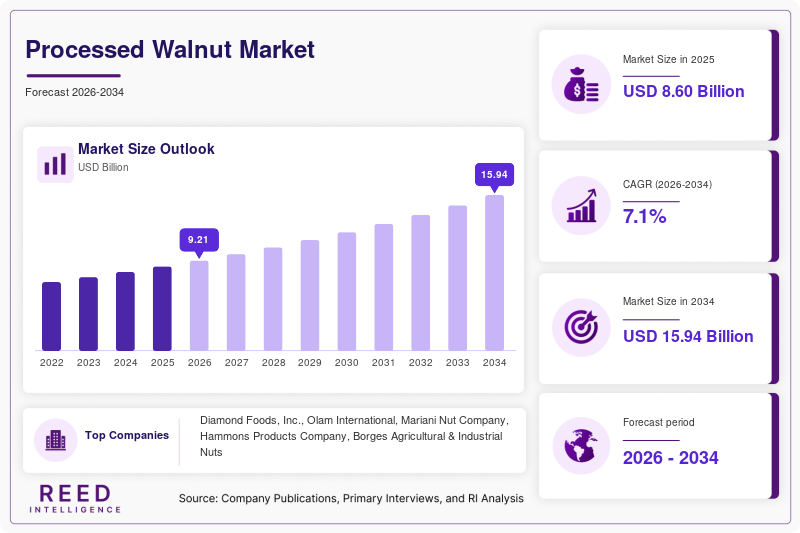
Key Highlights:
- North America dominated the market with a 34.2% share in 2025, while Asia Pacific is expected to grow at the fastest CAGR of 8.4%.
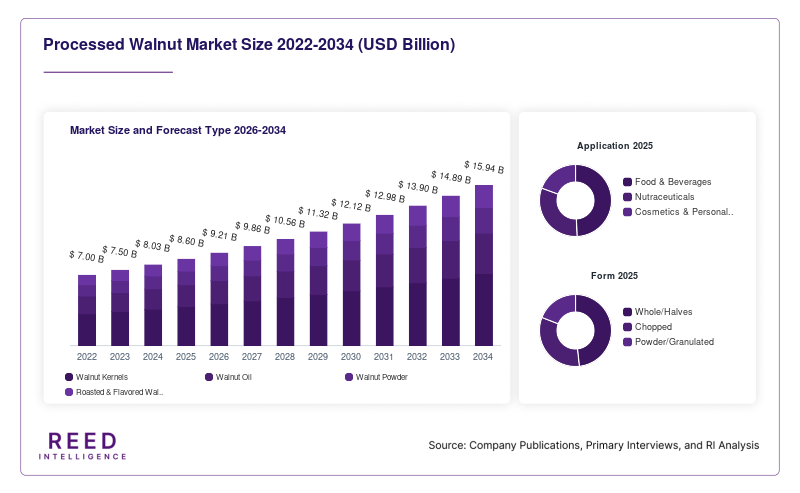
- By type, walnut kernels held the leading share of 46.8% in 2025, while walnut oil is projected to grow at a CAGR of 8.9%.
- By application, the food & beverages segment accounted for 61.5% share in 2025, whereas nutraceuticals are expected to expand at a CAGR of 9.2%.
- The United States led the market, with values of USD 2.1 billion in 2024 and USD 2.3 billion in 2025, driven by strong consumption of healthy snacks and baking ingredients.
Market Trends
Rising Demand for Clean-Label and Organic Products
Consumers are increasingly prioritizing transparency in food sourcing and processing. This has led to growing demand for organic processed walnuts, free from additives and chemical treatments. Manufacturers are focusing on sustainable farming practices and traceability, which is influencing product positioning and pricing strategies across premium segments.
Expansion of Walnut-Based Functional Ingredients
The integration of walnut-derived ingredients such as walnut protein powder, walnut milk, and walnut oil into functional foods is gaining momentum. These ingredients are being used in plant-based dairy alternatives, protein bars, and fortified beverages, reflecting a shift toward innovative product formulations in the processed walnut market.
Market Drivers
Increasing Demand for Nutrient-Dense Foods
The rising awareness of nutritional benefits associated with walnuts, including omega-3 fatty acids, fiber, and antioxidants, is driving market growth. Consumers are actively incorporating processed walnuts into daily diets to support cardiovascular health and cognitive function, leading to higher demand across retail and foodservice channels.
Growth of Plant-Based and Vegan Diets
The global shift toward plant-based diets has significantly boosted the demand for processed walnuts. As a versatile ingredient, walnuts are used in vegan recipes, dairy alternatives, and meat substitutes. Their texture and nutritional profile make them an ideal component in plant-based innovations, thereby expanding their application scope.
Market Restraint
Price Volatility and Supply Chain Constraints
Fluctuations in walnut production due to climatic conditions and water availability can impact supply consistency and pricing. This creates challenges for manufacturers and may limit market expansion, particularly in price-sensitive regions.
Market Opportunities
Expansion in Emerging Markets
Developing economies present strong growth opportunities due to rising disposable income and increasing awareness of healthy eating. The expansion of modern retail infrastructure is enabling greater accessibility to processed walnut products, particularly in urban areas.
Product Innovation in Snack Segment
The introduction of flavored, roasted, and ready-to-eat walnut snacks is creating new revenue streams. Manufacturers are focusing on convenience and taste innovation to attract younger consumers, thereby expanding the consumer base.
Segmental Analysis
By Type
The walnut kernels segment held the dominant share of 46.8% in 2025, owing to its widespread use in direct consumption and food processing. Kernels are preferred for their convenience and versatility across applications such as baking, snacking, and cooking.
The walnut oil segment is expected to grow at the fastest CAGR of 8.9% during the forecast period. Its increasing use in culinary applications and cosmetic products, along with its perceived health benefits, will drive growth.
By Application
The food & beverages segment accounted for 61.5% share in 2025, driven by the extensive use of processed walnuts in bakery, confectionery, dairy products, and snacks.
The nutraceutical segment is projected to grow at a CAGR of 9.2%, supported by increasing demand for dietary supplements and functional foods enriched with omega-3 fatty acids.
By Form
The whole/halves segment dominated with a 52.3% share in 2025, as consumers prefer minimally processed forms for direct consumption.
The powder/granulated segment is expected to grow at a CAGR of 8.6%, driven by its use in protein supplements and baking mixes.
By Distribution Channel
The offline retail segment held a 68.7% share in 2025, supported by supermarkets and specialty stores offering a wide range of processed walnut products.
The online retail segment is anticipated to grow at a CAGR of 9.5%, driven by increasing e-commerce penetration and consumer preference for convenient shopping options.
Regional Analysis
North America
North America held a 34.2% market share in 2025 and is expected to grow at a CAGR of 6.5% during the forecast period. The United States dominated the region due to high consumption of healthy snacks and widespread use of walnuts in bakery and confectionery products. The strong presence of walnut producers and advanced processing infrastructure supported regional growth.
Europe
Europe accounted for 26.8% share in 2025 and is projected to grow at a CAGR of 6.8%. Germany led the region, driven by increasing demand for organic and functional foods. The region’s emphasis on sustainable sourcing and clean-label products has encouraged the adoption of processed walnuts across multiple applications.
Asia Pacific
Asia Pacific captured 22.5% market share in 2025 and will grow at the fastest CAGR of 8.4%. China emerged as the dominant country due to its large production base and growing domestic consumption. Rapid urbanization and dietary shifts toward protein-rich foods are fueling market expansion.
Middle East & Africa
The Middle East & Africa held 8.1% share in 2025 and is expected to grow at a CAGR of 7.3%. The United Arab Emirates led the region, supported by increasing demand for premium imported food products and expanding retail channels.
Latin America
Latin America accounted for 8.4% share in 2025 and is forecast to grow at a CAGR of 7.0%. Brazil dominated the region, driven by rising health awareness and growing demand for nutritious snacks.

Competitive Landscape
The processed walnut market is moderately fragmented, with several global and regional players competing based on product quality, pricing, and distribution networks. The leading companies are focusing on product innovation, sustainable sourcing, and expansion into emerging markets to strengthen their positions. One key market leader has consistently invested in advanced processing technologies and organic product lines, enabling it to maintain a strong global presence.
Recent developments include the introduction of flavored walnut snacks and expansion of production capacities to meet rising demand. Other players are forming strategic partnerships with retailers and food manufacturers to enhance market reach. The competitive environment is also characterized by increasing investments in branding and marketing to attract health-conscious consumers. Overall, the market is witnessing steady consolidation, with companies aiming to achieve economies of scale and improve supply chain efficiency.
Key Players List
- Diamond Foods, Inc.
- Olam International
- Mariani Nut Company
- Hammons Products Company
- Borges Agricultural & Industrial Nuts
- Grower Direct Nut Company
- Poindexter Nut Company
- Carriere Family Farms
- Kashmir Walnut Group
- Royal Nut Company
- Treehouse California Almonds & Walnuts
- Andersen Shelling Inc.
- Golden State Walnut Growers
- Kenkko Corporation
- Sierra Nut House
Recent Developments
- In 2025, a major industry participant expanded its processing facility to increase production capacity and improve supply chain efficiency.
- A leading company launched a new line of flavored walnut snacks targeting younger consumers and premium markets.
- Several manufacturers introduced organic-certified walnut products to cater to rising demand for clean-label foods.
- Strategic collaborations between walnut processors and food manufacturers have increased the use of walnut ingredients in innovative product formulations.
- Investments in sustainable farming practices and water-efficient cultivation methods have gained momentum across key producing regions.
Processed Walnut Market Segments
Type
- Walnut Kernels
- Walnut Oil
- Walnut Powder
- Roasted & Flavored Walnuts
Application
- Food & Beverages
- Nutraceuticals
- Cosmetics & Personal Care
Form
- Whole/Halves
- Chopped
- Powder/Granulated
Distribution Channel
- Online Retail
- Supermarkets & Hypermarkets
- Specialty Stores
- Convenience Stores
By Region
- North America
- Europe
- APAC
- Middle East and Africa
- LATAM