Proctoscope Market Size, Share, Demand Report By Product Type (Disposable Proctoscopes, Reusable Proctoscopes, Video-Assisted Proctoscopes), By Application (Colorectal Diagnostics, Anorectal Surgical Guidance, Screening Procedures), By End-Use (Hospitals, Ambulatory Surgical Centers, Specialty Clinics, Diagnostic Laboratories) & Regional Forecasts, 2026–2034
USD 3950
Market Overview
The Proctoscope Market size in 2026 is valued at approximately USD 1.42 billion, and is projected to reach USD 2.61 billion by 2034, expanding at a CAGR of 7.9% during the forecast period (2026–2034). The market is experiencing steady expansion due to increasing global prevalence of colorectal disorders, rising adoption of minimally invasive diagnostic procedures, and improvements in endoscopic visualization technologies. Growing awareness regarding early detection of colorectal cancer and gastrointestinal diseases has significantly strengthened demand for proctoscopic examinations across hospitals and specialty clinics.
A key global factor supporting market growth is the increasing burden of colorectal cancer and hemorrhoidal diseases linked to sedentary lifestyles and aging populations. Healthcare systems are prioritizing early-stage diagnosis, which has increased procedural volumes using proctoscopes in both developed and emerging economies. Additionally, technological advancements such as LED-based illumination, disposable proctoscopes, and integration with digital imaging systems have improved diagnostic accuracy and patient comfort, further accelerating adoption.
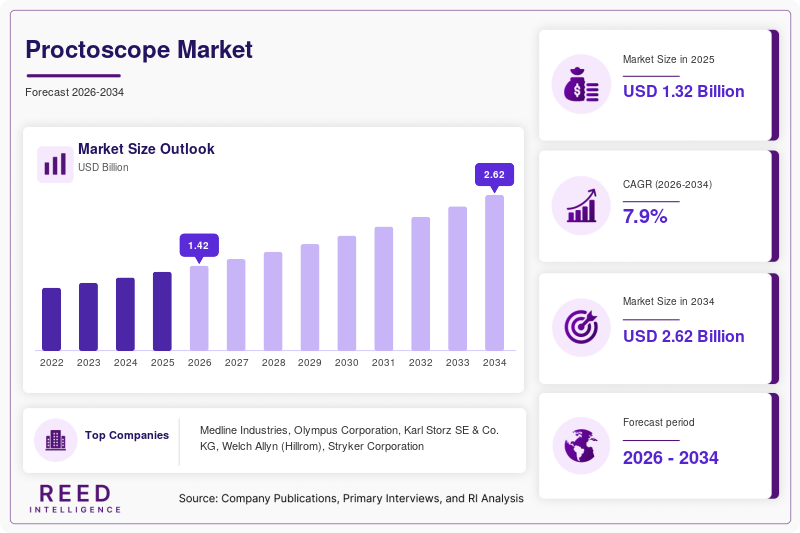
Key Highlights
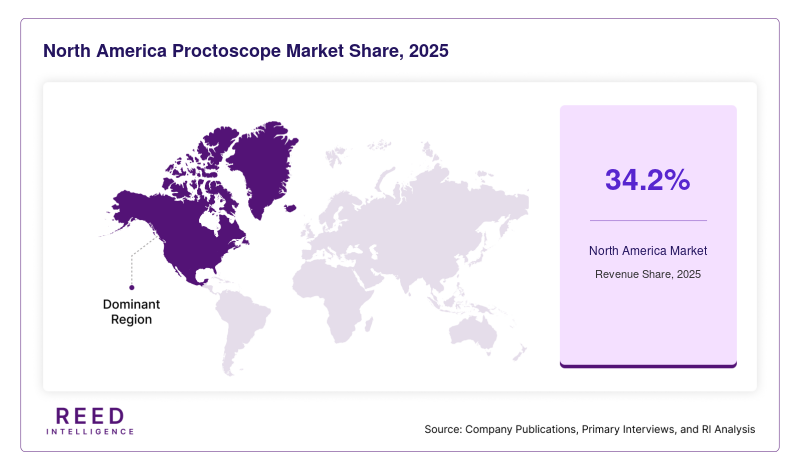
- North America dominated the market with a 34.2% share in 2025.
- while Asia Pacific is expected to grow at the fastest CAGR of 11.2% during 2026–2034.
- By product type, rigid proctoscopes accounted for the largest share of 39.6%.
- while disposable proctoscopes are projected to grow at a CAGR of 12.1%.
- By application, colorectal diagnostics led with a 42.3% share.
- whereas therapeutic endoscopy-assisted procedures are expected to expand at a CAGR of 11.5%.
- The United States remained the dominant country, with market values of USD 610 million in 2024 and USD 655 million in 2025.
Market Trends
Integration of Digital Visualization and Imaging Systems
One of the most prominent trends in the Proctoscope Market is the integration of advanced digital visualization technologies into traditional diagnostic devices. Modern proctoscopes are increasingly equipped with high-definition cameras, LED illumination systems, and real-time imaging transmission capabilities. These enhancements allow clinicians to obtain clearer internal rectal images, improving diagnostic precision and reducing procedural errors. Hospitals are adopting video-enabled proctoscopes that can connect to monitoring systems for documentation and remote consultation. This trend is also supported by the growing demand for telemedicine-assisted diagnostics, where digital imaging plays a central role in remote evaluation of gastrointestinal conditions. Manufacturers are focusing on ergonomic designs and lightweight materials combined with digital integration to improve usability in outpatient and surgical environments.
Rising Adoption of Disposable and Single-Use Devices
Another significant trend shaping the market is the growing shift toward disposable and single-use proctoscopes. Infection control concerns, particularly in hospital environments, have driven healthcare providers to adopt devices that eliminate cross-contamination risks. Disposable proctoscopes are manufactured using cost-effective medical-grade plastics and are designed for single-patient use, ensuring higher hygiene standards. This trend is especially strong in outpatient clinics and ambulatory surgical centers where high patient turnover demands quick and safe procedural workflows. Regulatory bodies emphasizing strict sterilization protocols are further encouraging this transition. Additionally, manufacturers are innovating biodegradable disposable materials to address environmental concerns, aligning product development with sustainability goals in the healthcare sector.
Market Drivers
Rising Prevalence of Colorectal and Anorectal Disorders
A major driver of the Proctoscope Market is the increasing prevalence of colorectal and anorectal disorders, including hemorrhoids, anal fissures, and colorectal cancer. Sedentary lifestyles, dietary changes, and rising obesity rates have contributed to a higher incidence of gastrointestinal conditions globally. Aging populations in developed economies further amplify the demand for diagnostic procedures such as proctoscopy. Early detection programs implemented by healthcare organizations are increasing screening volumes, particularly for colorectal cancer. This has led to greater utilization of proctoscopes in both hospital and outpatient settings. Additionally, awareness campaigns promoting preventive screening are encouraging individuals to undergo routine rectal examinations, thereby supporting sustained market demand across healthcare systems worldwide.
Expansion of Minimally Invasive Diagnostic Procedures
The growing preference for minimally invasive diagnostic techniques is another key factor driving market expansion. Proctoscopy is considered a low-risk, cost-effective procedure that provides quick diagnostic insights without the need for complex surgical interventions. Healthcare providers are increasingly adopting such techniques to reduce patient recovery time, procedural costs, and hospital stays. The integration of advanced imaging and ergonomic device designs has improved procedural efficiency, making proctoscopy more acceptable among both physicians and patients. Furthermore, outpatient diagnostic centers are expanding globally, particularly in emerging economies, where demand for affordable and efficient gastrointestinal diagnostics is increasing. This shift toward minimally invasive procedures continues to strengthen market penetration.
Market Restraint
Limited Awareness and Access in Low-Income Regions
Despite strong global growth potential, the Proctoscope Market faces restraints due to limited awareness and access to gastrointestinal diagnostic tools in low-income and rural regions. Many developing healthcare systems lack adequate infrastructure for early colorectal screening, resulting in delayed diagnosis of critical conditions. Additionally, shortages of trained gastroenterologists and endoscopic specialists further restrict the adoption of proctoscopic procedures. Financial constraints in public healthcare systems also limit the procurement of advanced diagnostic equipment. As a result, a significant portion of the population in underdeveloped regions remains underserved, which slows overall market penetration despite increasing global demand for colorectal disease management.
Market Opportunities
Expansion of Outpatient and Ambulatory Care Centers
One of the most promising opportunities in the Proctoscope Market is the rapid expansion of outpatient and ambulatory surgical centers. These facilities are increasingly preferred due to their cost efficiency, reduced waiting times, and focus on same-day procedures. Proctoscopy is particularly well-suited for outpatient environments, where quick diagnostic evaluations are required. The growing shift from inpatient hospital care to decentralized healthcare delivery models is expected to significantly boost demand for portable and easy-to-use proctoscopes. Manufacturers are responding by developing compact, battery-operated, and digitally integrated devices that enhance workflow efficiency in outpatient settings. This structural shift in healthcare delivery is expected to create long-term market expansion opportunities.
Technological Advancements in AI-Assisted Diagnostics
Another key opportunity lies in the integration of artificial intelligence (AI) and machine learning into proctoscopic diagnostics. AI-enabled systems can assist physicians in identifying abnormalities, analyzing tissue patterns, and improving diagnostic accuracy. These technologies reduce human error and support early detection of colorectal diseases. The incorporation of AI-driven imaging analytics into proctoscopes is expected to transform diagnostic workflows by enabling automated reporting and predictive diagnosis. Healthcare providers are increasingly investing in smart diagnostic systems to improve efficiency and reduce workload. As AI adoption continues to expand in medical imaging, its application in proctoscopy presents significant growth potential for manufacturers and technology developers.
Segmental Analysis
Product Type Segment
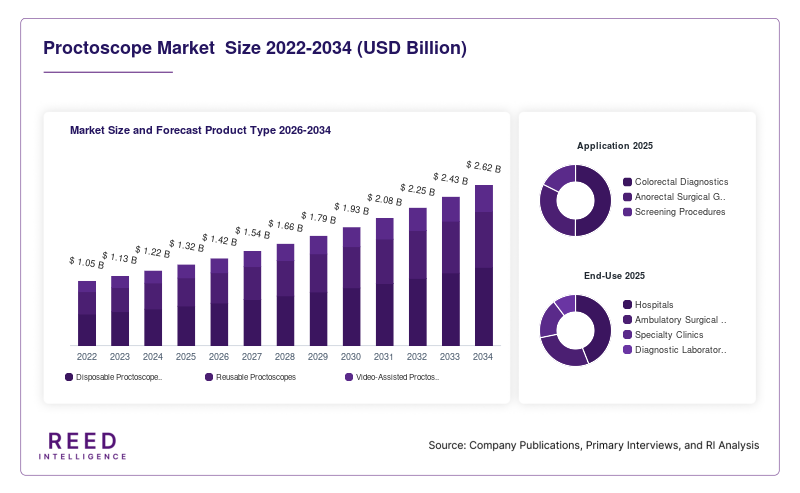
The Product Type segment of the Proctoscope Market is primarily categorized into rigid, flexible, and disposable proctoscopes. Rigid proctoscopes accounted for the dominant share of approximately 39.6% in 2024, as they are widely used in routine colorectal examinations due to their durability, cost-effectiveness, and ease of use in clinical settings. Hospitals and diagnostic centers continue to rely on rigid devices for standard proctoscopic procedures, especially in high-volume healthcare environments where operational efficiency is essential.
Disposable proctoscopes are emerging as the fastest-growing subsegment, projected to register a CAGR of 12.1% during the forecast period. This growth is driven by rising concerns regarding infection control and cross-contamination in clinical environments. Healthcare providers are increasingly shifting toward single-use devices to comply with stringent sterilization protocols and improve patient safety. Additionally, technological advancements in lightweight materials and improved optical clarity are enhancing the performance of disposable proctoscopes, making them a preferred choice in outpatient and ambulatory care settings.
Application Segment
Within the Application segment, colorectal diagnostics held the dominant share of approximately 42.3% in 2024, driven by increasing prevalence of colorectal cancer, hemorrhoids, and other anorectal disorders. Proctoscopy remains a critical first-line diagnostic procedure for evaluating rectal conditions due to its simplicity, affordability, and ability to provide immediate visual assessment. Rising global screening initiatives and awareness campaigns are further supporting widespread adoption of diagnostic procedures across hospitals and specialty clinics.
Therapeutic endoscopy-assisted procedures represent the fastest-growing application segment, expected to expand at a CAGR of 11.5% during 2026–2034. This growth is attributed to advancements in minimally invasive treatment techniques that allow physicians to perform both diagnosis and intervention simultaneously. Integration of enhanced visualization systems and precision-based instruments has improved procedural efficiency and outcomes. Increasing demand for outpatient therapeutic solutions and reduced hospital stay durations further support growth in this segment.
End-Use Segment
The End-Use segment is dominated by hospitals, which accounted for approximately 45.8% share in 2024. Hospitals remain the primary centers for proctoscopic procedures due to their access to advanced diagnostic infrastructure, skilled medical professionals, and comprehensive patient care facilities. High patient inflow and availability of multidisciplinary gastrointestinal departments contribute significantly to the dominance of hospitals in the global market.
Ambulatory surgical centers are the fastest-growing end-use segment, projected to grow at a CAGR of 11.8% during the forecast period. This growth is driven by the increasing shift toward outpatient care models that prioritize cost efficiency, reduced waiting times, and faster patient recovery. ASCs are increasingly adopting compact, portable, and disposable proctoscope systems to streamline workflow efficiency. Rising investments in decentralized healthcare infrastructure, particularly in emerging economies, are further accelerating adoption across this segment.
Regional Analysis
North America
North America accounted for approximately 34.2% of the global Proctoscope Market in 2025, supported by advanced healthcare infrastructure, strong colorectal screening adoption, and high awareness of gastrointestinal disorders. The region is projected to expand at a CAGR of 7.2% during 2026–2034, driven by increasing procedural volumes in hospitals and outpatient diagnostic centers. Demand is further strengthened by the widespread availability of minimally invasive diagnostic technologies and favorable reimbursement frameworks that encourage preventive screening practices across the population.
The United States dominates the regional landscape due to its highly developed hospital network and early adoption of advanced endoscopic technologies. A key growth factor is the rising prevalence of colorectal cancer and hemorrhoidal conditions among aging populations, which has led to expanded screening initiatives. Additionally, the presence of leading medical device manufacturers and continuous innovation in disposable and digital proctoscopes further reinforces market expansion across the country.
Europe
Europe held around 27.5% share of the Proctoscope Market in 2025 and is projected to grow at a CAGR of 6.8% from 2026 to 2034. The region benefits from structured public healthcare systems, well-established colorectal cancer screening programs, and high adoption of diagnostic endoscopy procedures. Increasing emphasis on early disease detection and preventive healthcare strategies continues to support demand for proctoscopic examinations across hospitals and specialty clinics.
Germany leads the European market due to its advanced medical infrastructure and strong focus on diagnostic innovation. A major growth factor is the rising geriatric population, which increases susceptibility to colorectal disorders and drives screening volumes. Additionally, government-funded awareness programs and the integration of digital diagnostic tools in healthcare facilities contribute to consistent market expansion across Western and Central Europe.
Asia Pacific
Asia Pacific accounted for approximately 22.8% share in 2025, and is expected to register the fastest CAGR of 11.2% during 2026–2034. Rapid expansion of healthcare infrastructure, increasing medical tourism, and rising awareness of gastrointestinal diseases are key factors driving market growth. The region is witnessing strong demand for cost-effective diagnostic tools, particularly in densely populated countries where early disease detection is becoming a healthcare priority.
China dominates the regional market due to its large patient base and expanding hospital infrastructure. A major growth factor is government investment in healthcare modernization and colorectal cancer screening programs. India is also emerging as a high-growth market, driven by increasing healthcare accessibility, rising disposable income, and growing adoption of affordable diagnostic technologies in both urban and semi-urban healthcare centers.
Middle East & Africa
The Middle East & Africa region held nearly 8.3% share of the Proctoscope Market in 2025 and is expected to grow at a CAGR of 8.1% during the forecast period. Market growth is supported by improving healthcare infrastructure, increasing investment in specialty clinics, and rising awareness of colorectal health. Although adoption levels remain lower compared to developed regions, gradual modernization of healthcare systems is driving steady demand for diagnostic endoscopy solutions.
Saudi Arabia leads the regional market due to significant government spending on healthcare development under national transformation programs. A key growth factor is the expansion of tertiary care hospitals and diagnostic centers equipped with modern endoscopic equipment. Additionally, increasing prevalence of lifestyle-related gastrointestinal disorders in urban populations is contributing to higher diagnostic procedure volumes across the region.
Latin America
Latin America accounted for approximately 7.2% share of the global market in 2025 and is projected to expand at a CAGR of 7.6% from 2026 to 2034. Growth is driven by improving access to healthcare services, rising awareness of colorectal diseases, and gradual adoption of minimally invasive diagnostic technologies. Public health initiatives aimed at strengthening early detection capabilities are also supporting market expansion across major economies.
Brazil dominates the Latin American market due to its relatively advanced hospital infrastructure and growing investment in diagnostic healthcare services. A key growth factor is increasing government focus on preventive healthcare programs and expanding screening initiatives for gastrointestinal diseases. Argentina also contributes to market growth through gradual improvements in healthcare funding and rising adoption of modern diagnostic equipment in urban healthcare facilities.
Competitive Landscape
The Proctoscope Market features a moderately consolidated structure with leading players focusing on product innovation, material advancements, and digital integration. Companies such as Olympus Corporation, Karl Storz, Medtronic, Stryker Corporation, and CooperSurgical maintain strong market positions through extensive distribution networks and continuous R&D investments. Olympus Corporation remains a leading player due to its advanced endoscopic imaging technologies and global presence. Recent developments include the launch of enhanced LED-integrated disposable proctoscopes and expansion of production facilities to meet rising global demand.
Key Players
- Olympus Corporation
- Karl Storz SE & Co. KG
- Medtronic plc
- Stryker Corporation
- CooperSurgical Inc.
- Boston Scientific Corporation
- Welch Allyn
- Richard Wolf GmbH
- Hologic Inc.
- B. Braun Melsungen AG
- CONMED Corporation
- Smith & Nephew plc
- Fujifilm Holdings Corporation
- Mindray Medical International
- Medline Industries
Recent Developments
- Recent years have seen notable advancements in the Proctoscope Market.
- Several manufacturers have introduced disposable proctoscope models with enhanced LED illumination systems to improve diagnostic clarity and reduce infection risks.
- Digital integration has also expanded, with new devices enabling real-time image capture and cloud-based data sharing for remote consultation.
- Additionally, strategic collaborations between medical device companies and healthcare providers have increased, focusing on expanding colorectal screening programs in emerging economies.
- Investments in AI-assisted diagnostic platforms are also rising, enabling improved detection accuracy and workflow automation in gastrointestinal examinations.
Proctoscope Market Segments
Product Type
- Disposable Proctoscopes
- Reusable Proctoscopes
- Video-Assisted Proctoscopes
Application
- Colorectal Diagnostics
- Anorectal Surgical Guidance
- Screening Procedures
End-Use
- Hospitals
- Ambulatory Surgical Centers
- Specialty Clinics
- Diagnostic Laboratories
By Region
- North America
- Europe
- APAC
- Middle East and Africa
- LATAM