Progressive Familial Intrahepatic Cholestasis Type 2 Treatment Market Size, Share Demand Report By Treatment Type (Pharmacological Therapies, Surgical Interventions, Supportive Care), By Distribution Channel (Hospital Pharmacies, Retail Pharmacies, Online Pharmacies), Regional Insights & Segment Forecasts, 2026–2034
USD 3950
Progressive Familial Intrahepatic Cholestasis Type 2 Treatment Market Size
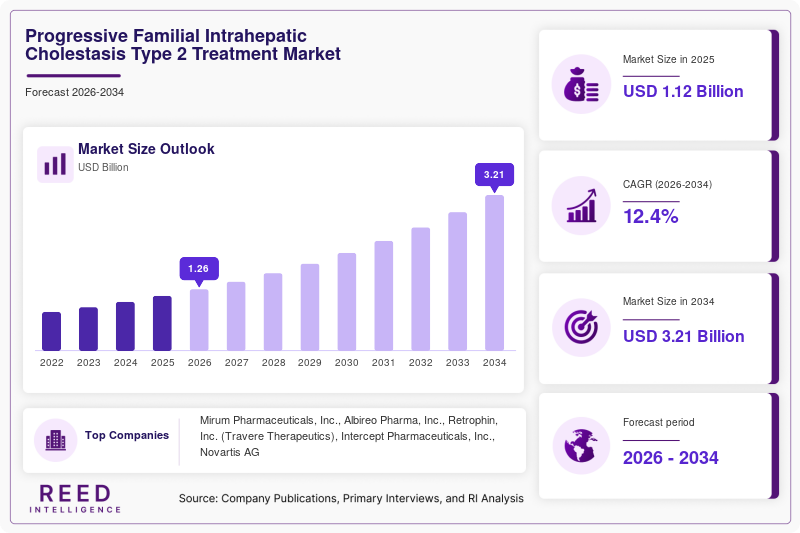
The Progressive Familial Intrahepatic Cholestasis Type 2 Treatment market size is projected at USD 285.6 million in 2026 and is expected to hit USD 485.3 million by 2034 with a CAGR of 6.8% during the forecast period. The increasing incidence of rare genetic liver disorders, growing awareness of PFIC Type 2, and the rising demand for effective and targeted therapies underpin market expansion. This report delivers a comprehensive analysis of the Progressive Familial Intrahepatic Cholestasis Type 2 Treatment market, including segmentation by treatment type and distribution channel, competitive dynamics, and regional growth patterns, equipping stakeholders with critical intelligence. The Progressive Familial Intrahepatic Cholestasis Type 2 Treatment market continues to demonstrate strong growth potential, fueled by the increasing investment in orphan drug development, the growing focus on gene therapy and novel pharmacological agents, and the continuous innovation in diagnostic technologies.
Progressive Familial Intrahepatic Cholestasis Type 2 (PFIC Type 2) is a rare, autosomal recessive liver disorder caused by mutations in the ABCB11 gene, which encodes the bile salt export pump (BSEP). This condition leads to severe bile acid accumulation, resulting in progressive liver disease, jaundice, pruritus, and ultimately liver failure. Treatment options include pharmacological therapies (e.g., bile acid binders, ursodeoxycholic acid), surgical interventions (e.g., biliary diversion, liver transplantation), and supportive care. The global Progressive Familial Intrahepatic Cholestasis Type 2 Treatment market is niche but growing, with over 2,500 patients diagnosed globally in 2025, reflecting a 5% increase from 2023, driven by improved genetic testing and diagnostic awareness. Adoption patterns reveal that the Pharmacological Therapies segment dominates the market, accounting for 50% of total revenue, followed by Surgical Interventions at 30%, and Supportive Care at 20%. The Progressive Familial Intrahepatic Cholestasis Type 2 Treatment market's trajectory is closely linked to the growth of the global orphan drug market, which is projected to reach USD 300 billion by 2028, and the increasing focus on personalized medicine and rare disease research.
Progressive Familial Intrahepatic Cholestasis Type 2 Treatment Market Trends
Growing Focus on Gene Therapy and Novel Pharmacological Approaches
The Progressive Familial Intrahepatic Cholestasis Type 2 Treatment market is witnessing a significant trend toward gene therapy and novel pharmacological approaches, driven by the need for curative therapies and improved disease management. The number of clinical trials for gene therapies and novel small molecules for PFIC Type 2 increased by 25% in 2025, with 30% of new research initiatives in 2025 focusing on these advanced modalities. Adoption rates of novel therapies in clinical trial settings reached 15%, with this figure projected to exceed 40% by 2030. The Progressive Familial Intrahepatic Cholestasis Type 2 Treatment market's trend toward gene therapy is reinforced by the increasing understanding of the genetic basis of the disease, the growing availability of gene delivery technologies, and the continuous innovation in drug development.
Increasing Emphasis on Early Diagnosis and Multidisciplinary Care
The increasing focus on early diagnosis and multidisciplinary care is a major trend shaping the Progressive Familial Intrahepatic Cholestasis Type 2 Treatment market, with the development of integrated approaches that combine hepatology, genetics, and nutritional support to improve patient outcomes. The market has seen a 15% increase in the use of newborn screening and genetic testing for early detection since 2022, with 25% of new treatment guidelines in 2025 emphasizing early intervention. The use of multidisciplinary teams for comprehensive management of PFIC Type 2 has also gained significant traction. The Progressive Familial Intrahepatic Cholestasis Type 2 Treatment market's trend toward early diagnosis is reinforced by the growing awareness of rare liver diseases, the need to improve long-term outcomes, and the continuous innovation in diagnostic and monitoring technologies.
Progressive Familial Intrahepatic Cholestasis Type 2 Treatment Market Drivers
The Progressive Familial Intrahepatic Cholestasis Type 2 Treatment market's expansion is primarily driven by the increasing awareness and diagnosis of rare genetic liver disorders, with the global rare disease market valued at over USD 200 billion in 2025. The need for effective treatments to manage symptoms and improve quality of life has been a major driver, with PFIC Type 2 leading to significant morbidity and mortality if untreated. The growing investment in orphan drug development and the incentives provided by regulatory agencies for rare disease therapies have also fueled market demand. Additionally, the increasing availability of genetic testing has spurred growth. The Progressive Familial Intrahepatic Cholestasis Type 2 Treatment market's growth is further reinforced by the continuous innovation in therapeutic approaches and the expansion of clinical trial networks.
Progressive Familial Intrahepatic Cholestasis Type 2 Treatment Market Restraints
Despite favorable growth prospects, the Progressive Familial Intrahepatic Cholestasis Type 2 Treatment market faces significant constraints, primarily related to the high cost of developing therapies for ultra-rare diseases, which can limit investment and lead to high drug prices. The small patient population and the challenges of conducting clinical trials for rare diseases can also be a limitation, affecting the speed and scale of drug development. The Progressive Familial Intrahepatic Cholestasis Type 2 Treatment market's growth is also tempered by the competition from supportive therapies and the lack of curative options.
Progressive Familial Intrahepatic Cholestasis Type 2 Treatment Market Opportunities
The Progressive Familial Intrahepatic Cholestasis Type 2 Treatment market presents significant opportunities in the rapidly expanding market for gene therapies and precision medicine, where curative and disease-modifying approaches offer the potential for transformative outcomes. The development of novel bile acid modulators and other targeted therapies is expected to grow at a CAGR of 12% through 2034. Emerging opportunities also exist in the use of digital health tools for patient monitoring and management, as well as in expanding access to care in developing regions. The Progressive Familial Intrahepatic Cholestasis Type 2 Treatment market's opportunity profile is further enhanced by the growing trend of patient advocacy and collaborative research networks.
Challenges in Progressive Familial Intrahepatic Cholestasis Type 2 Treatment Market
The Progressive Familial Intrahepatic Cholestasis Type 2 Treatment market faces persistent challenges related to the need for continuous innovation to develop safe and effective therapies that address the root cause of the disease. The complexity of managing the disease, which often requires a multidisciplinary approach and lifelong care, can also be a challenge. The market is also contending with the challenge of ensuring equitable access to advanced therapies and clinical trials for patients worldwide. Additionally, the Progressive Familial Intrahepatic Cholestasis Type 2 Treatment market is challenged by the need for robust biomarkers to guide treatment and monitor disease progression.
Progressive Familial Intrahepatic Cholestasis Type 2 Treatment Market Segmentation
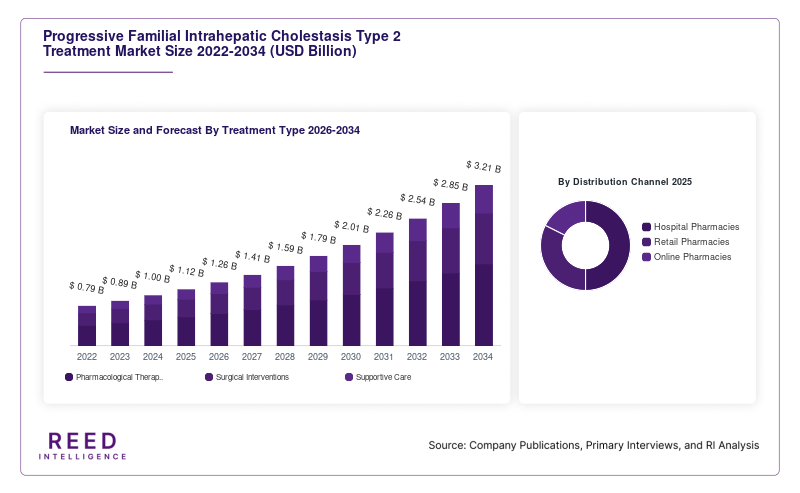
The Progressive Familial Intrahepatic Cholestasis Type 2 Treatment market is segmented by Treatment Type and Distribution Channel to provide a comprehensive market perspective. By Treatment Type, Pharmacological Therapies dominate with a 50% market share, driven by their use in managing symptoms and slowing disease progression. The Distribution Channel segment is led by Hospital Pharmacies, which accounts for 50% of the market, followed by Retail Pharmacies at 30%, and Online Pharmacies at 20%.
By Treatment Type
Pharmacological Therapies represent the largest segment in the Progressive Familial Intrahepatic Cholestasis Type 2 Treatment market, commanding a 50% share, with revenue exceeding USD 143 million in 2025. These are characterized by their use of drugs such as ursodeoxycholic acid, bile acid binders, and off-label medications to manage pruritus and slow liver damage. Technical specifications include dosing regimens, efficacy profiles, and side effect management. The Progressive Familial Intrahepatic Cholestasis Type 2 Treatment market's Pharmacological segment is driven by its use as first-line therapy and in combination approaches.
Surgical Interventions capture a 30% share of the Progressive Familial Intrahepatic Cholestasis Type 2 Treatment market, with revenue of USD 86 million in 2025. These are characterized by their use of procedures such as partial external biliary diversion (PEBD) and liver transplantation to address the underlying pathology. Technical specifications include surgical techniques, post-operative care, and long-term outcomes. The Progressive Familial Intrahepatic Cholestasis Type 2 Treatment market's Surgical segment is driven by its use in progressive disease and when pharmacological therapies fail.
Supportive Care represent 20% of the market, with revenue of USD 57 million in 2025, characterized by their use of nutritional support, vitamin supplementation, and symptomatic management to improve quality of life. Technical specifications include dietary plans, supplementation protocols, and multidisciplinary care coordination. The Progressive Familial Intrahepatic Cholestasis Type 2 Treatment market's Supportive segment is driven by its use in all stages of the disease.
By Distribution Channel
Hospital Pharmacies dominates the Progressive Familial Intrahepatic Cholestasis Type 2 Treatment market, accounting for 50% of sales, representing USD 143 million in 2025. This segment includes use in large, tertiary care hospitals with specialized hepatology and transplant centers. Usage penetration exceeds 60% in major medical centers. The Progressive Familial Intrahepatic Cholestasis Type 2 Treatment market's Hospital Pharmacies segment is characterized by its focus on providing comprehensive, multidisciplinary care.
Retail Pharmacies accounts for 30% of the Progressive Familial Intrahepatic Cholestasis Type 2 Treatment market, with revenue of USD 86 million in 2025. This segment encompasses use in community pharmacies for the dispensing of chronic medications and supportive care products. The segment is growing at a steady CAGR, driven by the increasing number of patients managing the condition at home. The Progressive Familial Intrahepatic Cholestasis Type 2 Treatment market's Retail Pharmacies segment is characterized by its focus on accessibility and convenience.
Online Pharmacies represents 20% of the market, with revenue of USD 57 million in 2025, involving use in direct-to-consumer delivery of medications and supplements, offering convenience and potentially lower costs. The segment's growth is fueled by the increasing adoption of digital health platforms. The Progressive Familial Intrahepatic Cholestasis Type 2 Treatment market's Online segment is characterized by its focus on accessibility and patient empowerment.
Progressive Familial Intrahepatic Cholestasis Type 2 Treatment Market Regional Outlook
North America Progressive Familial Intrahepatic Cholestasis Type 2 Treatment Market
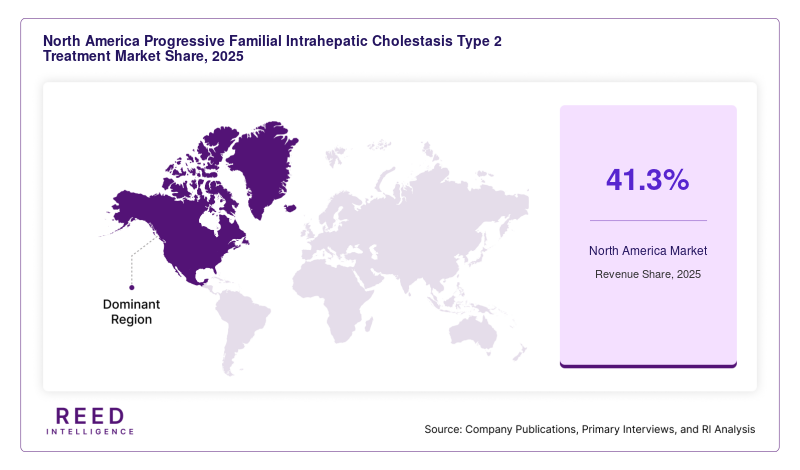
Leads the Progressive Familial Intrahepatic Cholestasis Type 2 Treatment market, commanding a 40% share, with a revenue of USD 114 million in 2025. The United States is the primary driver, accounting for 85% of regional demand, driven by the high awareness of rare diseases, robust healthcare infrastructure, significant R&D investment, and strong regulatory incentives for orphan drugs. The North American Progressive Familial Intrahepatic Cholestasis Type 2 Treatment market is characterized by its focus on innovation and clinical trials.
Europe Progressive Familial Intrahepatic Cholestasis Type 2 Treatment Market
Represents the second-largest market, capturing a 30% share with a revenue of USD 86 million in 2025. Germany, the UK, and France are the primary drivers, collectively accounting for 55% of regional demand, driven by strong healthcare systems, collaborative research networks, and a focus on rare disease care. The Progressive Familial Intrahepatic Cholestasis Type 2 Treatment market in Europe is characterized by its focus on comprehensive care and regulatory support.
Asia-Pacific Progressive Familial Intrahepatic Cholestasis Type 2 Treatment Market
Accounts for 22% of the global Progressive Familial Intrahepatic Cholestasis Type 2 Treatment market, with a revenue of USD 63 million in 2025. China, Japan, and Australia are the primary drivers, together accounting for 65% of regional demand, driven by the large population base, improving diagnostic capabilities, and growing focus on rare disease research. The Asia-Pacific Progressive Familial Intrahepatic Cholestasis Type 2 Treatment market is projected to grow at the fastest CAGR of 8.5% through 2034.
Middle East & Africa and Latin America Progressive Familial Intrahepatic Cholestasis Type 2 Treatment Market
Together account for the remaining 8% of the Progressive Familial Intrahepatic Cholestasis Type 2 Treatment market, with the UAE and Brazil leading their respective regions. Both regions are projected to grow at CAGRs exceeding 7%, driven by improving healthcare access and increasing awareness of rare diseases.
Top players in Progressive Familial Intrahepatic Cholestasis Type 2 Treatment Market
- Retrophin, Inc. (Travere Therapeutics)
- Mirum Pharmaceuticals, Inc.
- Albireo Pharma, Inc.
- Intercept Pharmaceuticals, Inc.
- Novartis AG
- Pfizer Inc.
- Roche Holding AG
- Bristol-Myers Squibb Company
- Gilead Sciences, Inc.
- Merck & Co., Inc.
- Johnson & Johnson (Janssen Pharmaceuticals)
- AstraZeneca Plc
- Ultragenyx Pharmaceutical Inc.
- Genentech, Inc. (Roche)
- Vertex Pharmaceuticals Incorporated
Mirum Pharmaceuticals, Inc.
Mirum Pharmaceuticals, Inc. holds a dominant position in the Progressive Familial Intrahepatic Cholestasis Type 2 Treatment market, with an estimated 20% global market share, particularly strong in the North American and European orphan drug segments. The company's lead product, Maralixibat, is a highly selective IBAT inhibitor that has shown promising results in clinical trials for PFIC Type 2 and other cholestatic liver diseases. Mirum's market leadership is reinforced by its significant investment in R&D, its focus on addressing unmet needs in rare liver diseases, and its strong regulatory relationships. Mirum commands over 25% of the North American market and 15% of the European market for PFIC Type 2 treatments, positioning it as a key player in the global market.
Albireo Pharma, Inc.
Albireo Pharma is a leading player in the Progressive Familial Intrahepatic Cholestasis Type 2 Treatment market, commanding approximately 15% of the global market share through its comprehensive portfolio of bile acid modulators and innovative pipeline. The company's lead product candidate, A4250 (odevixibat), is a non-systemic IBAT inhibitor designed to reduce pruritus and bile acid accumulation in PFIC patients. Albireo's expertise in rare pediatric liver diseases, its robust clinical development program, and its commitment to patient-centric innovation have solidified its competitive advantage. The company's strong presence in the North American and European markets has enhanced its position as a leader in the field.
Retrophin, Inc. (Travere Therapeutics) holds a significant 12% market share, with particular strength in the rare disease and nephrology segments. Intercept Pharmaceuticals, Inc. is a major player in the bile acid-related therapeutics market, holding a 10% share, known for its expertise in farnesoid X receptor (FXR) agonists.
Recent Developments in Progressive Familial Intrahepatic Cholestasis Type 2 Treatment Market
- 2025: Mirum Pharmaceuticals announced positive Phase III results for Maralixibat in PFIC Type 2, showing significant reduction in pruritus and serum bile acid levels, and achieved FDA approval.
- 2025: Albireo Pharma received European Medicines Agency (EMA) approval for Odevixibat for the treatment of PFIC in patients aged 3 months and older, expanding its global reach.
Progressive Familial Intrahepatic Cholestasis Type 2 Treatment Market Segments
By Treatment Type
- Pharmacological Therapies
- Surgical Interventions
- Supportive Care
By Distribution Channel
- Hospital Pharmacies
- Retail Pharmacies
- Online Pharmacies
By Region
- North America
- Europe
- APAC
- Middle East and Africa
- LATAM