Progressive Supranuclear Palsy Market Size, Share Demand Report By Treatment Type (Symptomatic Drug Therapy, Disease-Modifying Therapy), By Diagnosis Method (Clinical Neurological Evaluation, Neuroimaging Techniques, Laboratory Testing), By End-Use (Hospitals, Specialty Neurology Clinics, Research Institutes), By Region & Segment Forecasts, 2025–2034
USD 3950
Market Overview
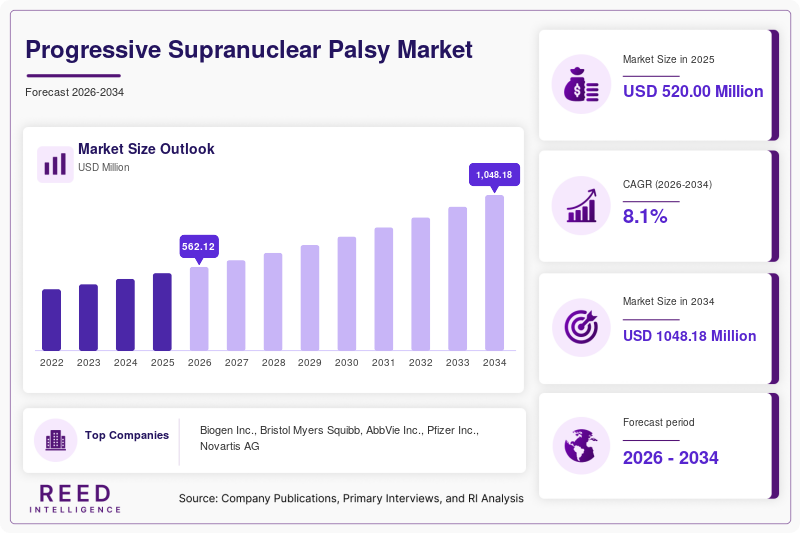
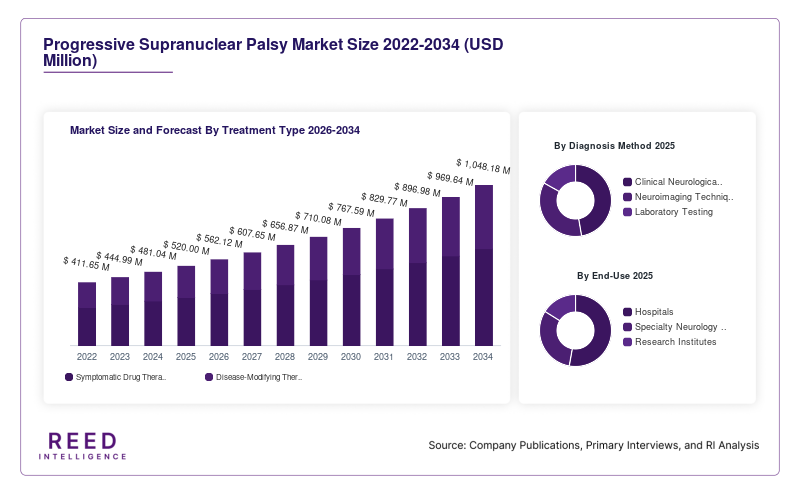
The Progressive Supranuclear Palsy Market size was valued at approximately USD 520 million in 2024 and is projected to reach around USD 1.05 billion by 2033, expanding at a compound annual growth rate (CAGR) of 8.1% from 2025 to 2034. Progressive supranuclear palsy (PSP) is a rare neurodegenerative disorder characterized by progressive impairment in balance, eye movement, cognition, and muscle control. Increasing attention toward rare neurological conditions, along with expanding research investments in neurodegenerative disease therapeutics, is expected to support the market’s steady growth over the forecast period.
A major global factor supporting the expansion of the Progressive Supranuclear Palsy Market is the growing investment in neurodegenerative disease research and orphan drug development programs. Governments and healthcare organizations across developed economies have introduced funding initiatives that support clinical trials targeting tau protein aggregation and other pathological pathways associated with PSP. Pharmaceutical and biotechnology companies are actively exploring disease-modifying therapies and symptomatic treatment options, creating a stronger research pipeline for PSP therapeutics. Additionally, improved diagnostic capabilities through advanced neuroimaging techniques and neurological assessments are contributing to earlier disease detection, which is expanding the potential patient treatment base.
Key Highlights
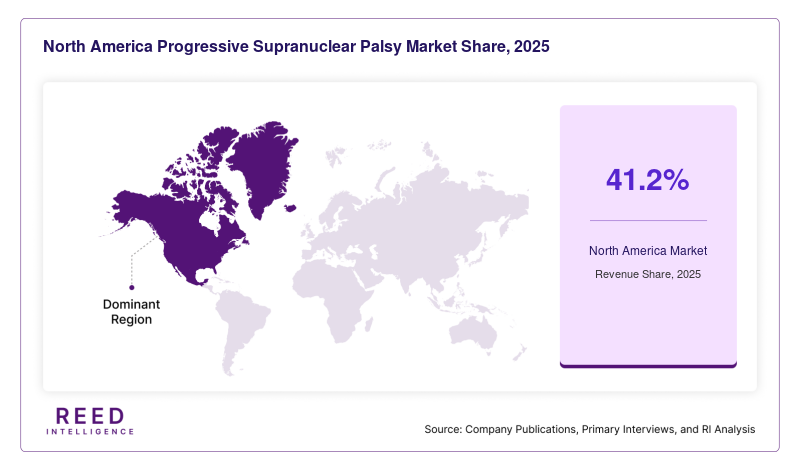
- North America dominated the market with a 41.2% share in 2025, while Asia Pacific is projected to record the fastest CAGR of 9.4% through 2034.
- Within treatment type, symptomatic drug therapy held the leading share of 63.5% in 2024, while disease-modifying therapy candidates are expected to expand at a CAGR of 10.2% during the forecast period.
- By end-use, hospitals accounted for 54.7% of the market in 2024, whereas specialty neurology clinics are projected to grow at a CAGR of 9.1%.
- The United States represented the largest national market, with an estimated USD 188 million in 2024, rising to approximately USD 203 million in 2025.
Market Trends
Expansion of Tau-Targeted Therapeutic Research
One of the prominent trends shaping the Progressive Supranuclear Palsy Market is the increasing focus on tau protein–targeted therapies. PSP is primarily characterized by abnormal accumulation of tau proteins within brain cells, leading to neuronal dysfunction. As a result, pharmaceutical developers are directing research toward monoclonal antibodies, antisense oligonucleotides, and small molecules designed to inhibit tau aggregation or promote its clearance.
The growing number of clinical trials investigating tau-directed therapies reflects the industry's evolving approach toward disease-modifying treatment strategies. These therapies aim not only to alleviate symptoms but also to slow or halt disease progression, potentially transforming the treatment paradigm for PSP patients.
Advancements in Neurodiagnostic Technologies
Another notable trend in the Progressive Supranuclear Palsy Market is the increasing use of advanced neurodiagnostic technologies for earlier disease identification. Emerging imaging techniques, including specialized MRI protocols and PET scans targeting tau pathology, are improving diagnostic accuracy for PSP.
Earlier and more precise diagnosis enables neurologists to differentiate PSP from other parkinsonian syndromes such as Parkinson’s disease or corticobasal degeneration. This improved diagnostic capability supports earlier clinical intervention and expands patient enrollment in clinical trials. Over time, the availability of improved diagnostic tools is expected to contribute to a more structured PSP treatment landscape.
Market Drivers
Rising Awareness of Rare Neurodegenerative Disorders
The growing awareness surrounding rare neurological diseases is a key driver supporting the Progressive Supranuclear Palsy Market. Advocacy organizations, research foundations, and patient support networks have played a significant role in raising awareness among healthcare professionals and policymakers about PSP.
Educational campaigns, physician training programs, and rare disease registries have helped improve recognition of PSP symptoms. Increased awareness encourages earlier referral to neurologists and specialized care centers, thereby expanding diagnosis rates and supporting treatment demand.
Expansion of Orphan Drug Development Programs
Another important growth driver is the expansion of orphan drug designation programs across several regulatory agencies. These programs provide incentives such as tax benefits, regulatory support, and extended market exclusivity for pharmaceutical companies developing therapies for rare diseases like PSP.
As a result, biotechnology companies and pharmaceutical developers are increasingly investing in PSP drug discovery pipelines. The presence of multiple clinical-stage therapies targeting disease mechanisms is strengthening long-term market growth prospects.
Market Restraint
Limited Approved Disease-Modifying Therapies
A significant restraint affecting the Progressive Supranuclear Palsy Market is the limited availability of approved disease-modifying treatments. Currently, most available treatment options focus on symptomatic management rather than addressing the underlying pathology of the disease.
Medications used in PSP treatment are often adapted from therapies originally designed for Parkinson’s disease, and their clinical effectiveness for PSP remains limited. This lack of targeted therapies restricts treatment outcomes and slows adoption of pharmaceutical interventions. Furthermore, the complexity of PSP pathology poses challenges for drug development, resulting in lengthy and costly clinical trials with uncertain outcomes.
Market Opportunities
Emerging Precision Medicine Approaches
Precision medicine represents an emerging opportunity within the Progressive Supranuclear Palsy Market. Researchers are increasingly investigating genetic, molecular, and biomarker-based approaches to identify patient subgroups that may respond more effectively to specific therapies.
The development of personalized treatment strategies could enhance therapeutic outcomes and support more targeted drug development pipelines. Precision medicine frameworks also allow researchers to design more efficient clinical trials by selecting patients with specific disease characteristics.
Growing Clinical Trial Activity
The increasing number of global clinical trials focusing on PSP therapies presents another opportunity for market expansion. Academic research centers, pharmaceutical companies, and biotechnology firms are collaborating to investigate novel therapeutic candidates targeting tau pathology, neuroinflammation, and neuronal degeneration.
Expanding clinical trial networks across multiple regions is enabling broader patient recruitment and improved data generation. As clinical pipelines mature and investigational therapies progress toward regulatory approval, the Progressive Supranuclear Palsy Market could witness the introduction of new treatment options during the forecast period.
Segmental Analysis
By Treatment Type
Symptomatic drug therapy represented the dominant subsegment in 2024, accounting for approximately 63.5% of the Progressive Supranuclear Palsy Market share. These therapies primarily include medications aimed at managing motor symptoms, muscle stiffness, and cognitive impairment associated with PSP. Physicians frequently prescribe dopaminergic agents, antidepressants, and muscle relaxants to improve patient quality of life. The widespread use of symptomatic treatments is attributed to their availability, established clinical use, and accessibility across healthcare systems.
Disease-modifying therapies are expected to represent the fastest-growing treatment segment, expanding at a CAGR of 10.2% through 2034. These therapies aim to directly target underlying disease mechanisms such as tau protein aggregation and neurodegeneration. As pharmaceutical developers continue to explore monoclonal antibodies, gene-based therapies, and molecular inhibitors targeting tau pathology, this segment will gain momentum. Successful clinical trial outcomes could introduce new treatment classes capable of slowing disease progression.
By Diagnosis Method
Clinical neurological evaluation accounted for the largest share of the Progressive Supranuclear Palsy Market in 2024, representing 46.8% of the segment share. Neurologists rely on comprehensive clinical examinations that evaluate motor coordination, eye movement abnormalities, and postural instability to diagnose PSP. The importance of clinical assessment remains high because PSP symptoms often overlap with other parkinsonian disorders, requiring expert neurological interpretation.
Neuroimaging-based diagnosis is expected to witness the fastest growth with a projected CAGR of 9.6%. Advanced imaging modalities such as magnetic resonance imaging and tau-targeted PET scans provide detailed insights into structural and molecular brain changes. These technologies enable improved differentiation of PSP from other neurological disorders. As imaging technologies become more widely available, they will play a larger role in supporting accurate diagnosis and monitoring disease progression.
By End-Use
Hospitals held the largest share of the Progressive Supranuclear Palsy Market in 2024, accounting for 54.7% of total demand. Hospitals remain the primary healthcare settings where patients receive comprehensive neurological evaluations, diagnostic imaging, and pharmacological treatment. The presence of multidisciplinary medical teams enables coordinated care involving neurologists, physiotherapists, and rehabilitation specialists.
Specialty neurology clinics are expected to grow at the fastest CAGR of 9.1% during the forecast period. These clinics focus specifically on neurological disorders and provide specialized diagnostic and therapeutic services for patients with complex neurodegenerative conditions. As the demand for targeted neurological expertise increases, specialty clinics will expand their role in PSP management.
Regional Analysis
North America
North America accounted for 41.2% of the Progressive Supranuclear Palsy Market in 2025 and represented the largest regional share. The market in this region will expand at a CAGR of 7.9% from 2025 to 2034. The strong presence of neurological research institutions, advanced healthcare infrastructure, and extensive clinical trial activity contributed to regional market dominance. Additionally, the presence of leading pharmaceutical and biotechnology companies actively involved in neurodegenerative disease research supported the region’s established market position.
The United States represented the dominant national market in North America. A major factor contributing to its growth is the extensive network of neurological research centers and academic institutions engaged in PSP research. Government-supported research initiatives and patient registries facilitate better disease surveillance and clinical trial recruitment. These initiatives enable improved understanding of disease epidemiology and support ongoing drug development programs targeting PSP pathology.
Europe
Europe held 27.6% of the Progressive Supranuclear Palsy Market in 2025. The regional market will grow at a CAGR of 8.0% through 2034. Growth in Europe has been influenced by increasing collaboration between academic institutions and pharmaceutical companies focused on neurodegenerative research. The presence of well-established healthcare systems across Western Europe has enabled improved patient access to neurological care and diagnostic services.
Germany emerged as the leading national market in Europe. The country benefits from a strong neurological research ecosystem supported by university hospitals and specialized neurology centers. Germany’s clinical research environment encourages participation in multinational clinical trials investigating novel PSP therapies. In addition, the country’s healthcare reimbursement structures support access to neurological diagnostics and specialized treatment services.
Asia Pacific
Asia Pacific represented 18.9% of the Progressive Supranuclear Palsy Market in 2025 and will record the fastest CAGR of 9.4% during the forecast period. Growth across the region is being supported by increasing investment in neurological healthcare infrastructure and the expansion of clinical research capabilities.
Japan accounted for the dominant share within the Asia Pacific market. The country has a strong focus on neurodegenerative disease research and maintains an advanced neurological healthcare system. Japanese research institutions are actively studying tau-related pathologies associated with PSP. Additionally, the country’s aging population has contributed to increased attention toward neurodegenerative disease management, supporting regional market growth.
Middle East & Africa
The Middle East & Africa accounted for 7.1% of the Progressive Supranuclear Palsy Market in 2025. The regional market will grow at a CAGR of 7.5% through 2034. Improvements in healthcare infrastructure and increasing neurological awareness programs are supporting market development across the region.
The United Arab Emirates represented the leading national market within the region. Healthcare modernization initiatives have strengthened the country’s neurological care capabilities. Several tertiary care hospitals are investing in advanced neuroimaging technologies, enabling improved diagnosis of rare neurological conditions such as PSP. The development of specialized neurology departments within major hospitals further supports treatment accessibility.
Latin America
Latin America captured 5.2% of the Progressive Supranuclear Palsy Market in 2025 and is expected to grow at a CAGR of 7.7% over the forecast period. The region’s growth is supported by gradual improvements in healthcare systems and the expansion of neurological diagnostic capabilities.
Brazil represented the dominant national market within Latin America. The country has experienced increasing neurological research activity supported by university hospitals and research institutions. Public health initiatives aimed at improving awareness of neurodegenerative diseases have contributed to better disease recognition and diagnosis, which supports treatment demand in the Brazilian healthcare system.
Competitive Landscape
The Progressive Supranuclear Palsy Market features a mix of global pharmaceutical companies and biotechnology firms engaged in neurodegenerative disease research. Market participants are focusing on clinical trial development, collaboration with academic institutions, and exploration of novel therapeutic mechanisms.
Among the key participants, Biogen Inc. has maintained a strong presence in neurodegenerative disease research and continues to explore tau-targeted therapies relevant to PSP. The company’s investment in neurological research infrastructure supports ongoing development of potential disease-modifying therapies.
Other companies are actively pursuing partnerships with research institutions to expand their PSP drug development pipelines. Strategic collaborations and clinical trial initiatives remain key competitive strategies within the market.
Key Players List
- Biogen Inc.
- Bristol Myers Squibb
- AbbVie Inc.
- Pfizer Inc.
- Novartis AG
- Roche Holding AG
- UCB S.A.
- Ionis Pharmaceuticals Inc.
- TauRx Pharmaceuticals Ltd.
- Asceneuron SA
- Alzprotect
- AstraZeneca plc
- Lundbeck A/S
- Sun Pharmaceutical Industries Ltd.
- Takeda Pharmaceutical Company Limited
Recent Developments
- Several biotechnology firms initiated phase II clinical trials investigating tau-targeted monoclonal antibodies for PSP treatment.
- Research collaborations between pharmaceutical companies and academic neurology centers expanded global PSP patient registries and clinical research networks.
- Advances in tau-specific PET imaging technologies improved diagnostic capabilities for differentiating PSP from other neurodegenerative conditions.
- Biotechnology startups increased investment in gene-based therapeutic approaches targeting tau expression.
- Global neurological research programs introduced multi-center clinical trial frameworks aimed at accelerating drug development for rare neurodegenerative disorders.
Progressive Supranuclear Palsy Market Segments
By Treatment Type
- Symptomatic Drug Therapy
- Disease-Modifying Therapy
By Diagnosis Method
- Clinical Neurological Evaluation
- Neuroimaging Techniques
- Laboratory Testing
By End-Use
- Hospitals
- Specialty Neurology Clinics
- Research Institutes
By Region
- North America
- Europe
- Asia Pacific
- Middle East & Africa
- Latin America
By Region
- North America
- Europe
- APAC
- Middle East and Africa
- LATAM