Proopiomelanocortin Deficiency Treatment Market Size, Share & Demand Report By Treatment Type (Drug Therapy, Gene Therapy), By Route of Administration (Injectable, Oral), By Distribution Channel (Hospital Pharmacies, Retail Pharmacies, Online Pharmacies), By End-User (Hospitals, Specialty Clinics, Research Institutes), By Region & Segment Forecasts, 2025–2034
USD 3950
Market Overview
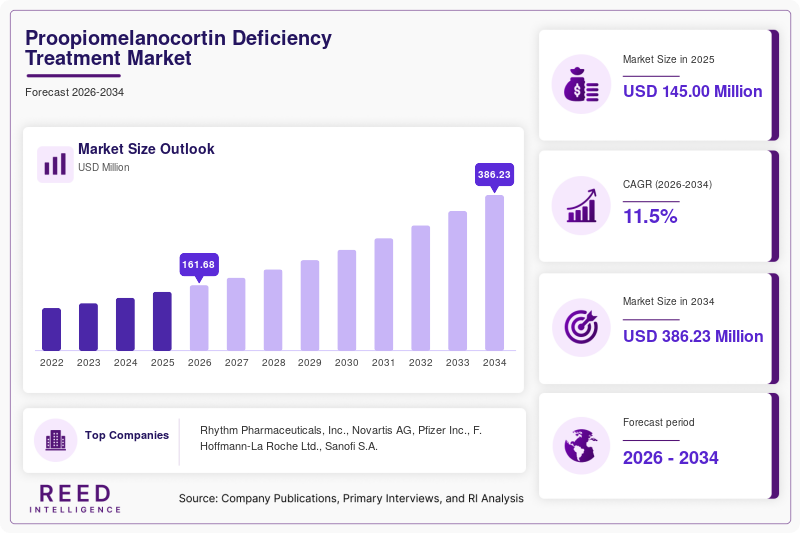
The Proopiomelanocortin Deficiency Treatment Market size was valued at approximately USD 145 million in 2025 and is projected to reach USD 385 million by 2034, expanding at a compound annual growth rate (CAGR) of 11.5% from 2025 to 2034. This growth trajectory reflects the increasing recognition of rare genetic disorders and advancements in targeted therapies aimed at addressing metabolic and endocrine dysfunctions associated with proopiomelanocortin (POMC) deficiency.
A major global factor supporting the expansion of the Proopiomelanocortin Deficiency Treatment Market is the growing emphasis on precision medicine and orphan drug development. Governments and regulatory bodies worldwide are offering incentives such as accelerated approvals, tax credits, and extended exclusivity to pharmaceutical companies focusing on rare diseases. This has significantly boosted research investments and improved access to innovative therapies.
Key Highlights:
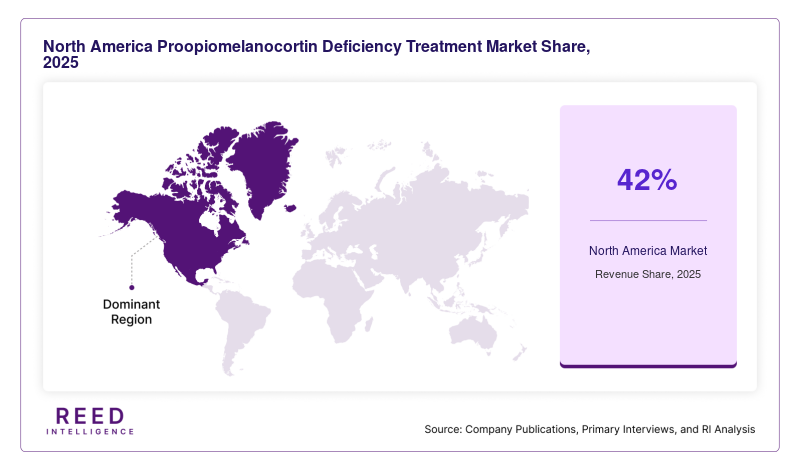
- North America dominated the market with a 42% share, while Asia Pacific is expected to grow at the fastest CAGR of 13.2%.
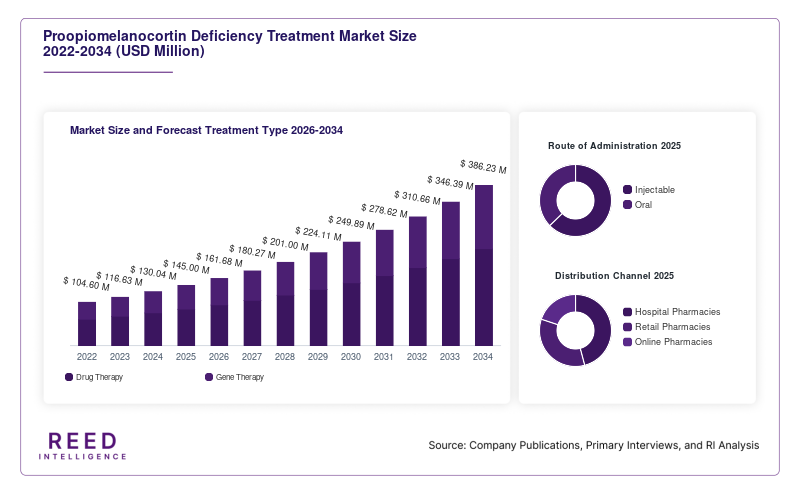
- Drug therapy emerged as the leading segment, accounting for 68% share, while gene therapy is projected to grow at a CAGR of 14.1%.
- Hospital pharmacies led distribution with a 55% share, while online pharmacies are expected to grow at 12.8% CAGR.
- The United States remained the dominant country, with market values of USD 58 million in 2024 and USD 65 million in 2025.
Market Trends
Increasing Adoption of Targeted Melanocortin Therapies
A key trend shaping the Proopiomelanocortin Deficiency Treatment Market is the growing adoption of targeted melanocortin receptor agonists. These therapies directly address the underlying genetic defect by stimulating the melanocortin-4 receptor pathway, which regulates appetite and energy balance. As clinical evidence supporting efficacy and safety expands, healthcare providers are increasingly preferring these targeted treatments over conventional symptomatic therapies. This shift is improving patient outcomes and driving market demand.
Expansion of Rare Disease Diagnostic Infrastructure
Another notable trend is the expansion of advanced diagnostic capabilities for rare endocrine disorders. The integration of genetic testing, next-generation sequencing, and biomarker analysis is enabling early and accurate diagnosis of POMC deficiency. Improved diagnostics are leading to higher treatment rates and better disease management. Additionally, collaborations between diagnostic companies and healthcare institutions are accelerating patient identification, thereby contributing to the growth of the Proopiomelanocortin Deficiency Treatment Market.
Market Drivers
Rising Focus on Orphan Drug Development
The increasing focus on orphan drug development is a major driver of the Proopiomelanocortin Deficiency Treatment Market. Pharmaceutical companies are investing heavily in research and development to create therapies specifically targeting rare genetic disorders. Regulatory incentives such as priority review and market exclusivity are encouraging innovation and speeding up product launches.
Growing Awareness and Diagnosis of Genetic Obesity Disorders
Enhanced awareness among clinicians and patients regarding genetic causes of obesity is driving early diagnosis and treatment adoption. Educational initiatives, patient advocacy groups, and improved screening protocols are contributing to increased identification of POMC deficiency cases. As diagnosis rates rise, demand for specialized treatment options continues to grow, supporting overall market expansion.
Market Restraint
High Cost of Treatment and Limited Accessibility
A significant restraint in the Proopiomelanocortin Deficiency Treatment Market is the high cost associated with advanced therapies, particularly targeted biologics and gene-based treatments. These therapies often involve complex manufacturing processes and specialized administration protocols, resulting in elevated pricing.
Additionally, limited availability of treatment centers and specialists in developing regions restricts patient access. Reimbursement challenges further complicate adoption, as not all healthcare systems provide adequate coverage for rare disease treatments. This financial burden can delay treatment initiation and limit market penetration, especially in low- and middle-income countries.While ongoing efforts aim to improve affordability and access, cost-related barriers remain a critical challenge for market growth.
Market Opportunities
Development of Gene Therapy Solutions
The emergence of gene therapy presents a promising opportunity in the Proopiomelanocortin Deficiency Treatment Market. Gene-editing technologies and viral vector-based therapies have the potential to correct the underlying genetic mutation, offering long-term or permanent solutions. As research advances and clinical trials progress, gene therapy is expected to transform the treatment landscape.
Expansion in Emerging Markets
Emerging economies present significant growth opportunities due to improving healthcare infrastructure and increasing awareness of rare diseases. Governments in these regions are investing in healthcare modernization and expanding access to advanced diagnostics. Pharmaceutical companies are also focusing on strategic partnerships and market entry initiatives, which are expected to drive demand and broaden the global footprint of the Proopiomelanocortin Deficiency Treatment Market.
Segmental Analysis
By Treatment Type
Drug therapy dominated the Proopiomelanocortin Deficiency Treatment Market, accounting for approximately 68% share in 2024. This dominance was attributed to the widespread use of melanocortin receptor agonists and hormone replacement therapies, which effectively manage symptoms and improve patient outcomes. The availability of approved drugs and established treatment protocols further supported segment growth.
Gene therapy is expected to be the fastest-growing subsegment, registering a CAGR of 14.1% during the forecast period. The potential for long-term disease correction and advancements in genetic engineering technologies are driving growth. Increasing clinical trials and investment in gene-editing platforms are expected to accelerate adoption.
By Route of Administration
Injectable treatments held the largest share of around 60% in 2024 due to their higher efficacy and controlled delivery mechanisms. Injectable formulations are commonly used for biologics and targeted therapies, making them the preferred choice among healthcare providers.
Oral therapies are projected to grow at the fastest CAGR of 12.7% due to improved patient compliance and convenience. Ongoing research aimed at developing effective oral formulations is expected to boost segment growth.
By Distribution Channel
Hospital pharmacies dominated the market with a 55% share in 2024, driven by the need for specialized handling and administration of advanced therapies. Hospitals serve as primary treatment centers for rare diseases, ensuring proper monitoring and follow-up care.
Online pharmacies are expected to witness the fastest growth, with a CAGR of 12.8%, due to increasing digitalization and improved access to medications. The convenience of home delivery and expanding e-commerce platforms are supporting growth.
By End-User
Hospitals accounted for the largest share of 62% in 2024, owing to the availability of advanced diagnostic tools and specialized healthcare professionals. Hospitals play a critical role in managing complex cases and providing comprehensive treatment.
Specialty clinics are anticipated to grow at the fastest CAGR of 13.0% due to increasing focus on personalized care and specialized treatment services. The expansion of dedicated rare disease centers is expected to drive segment growth.
Regional Analysis
North America
North America accounted for approximately 42% of the Proopiomelanocortin Deficiency Treatment Market share in 2025 and is expected to grow at a CAGR of 10.8% during the forecast period. The region’s dominance was attributed to strong healthcare infrastructure, high awareness levels, and robust investment in rare disease research. Favorable regulatory frameworks and the presence of leading pharmaceutical companies further supported market growth.
The United States emerged as the dominant country due to its advanced clinical research ecosystem and early adoption of innovative therapies. The presence of specialized treatment centers and strong reimbursement policies contributed to increased patient access and market expansion.
Europe
Europe held around 27% market share in 2025 and is projected to grow at a CAGR of 10.5% through 2034. The region’s growth was supported by increasing government initiatives to promote orphan drug development and expanding healthcare coverage for rare diseases.
Germany dominated the regional market due to its strong pharmaceutical industry and well-established healthcare system. The country’s focus on early diagnosis and comprehensive treatment strategies played a key role in driving market growth.
Asia Pacific
Asia Pacific accounted for nearly 18% of the market in 2025 and is expected to register the fastest CAGR of 13.2% during the forecast period. Rapid improvements in healthcare infrastructure and increasing awareness of genetic disorders are key factors contributing to growth.
China led the regional market due to its large population base and growing investment in biotechnology research. Government support for rare disease initiatives and expanding diagnostic capabilities are accelerating market development.
Middle East & Africa
The Middle East & Africa region held a 7% share in 2025 and is projected to grow at a CAGR of 9.6% over the forecast period. The market growth was driven by increasing healthcare investments and gradual improvements in diagnostic services.
Saudi Arabia dominated the region due to its focus on healthcare modernization and government initiatives to address rare diseases. The country’s investment in specialized medical facilities is supporting market growth.
Latin America
Latin America represented approximately 6% of the Proopiomelanocortin Deficiency Treatment Market in 2025 and is expected to grow at a CAGR of 9.9% through 2034. Rising awareness and improving access to healthcare services are key growth factors.
Brazil emerged as the leading country due to its expanding healthcare infrastructure and increasing focus on rare disease management. Government programs aimed at improving treatment accessibility are contributing to market expansion.
Competitive Landscape
The Proopiomelanocortin Deficiency Treatment Market is moderately consolidated, with a mix of established pharmaceutical companies and emerging biotech firms. Leading players are focusing on research collaborations, product innovation, and strategic partnerships to strengthen their market presence.
A key market leader is Rhythm Pharmaceuticals, which has pioneered targeted therapies for rare genetic obesity disorders. The company’s continued investment in clinical trials and expansion of its product portfolio has reinforced its leadership position.
Other prominent players are actively engaged in developing novel therapies and expanding their geographic reach. Increasing competition is expected to drive innovation and improve treatment accessibility over the forecast period.
Key Players
- Rhythm Pharmaceuticals, Inc.
- Novartis AG
- Pfizer Inc.
- F. Hoffmann-La Roche Ltd.
- Sanofi S.A.
- AstraZeneca plc
- Takeda Pharmaceutical Company Limited
- Eli Lilly and Company
- Bayer AG
- Amgen Inc.
Recent Developments
- Rhythm Pharmaceuticals expanded its clinical trial pipeline for next-generation melanocortin receptor agonists in 2024.
- Novartis AG announced collaboration initiatives to explore gene therapy solutions for rare endocrine disorders.
- Pfizer Inc. invested in research programs targeting genetic obesity conditions.
- Novo Nordisk strengthened its rare disease portfolio through strategic partnerships.
- Roche advanced its diagnostic capabilities to support early detection of genetic deficiencies.
Proopiomelanocortin Deficiency Treatment Market Segments
Treatment Type
- Drug Therapy
- Gene Therapy
Route of Administration
- Injectable
- Oral
Distribution Channel
- Hospital Pharmacies
- Retail Pharmacies
- Online Pharmacies
End-User
- Hospitals
- Specialty Clinics
- Research Institutes
By Region
- North America
- Europe
- APAC
- Middle East and Africa
- LATAM