Prosthetic Disc Nucleus Market Size, Share & Demand Report By Material (Hydrogel-Based Implants, Polymer-Based Implants, Composite Biomaterial Implants), By Application (Degenerative Disc Disease, Traumatic Disc Injury, Post-Surgical Disc Reconstruction), By End-Use (Hospitals, Ambulatory Surgical Centers, Specialty Spine Clinics), By Distribution Channel (Direct Sales, Third-Party Medical Distributors), By Region & Segment Forecasts, 2025–2033
USD 3950
Market Overview
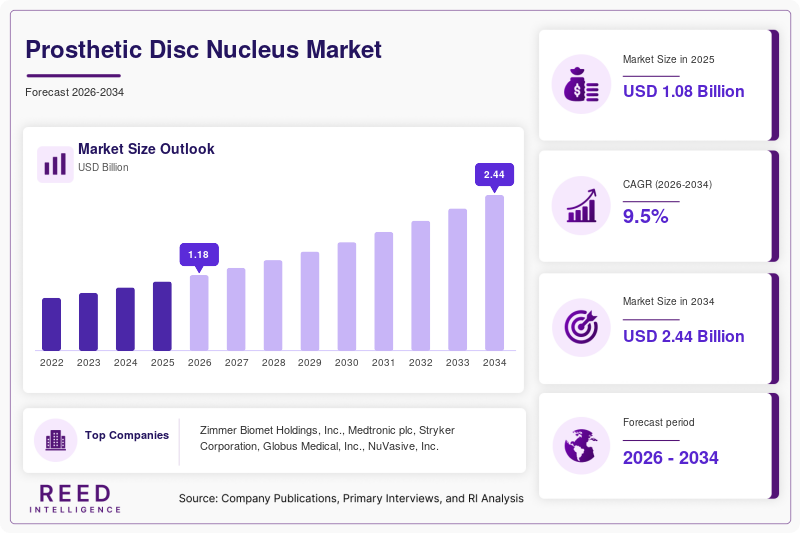
The Prosthetic Disc Nucleus Market size was valued at USD 1.08 billion in 2024 and is projected to reach USD 2.42 billion by 2033, registering a CAGR of 9.5% from 2025 to 2033. The market growth reflects the increasing adoption of minimally invasive spinal procedures and growing awareness about advanced disc replacement solutions. Prosthetic disc nucleus implants are used to replace damaged nucleus pulposus components in intervertebral discs, enabling motion preservation while reducing pressure on surrounding spinal structures. These devices are increasingly preferred in early-stage degenerative disc disease where complete disc replacement is not required.
A significant global factor supporting market growth is the increasing prevalence of degenerative spine disorders associated with aging populations and sedentary lifestyles. Patients are increasingly seeking alternatives to spinal fusion procedures due to concerns regarding reduced mobility and extended recovery periods. Prosthetic disc nucleus implants address this gap by restoring disc height and maintaining natural spinal movement, which has improved clinical acceptance among surgeons and patients.
Key Highlights
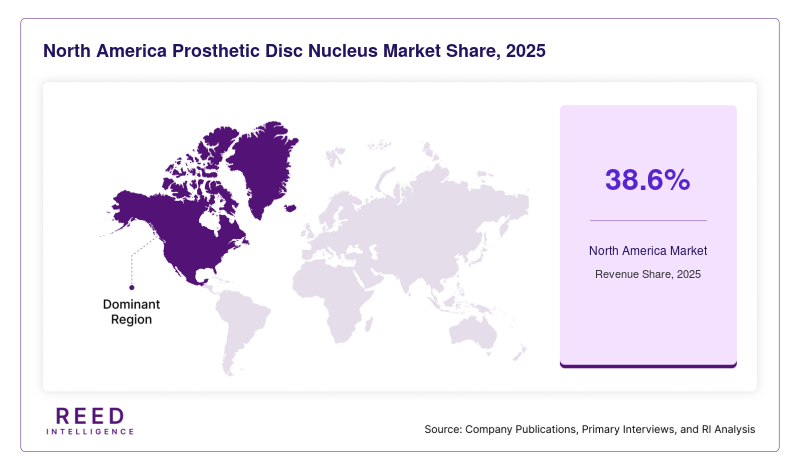
- North America dominated the Prosthetic Disc Nucleus Market with 38.6% share in 2025, while Asia Pacific will record the fastest CAGR of 11.2% through 2033.
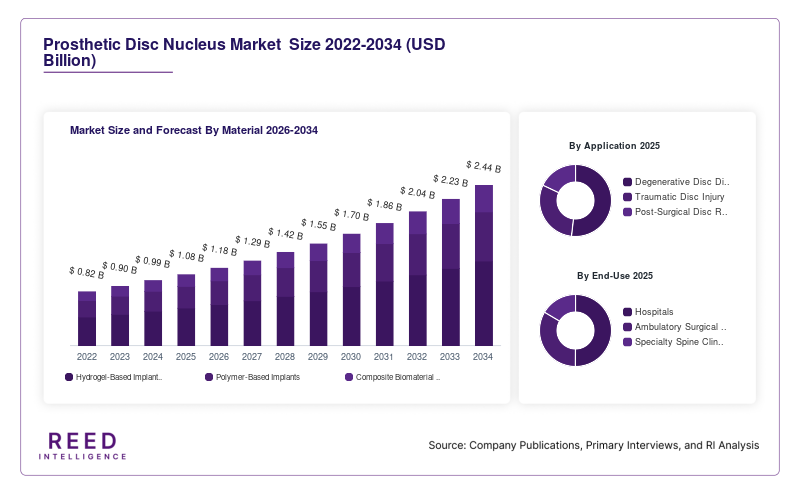
- Hydrogel-based implants led the material segment with 44.3% share in 2024, while polymer-based implants will grow fastest at a CAGR of 10.4%.
- Degenerative disc disease accounted for the largest application share of 52.1% in 2024, whereas traumatic disc injury treatment will expand at 10.8% CAGR.
- The United States remained the dominant country with USD 372 million in 2024, expected to reach USD 404 million in 2025.
Market Trends
Increasing Adoption of Motion-Preserving Spine Therapies
One notable trend shaping the Prosthetic Disc Nucleus Market is the rising demand for motion-preserving spinal treatment solutions. Traditional spinal fusion procedures restrict vertebral movement and may lead to adjacent segment degeneration over time. As a result, surgeons are increasingly exploring nucleus replacement implants that maintain spinal biomechanics while relieving disc pressure. Healthcare providers are incorporating prosthetic nucleus implants into treatment algorithms for early-to-moderate degenerative disc disease. This shift toward preserving natural spinal motion is encouraging research institutions and medical device manufacturers to invest in innovative implant technologies designed for enhanced biomechanical performance.
Advancements in Biomaterials and Implant Engineering
Another emerging trend in the Prosthetic Disc Nucleus Market is the development of advanced biomaterials that mimic the mechanical properties of the natural nucleus pulposus. Manufacturers are exploring hydrogels, elastomeric polymers, and composite materials to improve implant flexibility and durability. These materials enable implants to absorb spinal loads more effectively while minimizing implant migration risks. In addition, modern implant designs incorporate minimally invasive delivery systems, enabling surgeons to perform procedures through smaller incisions. Such engineering advancements are improving patient outcomes and expanding the scope of nucleus replacement procedures across specialized spine care centers.
Market Drivers
Rising Incidence of Degenerative Disc Disorders
The increasing prevalence of degenerative disc disorders has emerged as a primary growth driver for the Prosthetic Disc Nucleus Market. Degenerative disc disease commonly occurs due to aging, repetitive mechanical stress, and reduced hydration within spinal discs. As the global population continues to age, the number of patients experiencing chronic lower back pain and disc degeneration is rising steadily. Prosthetic nucleus implants provide a treatment option for patients seeking alternatives to spinal fusion surgeries. These implants restore disc functionality while preserving mobility, making them an appealing solution for both physicians and patients.
Growing Preference for Minimally Invasive Spine Surgery
Another key driver contributing to the growth of the Prosthetic Disc Nucleus Market is the increasing preference for minimally invasive surgical procedures. Patients and healthcare providers are prioritizing surgical techniques that reduce recovery time, minimize tissue damage, and shorten hospital stays. Prosthetic disc nucleus implantation procedures are generally performed through smaller incisions compared to traditional spinal fusion surgeries. This minimally invasive approach allows faster patient recovery and improves postoperative outcomes. As healthcare systems expand minimally invasive spine surgery programs, demand for nucleus replacement devices is expected to increase across orthopedic and neurosurgical centers.
Market Restraint
Clinical Uncertainty and Limited Long-Term Outcome Data
Despite promising clinical potential, the Prosthetic Disc Nucleus Market faces a restraint related to limited long-term clinical evidence regarding implant durability and long-term patient outcomes. Spine surgeons often prefer treatment approaches with well-established clinical data, particularly for procedures involving permanent implants. Prosthetic nucleus implants are relatively newer technologies compared with spinal fusion systems, and long-term performance data remains limited in certain cases.
Concerns related to implant migration, device wear, and revision procedures can influence clinical decision-making. Healthcare providers may hesitate to adopt newer implant systems without extensive multi-year outcome studies demonstrating safety and effectiveness. Additionally, regulatory authorities in several countries require comprehensive clinical evidence before approving new implant technologies, which may slow product introduction timelines.
This clinical uncertainty can delay widespread adoption in certain healthcare markets. Medical device manufacturers are increasingly conducting long-term clinical trials and post-market surveillance programs to address these concerns. As additional clinical evidence becomes available, healthcare providers may gain greater confidence in prosthetic nucleus replacement procedures.
Market Opportunities
Expansion of Ambulatory Spine Surgery Centers
The expansion of ambulatory spine surgery centers represents a notable opportunity for the Prosthetic Disc Nucleus Market. Outpatient surgical facilities are becoming an important part of modern healthcare infrastructure due to their ability to deliver cost-efficient surgical care. Prosthetic disc nucleus implantation procedures are compatible with minimally invasive surgical techniques that can be performed in specialized outpatient facilities. As healthcare systems aim to reduce inpatient costs and improve surgical efficiency, the number of ambulatory spine procedures is expected to increase. This shift could create significant growth potential for prosthetic nucleus implant manufacturers.
Increasing Research in Biomimetic Disc Replacement Technology
Growing research activities focused on biomimetic spinal implants present another opportunity for the Prosthetic Disc Nucleus Market. Academic institutions and medical device companies are developing implant materials that replicate the biomechanical characteristics of natural spinal discs. These innovations include hydrogel-based implants capable of absorbing mechanical loads and adapting to spinal movement. As research in tissue engineering and biomaterials continues to evolve, prosthetic nucleus implants may become more reliable and widely adopted. Improved implant design and long-term durability could expand the scope of nucleus replacement procedures in the future.
Segmental Analysis
By Material
Hydrogel-based implants dominated the Prosthetic Disc Nucleus Market in 2024, accounting for 44.3% share. Hydrogel implants are designed to replicate the hydration properties of natural nucleus pulposus tissue. These implants absorb spinal loads effectively and maintain disc height after implantation. Their ability to mimic the biomechanical behavior of natural discs has supported widespread adoption among spine surgeons.
Polymer-based implants will emerge as the fastest-growing subsegment with a CAGR of 10.4% during the forecast period. Advanced polymer materials offer improved structural durability and resistance to mechanical stress. Manufacturers are developing polymer composites that enhance implant longevity while maintaining flexibility. These innovations will support increasing adoption of polymer-based nucleus replacement implants.
By Application
Degenerative disc disease represented the dominant application segment in the Prosthetic Disc Nucleus Market, accounting for 52.1% share in 2024. Degenerative disc disease is one of the most common causes of chronic lower back pain. Prosthetic nucleus implants help restore disc height and relieve pressure on spinal nerves without requiring complete disc replacement surgery.
The traumatic disc injury treatment segment will grow at the fastest CAGR of 10.8% through 2033. Patients experiencing disc damage due to accidents or physical trauma often require surgical intervention to restore spinal function. Prosthetic nucleus implants may provide a suitable solution for such cases, particularly when the outer annulus structure remains intact.
By End-Use
Hospitals accounted for the largest share of the Prosthetic Disc Nucleus Market, representing 56.7% in 2024. Hospitals typically possess advanced surgical infrastructure and multidisciplinary spine care teams capable of performing complex procedures. The availability of diagnostic imaging systems and postoperative rehabilitation services supports hospital-based procedures.
Ambulatory surgical centers will represent the fastest-growing end-use segment, projected to expand at a CAGR of 11.1% through 2033. These facilities focus on minimally invasive surgical procedures that allow same-day patient discharge. As spinal implant procedures become less invasive, ambulatory centers are expected to play a larger role in nucleus replacement surgeries.
By Distribution Channel
Direct sales dominated the Prosthetic Disc Nucleus Market in 2024, accounting for 63.5% share. Medical device manufacturers frequently rely on direct sales channels to distribute specialized spinal implants. Direct sales allow companies to maintain close relationships with surgeons and hospitals while providing technical training and surgical support.
Third-party medical distributors will experience the fastest growth with a CAGR of 9.7% during the forecast period. These distributors enable medical device companies to expand product availability across emerging healthcare markets. They also provide logistics support and regional market access for spinal implant manufacturers.
Regional Analysis
North America
North America accounted for 38.6% share of the Prosthetic Disc Nucleus Market in 2025 and will grow at a CAGR of 8.7% through 2033. The region’s growth trajectory is influenced by a mature medical device ecosystem and established reimbursement frameworks supporting advanced spine surgery procedures. Hospitals and specialty spine clinics in the region have gradually expanded their adoption of motion-preserving implant technologies. Medical device innovation hubs located across the United States and Canada also contribute to continuous product development in spinal implants.
The United States represented the dominant country in the region due to the high concentration of specialized spine surgeons and advanced surgical facilities. Spine care centers in the country frequently adopt new surgical technologies, particularly those designed to preserve spinal mobility. Additionally, academic medical institutions conduct extensive clinical research on nucleus replacement devices, which contributes to the availability of procedure data and physician training programs.
Europe
Europe held 27.4% share of the Prosthetic Disc Nucleus Market in 2025 and will grow at a CAGR of 8.9% during the forecast period. The region’s growth is influenced by strong orthopedic implant manufacturing capabilities and the presence of established regulatory pathways for medical device approvals. European healthcare systems have gradually incorporated motion-preserving spinal treatments as part of comprehensive spine care programs. Hospitals and research institutions across the region are increasingly participating in clinical trials related to spinal implants.
Germany dominated the regional market due to its advanced orthopedic surgery infrastructure and large number of specialized spine treatment centers. The country maintains a well-established medical device manufacturing industry that supports innovation in implant technologies. Additionally, orthopedic surgeons in Germany frequently adopt advanced surgical techniques supported by structured training programs.
Asia Pacific
Asia Pacific captured 19.8% share of the Prosthetic Disc Nucleus Market in 2025 and will grow at the fastest CAGR of 11.2% through 2033. The region’s growth outlook is supported by expanding healthcare infrastructure and rising awareness regarding advanced spinal treatments. Several emerging economies in Asia are investing in specialized orthopedic and neurosurgical hospitals to address growing demand for spinal disorder treatments.
China represented the dominant country in the region due to its large patient population requiring spine treatment procedures. Rapid healthcare infrastructure expansion has enabled hospitals to introduce advanced surgical technologies. In addition, domestic medical device manufacturers are increasingly entering the spinal implant sector, supporting regional product availability.
Middle East & Africa
The Middle East & Africa held 7.1% share of the Prosthetic Disc Nucleus Market in 2025 and will grow at a CAGR of 9.1% during the forecast period. The regional healthcare sector has gradually expanded its capacity for specialized orthopedic treatments. Governments in several countries are investing in advanced hospital infrastructure and training programs to strengthen surgical capabilities.
The United Arab Emirates dominated the regional market due to its growing medical tourism sector and modern healthcare facilities. Hospitals in the country are increasingly offering advanced spine surgery procedures to international patients seeking specialized care.
Latin America
Latin America accounted for 7.1% share of the Prosthetic Disc Nucleus Market in 2025 and will grow at a CAGR of 9.3% through 2033. Regional growth is associated with gradual improvements in healthcare access and increasing awareness regarding spinal disorder treatments. Hospitals in several countries are expanding their orthopedic surgery capabilities.
Brazil remained the dominant country in the region due to its large healthcare system and expanding network of specialized spine surgery centers. Medical universities and hospitals in the country have increasingly participated in clinical training programs related to spinal implant procedures.
Competitive Landscape
The Prosthetic Disc Nucleus Market features a competitive landscape characterized by medical device companies specializing in spinal implant technologies. Companies focus on implant design innovation, biomaterial development, and clinical research programs to strengthen their market presence.
Zimmer Biomet Holdings, Inc. is considered a leading market participant due to its extensive spinal implant portfolio and global distribution network. The company continues to invest in research programs related to motion-preserving spinal implants. A recent development involved expanding its spinal implant product line with advanced biomaterial technologies designed to improve implant durability and compatibility with minimally invasive surgical techniques.
Other companies operating in the market are focusing on partnerships with research institutions and healthcare providers to develop next-generation prosthetic nucleus implants. Continuous product innovation and surgeon training programs remain key competitive strategies.
Key Players
- Zimmer Biomet Holdings, Inc.
- Medtronic plc
- Globus Medical, Inc.
- NuVasive, Inc.
- Orthofix Medical Inc.
- Spineart SA
- Aesculap Implant Systems LLC
- AxioMed LLC
- RTI Surgical Holdings
- Stryker Corporation
Recent Developments
- 2024: Zimmer Biomet expanded research initiatives focused on biomaterial spinal implants designed to enhance motion preservation.
- 2023: Globus Medical introduced an updated minimally invasive delivery system for spinal implant procedures.
- 2023: Medtronic strengthened its spinal surgery training programs to support surgeons adopting motion-preserving technologies.
- 2022: Spineart collaborated with European research institutions to study long-term outcomes of nucleus replacement implants.
- 2022: Orthofix Medical expanded its spinal implant manufacturing capacity to support growing global demand.
Prosthetic Disc Nucleus Market Segments
By Material
- Hydrogel-Based Implants
- Polymer-Based Implants
- Composite Biomaterial Implants
By Application
- Degenerative Disc Disease
- Traumatic Disc Injury
- Post-Surgical Disc Reconstruction
By End-Use
- Hospitals
- Ambulatory Surgical Centers
- Specialty Spine Clinics
By Distribution Channel
- Direct Sales
- Third-Party Medical Distributors
By Region
- North America
- Europe
- APAC
- Middle East and Africa
- LATAM