Protein Film Market Size, Share & Demand Report By Type (Whey Protein Films, Soy Protein Films, Gelatin-Based Films, Casein-Based Films), By Application (Food Packaging, Pharmaceutical, Agriculture, Others), By End-Use Industry (Food & Beverage, Healthcare, Agriculture, Industrial), By Region & Segment Forecasts, 2025–2034
USD 3950
Market Overview
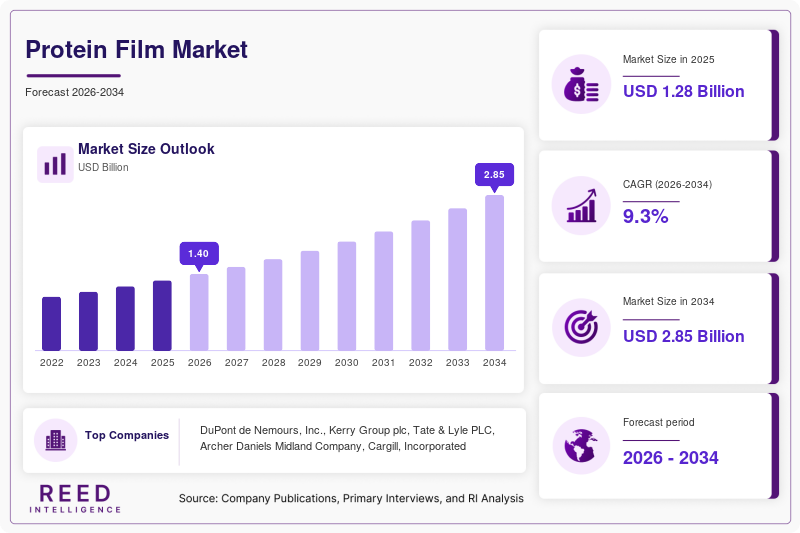
The global Protein Film Market size is estimated at approximately USD 1.28 billion, with a projected rise to USD 1.39 billion in 2026. The market is forecast to reach nearly USD 2.85 billion by 2034, registering a compound annual growth rate (CAGR) of 9.3% during the period 2025–2034. This growth trajectory reflects increasing demand for eco-friendly packaging solutions across food, pharmaceutical, and agricultural sectors.
Protein films, derived from sources such as whey, soy, gelatin, and casein, offer excellent barrier properties against oxygen and moisture, making them suitable for food preservation and shelf-life extension. As regulatory bodies globally enforce stricter plastic usage norms, industries are shifting toward renewable alternatives. This transition is driving adoption in both developed and emerging economies.
Key Highlights
- Market size was valued at USD 1.28 billion in 2025, reflecting steady demand across food, pharmaceutical, and industrial applications. The growth is supported by increasing adoption of sustainable and biodegradable materials in packaging.
- The market is expected to reach USD 2.85 billion by 2034, driven by technological advancements and expanding end-use industries. Rising investments in bio-based materials are further contributing to long-term expansion.
- The market is projected to grow at a CAGR of 9.3% from 2025 to 2034, indicating consistent industry momentum. Increasing regulatory pressure on plastic usage is accelerating this growth trajectory.
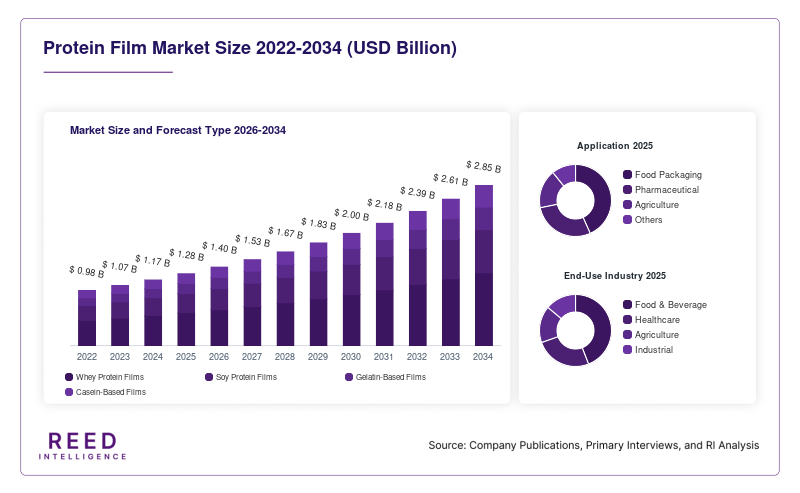
- Food packaging remains the dominant application segment due to the strong need for extended shelf life and product freshness. Protein films offer effective barrier properties, making them suitable for various food products.
Market Trends
Increasing Adoption of Edible Packaging Solutions
The growing focus on reducing packaging waste has led to the rising adoption of edible protein films. These films, made from natural protein sources such as whey and soy, are increasingly used in food packaging to eliminate waste entirely. Food manufacturers are integrating edible films into products like dairy items, confectionery, and ready-to-eat meals. This trend is supported by evolving consumer preferences for clean-label and sustainable products. Additionally, advancements in flavor incorporation and texture enhancement are making edible films more appealing. The trend is particularly strong in developed markets where sustainability regulations and consumer awareness are high, driving widespread adoption.
Technological Advancements in Film Processing
Continuous improvements in processing technologies are significantly enhancing the performance characteristics of protein films. Innovations such as nanocomposite integration and cross-linking techniques have improved tensile strength, flexibility, and barrier properties. These advancements are enabling protein films to compete more effectively with conventional plastic materials. Manufacturers are also focusing on improving scalability and reducing production costs, which has been a key limitation in the past. The integration of advanced processing methods is opening new opportunities in industrial packaging and medical applications, thereby expanding the overall market scope.
Market Drivers
Rising Demand for Sustainable Packaging Materials
The global push toward sustainability is a major driver of the protein film market. Governments and regulatory bodies are imposing restrictions on single-use plastics, encouraging industries to adopt biodegradable alternatives. Protein films, being derived from renewable resources, align well with these regulations. Companies across the food and beverage sector are actively investing in sustainable packaging solutions to meet both regulatory requirements and consumer expectations. Additionally, corporate sustainability goals and ESG commitments are driving large-scale adoption. This shift is expected to accelerate market growth as industries seek environmentally friendly alternatives that do not compromise functionality.
Growth of the Food Processing Industry
The rapid expansion of the food processing sector is significantly contributing to the demand for protein films. These films offer excellent barrier properties that help preserve food quality and extend shelf life. As the demand for packaged and processed foods increases globally, especially in urban areas, the need for effective packaging solutions is rising. Protein films provide a viable alternative to synthetic materials, particularly for perishable products. Their ability to reduce spoilage and maintain freshness makes them highly attractive to food manufacturers. This driver is particularly strong in emerging economies where food consumption patterns are evolving rapidly.
Market Restraint
High Production Costs and Limited Scalability
Despite their advantages, protein films face challenges related to high production costs and scalability limitations. The extraction and processing of proteins into film-forming materials involve complex procedures, which increase manufacturing expenses. Additionally, maintaining consistent quality and performance at large production scales remains a challenge for many manufacturers. This cost factor makes protein films less competitive compared to traditional plastic materials, especially in price-sensitive markets. For example, small and medium-sized food producers may find it difficult to adopt protein films due to higher packaging costs. This restraint impacts overall market penetration, particularly in developing regions where cost efficiency is a key consideration.
Market Opportunities
Expansion in Pharmaceutical Applications
The pharmaceutical industry presents significant growth opportunities for the protein film market. Protein-based films are biocompatible, non-toxic, and biodegradable, making them suitable for drug delivery systems and medical packaging. These films can be used in applications such as dissolvable strips and protective coatings for medicines. As the demand for advanced drug delivery solutions increases, protein films are gaining attention for their ability to improve patient compliance and enhance drug stability. Ongoing research in bio-based materials is expected to further expand their use in medical applications, creating new revenue streams for market players.
Emerging Markets and Industrial Adoption
Emerging economies offer substantial growth opportunities due to increasing industrialization and rising awareness of sustainable materials. Countries in Asia Pacific and Latin America are witnessing rapid growth in food processing and packaging industries. This creates a favorable environment for the adoption of protein films. Additionally, government initiatives promoting eco-friendly materials are supporting market expansion. Industrial applications beyond food and pharmaceuticals, such as agriculture and personal care, are also emerging. These factors collectively provide a strong growth outlook for protein films in developing regions.
Segmental Analysis
By Type
The whey protein film segment dominated the market in 2024, accounting for approximately 38% of the total share. Whey protein films are widely used due to their excellent barrier properties and transparency, making them ideal for food packaging applications. Their ability to prevent oxygen transmission helps extend the shelf life of perishable products. Additionally, whey protein is readily available as a byproduct of the dairy industry, making it a cost-effective raw material. Manufacturers prefer whey protein films for their versatility and compatibility with various food products, further supporting their dominant position in the market.
The soy protein film segment is expected to be the fastest-growing, with a projected CAGR of 10.8% during the forecast period. The growth is driven by increasing demand for plant-based and vegan-friendly materials. Soy protein films offer good mechanical strength and biodegradability, making them suitable for a wide range of applications. Additionally, the rising popularity of plant-based diets is encouraging the use of soy-derived materials. This trend is particularly strong in regions with high consumer awareness regarding sustainability and ethical sourcing.
By Application
Food packaging emerged as the dominant application segment in 2024, accounting for around 52% of the market share. Protein films are extensively used in food packaging due to their ability to enhance shelf life and maintain product quality. They are commonly used for packaging meat, dairy, and bakery products. The growing demand for fresh and minimally processed foods is driving the adoption of protein films in this segment. Additionally, their biodegradability aligns with the increasing focus on sustainable packaging solutions, further boosting their demand.
Pharmaceutical applications are projected to be the fastest-growing segment, with a CAGR of 10.2%. The growth is attributed to the increasing use of protein films in drug delivery systems and medical packaging. These films offer advantages such as biocompatibility and controlled release properties. As the pharmaceutical industry continues to innovate, the demand for advanced materials is rising. Protein films are gaining traction as a viable alternative to synthetic materials, particularly in applications requiring high safety standards.
By End-Use Industry
The food and beverage industry dominated the market in 2024, holding approximately 55% of the share. The widespread use of protein films in food packaging is a key factor driving this dominance. These films help reduce food waste by extending shelf life and maintaining freshness. The increasing demand for sustainable packaging solutions in the food industry is further supporting the growth of this segment. Additionally, regulatory pressures to reduce plastic usage are encouraging food manufacturers to adopt biodegradable alternatives.
The healthcare industry is expected to be the fastest-growing end-use segment, with a CAGR of 10.6%. The growth is driven by the increasing use of protein films in medical and pharmaceutical applications. These films are used in wound care, drug delivery, and protective coatings. The rising demand for biocompatible materials in healthcare is creating new opportunities for protein films. As research and development activities continue to advance, the adoption of protein-based materials in healthcare is expected to increase significantly.
Regional Analysis
North America
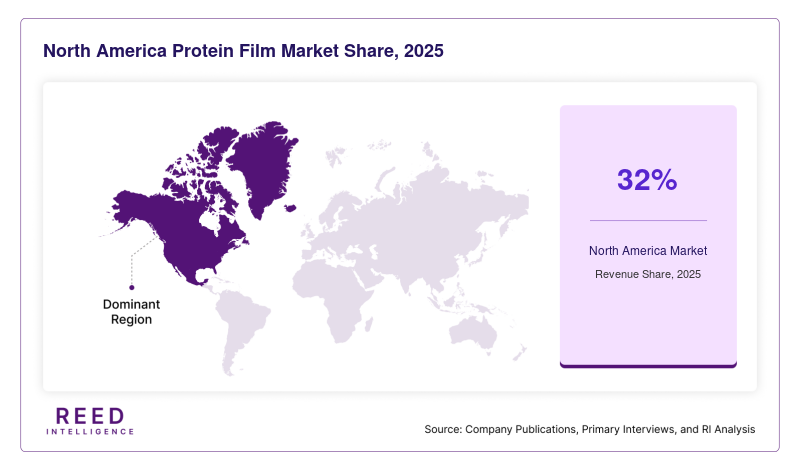
North America accounted for approximately 32% of the global protein film market share in 2025, with a projected CAGR of 8.7% through 2034. The region benefits from advanced technological infrastructure and strong demand for sustainable packaging. The presence of established food processing industries further supports market growth, as companies seek eco-friendly alternatives to conventional plastics.
The United States dominates the regional market due to high consumer awareness and stringent environmental regulations. A key growth factor is the increasing adoption of biodegradable packaging solutions by major food and beverage companies. This trend is reinforced by government initiatives aimed at reducing plastic waste.
Europe
Europe held around 27% of the market share in 2025 and is expected to grow at a CAGR of 8.9%. The region’s strong regulatory framework promoting sustainability is a major driver. The European Union’s policies on plastic reduction are encouraging the adoption of protein-based films across multiple industries.
Germany leads the market in Europe, supported by its advanced manufacturing sector and focus on innovation. A unique growth factor is the strong emphasis on circular economy practices, which encourages the use of renewable and biodegradable materials in packaging solutions.
Asia Pacific
Asia Pacific captured nearly 24% of the market share in 2025 and is projected to grow at the fastest CAGR of 10.5%. Rapid urbanization and increasing demand for packaged food are key contributors to market expansion in the region.
China dominates the regional market due to its large manufacturing base and growing focus on sustainable materials. A significant growth factor is the rising investment in food processing industries, which is driving demand for efficient and eco-friendly packaging solutions.
Middle East & Africa
The Middle East & Africa region accounted for about 9% of the market share in 2025, with a CAGR of 8.2%. The market is gradually expanding due to increasing awareness of sustainable packaging solutions and growing industrial activities.
South Africa leads the market in this region, supported by a developing food processing sector. A unique growth factor is the increasing government focus on reducing environmental impact, which is encouraging the adoption of biodegradable materials such as protein films.
Latin America
Latin America held approximately 8% of the market share in 2025 and is expected to grow at a CAGR of 8.6%. The region is experiencing steady growth due to rising demand for packaged food and beverages.
Brazil dominates the market, driven by its large agricultural base and expanding food industry. A key growth factor is the increasing adoption of eco-friendly packaging solutions, supported by government initiatives promoting sustainable practices.
Competitive Landscape
The protein film market is moderately fragmented, with several global and regional players competing based on innovation, product quality, and sustainability initiatives. Leading companies are focusing on research and development to improve film properties and reduce production costs. Strategic partnerships and collaborations are also common, enabling companies to expand their product portfolios and market reach.
Among the key players, DuPont stands out as a market leader due to its strong focus on innovation and extensive product offerings. The company recently introduced advanced protein-based film solutions designed for high-performance packaging applications. Other major players are also investing in sustainable technologies to meet growing demand. The competitive landscape is expected to evolve further as new entrants bring innovative solutions to the market.
Key Players
- DuPont de Nemours, Inc.
- Kerry Group plc
- Tate & Lyle PLC
- Archer Daniels Midland Company
- Cargill, Incorporated
- Ingredion Incorporated
- Devro plc
- Gelita AG
- Ashland Global Holdings Inc.
- Roquette Frères
- Glanbia plc
- Fonterra Co-operative Group Limited
- Darling Ingredients Inc.
- BASF SE
- Koninklijke DSM N.V.
Recent Developments
- In 2024, DuPont launched a new range of high-strength protein films aimed at improving food packaging efficiency and sustainability.
- In 2023, Kerry Group expanded its protein-based material portfolio with new biodegradable film solutions targeting the European market.
- In 2024, Gelita AG introduced advanced gelatin-based films designed for pharmaceutical applications, enhancing drug delivery performance.
Protein Film Market Segments
Type
- Whey Protein Films
- Soy Protein Films
- Gelatin-Based Films
- Casein-Based Films
Application
- Food Packaging
- Pharmaceutical
- Agriculture
- Others
End-Use Industry
- Food & Beverage
- Healthcare
- Agriculture
- Industrial
By Region
- North America
- Europe
- APAC
- Middle East and Africa
- LATAM