Puerperal Sepsis Treatment Market Size, Share & Demand Report By Treatment Type (Antibiotics, Combination Therapy, Supportive Care), By Infection Type (Endometritis, Septicemia, Wound Infection), By End-Use (Hospitals, Clinics, Home Healthcare) & Segment Forecasts, 2025–2034
USD 3950
Market Overview
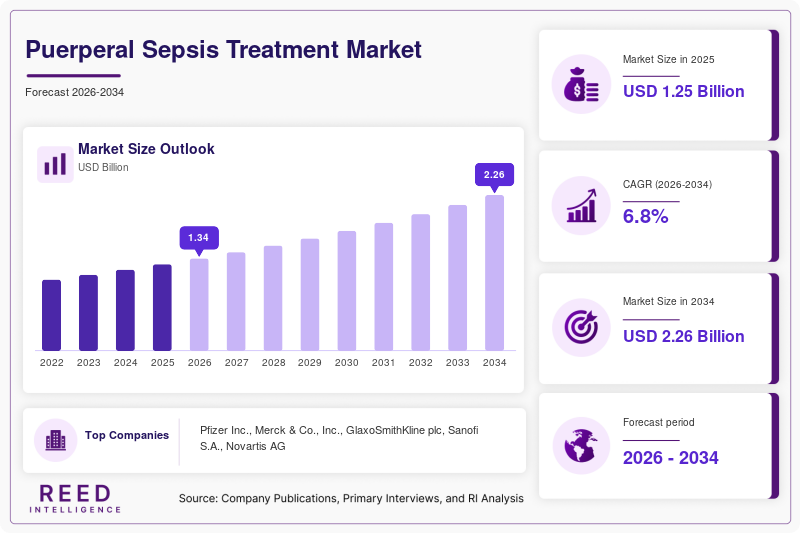
The global Puerperal Sepsis Treatment Market size was estimated at approximately USD 1.25 billion in 2025 and is projected to reach USD 1.34 billion in 2026. Over the forecast period from 2025 to 2034, the market is expected to grow at a compound annual growth rate (CAGR) of 6.8%, reaching nearly USD 2.35 billion by 2034. This growth reflects increasing global efforts to reduce maternal mortality rates, especially in low- and middle-income countries where puerperal infections remain a major health concern.
One of the primary growth factors driving the market is the rising incidence of postpartum infections due to inadequate hygiene during childbirth and limited access to skilled birth attendants in developing regions. Additionally, the growing adoption of broad-spectrum antibiotics and combination therapies has significantly improved treatment outcomes, thereby increasing demand for effective pharmaceutical solutions. Another critical factor contributing to market growth is the implementation of government-led maternal health programs, which focus on early diagnosis and timely intervention of sepsis cases.
Key Highlights
- Market size reached USD 1.25 billion in 2025 and is projected to hit USD 2.35 billion by 2034. This steady expansion reflects growing demand for effective maternal infection management solutions across both developed and emerging healthcare systems.
- The market is expected to grow at a CAGR of 6.8% from 2025 to 2034. This growth rate is supported by continuous advancements in treatment protocols and increasing investments in maternal healthcare infrastructure.
- Rising awareness of maternal healthcare is significantly driving treatment demand. Improved education, prenatal care programs, and postnatal monitoring are encouraging early diagnosis and timely treatment of puerperal infections.
- There is increasing adoption of advanced antibiotics and modern diagnostic tools in clinical settings. These innovations are improving treatment outcomes and enabling faster identification of infection-causing pathogens.
Market Trends
Increasing Adoption of Combination Antibiotic Therapies
A significant trend in the Puerperal Sepsis Treatment Market is the growing use of combination antibiotic therapies to improve treatment effectiveness. Healthcare providers are increasingly opting for multi-drug regimens that target a broad range of pathogens responsible for postpartum infections. This approach reduces the risk of antimicrobial resistance and ensures better clinical outcomes. The integration of combination therapies into treatment protocols is particularly prominent in tertiary care hospitals where severe cases are managed. Additionally, clinical guidelines are being updated to recommend tailored antibiotic combinations based on patient conditions and microbial profiles. This trend is expected to gain further traction as resistance patterns evolve globally.
Expansion of Maternal Healthcare Programs in Emerging Economies
Another notable trend is the expansion of maternal healthcare initiatives across emerging economies. Governments and international health organizations are investing in programs aimed at reducing maternal mortality caused by infections, including puerperal sepsis. These programs focus on improving sanitation during childbirth, increasing institutional deliveries, and enhancing postnatal care services. The integration of digital health tools and telemedicine is also supporting early diagnosis and monitoring of postpartum infections. As awareness campaigns continue to educate women about the importance of timely medical intervention, the demand for sepsis treatment solutions is expected to rise steadily across these regions.
Market Drivers
Rising Incidence of Postpartum Infections
The increasing prevalence of postpartum infections is a major driver of the Puerperal Sepsis Treatment Market. Factors such as prolonged labor, cesarean deliveries, and poor hygiene practices during childbirth contribute to the growing number of sepsis cases. In many developing regions, limited access to clean healthcare facilities exacerbates the risk of infection. As healthcare systems recognize the burden of maternal infections, there is a growing emphasis on early diagnosis and treatment. This has led to increased demand for antibiotics, supportive therapies, and diagnostic tools. The rising incidence of infections is therefore directly contributing to market expansion.
Government Initiatives to Reduce Maternal Mortality
Government policies and programs aimed at reducing maternal mortality rates are significantly driving the market. Initiatives such as free maternal healthcare services, improved access to skilled birth attendants, and investments in hospital infrastructure are enhancing the quality of care provided to women during and after childbirth. These programs often include guidelines for infection prevention and management, which promote the use of standardized treatment protocols. As governments continue to prioritize maternal health, the demand for effective puerperal sepsis treatments is expected to grow, supporting overall market development.
Market Restraint
Limited Access to Healthcare in Rural Areas
A key restraint affecting the Puerperal Sepsis Treatment Market is the limited access to healthcare services in rural and remote regions. In many low-income countries, healthcare facilities are scarce, and women often rely on home births without skilled medical supervision. This increases the risk of infections and delays in diagnosis and treatment. Additionally, the lack of awareness about postpartum complications further hinders timely medical intervention. Even when healthcare services are available, the cost of treatment and transportation can be prohibitive for many patients. This disparity in access to care significantly impacts market growth, as a large portion of the target population remains underserved. Addressing these challenges requires coordinated efforts from governments, healthcare providers, and non-governmental organizations to improve infrastructure and accessibility.
Market Opportunities
Development of Rapid Diagnostic Tools
The development of rapid diagnostic technologies presents a significant opportunity for the Puerperal Sepsis Treatment Market. Early detection of infections is critical for effective treatment and improved patient outcomes. Advances in molecular diagnostics and point-of-care testing are enabling faster identification of pathogens, allowing healthcare providers to initiate appropriate therapies without delay. These technologies are particularly beneficial in resource-limited settings where laboratory infrastructure is inadequate. As companies continue to invest in innovative diagnostic solutions, the adoption of these tools is expected to increase, creating new growth avenues for the market.
Expansion of Telemedicine and Digital Health Solutions
The growing adoption of telemedicine and digital health platforms offers promising opportunities for market growth. These technologies enable remote monitoring and consultation, allowing healthcare providers to detect and manage postpartum infections more effectively. Telemedicine is especially valuable in rural areas where access to healthcare facilities is limited. By facilitating timely diagnosis and treatment, digital health solutions can help reduce complications associated with puerperal sepsis. The integration of mobile health applications and wearable devices further enhances patient monitoring, supporting better outcomes and driving demand for treatment solutions.
Segmental Analysis
By Treatment Type
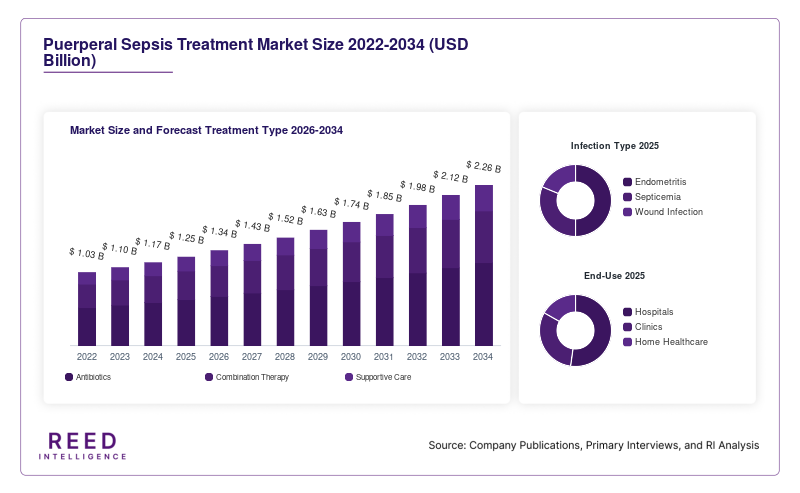
The antibiotics segment dominated the Puerperal Sepsis Treatment Market in 2024, accounting for approximately 62% of the total market share. This dominance is attributed to the widespread use of antibiotics as the primary treatment for bacterial infections causing puerperal sepsis. Broad-spectrum antibiotics are commonly prescribed to target multiple pathogens, ensuring effective treatment. The availability of generic antibiotics at affordable prices has further supported their adoption across both developed and developing regions. Additionally, clinical guidelines strongly recommend antibiotic therapy as the first line of treatment, reinforcing the segment’s leading position in the market.
The combination therapy segment is expected to witness the fastest growth, with a projected CAGR of 7.5% during the forecast period. This growth is driven by the increasing prevalence of antimicrobial resistance, which necessitates the use of multiple drugs to achieve effective treatment outcomes. Combination therapies offer enhanced efficacy by targeting different bacterial strains simultaneously. Healthcare providers are increasingly adopting these regimens for severe cases, particularly in hospital settings. The rising focus on personalized medicine and tailored treatment approaches is also contributing to the rapid growth of this segment.
By Infection Type
The endometritis segment held the largest market share in 2024, accounting for around 48% of the total revenue. Endometritis is one of the most common causes of puerperal sepsis, particularly following cesarean deliveries. The high incidence of this condition has led to increased demand for effective treatment options, including antibiotics and supportive therapies. Healthcare providers prioritize early diagnosis and treatment of endometritis to prevent complications, which further drives the segment’s growth. The availability of established treatment protocols and guidelines also supports its dominance in the market.
The septicemia segment is expected to grow at the fastest rate, with a CAGR of 8.2% over the forecast period. This growth is attributed to the increasing severity of infections and the rising number of complicated cases requiring intensive care. Septicemia poses a significant risk to maternal health, necessitating prompt and aggressive treatment. Advances in diagnostic technologies are enabling early detection of bloodstream infections, which is driving demand for targeted therapies. The growing focus on critical care management is also contributing to the rapid growth of this segment.
By End-Use
Hospitals accounted for the largest share of the Puerperal Sepsis Treatment Market in 2024, contributing approximately 68% of the total revenue. Hospitals are the primary point of care for childbirth and postpartum treatment, making them the leading end-users of sepsis treatment solutions. The availability of advanced medical equipment, skilled healthcare professionals, and intensive care units ensures effective management of severe cases. Additionally, hospitals follow standardized treatment protocols, which include the use of antibiotics and supportive therapies. This has reinforced their dominant position in the market.
The home healthcare segment is expected to grow at the fastest rate, with a CAGR of 7.9% during the forecast period. This growth is driven by the increasing adoption of remote monitoring and telemedicine solutions, which enable patients to receive care at home. Home healthcare services are particularly beneficial for patients in rural areas or those with limited access to hospitals. The growing emphasis on cost-effective treatment options and patient convenience is also contributing to the expansion of this segment. As digital health technologies continue to evolve, the adoption of home-based care is expected to increase significantly.
Regional Analysis
North America
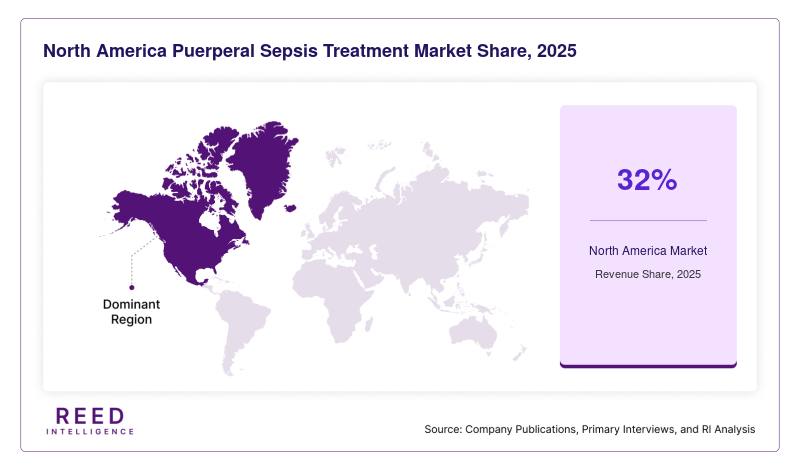
North America accounted for a significant share of the Puerperal Sepsis Treatment Market in 2025, contributing approximately 32% of the global revenue. The region is expected to grow at a CAGR of 5.9% during the forecast period. The presence of advanced healthcare infrastructure, high awareness of maternal health, and widespread access to antibiotics are key factors supporting market growth. Additionally, the availability of skilled healthcare professionals ensures effective management of postpartum infections.
The United States dominates the regional market due to its well-established healthcare system and strong focus on maternal care. A unique growth factor in this region is the increasing adoption of advanced diagnostic technologies, which enable early detection of infections. This has led to improved treatment outcomes and reduced mortality rates, further driving market expansion.
Europe
Europe held around 27% of the global market share in 2025 and is projected to grow at a CAGR of 6.2% through 2034. The region benefits from strong healthcare policies, universal healthcare coverage, and high awareness of maternal health issues. Governments across Europe are actively implementing programs to reduce maternal mortality, which supports the demand for effective treatment solutions.
Germany leads the European market due to its robust healthcare infrastructure and high investment in medical research. A unique growth factor in this region is the emphasis on infection control practices in hospitals. Strict guidelines and protocols ensure proper hygiene during childbirth, reducing the incidence of puerperal sepsis and driving demand for preventive and therapeutic solutions.
Asia Pacific
Asia Pacific is the fastest-growing region, with a market share of approximately 24% in 2025 and a projected CAGR of 8.1%. The region’s growth is driven by a large population base, increasing healthcare expenditure, and rising awareness of maternal health. Governments are investing in improving healthcare infrastructure, particularly in rural areas, which is boosting market growth.
India dominates the Asia Pacific market due to its high birth rate and ongoing efforts to improve maternal healthcare. A unique growth factor is the implementation of national health programs focused on institutional deliveries and postnatal care. These initiatives are increasing access to medical services and driving demand for puerperal sepsis treatments.
Middle East & Africa
The Middle East & Africa region accounted for about 9% of the global market share in 2025 and is expected to grow at a CAGR of 7.3%. The market is driven by increasing investments in healthcare infrastructure and rising awareness of maternal health issues. However, challenges such as limited access to healthcare in rural areas continue to affect growth.
South Africa is a key contributor to the regional market, supported by government initiatives to improve maternal healthcare. A unique growth factor in this region is the increasing involvement of international organizations in funding healthcare programs. These efforts are enhancing access to treatment and supporting market expansion.
Latin America
Latin America held approximately 8% of the global market share in 2025 and is projected to grow at a CAGR of 6.5%. The region is witnessing improvements in healthcare infrastructure and increased focus on maternal health. Government initiatives aimed at reducing maternal mortality are driving demand for treatment solutions.
Brazil dominates the Latin American market due to its large population and improving healthcare system. A unique growth factor is the expansion of public healthcare programs that provide free or subsidized maternal care services. These programs are increasing access to treatment and contributing to market growth.
Competitive Landscape
The Puerperal Sepsis Treatment Market is moderately fragmented, with several global and regional players competing to expand their market presence. Companies are focusing on research and development to introduce new antibiotics and improve existing treatment protocols. Strategic collaborations, mergers, and acquisitions are common strategies adopted by market participants to strengthen their portfolios and geographic reach.
A leading player in the market is Pfizer Inc., which has a strong portfolio of antibiotics and a global distribution network. The company recently announced the development of a new broad-spectrum antibiotic aimed at treating severe bacterial infections, including those associated with puerperal sepsis. Other key players are also investing in innovative therapies and expanding their product offerings to address the growing demand for effective treatment solutions. The competitive landscape is expected to remain dynamic as companies continue to focus on innovation and market expansion.
Key Players
- Pfizer Inc.
- Merck & Co., Inc.
- GlaxoSmithKline plc
- Sanofi S.A.
- Novartis AG
- Johnson & Johnson
- Abbott Laboratories
- Bayer AG
- Cipla Ltd.
- Sun Pharmaceutical Industries Ltd.
- Lupin Limited
- Aurobindo Pharma
- Hikma Pharmaceuticals
- Teva Pharmaceutical Industries Ltd.
- Fresenius Kabi
Recent Developments
- In 2024, a major pharmaceutical company launched a new combination antibiotic therapy designed for severe postpartum infections.
- In 2025, several healthcare organizations collaborated to implement digital monitoring systems for postpartum patients in rural areas.
- In 2026, a leading biotech firm announced advancements in rapid diagnostic tools for early detection of sepsis-causing pathogens.
Puerperal Sepsis Treatment Market Segments
Treatment Type
- Antibiotics
- Combination Therapy
- Supportive Care
Infection Type
- Endometritis
- Septicemia
- Wound Infection
End-Use
- Hospitals
- Clinics
- Home Healthcare
By Region
- North America
- Europe
- APAC
- Middle East and Africa
- LATAM