Pulmonary Valve Replacement Market Size, Share & Demand Report By Valve Type (Mechanical Valves, Bioprosthetic Valves, Transcatheter Valves), By Procedure Type (Surgical Valve Replacement, Transcatheter Valve Replacement), By End-Use (Hospitals, Cardiac Centers, Ambulatory Surgical Centers), By Region & Segment Forecasts, 2026–2034
USD 3950
Market Overview
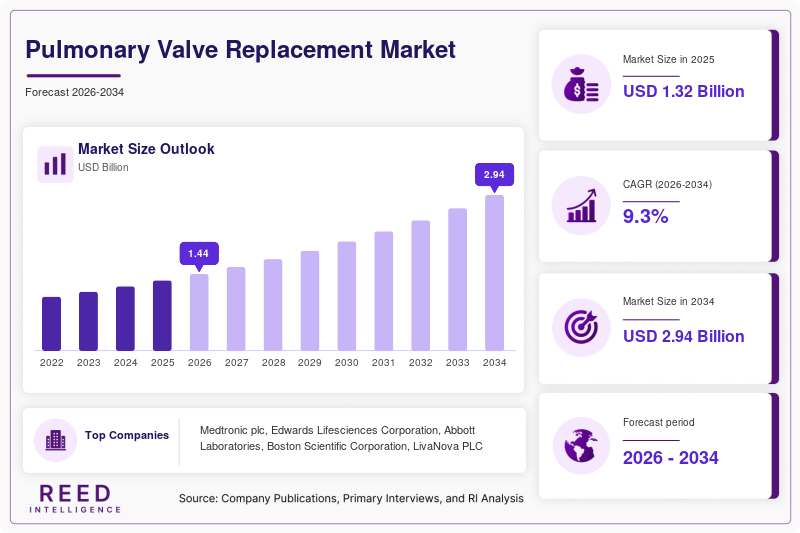
The Pulmonary Valve Replacement Market size was valued at approximately USD 1.32 billion in 2026 and is projected to reach USD 2.68 billion by 2034, expanding at a compound annual growth rate (CAGR) of 9.3% during 2026–2034. The market is gaining steady traction due to the rising incidence of congenital heart defects and increasing adoption of minimally invasive cardiac procedures. Pulmonary valve replacement procedures are widely used in treating conditions such as pulmonary stenosis and regurgitation, particularly among pediatric and adult congenital heart disease populations.
A key global factor supporting market growth is the increasing preference for transcatheter pulmonary valve replacement (TPVR) over traditional open-heart surgery. The shift toward minimally invasive approaches has improved patient outcomes, reduced hospital stays, and enhanced recovery times. In addition, advancements in biomaterials and imaging technologies are enabling more precise valve implantation, thereby increasing procedural success rates and expanding patient eligibility.
Key Highlights
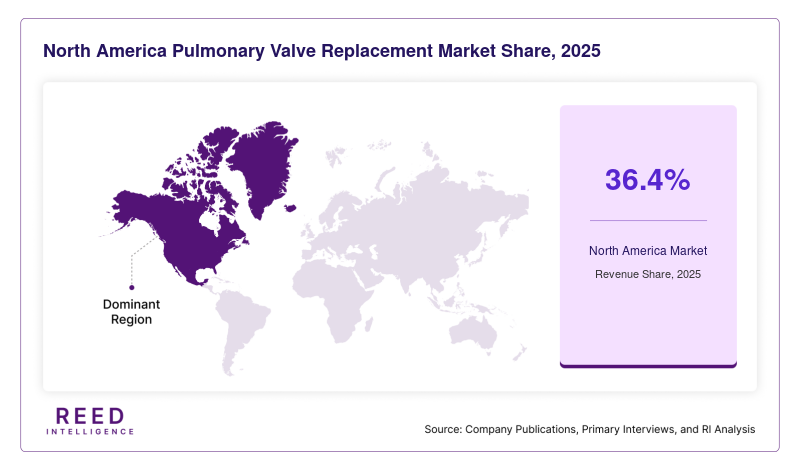
- North America dominated the market with a 36.4% share in 2025.
- Asia Pacific is expected to grow at the fastest CAGR of 10.8% during 2026–2034.
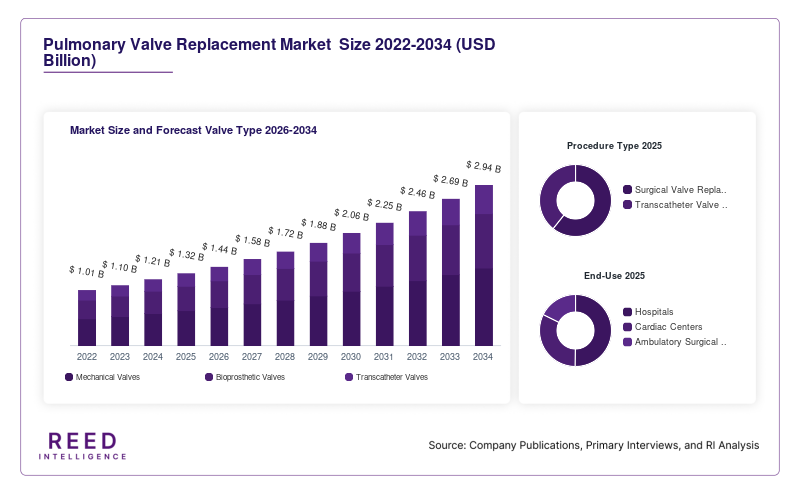
- By valve type, bioprosthetic valves accounted for the largest share of 58.7%, while transcatheter valves are projected to grow at a CAGR of 11.5%.
- By procedure type, surgical valve replacement led with a 62.3% share, whereas transcatheter procedures are expected to expand at a CAGR of 12.2%.
- The United States remained the dominant country, with market values of USD 480 million in 2024 and USD 525 million in 2025.
Market Trends
Increasing Adoption of Transcatheter Pulmonary Valve Replacement (TPVR)
The growing shift toward minimally invasive cardiac procedures is shaping the pulmonary valve replacement landscape. Transcatheter pulmonary valve replacement (TPVR) is gaining acceptance due to its reduced procedural risks, shorter hospital stays, and faster recovery times compared to traditional surgery. Healthcare providers are increasingly adopting catheter-based interventions, especially for patients who are considered high-risk for open-heart procedures. Furthermore, improvements in catheter design, valve durability, and imaging guidance have enhanced procedural accuracy and outcomes. The trend is also supported by favorable reimbursement policies in developed markets, encouraging hospitals to invest in advanced catheterization labs and training programs.
Technological Advancements in Valve Design and Materials
Continuous innovation in valve materials and structural design is transforming the pulmonary valve replacement market. Manufacturers are focusing on developing valves with improved durability, biocompatibility, and hemodynamic performance. The use of advanced biomaterials, such as tissue-engineered and polymer-based valves, is reducing the risk of calcification and extending valve lifespan. In addition, 3D imaging and patient-specific modeling are enabling customized valve solutions tailored to individual anatomical needs. These advancements are particularly beneficial for pediatric patients, who often require multiple interventions over their lifetime. The integration of digital technologies in preoperative planning is further enhancing surgical precision and outcomes.
Market Drivers
Rising Prevalence of Congenital Heart Diseases
The increasing incidence of congenital heart diseases (CHDs) is a major driver for the pulmonary valve replacement market. Conditions such as tetralogy of Fallot and pulmonary atresia often require valve replacement procedures, particularly as patients age. Improvements in early diagnosis and pediatric cardiac care have led to higher survival rates, resulting in a growing adult population requiring long-term cardiac interventions. This expanding patient base is creating sustained demand for both surgical and transcatheter pulmonary valve replacement procedures. Additionally, growing awareness about early treatment options and better access to specialized cardiac centers are further driving procedure volumes globally.
Expansion of Healthcare Infrastructure in Emerging Markets
Emerging economies are witnessing rapid improvements in healthcare infrastructure, which is contributing significantly to market growth. Governments and private healthcare providers are investing in advanced cardiac care facilities, including catheterization laboratories and specialized cardiac centers. Increased healthcare spending, coupled with rising medical tourism, is supporting the adoption of pulmonary valve replacement procedures in these regions. Furthermore, collaborations between global medical device companies and local healthcare providers are facilitating technology transfer and skill development. This expansion is enabling wider access to advanced cardiac treatments, particularly in countries across Asia Pacific and Latin America.
Market Restraint
High Cost of Procedures and Limited Accessibility
The high cost associated with pulmonary valve replacement procedures remains a key restraint for market growth. Both surgical and transcatheter procedures involve significant expenses, including device costs, hospital stays, and post-operative care. Transcatheter valves, in particular, are expensive due to advanced manufacturing processes and specialized technology. This limits accessibility, especially in low- and middle-income countries where healthcare budgets and insurance coverage are constrained.
Additionally, the requirement for highly skilled cardiac surgeons and specialized infrastructure further increases the overall cost burden. Many healthcare facilities in developing regions lack the necessary expertise and equipment to perform complex valve replacement procedures. As a result, patients often face delays in treatment or must travel to advanced centers, increasing out-of-pocket expenses. The disparity in healthcare access and affordability continues to hinder market penetration, despite technological advancements and growing awareness.
Market Opportunities
Growth Potential in Pediatric Cardiac Care
The pediatric segment presents significant growth opportunities for the pulmonary valve replacement market. Children born with congenital heart defects often require multiple valve replacement procedures throughout their lifetime. Advances in pediatric cardiac surgery and early diagnosis are increasing survival rates, leading to a larger population requiring long-term cardiac management. This creates demand for durable and adaptable valve solutions that can accommodate growth and reduce the need for repeated surgeries. Companies are increasingly focusing on developing pediatric-specific valve technologies, which is expected to open new revenue streams and expand the market footprint.
Expansion of Transcatheter Technologies in Emerging Regions
Emerging markets offer substantial opportunities for the adoption of transcatheter pulmonary valve replacement technologies. As healthcare infrastructure improves and awareness increases, there is growing demand for minimally invasive procedures. Governments in countries across Asia Pacific and Latin America are investing in advanced medical technologies and training programs to enhance cardiac care capabilities. Additionally, the rising prevalence of cardiovascular diseases and increasing healthcare expenditure are supporting market expansion. Strategic partnerships between global device manufacturers and regional healthcare providers are further accelerating the adoption of innovative technologies, creating favorable conditions for market growth.
Segmental Analysis
By Valve Type
Bioprosthetic valves dominated the market in 2024, accounting for approximately 58.7% of the total share. These valves are widely preferred due to their superior biocompatibility and reduced risk of thrombosis compared to mechanical valves. They are particularly suitable for patients who cannot tolerate long-term anticoagulation therapy. The increasing adoption of bioprosthetic valves is also driven by advancements in tissue processing technologies, which enhance durability and performance. Additionally, the growing preference for minimally invasive procedures is supporting the use of bioprosthetic valves in transcatheter applications.
Transcatheter valves are expected to be the fastest-growing subsegment, with a projected CAGR of 11.5% during the forecast period. The growth is driven by the increasing adoption of minimally invasive procedures and technological advancements in catheter-based delivery systems. These valves offer significant advantages, including shorter recovery times and reduced procedural risks. The expanding use of transcatheter valves in high-risk patient populations is further contributing to their rapid growth.
By Procedure Type
Surgical valve replacement accounted for the largest share of 62.3% in 2024, as it remains the standard treatment for many complex cardiac conditions. Surgical procedures provide long-term durability and are often preferred for younger patients or those requiring multiple interventions. Advances in surgical techniques and post-operative care have improved patient outcomes, supporting the continued dominance of this segment.
Transcatheter procedures are projected to grow at the fastest CAGR of 12.2%, driven by the increasing demand for less invasive treatment options. The rising number of high-risk patients who are not suitable for open-heart surgery is fueling the adoption of transcatheter procedures. Technological innovations in imaging and catheter design are further enhancing procedural success rates, making these procedures more accessible and effective.
By End-Use
Hospitals dominated the market in 2024, accounting for approximately 65.1% of the total share. Hospitals are the primary centers for performing pulmonary valve replacement procedures due to their advanced infrastructure and availability of skilled professionals. The presence of specialized cardiac units and comprehensive post-operative care facilities further supports their dominance.
Cardiac centers are expected to grow at the fastest CAGR of 10.9%, driven by the increasing establishment of specialized healthcare facilities focused on cardiac care. These centers offer dedicated expertise and advanced technologies, enabling efficient and effective treatment. The growing trend of outpatient procedures and shorter hospital stays is also contributing to the expansion of this segment.
Regional Analysis
North America
North America held a dominant share of 36.4% in 2025 and is expected to grow at a CAGR of 8.7% during the forecast period. The region benefits from well-established healthcare infrastructure, high adoption of advanced medical technologies, and strong reimbursement frameworks. The presence of leading medical device companies and ongoing research activities are contributing to market expansion. Increasing awareness about minimally invasive procedures and favorable clinical outcomes are further supporting growth.
The United States is the leading country in this region, driven by a high prevalence of congenital heart conditions and strong healthcare spending. A unique growth factor is the widespread adoption of transcatheter technologies supported by favorable reimbursement policies. The presence of specialized cardiac centers and skilled professionals ensures high procedural success rates, reinforcing the country’s dominance.
Europe
Europe accounted for approximately 27.1% of the market share in 2025 and is projected to grow at a CAGR of 8.5%. The region’s growth is supported by increasing healthcare investments and a strong focus on research and development. Countries such as Germany, France, and the United Kingdom are at the forefront of adopting advanced cardiac procedures. Government initiatives to improve cardiac care and early diagnosis are further driving demand.
Germany leads the European market due to its advanced healthcare infrastructure and high adoption of innovative medical devices. A unique growth factor is the strong regulatory support for medical device approvals, enabling faster commercialization of new technologies. This has encouraged companies to introduce advanced pulmonary valve replacement solutions in the region.
Asia Pacific
Asia Pacific held a 19.8% market share in 2025 and is expected to grow at the fastest CAGR of 10.8%. The region is witnessing rapid expansion due to increasing healthcare expenditure, growing awareness about cardiovascular diseases, and improving medical infrastructure. Countries such as China, India, and Japan are investing heavily in advanced healthcare technologies and expanding access to cardiac care.
China dominates the Asia Pacific market due to its large patient population and increasing government initiatives to improve healthcare access. A unique growth factor is the expansion of public healthcare programs that support advanced cardiac procedures. The growing number of specialized cardiac centers and trained professionals is further accelerating market growth.
Middle East & Africa
The Middle East & Africa region accounted for 8.3% of the market share in 2025 and is projected to grow at a CAGR of 9.1%. The region is gradually adopting advanced medical technologies, supported by increasing healthcare investments and government initiatives. Countries in the Gulf Cooperation Council (GCC) are leading the adoption of modern cardiac procedures.
Saudi Arabia is the dominant country in this region, driven by increasing healthcare spending and infrastructure development. A unique growth factor is the rise in medical tourism, attracting patients seeking advanced cardiac treatments. The expansion of private healthcare facilities is further supporting market growth.
Latin America
Latin America held a 8.4% market share in 2025 and is expected to grow at a CAGR of 9.4%. The region is experiencing steady growth due to improving healthcare infrastructure and increasing awareness about cardiac diseases. Brazil and Mexico are key contributors to the market, with rising investments in healthcare facilities.
Brazil leads the regional market due to its large population and expanding healthcare sector. A unique growth factor is the growing adoption of minimally invasive procedures supported by government healthcare programs. Increasing partnerships between global device manufacturers and local healthcare providers are further enhancing market accessibility.
Competitive Landscape
The pulmonary valve replacement market is characterized by intense competition among leading medical device manufacturers focusing on innovation and strategic expansion. Key players are investing in research and development to introduce advanced valve technologies with improved durability and performance. The market is also witnessing collaborations, mergers, and acquisitions aimed at strengthening product portfolios and expanding global reach.
One of the leading companies in the market is Medtronic, which has established a strong presence through its advanced transcatheter valve solutions. The company continues to invest in clinical research and product innovation to maintain its competitive edge. A recent development includes the expansion of its transcatheter valve portfolio, aimed at addressing a broader range of patient needs. Other major players are also focusing on technological advancements and geographic expansion to enhance their market position.
Key Players
- Medtronic
- Edwards Lifesciences Corporation
- Abbott Laboratories
- Boston Scientific Corporation
- LivaNova PLC
- CryoLife Inc.
- Colibri Heart Valve LLC
- JenaValve Technology Inc.
- Braile Biomedica
- Lepu Medical Technology
- MicroPort Scientific Corporation
- Venus Medtech
- Meril Life Sciences
- TTK Healthcare Limited
- Artivion Inc.
Recent Developments
- A leading medical device company introduced a next-generation transcatheter pulmonary valve designed to improve durability and patient outcomes.
- Strategic partnerships between global manufacturers and regional healthcare providers have expanded access to advanced valve replacement technologies in emerging markets.
- Increased investment in clinical trials for pediatric valve replacement solutions has accelerated innovation and product development in the market.
Pulmonary Valve Replacement Market Segments
Valve Type
- Mechanical Valves
- Bioprosthetic Valves
- Transcatheter Valves
Procedure Type
- Surgical Valve Replacement
- Transcatheter Valve Replacement
End-Use
- Hospitals
- Cardiac Centers
- Ambulatory Surgical Centers
By Region
- North America
- Europe
- APAC
- Middle East and Africa
- LATAM