Pyrimidine Market Size, Share Demand Report By Type (Synthetic Pyrimidines, Bio-based Pyrimidines), By Application (Pharmaceuticals, Agrochemicals, Research & Development), By End-Use (Pharmaceutical Companies, Research Institutes, Chemical Manufacturers), By Region & Segment Forecasts, 2026–2034
USD 3950
Market Overview
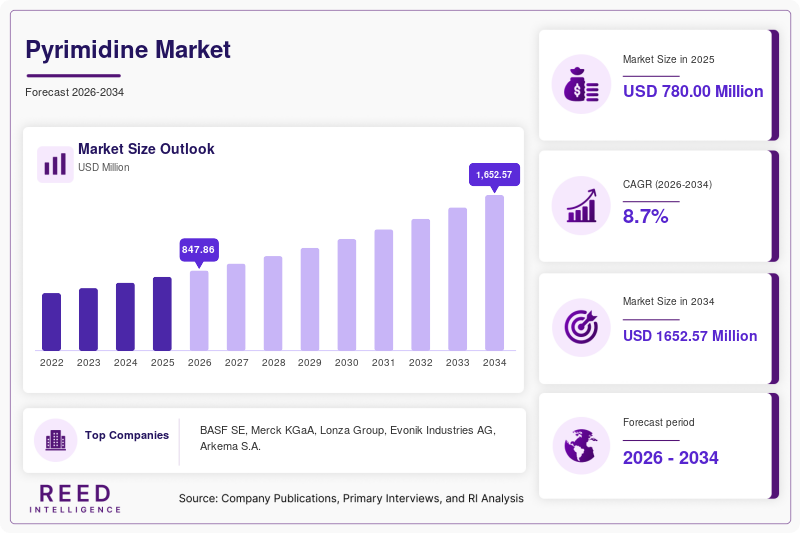
The global Pyrimidine Market was valued at approximately USD 780 million in 2026 and is projected to reach USD 1520 million by 2034, expanding at a CAGR of 8.7% during 2026–2034. Pyrimidine compounds are widely used in pharmaceuticals, agrochemicals, and biochemical research, primarily due to their role in nucleic acid synthesis and drug formulation. The steady rise in pharmaceutical manufacturing, particularly in antiviral and anticancer drug development, has significantly contributed to the expansion of the market.
One of the major global factors supporting market growth is the increasing prevalence of chronic diseases and infectious conditions, which has driven the demand for advanced therapeutics containing pyrimidine derivatives. In addition, continuous advancements in medicinal chemistry and synthetic biology have improved the production efficiency and functional versatility of pyrimidine-based compounds, making them suitable for a broader range of industrial applications.
Key Highlights
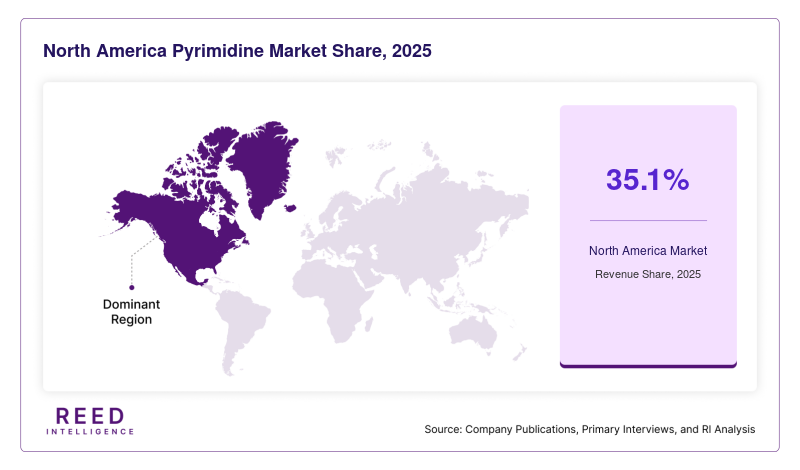
- North America dominated the market with a 35.1% share in 2025.
- Asia Pacific is expected to grow at the fastest CAGR of 10.8% during 2026–2034.
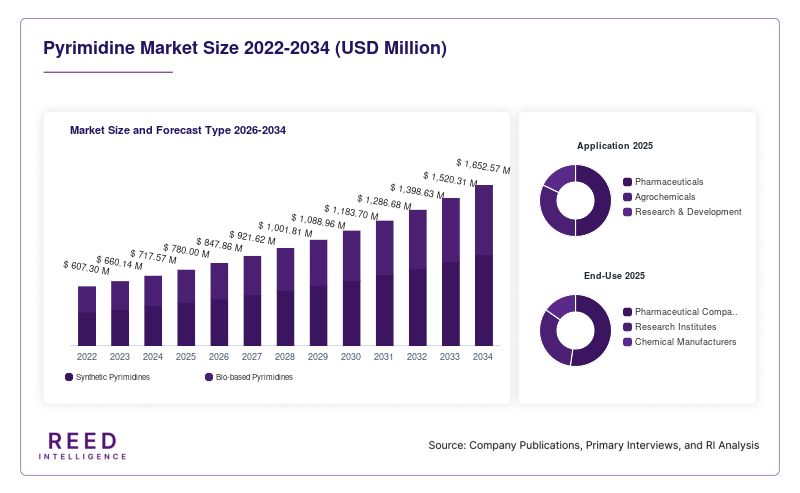
- By type, synthetic pyrimidines accounted for the largest share of 62.4%.
- while bio-based pyrimidines are projected to grow at a CAGR of 11.5%.
- By application, pharmaceuticals led with a 48.7% share, whereas agrochemicals are expected to expand at a CAGR of 9.9%.
- The United States remained the dominant country, with market values of USD 210 million in 2024 and USD 235 million in 2025.
Market Trends
Rising Demand for Pyrimidine-Based Pharmaceuticals
The increasing use of pyrimidine derivatives in drug formulations is emerging as a key trend shaping the Pyrimidine Market. These compounds are essential in the development of antiviral, anticancer, and anti-inflammatory drugs. Pharmaceutical companies are focusing on designing targeted therapies using pyrimidine scaffolds due to their ability to interact with biological systems effectively. Additionally, the expansion of personalized medicine has further accelerated demand, as pyrimidine-based compounds are often used in precision drug development. Research institutions are also increasing their investments in nucleic acid analogs, supporting innovation and broadening the application scope of pyrimidines across therapeutic areas.
Growth of Sustainable and Bio-Based Pyrimidine Production
Another notable trend is the shift toward sustainable production methods for pyrimidine compounds. Manufacturers are exploring bio-based synthesis processes to reduce environmental impact and comply with evolving regulatory standards. This trend is driven by the need to minimize chemical waste and carbon emissions associated with traditional synthesis routes. Advances in biotechnology and enzymatic synthesis have enabled more efficient production processes, reducing costs and improving yield. Furthermore, regulatory bodies are encouraging the adoption of greener technologies, which is influencing companies to invest in eco-friendly manufacturing infrastructure.
Market Drivers
Expansion of the Pharmaceutical Industry
The rapid expansion of the global pharmaceutical industry is a major driver of the Pyrimidine Market. Pyrimidine compounds serve as key intermediates in the synthesis of various therapeutic drugs, including those used for cancer, viral infections, and neurological disorders. The growing investment in drug discovery and development has led to increased demand for these compounds. Additionally, the rising number of clinical trials involving nucleic acid-based therapies has further strengthened market growth. Governments and private organizations are also providing funding for pharmaceutical research, which is expected to sustain demand for pyrimidine derivatives over the forecast period.
Increasing Agricultural Demand for Agrochemicals
The demand for pyrimidine compounds in agrochemicals is another significant growth driver. These compounds are widely used in the formulation of herbicides, fungicides, and insecticides due to their effectiveness in crop protection. As global food demand continues to rise, agricultural productivity has become a priority, leading to increased adoption of advanced agrochemical solutions. Pyrimidine-based products help improve crop yield and resistance to pests and diseases. Moreover, technological advancements in agricultural practices and the introduction of precision farming techniques have further boosted the demand for efficient agrochemical formulations.
Market Restraint
Stringent Regulatory Framework and Production Complexity
One of the primary restraints affecting the Pyrimidine Market is the stringent regulatory environment associated with chemical synthesis and pharmaceutical production. Regulatory authorities impose strict guidelines on the manufacturing, handling, and disposal of chemical compounds, including pyrimidines. Compliance with these regulations often requires significant investment in infrastructure, quality control systems, and documentation processes. This increases the overall cost of production and can limit market entry for smaller players.
Additionally, the synthesis of pyrimidine compounds involves complex chemical processes that require specialized equipment and expertise. Variability in raw material quality and reaction conditions can impact yield and product consistency. For example, pharmaceutical-grade pyrimidine production must meet high purity standards, which adds to operational challenges. These factors collectively hinder market growth by increasing operational costs and limiting scalability, particularly in developing regions where access to advanced manufacturing technologies may be limited.
Market Opportunities
Growth in Biopharmaceutical Research
The increasing focus on biopharmaceutical research presents significant opportunities for the Pyrimidine Market. Pyrimidine derivatives play a crucial role in nucleic acid synthesis, making them essential for the development of gene therapies and RNA-based treatments. The growing interest in biotechnology and genomics has led to increased demand for these compounds in research and development activities. Furthermore, collaborations between academic institutions and pharmaceutical companies are fostering innovation in this field. As the biopharmaceutical sector continues to expand, the demand for high-quality pyrimidine compounds is expected to rise.
Emerging Markets and Industrial Expansion
Emerging economies offer substantial growth opportunities for the Pyrimidine Market due to rapid industrialization and increasing investments in healthcare and agriculture. Countries in Asia Pacific, Latin America, and the Middle East are witnessing a surge in pharmaceutical manufacturing and agrochemical production. Governments in these regions are supporting domestic production through favorable policies and incentives. Additionally, the availability of low-cost labor and raw materials makes these markets attractive for manufacturers. Expanding distribution networks and increasing awareness about advanced chemical applications are also expected to drive market growth in these regions.
Segmental Analysis
By Type
Synthetic pyrimidines dominated the Pyrimidine Market in 2024, accounting for approximately 62.4% of the total share. These compounds are widely used in pharmaceutical and agrochemical applications due to their consistent quality and availability. The ability to produce synthetic pyrimidines in large quantities using established chemical processes has contributed to their dominance. Additionally, advancements in synthetic chemistry have improved the efficiency and cost-effectiveness of production, making these compounds more accessible to various industries.
Bio-based pyrimidines are expected to be the fastest-growing subsegment, with a projected CAGR of 11.5% during the forecast period. The increasing focus on sustainability and environmental protection is driving the demand for bio-based alternatives. These compounds are produced using renewable resources and environmentally friendly processes, which reduces the environmental impact. Additionally, regulatory support for green chemistry initiatives is encouraging manufacturers to adopt bio-based production methods, further boosting market growth.
By Application
The pharmaceutical segment held the largest share of 48.7% in 2024 within the Pyrimidine Market. Pyrimidine compounds are essential in the development of various drugs, including antivirals, anticancer agents, and antibiotics. The growing prevalence of chronic diseases and the increasing demand for effective treatments have driven the adoption of these compounds in pharmaceutical applications. Additionally, ongoing research and development activities in drug discovery continue to support the growth of this segment.
The agrochemical segment is expected to grow at the fastest CAGR of 9.9% during 2026–2034. The rising demand for food and the need to improve agricultural productivity are key factors driving this growth. Pyrimidine-based agrochemicals are widely used for crop protection, helping to prevent damage from pests and diseases. The adoption of advanced farming techniques and the increasing use of precision agriculture are further supporting the expansion of this segment.
By End-Use
The pharmaceutical companies segment dominated the Pyrimidine Market in 2024, accounting for a significant share of the overall demand. These companies rely heavily on pyrimidine compounds for drug development and production. The increasing investment in research and development, along with the growing number of clinical trials, has contributed to the dominance of this segment. Additionally, collaborations between pharmaceutical companies and research institutions are driving innovation and expanding the application scope of pyrimidine compounds.
The research institutes segment is projected to grow at the fastest CAGR of 10.6% during the forecast period. The increasing focus on scientific research and the development of new therapeutic solutions are key factors driving this growth. Research institutes play a crucial role in advancing the understanding of pyrimidine compounds and their applications. Government funding and private investments in research activities are expected to further support the growth of this segment.
Regional Analysis
North America
North America held a dominant share of 35.1% in 2025 in the Pyrimidine Market and is expected to grow at a CAGR of 7.9% during the forecast period. The region benefits from a well-established pharmaceutical sector, advanced research infrastructure, and high healthcare expenditure. Continuous innovation in drug development and the presence of leading pharmaceutical companies contribute to sustained demand for pyrimidine compounds. Additionally, increasing investments in biotechnology and genomics research further strengthen market growth.
The United States remains the dominant country in this region due to its strong pharmaceutical manufacturing base and extensive R&D activities. One unique growth factor is the rising adoption of precision medicine, which relies heavily on nucleic acid-based compounds, including pyrimidines. Government support for research initiatives and favorable regulatory frameworks also play a crucial role in maintaining the country’s leadership position.
Europe
Europe accounted for a significant share of the Pyrimidine Market in 2025, with steady growth expected at a CAGR of 7.5% through 2034. The region’s well-regulated pharmaceutical and chemical industries contribute to consistent demand for pyrimidine derivatives. Additionally, strong collaboration between research institutions and industry players fosters innovation and supports market expansion. Increasing focus on sustainable production practices also influences market dynamics.
Germany stands out as the dominant country in Europe, supported by its robust chemical manufacturing sector. A unique growth factor in this region is the emphasis on green chemistry and sustainable manufacturing processes. Companies are investing in eco-friendly production technologies to comply with environmental regulations, which is driving the adoption of advanced pyrimidine synthesis methods.
Asia Pacific
Asia Pacific is projected to grow at the fastest CAGR of 10.8% during 2026–2034, driven by rapid industrialization and expanding pharmaceutical and agricultural sectors. The region’s large population base and increasing healthcare needs contribute to strong demand for pyrimidine compounds. Additionally, favorable government policies and growing investments in research and development further support market growth.
China dominates the Asia Pacific market due to its extensive manufacturing capabilities and cost advantages. A key growth factor is the expansion of contract manufacturing organizations (CMOs) that produce pharmaceutical intermediates, including pyrimidines. The availability of skilled labor and raw materials enhances production efficiency, making China a major contributor to regional growth.
Middle East & Africa
The Middle East & Africa region is experiencing moderate growth in the Pyrimidine Market, with a projected CAGR of 6.8% during the forecast period. Increasing investments in healthcare infrastructure and agricultural development are key factors supporting market expansion. Governments are focusing on improving access to healthcare services and enhancing food security, which drives demand for pharmaceutical and agrochemical products.
Saudi Arabia emerges as the dominant country in this region, supported by its growing pharmaceutical sector. A unique growth factor is the government’s focus on diversifying the economy and reducing dependence on oil revenues. Investments in chemical manufacturing and healthcare industries are expected to boost the demand for pyrimidine compounds in the coming years.
Latin America
Latin America holds a smaller share of the Pyrimidine Market but is expected to grow steadily at a CAGR of 7.2% through 2034. The region’s agricultural sector plays a significant role in driving demand for pyrimidine-based agrochemicals. Additionally, improving healthcare infrastructure and increasing pharmaceutical production contribute to market growth.
Brazil is the leading country in this region, driven by its large agricultural industry. A unique growth factor is the adoption of modern farming techniques and crop protection solutions. The increasing use of advanced agrochemicals to enhance crop yield and quality is expected to drive demand for pyrimidine compounds in the region.
Competitive Landscape
The Pyrimidine Market is moderately fragmented, with several global and regional players competing based on product quality, pricing, and technological capabilities. Leading companies are focusing on expanding their product portfolios and investing in research and development to maintain a competitive edge. Strategic collaborations, mergers, and acquisitions are common strategies adopted by market participants to strengthen their market presence.
One of the leading players in the market is a major chemical and pharmaceutical company that has established a strong global footprint through continuous innovation and product development. Recently, this company announced the expansion of its production capacity for pharmaceutical intermediates, including pyrimidine compounds, to meet growing demand. Other key players are also investing in sustainable production methods and exploring new applications for pyrimidine derivatives. The competitive landscape is expected to remain dynamic, with increasing emphasis on technological advancements and strategic partnerships.
Key Players List
- BASF SE
- Merck KGaA
- Lonza Group
- Evonik Industries AG
- Arkema S.A.
- Mitsubishi Chemical Corporation
- Sumitomo Chemical Co., Ltd.
- Toray Industries, Inc.
- Johnson Matthey
- Thermo Fisher Scientific Inc.
- Tokyo Chemical Industry Co., Ltd.
- Jubilant Pharmova Limited
- LGC Limited
- Alfa Aesar
- Wuxi AppTec
Recent Developments
- In 2025, a leading chemical company expanded its production facility to increase the output of pyrimidine intermediates for pharmaceutical applications.
- In 2024, a biotechnology firm introduced a new bio-based synthesis process for pyrimidine compounds, improving efficiency and sustainability.
- In 2026, a global pharmaceutical company entered into a strategic partnership with a research institute to develop advanced pyrimidine-based therapeutics.
Pyrimidine Market Segments
Type
- Synthetic Pyrimidines
- Bio-based Pyrimidines
Application
- Pharmaceuticals
- Agrochemicals
- Research & Development
End-Use
- Pharmaceutical Companies
- Research Institutes
- Chemical Manufacturers
By Region
- North America
- Europe
- APAC
- Middle East and Africa
- LATAM