Quinoline Yellow WS Market Size, Share & Demand Report By Type (Food Grade, Pharmaceutical Grade, Industrial Grade), By Application (Food & Beverages, Pharmaceuticals, Cosmetics, Industrial Applications), By End-Use Industry (Food Processing, Healthcare, Personal Care & Cosmetics, Manufacturing) & Segment Forecasts, 2025–2034
USD 3950
Market Overview
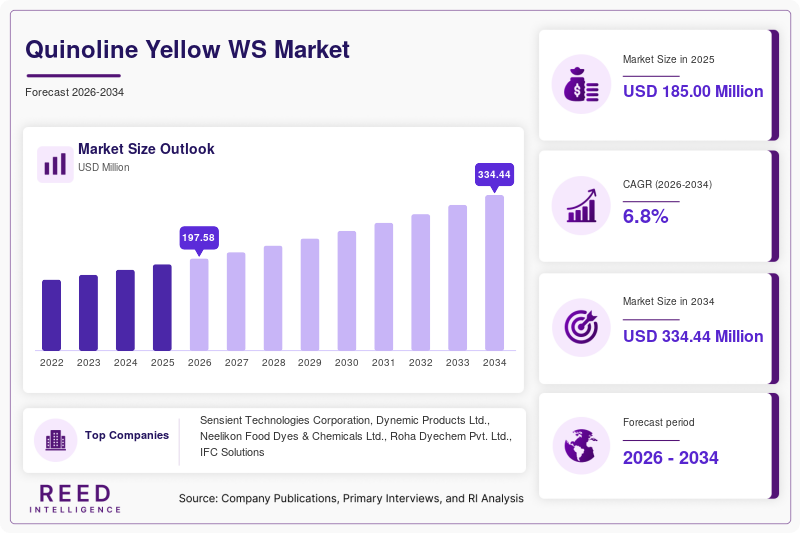
The Quinoline Yellow WS Market size is estimated at USD 185 million, with a moderate increase to approximately USD 198 million in 2026. The market is projected to reach USD 342 million by 2034, reflecting a compound annual growth rate (CAGR) of 6.8% during the forecast period from 2025 to 2034. This growth trajectory reflects rising demand for certified food-grade colorants and increasing industrial usage across emerging economies.
One of the primary growth factors is the expansion of the processed food industry, where Quinoline Yellow WS is extensively used in beverages, confectionery, and bakery products. The rising consumption of visually appealing packaged foods has significantly contributed to the market size and share. Secondly, the pharmaceutical industry continues to utilize Quinoline Yellow WS in tablet coatings and syrups, supporting consistent market growth. Thirdly, the cosmetics sector is experiencing increased adoption of synthetic dyes due to their stability and cost efficiency, further driving market trends.
Key Highlights
- Market size estimated at USD 185 million in 2025, reflecting steady demand across key application industries. The market continues to expand due to consistent usage in food processing, pharmaceuticals, and cosmetic formulations.
- Expected to reach USD 342 million by 2034, driven by rising consumption of processed and packaged products globally. Growth is further supported by increasing industrial applications and expanding emerging markets.
- CAGR of 6.8% from 2025 to 2034 indicates stable and sustained market expansion. This growth rate reflects balanced demand, regulatory adaptation, and technological advancements in dye manufacturing.
- Strong demand from food, pharmaceutical, and cosmetics sectors continues to drive market growth. These industries rely on Quinoline Yellow WS for its stability, cost-effectiveness, and wide compatibility in formulations.
- Increasing regulatory compliance is shaping product innovation across the market. Manufacturers are focusing on high-purity, safer variants to meet global standards and maintain competitive positioning.
Market Trends
Rising Preference for Certified and Regulated Food Additives
A significant trend shaping the Quinoline Yellow WS Market is the growing preference for certified and regulated food additives. Consumers are increasingly concerned about food safety, prompting manufacturers to adopt dyes that comply with international standards. Quinoline Yellow WS, being approved in several regions with defined usage limits, is gaining traction among food producers. This trend is further supported by regulatory bodies that enforce stringent guidelines on synthetic colorants, encouraging companies to invest in quality assurance processes. As a result, the market is witnessing increased demand for high-purity variants, which enhances product differentiation and strengthens brand trust.
Expansion of Application in Cosmetic Formulations
Another notable trend is the increasing use of Quinoline Yellow WS in cosmetic products such as lipsticks, lotions, and personal care items. The cosmetic industry is experiencing robust growth, particularly in emerging markets, where consumers seek vibrant and long-lasting formulations. Quinoline Yellow WS offers stability under varying pH conditions and light exposure, making it suitable for cosmetic applications. Manufacturers are leveraging these properties to develop innovative formulations that meet consumer expectations. This trend is contributing to the overall market growth and diversifying the application base beyond traditional sectors.
Market Drivers
Growth of the Processed Food Industry
The rapid expansion of the global processed food industry is a major driver of the Quinoline Yellow WS Market. Urbanization and changing lifestyles have increased the demand for ready-to-eat and packaged foods, which rely heavily on colorants for visual appeal. Quinoline Yellow WS is widely used to enhance the appearance of beverages, candies, and snacks. Its cost-effectiveness and stability make it a preferred choice among manufacturers. As food companies continue to innovate and introduce new products, the demand for reliable coloring agents is expected to rise, supporting sustained market growth.
Increasing Demand from Pharmaceutical Applications
The pharmaceutical sector plays a crucial role in driving the Quinoline Yellow WS Market. The dye is commonly used in tablet coatings and liquid formulations to improve product identification and patient compliance. With the growing prevalence of chronic diseases and expanding healthcare infrastructure, the demand for pharmaceutical products is increasing. This, in turn, boosts the need for excipients such as colorants. Additionally, advancements in drug delivery systems are creating new opportunities for the use of Quinoline Yellow WS, further contributing to market growth.
Market Restraint
Regulatory Restrictions and Health Concerns
One of the primary restraints affecting the Quinoline Yellow WS Market is the stringent regulatory environment and associated health concerns. Certain regions impose strict limitations on the use of synthetic dyes due to potential allergic reactions and safety risks. These regulations can restrict market growth by limiting product usage and increasing compliance costs for manufacturers. For example, some European countries have implemented labeling requirements that discourage the use of synthetic colorants in food products. This has led to a shift toward natural alternatives, impacting the market share of Quinoline Yellow WS. Additionally, ongoing research into the long-term effects of synthetic dyes may influence future regulatory decisions, creating uncertainty for industry participants.
Market Opportunities
Expansion in Emerging Economies
Emerging economies present significant growth opportunities for the Quinoline Yellow WS Market. Rapid industrialization, rising disposable incomes, and expanding urban populations are driving demand for processed foods, pharmaceuticals, and cosmetics. Countries in Asia Pacific and Latin America are witnessing increased consumption of packaged goods, creating a favorable environment for synthetic colorants. Manufacturers can capitalize on these opportunities by establishing local production facilities and forming strategic partnerships. Additionally, favorable government policies and investments in infrastructure are supporting market expansion in these regions.
Technological Advancements in Dye Manufacturing
Technological innovations in dye manufacturing are creating new opportunities for market growth. Advances in production processes are improving the purity, stability, and safety of Quinoline Yellow WS. These developments enable manufacturers to meet stringent regulatory requirements and cater to diverse applications. Furthermore, the adoption of sustainable manufacturing practices is gaining importance, as companies seek to reduce environmental impact. Innovations such as eco-friendly synthesis methods and waste reduction techniques are enhancing the competitiveness of Quinoline Yellow WS, opening new avenues for growth.
Segmental Analysis
By Type
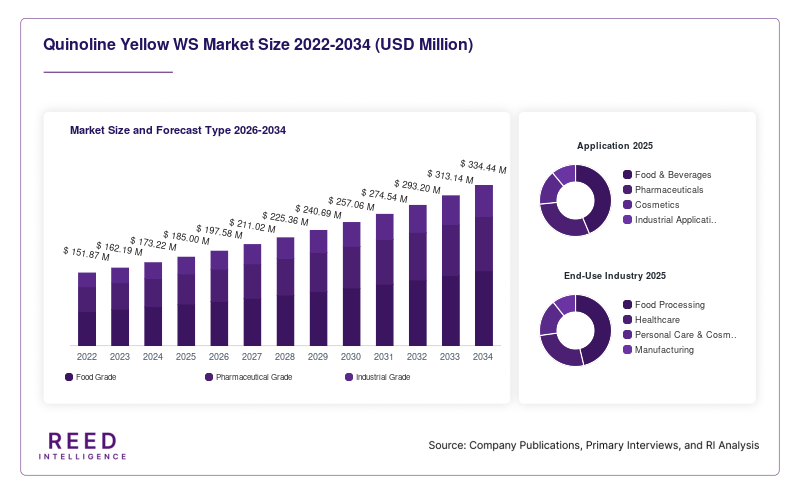
The food-grade Quinoline Yellow WS segment dominated the market in 2024, accounting for approximately 52% of the total share. This dominance is attributed to its extensive use in the food and beverage industry, where it enhances the visual appeal of products such as soft drinks, candies, and baked goods. The segment benefits from consistent demand driven by consumer preference for attractive food products. Additionally, regulatory approvals in several regions have supported the widespread adoption of food-grade variants, contributing to overall market growth and stability.
The pharmaceutical-grade segment is expected to be the fastest-growing, with a CAGR of 7.4% during the forecast period. Growth in this segment is driven by increasing demand for pharmaceutical formulations that require colorants for identification and branding. Advancements in drug manufacturing and rising healthcare needs are supporting this trend. The segment also benefits from stringent quality requirements, which encourage the use of high-purity Quinoline Yellow WS, further driving market expansion.
By Application
The food and beverages segment held the largest market share in 2024, accounting for around 48%. This dominance is driven by the widespread use of Quinoline Yellow WS in processed foods and drinks. The segment is supported by the growing demand for visually appealing products, which enhances consumer experience. Manufacturers are increasingly incorporating colorants to differentiate their products and attract customers, contributing to sustained market growth.
The cosmetics segment is projected to be the fastest-growing, with a CAGR of 7.8%. This growth is driven by increasing consumer demand for personal care products and the expansion of the beauty industry. Quinoline Yellow WS is used in various cosmetic formulations due to its stability and compatibility. The segment is also benefiting from innovation in product development, which is driving the adoption of synthetic colorants in new applications.
By End-Use Industry
The food processing industry dominated the market in 2024, accounting for approximately 45% of the total share. This dominance is driven by the high consumption of packaged foods and beverages. The industry relies on colorants to enhance product appearance and maintain consistency. The growing demand for convenience foods and changing consumer preferences are supporting the expansion of this segment, contributing to overall market growth.
The personal care and cosmetics industry is expected to be the fastest-growing segment, with a CAGR of 7.6%. This growth is driven by increasing consumer awareness of personal grooming and the rising popularity of beauty products. The industry is adopting Quinoline Yellow WS for its stability and cost-effectiveness. Additionally, the expansion of e-commerce platforms is increasing product accessibility, further supporting segment growth.
Regional Analysis
North America
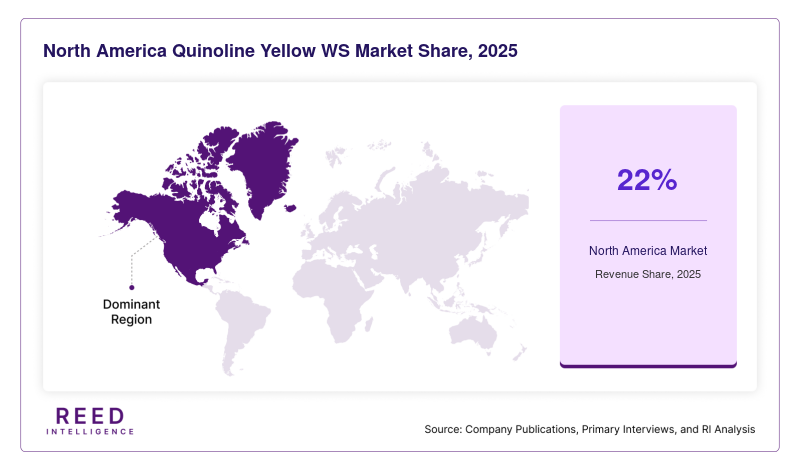
North America accounted for approximately 22% of the Quinoline Yellow WS Market share in 2025, with a projected CAGR of 5.9% during the forecast period. The region benefits from a well-established food processing and pharmaceutical industry. Demand for certified colorants remains strong due to strict regulatory standards and consumer awareness. Market growth is supported by technological advancements and consistent product innovation across industries.
The United States dominates the regional market, driven by its advanced food and pharmaceutical sectors. A key growth factor is the increasing demand for visually appealing packaged foods. Manufacturers are focusing on compliance with regulatory guidelines while maintaining product quality. This balance is supporting steady market expansion and encouraging the adoption of Quinoline Yellow WS in various applications.
Europe
Europe held around 20% of the global market share in 2025, with a CAGR of 5.5% expected through 2034. The region is characterized by stringent regulations governing the use of synthetic dyes. Despite these restrictions, demand remains stable due to established applications in pharmaceuticals and industrial sectors. Market trends indicate a gradual shift toward high-purity and compliant products.
Germany leads the European market, supported by its strong chemical manufacturing industry. A unique growth factor is the emphasis on research and development to improve product safety and compliance. Companies are investing in advanced production technologies to meet regulatory standards, ensuring sustained market growth despite challenges.
Asia Pacific
Asia Pacific is the largest and fastest-growing region, accounting for approximately 35% of the market share in 2025 and expected to register a CAGR of 8.2%. The region’s growth is driven by rapid industrialization and increasing consumption of processed foods and cosmetics. Expanding manufacturing capabilities and favorable economic conditions are further supporting market expansion.
China dominates the Asia Pacific market due to its large-scale production capacity and growing domestic demand. A key growth factor is the rising middle-class population, which drives consumption of packaged goods. This trend is creating strong demand for cost-effective colorants such as Quinoline Yellow WS, boosting regional market growth.
Middle East & Africa
The Middle East & Africa region accounted for around 11% of the market share in 2025, with a projected CAGR of 6.3%. Market growth is supported by increasing investments in the food and beverage sector. The region is gradually adopting synthetic colorants to enhance product appeal and meet consumer preferences.
South Africa leads the regional market, driven by its developing food processing industry. A unique growth factor is the expansion of retail and distribution networks, which increases the availability of packaged products. This trend is supporting the adoption of Quinoline Yellow WS in various applications, contributing to market growth.
Latin America
Latin America held approximately 12% of the global market share in 2025, with a CAGR of 6.7% expected during the forecast period. The region is experiencing steady growth due to rising demand for processed foods and beverages. Market trends indicate increasing adoption of synthetic colorants in both food and pharmaceutical applications.
Brazil is the dominant country in this region, supported by its large consumer base and growing industrial sector. A key growth factor is the increasing popularity of convenience foods, which require effective coloring agents. This trend is driving demand for Quinoline Yellow WS and supporting regional market expansion.
Competitive Landscape
The Quinoline Yellow WS Market is moderately fragmented, with several global and regional players competing based on product quality, pricing, and regulatory compliance. Key companies are focusing on expanding their production capacities and improving product formulations to meet evolving industry standards. Strategic collaborations and mergers are also observed as companies aim to strengthen their market position.
One of the leading players in the market is Sensient Technologies Corporation, which holds a significant share due to its extensive product portfolio and global presence. The company has recently invested in advanced manufacturing technologies to enhance product purity and efficiency. Other prominent players are also focusing on innovation and sustainability to gain a competitive edge. The competitive landscape is expected to remain dynamic, with companies continuously adapting to regulatory changes and market trends.
Key Players
- Sensient Technologies Corporation
- Dynemic Products Ltd.
- Neelikon Food Dyes & Chemicals Ltd.
- Roha Dyechem Pvt. Ltd.
- IFC Solutions
- Koel Colours Pvt. Ltd.
- Vidhi Specialty Food Ingredients Ltd.
- Aarti Industries Ltd.
- Cathay Industries
- Organic Dyes and Pigments
- Crownpigment Co., Ltd.
- Hangzhou Epsilon Chemical Co., Ltd.
- Zhejiang Dragoon Chemical Co., Ltd.
- Megha International
- Spectrum Chemical Manufacturing Corp.
Recent Developments
- In 2024, a leading manufacturer expanded its production facility in Asia Pacific to meet increasing regional demand for food-grade Quinoline Yellow WS.
- In 2025, a major company introduced a high-purity variant designed to comply with stricter regulatory standards in Europe.
- In 2026, a strategic partnership was formed between two industry players to develop sustainable dye manufacturing processes, focusing on reducing environmental impact.
Quinoline Yellow WS Market Segments
Type
- Food Grade
- Pharmaceutical Grade
- Industrial Grade
Application
- Food & Beverages
- Pharmaceuticals
- Cosmetics
- Industrial Applications
End-Use Industry
- Food Processing
- Healthcare
- Personal Care & Cosmetics
- Manufacturing
By Region
- North America
- Europe
- APAC
- Middle East and Africa
- LATAM