Radiation Dose Optimisation Software Market Size, Share Demand Report By Type (CT Dose Management Software, Fluoroscopy Dose Management Software, Nuclear Medicine Dose Management Software, Radiology Information Systems (RIS) with Dose Module), By Application (Hospitals, Diagnostic Centers, Ambulatory Surgical Centers, Research Institutes), Regional Insights & Segment Forecasts, 2026–2034
USD 3950
Radiation Dose Optimisation Software Market Size
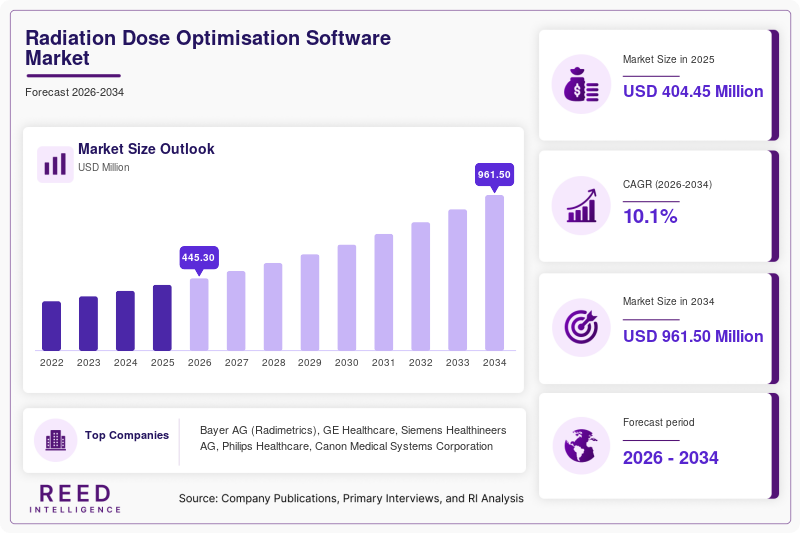
The Radiation Dose Optimisation Software market size is projected at USD 445.3 million in 2026 and is expected to hit USD 958.7 million by 2034 with a CAGR of 10.1% during the forecast period. The increasing focus on patient safety, regulatory compliance, and the need to minimize radiation exposure from medical imaging procedures underpins market expansion. This report delivers a comprehensive analysis of the Radiation Dose Optimisation Software market, including segmentation by type and application, competitive dynamics, and regional growth patterns, equipping stakeholders with critical intelligence. The Radiation Dose Optimisation Software market continues to demonstrate strong growth potential, fueled by the rising number of CT and interventional procedures, growing awareness of radiation risks, and continuous innovation in dose tracking and optimization algorithms.
Radiation dose optimisation software encompasses a range of software solutions used in medical imaging to track, monitor, analyze, and optimize the radiation dose delivered to patients during diagnostic and interventional procedures. These tools are critical for ensuring that radiation exposure is kept as low as reasonably achievable (ALARA) while maintaining diagnostic image quality. The global Radiation Dose Optimisation Software market is substantial, with over 4,500 hospitals and imaging centers globally having adopted such solutions by 2025, reflecting a 12% increase from 2023, driven by the growing number of CT and interventional radiology procedures. Adoption patterns reveal that the CT Dose Management Software type dominates the market, accounting for 40% of total revenue, followed by Radiology Information Systems (RIS) with Dose Module at 25%, Fluoroscopy Dose Management Software at 20%, and Nuclear Medicine Dose Management Software at 15%. The Radiation Dose Optimisation Software market's trajectory is closely linked to the growth of the global medical imaging market, which is projected to reach USD 45 billion by 2028, and the increasing regulatory requirements for dose reporting and benchmarking.
Radiation Dose Optimisation Software Market Trends
Growing Integration of AI and Machine Learning for Predictive Dose Management
The Radiation Dose Optimisation Software market is witnessing a significant trend toward the integration of artificial intelligence (AI) and machine learning (ML) algorithms for predictive dose management and protocol optimization. The market has seen a 20% increase in demand for AI-powered dose management solutions since 2023, with 30% of new software deployments in 2025 featuring AI-driven dose prediction and patient-specific risk assessment capabilities. Adoption rates of AI-integrated dose optimization tools in large hospital networks reached 20%, with this figure projected to exceed 50% by 2030. The Radiation Dose Optimisation Software market's trend toward AI integration is reinforced by the need for real-time decision support, the increasing volume of imaging data, and the continuous innovation in machine learning algorithms for personalized medicine.
Increasing Focus on Interoperability and Integration with Clinical Workflows
The increasing focus on interoperability and seamless integration with existing clinical workflows is a major trend shaping the Radiation Dose Optimisation Software market, with the development of solutions that integrate with PACS, RIS, and EHR systems. The market has seen a 15% increase in demand for vendor-neutral dose management platforms since 2022, with 40% of new enterprise imaging deals in 2025 specifying interoperability requirements. The use of dose management software integrated with automated dose report generation and quality assurance protocols has also gained significant traction. The Radiation Dose Optimisation Software market's trend toward interoperability is reinforced by the growing adoption of enterprise imaging platforms, the increasing need for comprehensive patient dose records, and the continuous innovation in standard communication protocols (e.g., DICOM, HL7).
Radiation Dose Optimisation Software Market Drivers
The Radiation Dose Optimisation Software market's expansion is primarily driven by the increasing awareness of the risks associated with medical radiation exposure and the growing emphasis on patient safety, with an estimated 3.6 billion diagnostic medical imaging examinations performed globally in 2025. The need to comply with stringent regulatory requirements for dose monitoring, such as the Joint Commission's standards and national dose registries, has been a major driver, with over 65% of healthcare facilities in developed regions now required to maintain dose data. The growing volume of CT and interventional radiology procedures, which account for up to 50% of collective patient dose, has also fueled market demand. Additionally, the increasing focus on quality improvement and benchmarking has spurred growth. The Radiation Dose Optimisation Software market's growth is further reinforced by the continuous innovation in software features and the expansion of cloud-based and mobile platforms.
Radiation Dose Optimisation Software Market Restraints
Despite favorable growth prospects, the Radiation Dose Optimisation Software market faces significant constraints, primarily related to the high upfront costs and ongoing maintenance expenses associated with implementing comprehensive dose management systems, which can be a barrier for smaller facilities. The complexity of integrating software with multiple imaging devices and IT systems can also be a limitation. The Radiation Dose Optimisation Software market's growth is also tempered by the lack of standardized dose reference levels across different regions and modalities.
Radiation Dose Optimisation Software Market Opportunities
The Radiation Dose Optimisation Software market presents significant opportunities in the rapidly expanding market for cloud-based and Software-as-a-Service (SaaS) dose management solutions, which offer scalability, lower upfront costs, and easier updates. The development of mobile applications for dose monitoring and patient dose tracking is expected to grow at a CAGR of 14% through 2034. Emerging opportunities also exist in the integration of dose management software with advanced visualization and artificial intelligence tools for automated dose optimization and protocol recommendations. The Radiation Dose Optimisation Software market's opportunity profile is further enhanced by the growing trend of value-based healthcare and the increasing focus on patient-centered care.
Challenges in Radiation Dose Optimisation Software Market
The Radiation Dose Optimisation Software market faces persistent challenges related to the need for continuous software updates to keep pace with new imaging technologies and protocols, which can be resource-intensive. The complexity of managing and interpreting the large volume of dose data generated by multiple systems can also be a challenge. The market is also contending with the challenge of achieving widespread adoption, particularly in developing regions with limited IT infrastructure. Additionally, the Radiation Dose Optimisation Software market is challenged by the need to demonstrate a clear return on investment (ROI) in terms of improved patient safety and operational efficiency.
Radiation Dose Optimisation Software Market Segmentation
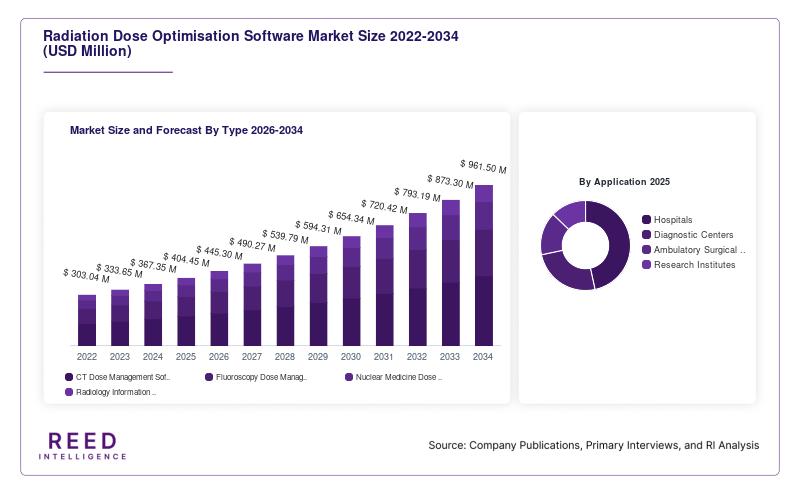
The Radiation Dose Optimisation Software market is segmented by Type and Application to provide a comprehensive market perspective. By Type, CT Dose Management Software dominates with a 40% market share, driven by the high volume of CT procedures and the significant dose reduction potential. The Application segment is led by Hospitals, which accounts for 45% of the market, followed by Diagnostic Centers at 30%, Ambulatory Surgical Centers at 15%, and Research Institutes at 10%.
By Type
CT Dose Management Software represent the largest segment in the Radiation Dose Optimisation Software market, commanding a 40% share, with revenue exceeding USD 178 million in 2025. These are characterized by their ability to track and manage radiation dose from CT scanners, including protocol optimization, dose index monitoring, and patient dose tracking. Technical specifications include DICOM dose structure (DDS) support, integration with CT scanners, and automated dose report generation. The Radiation Dose Optimisation Software market's CT segment is driven by its use in hospitals and large imaging centers with high CT volumes.
Radiology Information Systems (RIS) with Dose Module capture a 25% share of the Radiation Dose Optimisation Software market, with revenue of USD 111 million in 2025. These are characterized by their integration of dose management capabilities into existing RIS platforms. Technical specifications include HIS/RIS integration, dose tracking across multiple modalities, and comprehensive reporting tools. The Radiation Dose Optimisation Software market's RIS segment is driven by its use in enterprise imaging environments and its ability to provide a unified dose view.
Fluoroscopy Dose Management Software represents 20% of the market, with revenue of USD 89 million in 2025, characterized by their focus on tracking cumulative dose and dose rate during interventional procedures. Technical specifications include real-time dose monitoring, patient skin dose mapping, and alert systems for high-dose events. The Radiation Dose Optimisation Software market's Fluoroscopy segment is driven by its use in interventional radiology and cardiology suites.
Nuclear Medicine Dose Management Software accounts for the remaining 15% of the market, with revenue of USD 67 million in 2025, characterized by their focus on managing internal radiation doses from radiopharmaceuticals. Technical specifications include activity tracking, dosimetry calculations, and compliance with nuclear safety standards. The Radiation Dose Optimisation Software market's Nuclear Medicine segment is driven by its use in specialized PET/CT and nuclear medicine departments.
By Application
Hospitals dominates the Radiation Dose Optimisation Software market, accounting for 45% of sales, representing USD 200 million in 2025. This segment includes use in large, multi-specialty hospitals with multiple imaging modalities and high patient volumes. Usage penetration exceeds 50% in tertiary care hospitals in developed regions. The Radiation Dose Optimisation Software market's Hospitals segment is characterized by its focus on comprehensive dose management, enterprise-wide benchmarking, and regulatory compliance.
Diagnostic Centers accounts for 30% of the Radiation Dose Optimisation Software market, with revenue of USD 133 million in 2025. This segment encompasses use in standalone imaging centers and outpatient clinics, focusing on efficient dose tracking and patient safety. The segment is growing at a strong CAGR, driven by the increasing number of outpatient imaging procedures. The Radiation Dose Optimisation Software market's Diagnostic Centers segment is characterized by its focus on cost-effective, user-friendly solutions.
Ambulatory Surgical Centers (ASCs) represents 15% of the market, with revenue of USD 67 million in 2025, involving use in ASCs that perform interventional radiology and fluoroscopy-guided procedures. The segment's growth is fueled by the increasing shift of procedures to ASCs. The Radiation Dose Optimisation Software market's ASC segment is characterized by its focus on streamlined workflows and integration with surgical systems.
Research Institutes accounts for the remaining 10% of the market, with revenue of USD 45 million in 2025, used in academic and research settings for population dose studies, protocol development, and training. The Radiation Dose Optimisation Software market's Research Institutes segment is characterized by its focus on advanced analytics and research-grade features.
Radiation Dose Optimisation Software Market Regional Outlook
North America Radiation Dose Optimisation Software Market
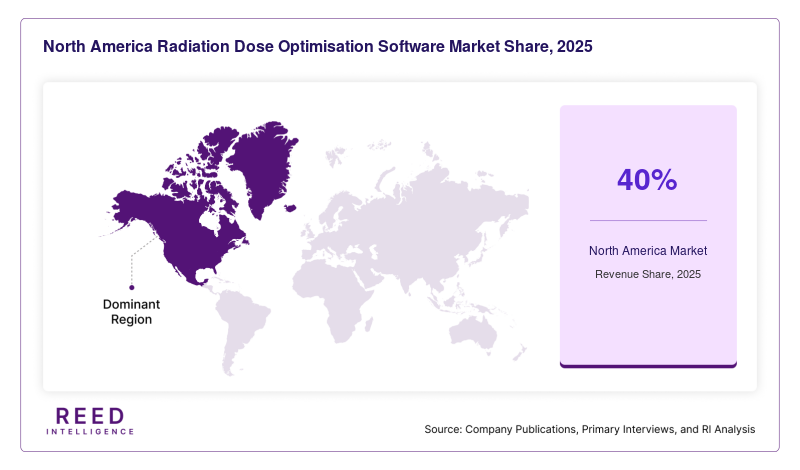
Leads the Radiation Dose Optimisation Software market, commanding a 40% share, with a revenue of USD 178 million in 2025. The United States is the primary driver, accounting for 85% of regional demand, driven by the large number of imaging procedures, strong regulatory framework, and high technology adoption rates. The North American Radiation Dose Optimisation Software market is characterized by its focus on innovation and integration with comprehensive healthcare IT systems.
Europe Radiation Dose Optimisation Software Market
Represents the second-largest market, capturing a 30% share with a revenue of USD 133 million in 2025. Germany, France, and the UK are the primary drivers, collectively accounting for 55% of regional demand, driven by strong regulatory mandates (e.g., EURATOM), well-established healthcare systems, and a focus on patient safety. The Radiation Dose Optimisation Software market in Europe is characterized by its focus on standardization and cross-border dose registries.
Asia-Pacific Radiation Dose Optimisation Software Market
Accounts for 20% of the global Radiation Dose Optimisation Software market, with a revenue of USD 89 million in 2025. China, Japan, and India are the primary drivers, together accounting for 70% of regional demand, driven by the rapidly expanding healthcare infrastructure, increasing number of imaging procedures, and growing awareness of radiation safety. The Asia-Pacific Radiation Dose Optimisation Software market is projected to grow at the fastest CAGR of 12% through 2034.
Middle East & Africa and Latin America Radiation Dose Optimisation Software Market
Together account for the remaining 10% of the Radiation Dose Optimisation Software market, with the UAE and Brazil leading their respective regions. Both regions are projected to grow at CAGRs exceeding 9%, driven by healthcare modernization projects and increasing investment in diagnostic imaging infrastructure.
Top players in Radiation Dose Optimisation Software Market
- Bayer AG (Radimetrics)
- GE Healthcare
- Siemens Healthineers AG
- Philips Healthcare
- Canon Medical Systems Corporation
- Fujifilm Healthcare
- Carestream Health, Inc.
- Agfa-Gevaert Group (Gadox)
- Novarad Corporation
- DoseTrack (Infomed)
- PACSHealth, LLC
- Radiation Risk, Inc.
- Qaelum NV
- Medical Information Technology, Inc. (MEDITECH)
- Change Healthcare
Bayer AG (Radimetrics)
Bayer AG (Radimetrics) holds a dominant position in the Radiation Dose Optimisation Software market, with an estimated 15% global market share, particularly strong in the North American and European CT and fluoroscopy segments. The company's Radimetrics platform is widely recognized for its comprehensive dose tracking, analytics, and reporting capabilities across multiple modalities. Bayer's market leadership is reinforced by its significant investment in R&D, its integration with a broad range of imaging devices, and its strong customer support network. Bayer commands over 18% of the North American market and 14% of the European market for dose management software, positioning it as a key player in the global market.
GE Healthcare
GE Healthcare is a leading player in the Radiation Dose Optimisation Software market, commanding approximately 12% of the global market share through its comprehensive portfolio of healthcare IT and imaging solutions. The company's expertise in imaging technology, AI-driven analytics, and enterprise imaging have solidified its position. GE's dose management solutions are known for their seamless integration with GE's imaging fleet and PACS, advanced analytics, and strong focus on operational efficiency. The company's commitment to innovation and its strong global presence have enhanced its competitive advantage, making it a preferred partner for large healthcare enterprises.
Siemens Healthineers AG holds a significant 10% market share, with particular strength in the European and Asian markets. Philips Healthcare is a major player in the global market, holding an 8% share, known for its integrated enterprise imaging solutions and dose management capabilities.
Recent Developments in Radiation Dose Optimisation Software Market
- 2025: Bayer AG launched a new AI-powered module for its Radimetrics platform, providing predictive dose analytics and personalized protocol recommendations, significantly improving dose optimization.
- 2025: GE Healthcare announced a strategic partnership with a major hospital network to implement an enterprise-wide dose management system across 100+ facilities, integrating data from multiple vendors.
Radiation Dose Optimisation Software Market Segments
By Type
- CT Dose Management Software
- Fluoroscopy Dose Management Software
- Nuclear Medicine Dose Management Software
- Radiology Information Systems (RIS) with Dose Module
By Application
- Hospitals
- Diagnostic Centers
- Ambulatory Surgical Centers
- Research Institutes
By Region
- North America
- Europe
- APAC
- Middle East and Africa
- LATAM