Radiation Protection Materials And Radiation Protection Fiber Market Size, Share & Demand Report By Material Type (Lead-Based Radiation Protection Materials, Lead-Free Composite Materials), By Product Type (Radiation Shielding Sheets & Panels, Radiation Protection Fibers), By Application (Medical Imaging & Diagnostics), By End User (Hospitals & Healthcare Facilities, Nuclear Energy Facilities), By Form (Sheets & Panels, Textile-Based Protective Solutions) By Region & Segment Forecasts, 2026–2034
USD 3950
Market Overview
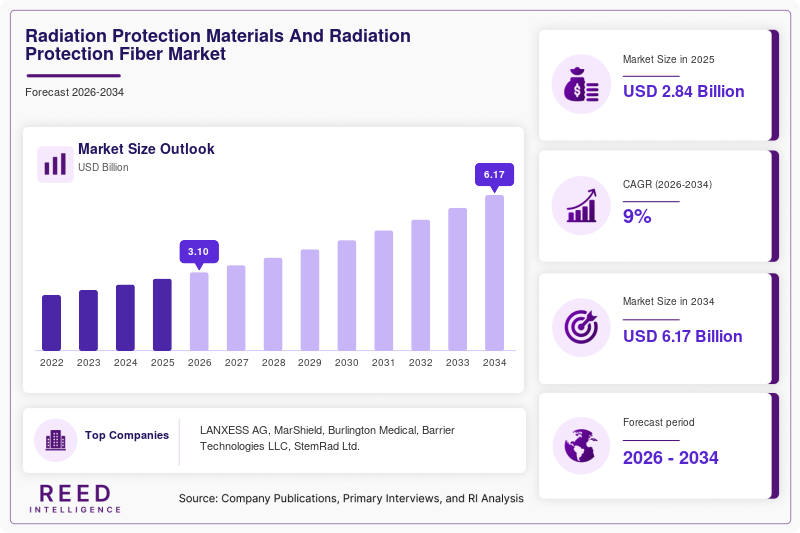
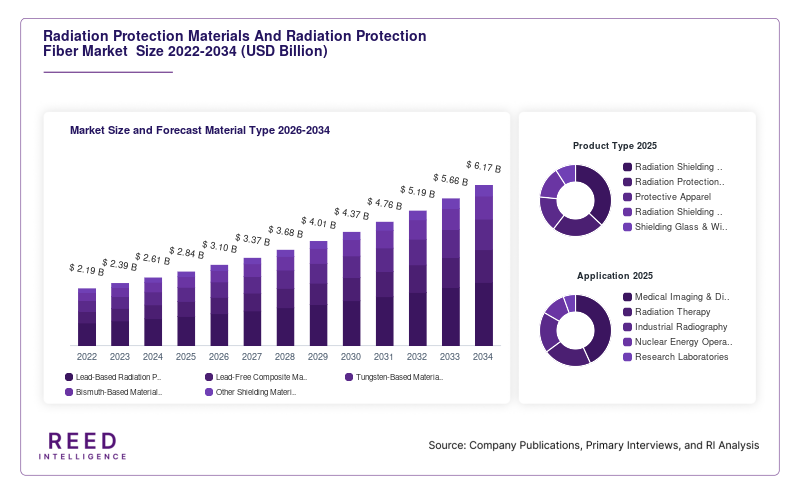
The Radiation Protection Materials And Radiation Protection Fiber Market was valued at USD 2.84 billion in 2026 and is projected to reach USD 5.67 billion by 2034, expanding at a CAGR of 9.0% during the forecast period (2026–2034). The market is experiencing steady expansion due to increasing utilization of radiation-based technologies across healthcare, nuclear energy, industrial inspection, aerospace, and defense sectors. Radiation protection materials and specialized fibers are widely used to shield personnel, equipment, and facilities from harmful ionizing radiation exposure while maintaining operational efficiency and regulatory compliance.
A major global factor supporting market growth has been the continuous expansion of medical diagnostic imaging and radiation therapy procedures worldwide. Increasing installation of CT scanners, PET systems, fluoroscopy equipment, and cancer treatment technologies has accelerated demand for advanced shielding materials and lightweight radiation protection fibers. Healthcare providers are investing in modern protective solutions that offer improved comfort, durability, and radiation attenuation performance.
Key Highlights
- North America dominated the market with 35.8% share in 2025, while Asia Pacific is projected to register the fastest CAGR of 10.8% during 2026–2034.
- By Material Type, Lead-Based Radiation Protection Materials accounted for 42.6% share in 2025, while Lead-Free Composite Materials are expected to grow at a CAGR of 11.7%.
- By Product Type, Radiation Shielding Sheets & Panels held 38.9% share in 2025, whereas Radiation Protection Fibers are forecast to expand at a CAGR of 12.1%.
- By Application, Medical Imaging & Diagnostics represented 44.5% share in 2025, while Radiation Therapy Applications are projected to grow at a CAGR of 10.9%.
- By End User, Hospitals & Healthcare Facilities accounted for 40.7% share in 2025, whereas Nuclear Energy Facilities are expected to grow at a CAGR of 10.4%.
- The United States, the dominant country market, recorded a value of USD 742 million in 2024, increasing to USD 801 million in 2025.
Market Trends
Growing Adoption of Lead-Free Radiation Shielding Solutions
Manufacturers are increasingly developing lead-free shielding materials to address environmental concerns and occupational safety requirements. Advanced composites containing tungsten, bismuth, antimony, and other high-density elements are gaining popularity across healthcare and industrial environments. These materials provide effective radiation attenuation while reducing toxicity concerns associated with traditional lead-based products. As sustainability requirements continue to strengthen, adoption of eco-friendly shielding materials is expected to increase significantly.
Integration of Advanced Fibers in Protective Apparel
Radiation protection fibers are becoming increasingly sophisticated through the incorporation of engineered composites and nanotechnology-based reinforcement materials. These fibers enable the production of lightweight protective garments that improve user comfort without compromising shielding performance. Healthcare professionals, industrial inspectors, and nuclear facility personnel are increasingly adopting advanced fiber-based protective equipment to enhance mobility and reduce fatigue during extended operational periods.
Market Drivers
Increasing Utilization of Diagnostic Imaging Equipment
The rising deployment of diagnostic imaging systems across healthcare facilities is creating sustained demand for radiation protection materials. Hospitals and diagnostic centers require shielding infrastructure, protective barriers, and personal protective equipment to maintain safe operating environments. Growing patient volumes and increasing imaging procedure frequency continue to support market expansion.
Expansion of Industrial Non-Destructive Testing Activities
Industries such as aerospace, oil & gas, manufacturing, and construction increasingly rely on radiographic inspection techniques to evaluate structural integrity and product quality. Radiation-based non-destructive testing applications require specialized shielding materials and protective solutions for worker safety. Expanding industrial inspection requirements are contributing significantly to market growth.
Market Restraint
High Manufacturing and Material Costs
The production of advanced radiation protection materials often requires specialized raw materials, complex engineering processes, and stringent quality control standards. These factors increase product costs and can limit adoption among budget-constrained organizations. Cost considerations remain a challenge, particularly in emerging markets with limited healthcare and industrial safety budgets.
Market Opportunities
Development of Smart Radiation Monitoring Textiles
Emerging smart textile technologies present opportunities for integrating radiation detection capabilities directly into protective fabrics. Intelligent garments capable of monitoring exposure levels in real time could improve occupational safety and create new product categories within the market.
Growth of Nuclear Infrastructure Modernization Projects
Many countries are investing in modernization of nuclear power facilities and radioactive waste management infrastructure. These projects require advanced shielding materials, containment solutions, and protective equipment, creating long-term opportunities for manufacturers operating in the Radiation Protection Materials And Radiation Protection Fiber Market.
Segmental Analysis
By Material Type
Lead-Based Radiation Protection Materials
Lead-based materials accounted for 42.6% of market share in 2025. These materials maintained leadership due to their high shielding efficiency, established industry acceptance, and widespread use across healthcare, industrial, and nuclear applications. Their proven performance and cost-effectiveness supported continued demand.
Lead-Free Composite Materials
Lead-free composite materials are projected to grow at a CAGR of 11.7% through 2034. Growth will be driven by increasing environmental regulations and demand for sustainable protective solutions. Enhanced flexibility and reduced weight will encourage broader adoption across wearable protective equipment applications.
By Product Type
Radiation Shielding Sheets & Panels
Radiation shielding sheets and panels held 38.9% share in 2025. These products were extensively utilized in medical imaging rooms, industrial facilities, and nuclear installations due to their versatility and effectiveness in permanent shielding structures.
Radiation Protection Fibers
Radiation protection fibers are expected to expand at a CAGR of 12.1% during the forecast period. Advances in textile engineering and lightweight shielding technologies will accelerate their adoption in protective apparel and portable safety equipment applications.
By Application
Medical Imaging & Diagnostics
Medical imaging and diagnostics represented 44.5% share in 2025. This segment remained dominant because diagnostic imaging procedures require comprehensive shielding infrastructure and personal protective equipment to ensure patient and operator safety.
Radiation Therapy Applications
Radiation therapy applications are forecast to register a CAGR of 10.9% through 2034. Growth will be supported by increasing cancer incidence rates and expansion of advanced radiotherapy treatment facilities worldwide.
By End User
Hospitals & Healthcare Facilities
Hospitals and healthcare facilities accounted for 40.7% share in 2025. Demand was driven by ongoing installation of imaging systems, treatment equipment, and safety infrastructure within healthcare environments.
Nuclear Energy Facilities
Nuclear energy facilities are projected to grow at a CAGR of 10.4% during the forecast period. Expansion of nuclear power generation capacity and facility modernization projects will create additional demand for advanced shielding materials and protective equipment.
By Form
Sheets & Panels
Sheets and panels represented 36.8% share in 2025. Their widespread application in room shielding, structural protection, and equipment enclosures contributed to segment dominance.
Textile-Based Protective Solutions
Textile-based protective solutions are expected to grow at a CAGR of 11.5% through 2034. Increasing preference for ergonomic and lightweight protective clothing will support adoption among healthcare and industrial personnel.
Regional Analysis
North America
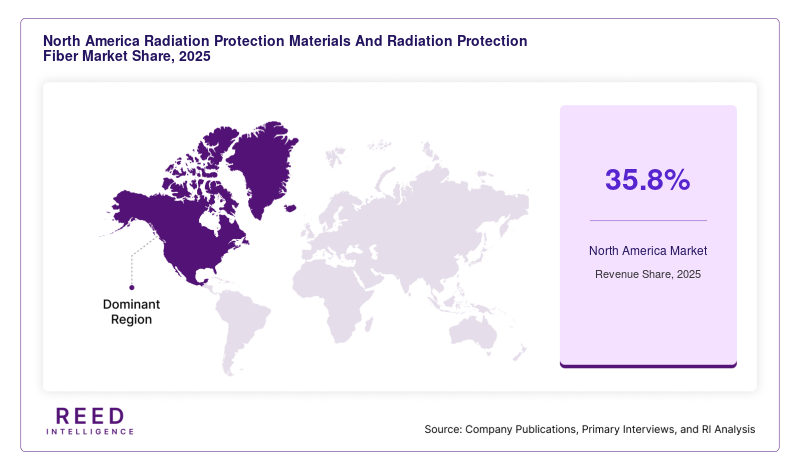
North America accounted for 35.8% of the Radiation Protection Materials And Radiation Protection Fiber Market share in 2025 and is expected to grow at a CAGR of 8.4% through 2034. The region benefited from extensive adoption of advanced medical imaging technologies and strong regulatory emphasis on occupational radiation safety. The United States dominated the regional market due to large-scale investment in healthcare infrastructure and widespread implementation of radiation safety compliance programs across medical and industrial facilities.
Europe
Europe represented 28.1% market share in 2025 and is projected to expand at a CAGR of 8.7% during the forecast period. Demand was supported by stringent workplace safety regulations and modernization of healthcare facilities. Germany emerged as the leading country owing to its advanced medical technology sector and strong industrial manufacturing base that relies extensively on radiographic testing procedures.
Asia Pacific
Asia Pacific held 24.9% share in 2025 and is forecast to witness the fastest CAGR of 10.8% from 2026 to 2034. Expanding healthcare infrastructure, growing cancer treatment capacity, and increasing industrialization supported regional market development. China dominated the region due to rapid expansion of diagnostic imaging centers and significant investments in domestic radiation protection equipment manufacturing.
Middle East & Africa
The Middle East & Africa accounted for 6.0% market share in 2025 and is anticipated to register a CAGR of 9.2% during the forecast period. Investments in specialized healthcare facilities and industrial safety programs contributed to market growth. Saudi Arabia led the region because of expanding healthcare modernization initiatives and increasing deployment of advanced diagnostic technologies.
Latin America
Latin America captured 5.2% market share in 2025 and is expected to grow at a CAGR of 8.8% through 2034. Demand increased due to improvements in healthcare accessibility and expansion of industrial inspection activities. Brazil remained the dominant country owing to ongoing investments in medical infrastructure and rising adoption of occupational safety equipment across industrial sectors.
Competitive Landscape
The Radiation Protection Materials And Radiation Protection Fiber Market is characterized by product innovation, material science advancements, strategic collaborations, and investments in lightweight shielding technologies. Market participants focus on developing environmentally compliant solutions while improving protection efficiency and user comfort.
LANXESS AG
LANXESS AG remains a significant market participant through its portfolio of specialty materials used in radiation shielding applications. The company continues investing in advanced material technologies designed for healthcare and industrial safety environments.
MarShield
MarShield specializes in radiation shielding products for medical, industrial, and nuclear applications. The company maintains a strong market presence through customized shielding solutions and engineering expertise.
Burlington Medical
Burlington Medical focuses on lightweight radiation protection apparel and personal protective equipment. The company continues to expand its portfolio of ergonomic shielding garments designed for healthcare professionals.
Barrier Technologies LLC
Barrier Technologies develops radiation protection products for medical imaging facilities and industrial environments. Its product range includes shielding barriers, protective apparel, and customized safety solutions.
StemRad Ltd.
StemRad is recognized for innovative personal radiation protection technologies. A recent development involved the introduction of enhanced wearable shielding systems designed for emergency response and specialized occupational environments.
Key Players List
- LANXESS AG
- MarShield
- Burlington Medical
- Barrier Technologies LLC
- StemRad Ltd.
- MAVIG GmbH
- Wardray Premise Ltd.
- Ray-Bar Engineering Corporation
- ETS-Lindgren
- Nelco Worldwide
- Nuclear Shields B.V.
- Lite Tech, Inc.
- Kiran Medical Systems
- AliMed, Inc.
- INFAB Corporation
Radiation Protection Materials And Radiation Protection Fiber Market Segments
Material Type
- Lead-Based Radiation Protection Materials
- Lead-Free Composite Materials
- Tungsten-Based Materials
- Bismuth-Based Materials
- Other Shielding Materials
Product Type
- Radiation Shielding Sheets & Panels
- Radiation Protection Fibers
- Protective Apparel
- Radiation Shielding Barriers
- Shielding Glass & Windows
Application
- Medical Imaging & Diagnostics
- Radiation Therapy
- Industrial Radiography
- Nuclear Energy Operations
- Research Laboratories
End User
- Hospitals & Healthcare Facilities
- Nuclear Energy Facilities
- Industrial Manufacturing Companies
- Research Institutions
- Defense & Aerospace Organizations
Form
- Sheets & Panels
- Textile-Based Protective Solutions
- Coatings & Composites
- Glass-Based Shielding Products
By Region
- North America
- Europe
- APAC
- Middle East and Africa
- LATAM