Radiation Shielding Glass Market Size, Share & Demand Report By Type (Lead Glass, Lead-Free Glass), By Application (Medical Imaging, Nuclear Power Plants, Industrial Inspection), By End-Use (Hospitals, Research Laboratories, Industrial Facilities), By Region & Segment Forecasts, 2026–2034
USD 3950
Market Overview
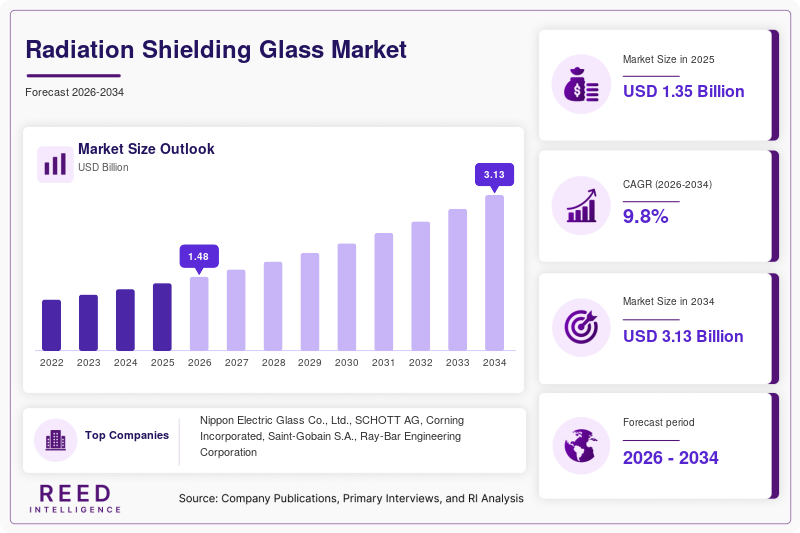
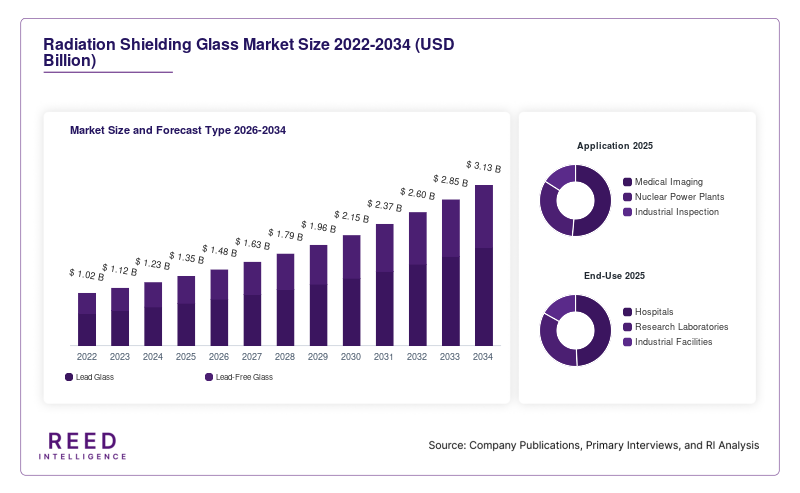
The Radiation Shielding Glass Market was valued at approximately USD 1.35 billion in 2026 and is projected to reach USD 2.85 billion by 2034, expanding at a CAGR of 9.8% during the forecast period (2026–2034). The market is witnessing steady growth due to the increasing demand for radiation protection solutions across healthcare, nuclear energy, and industrial applications. Radiation shielding glass is widely used in diagnostic imaging rooms, nuclear facilities, laboratories, and industrial inspection units, where safety and visibility are both critical.
One major global factor supporting market expansion is the rising adoption of advanced medical imaging technologies such as CT scans, fluoroscopy, and X-ray diagnostics. These technologies require protective infrastructure to safeguard healthcare professionals and patients from ionizing radiation. Governments and healthcare organizations are also implementing stricter safety standards, which is encouraging the adoption of high-performance shielding materials, including lead-based and lead-free radiation shielding glass.
Key Highlights
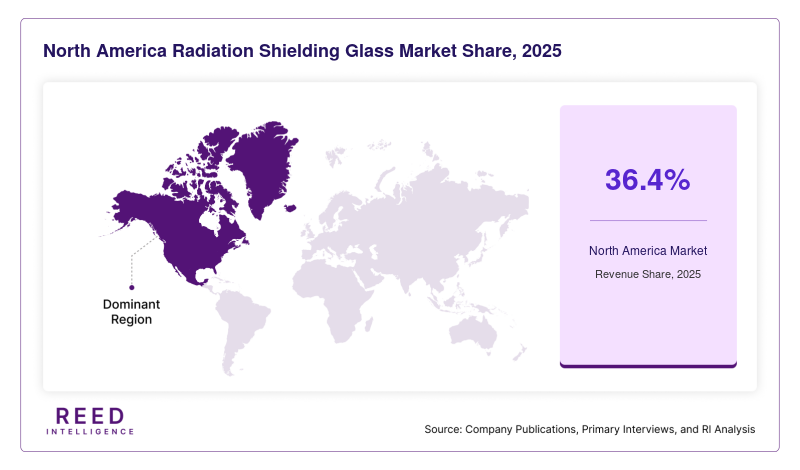
- North America dominated the market with a 36.4% share in 2025.
- Asia Pacific is expected to grow at the fastest CAGR of 10.9% during 2026–2034.
- By type, lead glass accounted for the largest share of 52.7%.
- while lead-free glass is projected to grow at a CAGR of 11.6%.
- By application, medical imaging led with a 48.3% share, whereas nuclear power plants are expected to expand at a CAGR of 10.8%.
- The United States remained the dominant country, with market values of USD 420 million in 2024 and USD 460 million in 2025.
Market Trends
Increasing Adoption of Lead-Free Radiation Shielding Glass
A key trend shaping the Radiation Shielding Glass Market is the growing shift toward lead-free alternatives. Traditional lead-based glass has been widely used due to its effective radiation attenuation properties. However, environmental concerns and regulatory pressures related to lead toxicity are encouraging manufacturers to develop eco-friendly substitutes. Lead-free shielding glass uses materials such as bismuth, tungsten, and other heavy metal oxides, which offer comparable protection without environmental risks. Healthcare facilities, especially in developed regions, are adopting these solutions to comply with safety and sustainability standards. Additionally, the lighter weight and improved optical clarity of lead-free glass enhance usability in modern medical environments. This transition is expected to influence product innovation and pricing strategies across the market.
Integration of Smart and High-Performance Materials
Another notable trend is the integration of advanced materials and smart technologies in radiation shielding glass. Manufacturers are focusing on enhancing durability, transparency, and multi-layered protection capabilities. Innovations such as laminated glass with anti-reflective coatings and impact-resistant properties are gaining traction. These solutions are particularly valuable in high-risk environments such as nuclear facilities and advanced diagnostic centers. Moreover, there is increasing interest in combining radiation shielding with other functionalities, including thermal insulation and soundproofing. This multifunctional approach is attracting investments from both healthcare infrastructure developers and industrial operators. As a result, the market is evolving from conventional shielding solutions toward more sophisticated and value-added products.
Market Drivers
Expansion of Healthcare Infrastructure and Diagnostic Imaging
The rapid expansion of healthcare infrastructure globally is a major driver for the Radiation Shielding Glass Market. The increasing prevalence of chronic diseases has led to higher demand for diagnostic imaging procedures such as X-rays, CT scans, and mammography. Hospitals, diagnostic centers, and specialty clinics are investing heavily in imaging equipment, which requires radiation-protected viewing windows and control rooms. Additionally, emerging economies are witnessing significant growth in healthcare investments, supported by government initiatives and private sector participation. This expansion is creating consistent demand for radiation shielding materials. The need to ensure safety for healthcare workers and patients further strengthens adoption, making shielding glass a critical component in modern medical facilities.
Growth in Nuclear Energy and Industrial Applications
The growing use of nuclear energy and radiation-based industrial processes is another key driver. Countries are increasingly investing in nuclear power as a reliable and low-emission energy source. Nuclear plants require robust radiation shielding solutions for control rooms and observation areas. Similarly, industries such as oil and gas, aerospace, and manufacturing use radiation-based inspection techniques for quality control and material testing. These applications require durable and high-performance shielding glass to maintain safety while allowing visibility. As industrial safety standards become stricter, the demand for certified radiation shielding solutions is expected to rise, further driving market growth.
Market Restraint
High Cost and Complex Manufacturing Processes
One of the primary restraints affecting the Radiation Shielding Glass Market is the high cost associated with production and installation. Radiation shielding glass requires specialized materials such as lead or alternative heavy metals, along with advanced manufacturing processes to ensure uniform density and transparency. These requirements increase production costs significantly compared to standard glass products. Additionally, the installation of shielding glass often involves customized designs and structural modifications, which further adds to overall project costs.
This cost factor can limit adoption, particularly in small healthcare facilities and developing regions with budget constraints. For example, smaller diagnostic centers may opt for alternative shielding solutions such as lead-lined walls instead of installing expensive glass panels. Moreover, fluctuations in raw material prices can impact profit margins for manufacturers and lead to pricing instability in the market.
Another challenge is the complexity of recycling and disposing of lead-based glass, which adds to lifecycle costs and environmental concerns. Although lead-free alternatives are emerging, they are still relatively expensive due to limited production scale. These factors collectively restrain market growth and create barriers for new entrants, slowing down widespread adoption across certain segments.
Market Opportunities
Rising Demand in Emerging Economies
Emerging economies present significant growth opportunities for the Radiation Shielding Glass Market. Countries in Asia Pacific, Latin America, and parts of Africa are investing heavily in healthcare infrastructure and industrial development. The increasing establishment of hospitals, diagnostic centers, and research laboratories is driving demand for radiation protection solutions. Governments in these regions are also implementing stricter safety regulations, which is encouraging the adoption of certified shielding materials. Additionally, the rising awareness of occupational safety among healthcare professionals is contributing to market expansion. Manufacturers can leverage these opportunities by offering cost-effective and customized solutions tailored to regional needs. Strategic partnerships with local distributors and healthcare providers can further enhance market penetration.
Technological Advancements in Lightweight and Multifunctional Glass
Technological advancements in material science are creating new opportunities for innovation in radiation shielding glass. The development of lightweight and multifunctional glass products is expanding their application across various industries. For instance, advanced glass solutions that combine radiation shielding with thermal insulation and acoustic properties are gaining interest in modern infrastructure projects. These products offer added value and improve overall efficiency, making them attractive for both healthcare and industrial applications. Additionally, ongoing research into nanomaterials and composite structures is expected to enhance shielding performance while reducing weight and thickness. Companies that invest in research and development can capitalize on these innovations to differentiate their offerings and capture a larger market share.
Segmental Analysis
By Type
Lead glass dominated the Radiation Shielding Glass Market, accounting for a 52.7% share in 2024. This dominance is attributed to its high density and effective radiation attenuation properties, making it suitable for a wide range of applications, particularly in medical imaging and nuclear facilities. Lead glass is widely used due to its proven performance and relatively lower cost compared to advanced alternatives. Healthcare facilities prefer lead glass for X-ray rooms and CT scan areas, where reliable shielding is essential. Additionally, its availability in various thicknesses and sizes makes it versatile for different installation requirements. Despite environmental concerns, lead glass continues to hold a strong position due to its established use and regulatory acceptance.
Lead-free glass is expected to be the fastest-growing subsegment, with a CAGR of 11.6% during the forecast period. This growth is driven by increasing environmental regulations and the need for sustainable alternatives. Lead-free glass offers comparable shielding performance while eliminating the risks associated with lead exposure. It is gaining traction in developed regions where sustainability and safety standards are stringent. Manufacturers are investing in research to improve the efficiency and affordability of these products. The growing adoption of green building practices and eco-friendly materials further supports the expansion of this segment.
By Application
Medical imaging accounted for the largest share of 48.3% in 2024, driven by the widespread use of diagnostic equipment in hospitals and clinics. Radiation shielding glass is an essential component in imaging rooms, providing protection for operators while maintaining visibility. The increasing prevalence of chronic diseases and the rising demand for early diagnosis are contributing to the growth of this segment. Additionally, advancements in imaging technologies require more sophisticated shielding solutions, further boosting demand. The expansion of healthcare infrastructure in emerging markets is also supporting the growth of this segment.
The nuclear power plants segment is projected to grow at the fastest CAGR of 10.8% during the forecast period. This growth is driven by increasing investments in nuclear energy as a clean and reliable power source. Radiation shielding glass is used in control rooms and observation areas to ensure safety while enabling monitoring of operations. The expansion of nuclear facilities in countries such as China and India is creating significant demand. Additionally, strict safety regulations in the nuclear industry are driving the adoption of high-performance shielding materials.
By End-Use
Hospitals dominated the market with a 44.6% share in 2024, as they are the primary users of diagnostic imaging equipment. The increasing number of hospitals and the expansion of existing facilities are driving demand for radiation shielding glass. Hospitals require high-quality shielding solutions to comply with safety standards and protect healthcare workers and patients. The growing focus on improving healthcare infrastructure and patient safety is further supporting the growth of this segment.
Research laboratories are expected to be the fastest-growing subsegment, with a CAGR of 10.5% during the forecast period. This growth is driven by increasing investments in scientific research and development across various fields, including nuclear physics and medical research. Laboratories require specialized shielding solutions to ensure safe handling of radioactive materials. The expansion of research activities in both developed and emerging regions is creating new opportunities for this segment.
Regional Analysis
North America
North America held a dominant share of 36.4% in the Radiation Shielding Glass Market in 2025 and is expected to maintain steady growth at a CAGR of 9.2% during the forecast period. The region benefits from advanced healthcare infrastructure and high adoption of diagnostic imaging technologies. The presence of well-established nuclear facilities and strict safety regulations further supports market growth. Additionally, ongoing investments in healthcare modernization and research institutions contribute to consistent demand for radiation shielding solutions.
The United States is the leading country in this region, driven by its extensive network of hospitals and diagnostic centers. A unique growth factor is the strong regulatory framework enforced by health and safety authorities, which mandates the use of certified radiation shielding materials. This has resulted in widespread adoption across both public and private healthcare facilities.
Europe
Europe accounted for a significant share of 27.8% in 2025 and is projected to grow at a CAGR of 8.7% through 2034. The region’s market growth is supported by increasing investments in healthcare infrastructure and nuclear energy projects. Countries in Western Europe are particularly focused on upgrading existing medical facilities with advanced imaging technologies, which drives demand for shielding glass.
Germany emerges as the dominant country in this region, supported by its strong industrial base and focus on technological innovation. A unique growth factor is the emphasis on sustainability, which is encouraging the adoption of lead-free radiation shielding glass solutions across healthcare and industrial applications.
Asia Pacific
Asia Pacific is expected to witness the fastest growth, with a CAGR of 10.9% during the forecast period, while holding a 22.5% market share in 2025. Rapid urbanization, expanding healthcare infrastructure, and increasing industrialization are key factors driving the market. Governments in the region are investing heavily in medical facilities and nuclear energy projects.
China leads the market in Asia Pacific due to its large population and extensive healthcare expansion initiatives. A unique growth factor is the increasing number of domestic manufacturers offering cost-effective shielding glass solutions, which enhances accessibility and supports regional market growth.
Middle East & Africa
The Middle East & Africa region accounted for a smaller share of 7.1% in 2025 but is expected to grow at a CAGR of 8.3% during the forecast period. The market is driven by rising investments in healthcare infrastructure and the development of nuclear energy projects in select countries.
Saudi Arabia stands out as the dominant country in this region. A unique growth factor is the government’s focus on healthcare modernization under national development programs, which includes the establishment of advanced diagnostic centers requiring radiation shielding solutions.
Latin America
Latin America held a market share of 6.2% in 2025 and is projected to grow at a CAGR of 8.5% through 2034. The region is witnessing gradual growth due to increasing healthcare investments and improving access to diagnostic services. Industrial applications are also contributing to market demand.
Brazil is the leading country in Latin America, supported by its expanding healthcare sector. A unique growth factor is the growing adoption of private healthcare services, which is driving demand for modern diagnostic equipment and associated radiation protection infrastructure.
Competitive Landscape
The Radiation Shielding Glass Market is moderately competitive, with several global and regional players focusing on product innovation and strategic partnerships. Leading companies are investing in research and development to enhance product performance and meet evolving regulatory requirements. The market is characterized by the presence of established manufacturers with extensive distribution networks and strong brand recognition.
One of the leading players is Nippon Electric Glass Co., Ltd., which has a strong presence in the global market. The company focuses on developing high-performance glass solutions for medical and industrial applications. A recent development includes the expansion of its production capacity to meet increasing demand for lead-free radiation shielding glass. Other companies are also adopting similar strategies, including mergers, acquisitions, and collaborations, to strengthen their market position and expand their product portfolios.
Key Players List
- Nippon Electric Glass Co., Ltd.
- SCHOTT AG
- Corning Incorporated
- Saint-Gobain S.A.
- Ray-Bar Engineering Corporation
- MAVIG GmbH
- A&L Shielding
- Radiation Protection Products, Inc.
- MarShield
- Mayco Industries
- Lead Glass Pro
- Envirotect Limited
- Shielding International
- Nuclear Shields
- Amray Medical
Recent Developments
- In 2025, a major manufacturer introduced a new range of lead-free radiation shielding glass designed for advanced medical imaging applications.
- In 2024, a leading company expanded its production facility in Asia Pacific to meet growing regional demand.
- In 2025, a strategic partnership was formed between two key players to develop multifunctional radiation shielding solutions for industrial use.
Radiation Shielding Glass Market Segments
Type
- Lead Glass
- Lead-Free Glass
Application
- Medical Imaging
- Nuclear Power Plants
- Industrial Inspection
End-Use
- Hospitals
- Research Laboratories
- Industrial Facilities
By Region
- North America
- Europe
- APAC
- Middle East and Africa
- LATAM