Radiodermatitis Market Size, Share Demand Report By Product Type (Topical Agents, Dressings, Oral Medications), By Application (Breast Cancer, Head & Neck Cancer, Pelvic Cancer, Other Cancer Types), By End-Use (Hospitals, Specialty Clinics, Homecare Settings) By Region & Segment Forecasts, 2026–2034
USD 3950
Market Overview
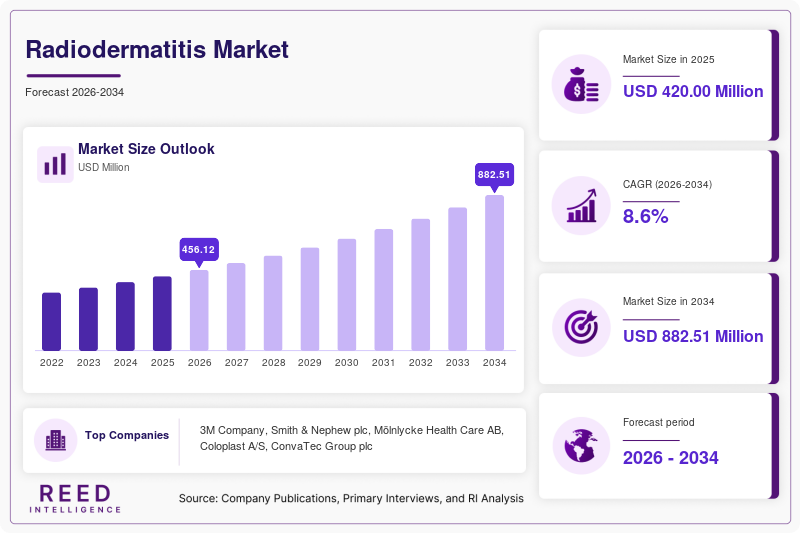
The Radiodermatitis Market size was valued at approximately USD 420 million in 2026 and is projected to reach around USD 810 million by 2034, expanding at a compound annual growth rate (CAGR) of 8.6% during the forecast period from 2026 to 2034. Radiodermatitis, a common side effect of radiation therapy in cancer patients, has gained increasing clinical attention due to its impact on patient quality of life and treatment continuity. The rising global cancer burden, coupled with increased adoption of radiotherapy as a primary and adjuvant treatment modality, has contributed significantly to the steady demand for effective radiodermatitis management solutions.
A key global factor supporting market growth is the increasing prevalence of cancer and the corresponding rise in radiotherapy procedures worldwide. As healthcare systems continue to expand oncology care infrastructure, the number of patients undergoing radiation therapy is increasing, leading to higher incidence rates of radiation-induced skin injuries. This has driven the need for advanced topical formulations, dressings, and therapeutic interventions that can mitigate skin damage, reduce discomfort, and improve treatment adherence.
Key Highlights
- North America dominated the market with a 36.1% share in 2025.
- Asia Pacific is expected to grow at the fastest CAGR of 9.8% during 2026–2034.
- By product type, topical agents accounted for the largest share of 44.3%.
- while advanced dressings are projected to grow at a CAGR of 10.5%.
- By application, breast cancer-related radiodermatitis led with a 39.6% share, whereas head and neck cancer applications are expected to expand at a CAGR of 9.9%.
- The United States remained the dominant country, with market values of USD 145 million in 2024 and USD 158 million in 2025.
Market Trends
Increasing Adoption of Advanced Skin Care Formulations
The radiodermatitis market is witnessing a gradual shift toward advanced topical formulations designed to improve patient outcomes and reduce the severity of skin damage. These formulations include corticosteroid creams, barrier films, and silicone-based gels that provide protective and healing properties. Healthcare providers are increasingly recommending these products due to their ability to maintain skin integrity during radiation therapy cycles. The trend is supported by ongoing clinical research that validates the efficacy of such formulations in reducing erythema, dryness, and ulceration.
In addition, manufacturers are focusing on developing combination products that integrate anti-inflammatory, antimicrobial, and moisturizing properties. This integrated approach is helping clinicians manage multiple symptoms simultaneously. The growing preference for evidence-based treatment protocols is also encouraging hospitals to adopt standardized skin care regimens, which further supports the uptake of advanced products in the radiodermatitis market.
Growing Emphasis on Patient-Centric Oncology Care
Another significant trend shaping the radiodermatitis market is the increasing focus on patient-centric care in oncology settings. Healthcare providers are prioritizing patient comfort, treatment adherence, and overall quality of life, which has led to greater attention on managing side effects such as radiodermatitis. Hospitals and cancer care centers are implementing supportive care programs that include routine skin assessments and early intervention strategies.
Digital health tools are also playing a role in this trend, enabling remote monitoring of skin conditions and timely medical intervention. Patients are becoming more informed about treatment side effects and are actively seeking solutions that minimize discomfort. This shift is encouraging pharmaceutical and medical device companies to invest in user-friendly and accessible products, thereby strengthening market growth through improved patient engagement and compliance.
Market Drivers
Rising Global Cancer Incidence and Radiotherapy Utilization
The increasing global incidence of cancer remains a primary driver of the radiodermatitis market. As cancer cases continue to rise due to aging populations, lifestyle changes, and environmental factors, the demand for effective treatment options has surged. Radiotherapy is widely used in cancer treatment, with a significant proportion of patients undergoing radiation exposure during their treatment journey. This directly increases the incidence of radiodermatitis, as skin tissues are highly sensitive to radiation damage.
Healthcare systems across developed and developing regions are expanding their radiotherapy infrastructure to meet growing demand. This includes the installation of advanced radiation equipment and the establishment of specialized oncology centers. As more patients gain access to radiotherapy, the need for effective radiodermatitis management solutions increases proportionally. This trend is expected to sustain long-term market growth.
Advancements in Wound Care Technologies
Technological advancements in wound care products are another important driver for the radiodermatitis market. Innovations in dressing materials, such as hydrocolloids, hydrogels, and foam dressings, have improved the ability to manage radiation-induced skin injuries. These products provide moisture balance, reduce infection risk, and promote faster healing, making them highly effective for radiodermatitis treatment.
Moreover, companies are investing in research and development to create products with enhanced therapeutic properties. The integration of bioactive compounds, such as growth factors and antimicrobial agents, is improving treatment outcomes. These advancements are increasing clinician confidence in using modern wound care solutions, thereby driving market adoption and supporting overall industry growth.
Market Restraint
Limited Awareness and Variability in Treatment Protocols
One of the key challenges restraining the growth of the radiodermatitis market is the limited awareness among patients and inconsistencies in treatment protocols across healthcare settings. Despite the high prevalence of radiodermatitis, many patients do not receive standardized preventive care or early-stage treatment. This often leads to progression of skin damage, resulting in more complex and costly interventions.
Additionally, there is a lack of universally accepted clinical guidelines for managing radiodermatitis, leading to variations in treatment approaches among healthcare providers. Some institutions rely on traditional methods, while others adopt advanced therapies, creating inconsistencies in patient outcomes. This variability can hinder the widespread adoption of new products and limit market growth. For example, in certain emerging economies, limited access to specialized oncology care results in underutilization of advanced radiodermatitis treatments, thereby affecting overall market expansion.
Market Opportunities
Expansion in Emerging Healthcare Markets
Emerging economies present significant growth opportunities for the radiodermatitis market due to improving healthcare infrastructure and increasing access to cancer treatment services. Countries in Asia Pacific, Latin America, and parts of Africa are investing in oncology care facilities, including radiotherapy units. This expansion is expected to increase the number of patients undergoing radiation therapy, thereby driving demand for radiodermatitis management solutions.
Furthermore, rising healthcare expenditure and government initiatives to improve cancer care are supporting market penetration in these regions. Local manufacturers are also entering the market with cost-effective products, making treatment more accessible. This combination of factors is creating a favorable environment for market growth in emerging economies.
Development of Personalized Treatment Approaches
The growing focus on personalized medicine is creating new opportunities in the radiodermatitis market. Advances in genomics and patient-specific treatment planning are enabling healthcare providers to tailor radiotherapy protocols based on individual patient characteristics. This approach can help minimize skin toxicity and improve treatment outcomes.
In addition, personalized skin care regimens are being developed to address specific patient needs, such as skin type, radiation dose, and treatment duration. Companies are exploring innovative formulations and delivery systems that cater to individual patient profiles. This trend is expected to enhance treatment effectiveness and drive the adoption of advanced radiodermatitis solutions, contributing to long-term market growth.
Segmental Analysis
By Product Type
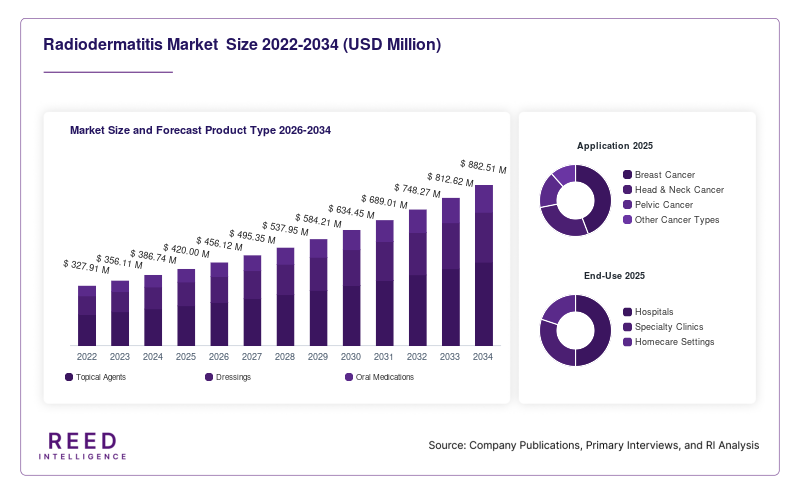
Topical agents dominated the radiodermatitis market in 2024, accounting for approximately 44.3% of the total market share. These products, including corticosteroid creams, moisturizers, and barrier formulations, are widely used due to their ease of application and effectiveness in managing mild to moderate skin reactions. Healthcare providers often recommend topical treatments as a first-line approach, making them a preferred choice in clinical settings.
Advanced dressings are emerging as the fastest-growing subsegment, projected to grow at a CAGR of 10.5%. These products offer enhanced healing properties and are particularly effective for severe cases. The growing adoption of innovative wound care technologies is a key factor driving this segment’s growth.
By Application
Breast cancer-related radiodermatitis accounted for the largest share of 39.6% in 2024, due to the high number of breast cancer patients undergoing radiation therapy. The widespread use of radiotherapy in breast cancer treatment contributes significantly to this segment’s dominance.
Head and neck cancer applications are expected to grow at the fastest CAGR of 9.9%. This growth is driven by increasing incidence rates and the complexity of radiation therapy in these regions, which often leads to higher rates of skin damage.
By End-Use
Hospitals held the largest share of 52.8% in 2024, as they are the primary centers for cancer treatment and radiotherapy procedures. The availability of advanced treatment facilities and skilled healthcare professionals supports the dominance of this segment.
Specialty clinics are projected to grow at the fastest CAGR of 9.3%, driven by increasing patient preference for specialized care and shorter treatment times. The expansion of outpatient oncology services is also contributing to the growth of this segment.
Regional Analysis
North America
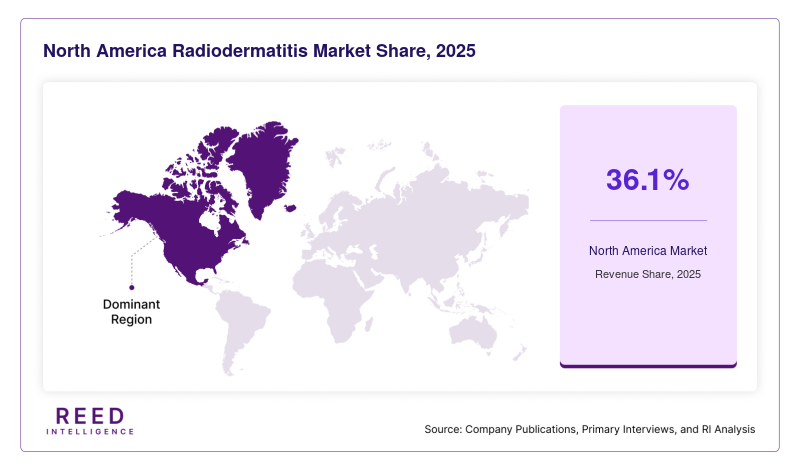
North America held a significant share of the radiodermatitis market in 2025, accounting for approximately 36.1% of the global market. The region is expected to maintain steady growth with a CAGR of around 7.9% during the forecast period. This growth is supported by well-established healthcare infrastructure, high adoption of advanced oncology treatments, and strong presence of key market players.
The United States dominates the regional market due to its high cancer incidence and extensive use of radiotherapy. A unique growth factor in this region is the widespread implementation of evidence-based clinical guidelines, which ensures consistent management of radiodermatitis and promotes the adoption of advanced treatment solutions.
Europe
Europe accounted for nearly 28.4% of the radiodermatitis market share in 2025 and is projected to grow at a CAGR of 8.1% through 2034. The region benefits from strong government support for cancer care and increasing investments in healthcare infrastructure.
Germany leads the European market, driven by its advanced healthcare system and high patient awareness. A unique growth factor is the emphasis on research and clinical trials, which facilitates the development and adoption of innovative radiodermatitis treatments.
Asia Pacific
Asia Pacific is expected to witness the fastest growth, with a CAGR of 9.8% during the forecast period, and held a 21.7% market share in 2025. Rapid urbanization and increasing healthcare investments are key contributors to regional growth.
China dominates the region due to its large patient population and expanding oncology care infrastructure. A unique growth factor is the increasing government focus on improving cancer treatment accessibility, which is boosting demand for supportive care products such as radiodermatitis treatments.
Middle East & Africa
The Middle East & Africa region held a 7.2% market share in 2025 and is projected to grow at a CAGR of 7.5%. Growth is driven by improving healthcare facilities and increasing awareness of cancer treatment side effects.
Saudi Arabia leads the region, supported by government investments in healthcare modernization. A unique growth factor is the expansion of specialized oncology centers, which is increasing the adoption of radiodermatitis management solutions.
Latin America
Latin America accounted for approximately 6.6% of the market share in 2025 and is expected to grow at a CAGR of 7.8%. The region is experiencing gradual improvements in healthcare access and cancer care services.
Brazil dominates the market due to its large population and expanding healthcare system. A unique growth factor is the increasing role of public healthcare programs in providing cancer treatment, which is driving demand for supportive care products.
Competitive Landscape
The radiodermatitis market is moderately competitive, with several global and regional players focusing on product innovation and strategic collaborations. Key companies are investing in research and development to enhance product efficacy and expand their market presence.
One leading player in the market is 3M Company, which has a strong portfolio of advanced wound care products. A recent development includes the introduction of improved silicone-based dressings designed to enhance patient comfort and accelerate healing. Other companies are also focusing on expanding their product lines and entering emerging markets to capitalize on growth opportunities.
Key Players
- 3M Company
- Smith & Nephew plc
- Mölnlycke Health Care AB
- Coloplast A/S
- ConvaTec Group plc
- B. Braun Melsungen AG
- Medline Industries, Inc.
- Integra LifeSciences Corporation
- Paul Hartmann AG
- Alliqua BioMedical, Inc.
- Derma Sciences Inc.
- Hollister Incorporated
- Advancis Medical
- BSN Medical GmbH
- Acelity L.P. Inc.
Recent Developments
- Several companies have introduced advanced silicone-based dressings aimed at improving healing outcomes for radiation-induced skin injuries.
- Strategic partnerships between healthcare providers and product manufacturers have increased to promote the adoption of standardized treatment protocols.
- New product launches focusing on natural and organic formulations have gained traction, addressing patient demand for safer and more skin-friendly treatment options.
Radiodermatitis Market Segments
Product Type
- Topical Agents
- Dressings
- Oral Medications
Application
- Breast Cancer
- Head & Neck Cancer
- Pelvic Cancer
- Other Cancer Types
End-Use
- Hospitals
- Specialty Clinics
- Homecare Settings
By Region
- North America
- Europe
- APAC
- Middle East and Africa
- LATAM