Rare Haematology Disorders Market Size, Share & Demand Report By Disorder Type (Hemophilia, Sickle Cell Disease, Thalassemia, Aplastic Anemia, Paroxysmal Nocturnal Hemoglobinuria, Others), By Treatment Type (Biologics, Gene Therapy, Blood Transfusion Therapy, Immunosuppressive Therapy, Others), By End User (Hospitals, Specialty Clinics, Research Institutes, Ambulatory Care Centers), By Region & Segment Forecasts, 2026–2034
USD 3950
Market Overview
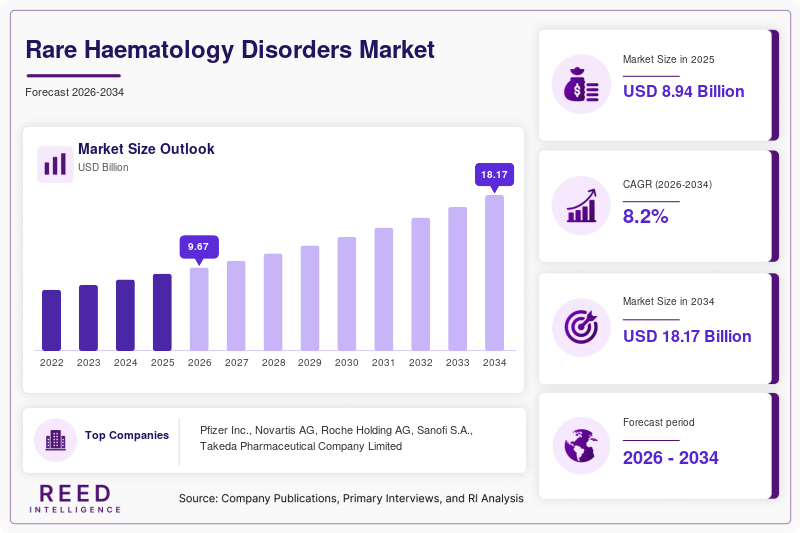
The global Rare Haematology Disorders Market size was valued at USD 8.94 billion in 2026 and is projected to reach USD 16.82 billion by 2034, expanding at a CAGR of 8.2% during the forecast period from 2026 to 2034. The market is witnessing stable growth due to increasing diagnosis rates of rare blood-related diseases, advancements in genetic testing, and rising investments in precision medicine therapies. Rare haematology disorders include conditions such as hemophilia, sickle cell disease, aplastic anemia, thalassemia, and paroxysmal nocturnal hemoglobinuria, among others. Pharmaceutical companies and healthcare institutions are increasingly focusing on orphan drug development, which has significantly improved treatment accessibility and patient survival rates across major healthcare markets.
A major global factor supporting market expansion is the rapid integration of genomic sequencing technologies into clinical diagnostics. Healthcare systems in developed and emerging economies are increasingly adopting molecular diagnostic platforms to identify rare blood disorders at earlier stages. This trend has accelerated personalized treatment strategies and improved therapeutic outcomes. In addition, favorable orphan drug regulations and reimbursement support in countries such as the United States, Germany, Japan, and the United Kingdom continue to encourage innovation in rare disease therapeutics.
Key Highlights
- North America dominated the market with a 36.4% share in 2025.
- Asia Pacific is expected to grow at the fastest CAGR of 9.8% during 2026–2034.
- By disorder type, hemophilia accounted for the largest share of 32.7%.
- while sickle cell disease is projected to grow at a CAGR of 10.6%.
- By treatment type, biologics led with a 44.1% share.
- whereas gene therapy is expected to expand at a CAGR of 12.8%.
- The United States remained the dominant country, with market values of USD 2.84 billion in 2024 and USD 3.06 billion in 2025.
Market Trends
Increasing Adoption of Gene and Cell Therapies
The Rare Haematology Disorders Market is experiencing substantial transformation due to the increasing adoption of gene and cell therapies. Pharmaceutical companies are actively investing in advanced therapeutic technologies designed to provide long-term or potentially curative outcomes for patients suffering from inherited blood disorders. Conditions such as sickle cell disease and beta-thalassemia are becoming major targets for CRISPR-based gene editing and stem cell therapies. Regulatory approvals for innovative therapies in the United States and Europe have strengthened investor confidence and encouraged further clinical development activities. Healthcare providers are also showing greater interest in precision-based therapies that reduce dependency on chronic blood transfusions and repeated hospital visits. This trend is expected to reshape treatment standards and improve patient quality of life across global healthcare systems.
Expansion of Rare Disease Diagnostic Infrastructure
Another important trend shaping the Rare Haematology Disorders Market is the expansion of diagnostic infrastructure for rare diseases. Governments and healthcare organizations are increasingly introducing newborn screening programs and advanced molecular testing facilities to improve early disease identification. Improved diagnostic accessibility has increased the detection rate of rare blood disorders in both developed and emerging economies. Artificial intelligence-assisted pathology analysis and next-generation sequencing technologies are reducing diagnostic delays and enabling faster treatment decisions. In addition, healthcare providers are integrating digital patient registries to improve disease monitoring and epidemiological tracking. The growing availability of specialized hematology laboratories and telemedicine-based consultations is also supporting diagnosis in rural and underserved regions, creating favorable long-term market opportunities.
Market Drivers
Rising Prevalence of Genetic Blood Disorders
The growing prevalence of inherited blood disorders is a major factor driving the Rare Haematology Disorders Market. Increasing cases of sickle cell disease, thalassemia, and hemophilia across regions with high genetic predisposition are contributing to the rising demand for effective treatment solutions. Population growth in developing countries and improved survival rates among affected patients have expanded the overall treatment population. Healthcare organizations are focusing on awareness campaigns and screening initiatives to improve disease management. Furthermore, improved patient access to healthcare facilities has increased treatment adoption rates globally. Pharmaceutical companies are expanding their orphan drug portfolios to address unmet therapeutic needs, while governments are supporting research grants and reimbursement policies for rare disease management, contributing to sustainable market growth.
Growing Investments in Orphan Drug Development
Increasing investments in orphan drug research and development are significantly supporting market expansion. Biotechnology and pharmaceutical companies are prioritizing rare hematology conditions due to favorable regulatory incentives, including tax credits, market exclusivity, and accelerated approval pathways. These incentives have encouraged the development of novel biologics and targeted therapies for rare blood disorders. Venture capital funding in rare disease biotechnology startups has also increased substantially over the past few years. Clinical trials focused on advanced immunotherapies and gene-based treatments are expanding across North America, Europe, and Asia Pacific. In addition, collaborations between academic research institutes and pharmaceutical manufacturers are accelerating product innovation and commercialization. The growing pipeline of specialized therapies is expected to strengthen the overall Rare Haematology Disorders Market during the forecast period.
Market Restraint
High Treatment Costs and Limited Accessibility
High treatment costs remain a significant restraint for the Rare Haematology Disorders Market. Advanced biologics, recombinant therapies, and gene-editing treatments often involve substantial manufacturing and research expenses, leading to elevated therapy prices. Many patients in low-income and middle-income countries face financial barriers due to limited insurance coverage and inadequate reimbursement frameworks. Gene therapies for rare blood disorders can cost several hundred thousand dollars per patient, limiting widespread adoption despite their clinical effectiveness. In addition, specialized diagnostic infrastructure and trained healthcare professionals are concentrated mainly in urban healthcare centers, reducing accessibility in rural areas. Delayed diagnosis and limited awareness among primary healthcare providers further affect treatment outcomes. Smaller healthcare systems often struggle to allocate sufficient budgets for orphan disease management, creating disparities in patient access. These cost-related challenges may restrict market penetration in developing economies and slow the adoption of advanced therapies over the coming years.
Market Opportunities
Emerging Potential in Personalized Medicine
The increasing focus on personalized medicine presents a strong opportunity for the Rare Haematology Disorders Market. Precision-based therapies are becoming more important as healthcare providers seek targeted treatment approaches based on individual genetic profiles. Advances in genomic sequencing and biomarker analysis are enabling clinicians to design customized treatment plans for patients with rare blood disorders. Pharmaceutical companies are developing highly specialized therapies with improved efficacy and fewer side effects compared to traditional treatments. Personalized medicine also supports earlier disease intervention and better long-term management. As healthcare systems continue integrating precision diagnostics into routine clinical practice, demand for individualized therapies is expected to rise significantly. This opportunity is particularly important for patients with complex or treatment-resistant hematological conditions.
Expansion of Healthcare Infrastructure in Emerging Economies
Emerging economies are creating new growth opportunities for the Rare Haematology Disorders Market due to ongoing healthcare infrastructure expansion. Countries across Asia Pacific, Latin America, and the Middle East are increasing healthcare investments to strengthen rare disease diagnosis and treatment capabilities. Governments are launching national rare disease policies and improving reimbursement support for orphan drugs. International pharmaceutical companies are also expanding their distribution networks and strategic partnerships in these regions to improve market access. The growing availability of specialized hospitals, hematology centers, and diagnostic laboratories is enhancing patient identification rates. Increasing healthcare awareness and rising disposable income levels are expected to improve treatment adoption. These developments are likely to create favorable conditions for market growth across underserved populations during the forecast period.
Segmental Analysis
By Disorder Type
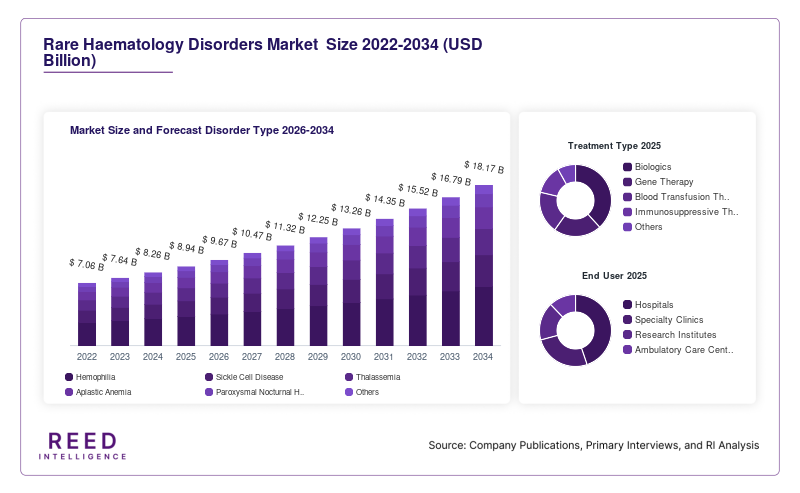
Hemophilia represented the dominant subsegment within the Rare Haematology Disorders Market in 2024, accounting for approximately 32.7% of total revenue. The large market share is primarily attributed to increasing diagnosis rates and widespread availability of recombinant factor replacement therapies. Hemophilia treatment programs are well established in developed healthcare markets, particularly in North America and Europe. Governments and healthcare organizations have implemented national screening and patient support programs to improve disease management. Pharmaceutical companies continue investing in long-acting factor therapies that reduce injection frequency and improve patient convenience. In addition, rising awareness regarding inherited bleeding disorders has encouraged earlier diagnosis and increased treatment adoption. The presence of strong reimbursement support and continuous innovation in biologic therapeutics further contributes to the dominance of the hemophilia segment across global markets.
Sickle cell disease is anticipated to emerge as the fastest-growing subsegment, expanding at a CAGR of 10.6% during the forecast period. The increasing burden of sickle cell disease in Africa, the Middle East, and parts of Asia is creating substantial demand for advanced treatment solutions. Governments and non-profit organizations are actively promoting disease awareness and screening initiatives to improve patient outcomes. Recent progress in gene-editing technologies and stem cell therapies has significantly improved the therapeutic landscape for sickle cell disease management. Pharmaceutical companies are also accelerating clinical trials focused on curative therapies. Improved access to supportive treatments, including blood transfusions and hydroxyurea therapy, is further driving segment growth. The rising integration of newborn screening programs and precision medicine approaches is expected to strengthen the long-term outlook for this rapidly expanding segment.
By Treatment Type
Biologics accounted for the largest share of the Rare Haematology Disorders Market in 2024, representing approximately 44.1% of total revenue. The dominance of this segment is linked to the growing use of recombinant proteins, monoclonal antibodies, and enzyme replacement therapies for managing rare blood disorders. Biologic treatments offer improved efficacy and targeted therapeutic action compared to conventional therapies, making them a preferred option among healthcare providers. Pharmaceutical companies are expanding biologic manufacturing capacities to meet increasing global demand. The segment also benefits from strong regulatory support and growing physician confidence in advanced biologic formulations. Hospitals and specialty clinics are increasingly adopting biologics for long-term disease management, particularly in patients requiring continuous therapy. The rising prevalence of chronic hematological conditions and expanding access to specialty healthcare services are further supporting segment leadership.
Gene therapy is projected to register the fastest CAGR of 12.8% during the forecast period due to its potential to provide long-term therapeutic benefits and disease modification. Healthcare providers and biotechnology firms are increasingly focusing on gene-editing technologies to treat inherited blood disorders such as beta-thalassemia and sickle cell disease. Significant investments in CRISPR technology and viral vector platforms are accelerating product development pipelines. Regulatory agencies in major markets are also introducing accelerated approval pathways for innovative therapies addressing rare diseases. The growing number of successful clinical trials and increasing patient preference for one-time treatment approaches are strengthening demand for gene therapies. Furthermore, academic research collaborations and strategic partnerships between pharmaceutical companies are improving commercialization opportunities, which is expected to support rapid expansion within this segment over the coming years.
By End User
Hospitals held the dominant share of the Rare Haematology Disorders Market in 2024, accounting for nearly 48.6% of global revenue. Hospitals remain the primary treatment centers for patients with complex hematological conditions due to the availability of advanced diagnostic equipment and specialized healthcare professionals. Many rare blood disorders require multidisciplinary treatment approaches involving hematologists, genetic counselors, and transfusion specialists, which are more accessible within hospital settings. Government funding and reimbursement support for hospital-based rare disease treatments also contribute to segment growth. In addition, hospitals are increasingly participating in clinical research programs focused on innovative therapies and personalized medicine. The availability of emergency care services and advanced monitoring systems further strengthens the role of hospitals in rare hematology disorder management. Continuous improvements in healthcare infrastructure are expected to sustain the dominance of this segment globally.
Specialty clinics are expected to witness the fastest growth during the forecast period, expanding at a CAGR of 9.9%. These clinics are becoming increasingly important due to their focused expertise in rare disease diagnosis and personalized treatment planning. Patients often prefer specialty clinics because they provide shorter waiting times and access to highly trained hematology professionals. Advances in outpatient infusion therapies and remote patient monitoring technologies are enabling clinics to manage chronic blood disorders more efficiently. Pharmaceutical companies are also collaborating with specialty care providers to improve treatment accessibility and patient support services. In emerging economies, private healthcare investments are expanding the number of specialized hematology centers, creating additional growth opportunities. The increasing adoption of telemedicine consultations and precision diagnostic services is expected to further accelerate expansion within this end-user segment.
Regional Analysis
North America
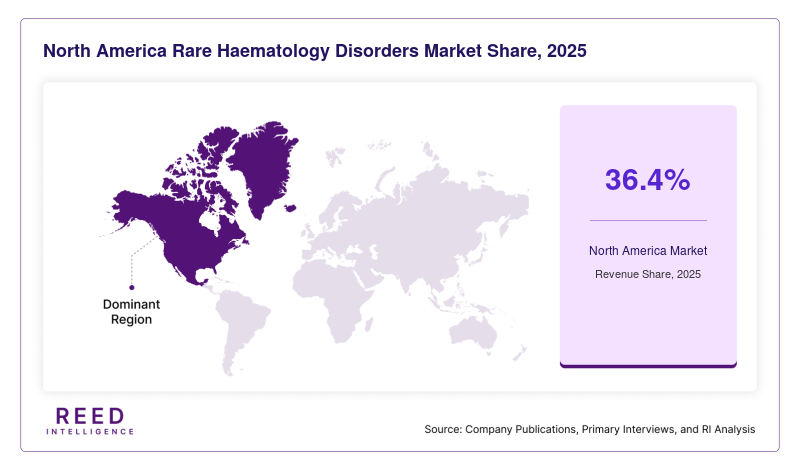
North America accounted for the largest share of the Rare Haematology Disorders Market in 2025, representing approximately 36.4% of global revenue. The regional market is projected to expand at a CAGR of 7.9% during the forecast period. Strong healthcare infrastructure, advanced diagnostic capabilities, and widespread adoption of orphan drugs continue to support regional growth. Pharmaceutical companies in the United States and Canada are heavily investing in gene therapy development and precision medicine research. The region also benefits from favorable reimbursement systems and strong regulatory support for rare disease therapeutics.
The United States remained the dominant country within North America due to extensive research funding and high awareness regarding rare blood disorders. A major growth factor in the country is the rapid expansion of clinical trials focused on gene-editing therapies for hemophilia and sickle cell disease. Academic research institutes and biotechnology companies are collaborating to accelerate treatment innovation. Additionally, patient advocacy organizations are improving access to early diagnosis and specialized care, which continues to strengthen market demand across the country.
Europe
Europe represented a substantial portion of the Rare Haematology Disorders Market in 2025 and is anticipated to register a CAGR of 7.6% through 2034. The regional market benefits from established healthcare systems, increasing investments in orphan drug research, and strong government support for rare disease programs. Countries such as Germany, France, Italy, and the United Kingdom are actively promoting genomic medicine initiatives to improve diagnostic efficiency. The presence of major pharmaceutical manufacturers and advanced hospital networks also contributes to stable regional market growth.
Germany emerged as the dominant country in the European market due to its extensive biotechnology sector and strong healthcare expenditure. A unique growth factor supporting the German market is the integration of digital health platforms into hematology treatment management. Healthcare providers are increasingly utilizing electronic patient registries and AI-supported diagnostic tools to improve disease monitoring and treatment planning. This technological advancement is helping clinicians deliver more personalized therapies and enhance long-term patient outcomes across the country.
Asia Pacific
Asia Pacific is expected to witness the fastest growth in the Rare Haematology Disorders Market, with a projected CAGR of 9.8% during the forecast period. Rising healthcare expenditure, increasing awareness of rare diseases, and improving access to advanced diagnostics are supporting regional expansion. Governments across China, India, Japan, and South Korea are strengthening healthcare infrastructure and promoting rare disease screening initiatives. The region is also experiencing rapid growth in biotechnology investments and pharmaceutical manufacturing capabilities, creating favorable conditions for long-term market development.
China dominated the Asia Pacific market due to its large patient population and expanding healthcare reforms. A major growth factor in the country is the increasing implementation of newborn screening programs for inherited blood disorders. Public healthcare institutions are investing heavily in molecular diagnostic laboratories to improve early disease detection. In addition, domestic pharmaceutical companies are entering the orphan drug segment through strategic collaborations with international biotechnology firms, further accelerating market growth across the country.
Middle East & Africa
The Middle East & Africa Rare Haematology Disorders Market is gradually expanding and is forecast to grow at a CAGR of 6.8% through 2034. Improving healthcare infrastructure and increasing awareness regarding inherited blood disorders are supporting market development across the region. Countries within the Gulf Cooperation Council are investing in advanced healthcare facilities and specialized hematology centers to improve rare disease management. Growing collaborations with international pharmaceutical companies are also improving access to innovative therapies and diagnostic technologies.
Saudi Arabia emerged as the leading country in the regional market due to its growing healthcare modernization initiatives. A unique growth factor supporting the Saudi Arabian market is the high prevalence of genetically inherited blood disorders linked to consanguineous marriages. The government has expanded premarital screening and genetic counseling programs to reduce disease incidence and improve early diagnosis. These initiatives are increasing demand for advanced treatment options and strengthening the overall market landscape in the country.
Latin America
Latin America accounted for a moderate share of the Rare Haematology Disorders Market in 2025 and is expected to grow steadily during the forecast period at a CAGR of 7.1%. The regional market is benefiting from improving public healthcare systems and increasing government attention toward rare disease management. Countries such as Brazil, Mexico, and Argentina are expanding access to diagnostic services and specialized treatments. International healthcare organizations are also supporting awareness programs to improve disease recognition and patient care across underserved populations.
Brazil dominated the Latin American market due to its relatively advanced healthcare infrastructure and large patient base. One significant growth factor in the country is the expansion of public-private partnerships focused on orphan drug accessibility. Pharmaceutical companies are collaborating with government healthcare agencies to improve treatment affordability and distribution efficiency. In addition, Brazil is increasing investments in hematology research and clinical training programs, which are contributing to improved patient outcomes and stronger market growth potential.
Competitive Landscape
The Rare Haematology Disorders Market is characterized by strong competition among multinational pharmaceutical companies, biotechnology firms, and specialized orphan drug manufacturers. Companies are focusing on research partnerships, acquisitions, and advanced therapy development to strengthen their market presence. The competitive environment is driven by innovation in gene therapies, recombinant biologics, and targeted treatments for inherited blood disorders. Major players are expanding clinical trial programs and investing in personalized medicine technologies to improve long-term treatment outcomes.
Among leading companies, Pfizer continues to maintain a strong market position due to its broad hematology portfolio and extensive research capabilities. The company recently expanded its rare disease pipeline through strategic biotechnology collaborations focused on gene-editing therapies. Other prominent companies are also emphasizing geographic expansion and orphan drug commercialization strategies to increase revenue opportunities. Increased competition is encouraging continuous product innovation and improving treatment accessibility across global healthcare systems.
Key Players
- Pfizer
- Novartis
- Roche
- Sanofi
- Takeda Pharmaceutical Company
- Bristol Myers Squibb
- BioMarin Pharmaceutical
- Vertex Pharmaceuticals
- CSL Behring
- Novo Nordisk
- bluebird bio
- Amgen
- Grifols
- Sobi
- Apellis Pharmaceuticals
Recent Developments
- In 2025, Vertex Pharmaceuticals expanded its partnership activities for CRISPR-based therapies targeting sickle cell disease and beta-thalassemia treatment programs.
- In 2024, Takeda Pharmaceutical Company announced additional investments in plasma-derived therapy manufacturing facilities to strengthen rare hematology treatment supply chains.
- In 2025, BioMarin Pharmaceutical initiated late-stage clinical trials for advanced hemophilia therapies focused on improving long-term bleeding control and reducing treatment frequency.
Rare Haematology Disorders Market Segments
Disorder Type
- Hemophilia
- Sickle Cell Disease
- Thalassemia
- Aplastic Anemia
- Paroxysmal Nocturnal Hemoglobinuria
- Others
Treatment Type
- Biologics
- Gene Therapy
- Blood Transfusion Therapy
- Immunosuppressive Therapy
- Others
End User
- Hospitals
- Specialty Clinics
- Research Institutes
- Ambulatory Care Centers
By Region
- North America
- Europe
- APAC
- Middle East and Africa
- LATAM