Raw Quinoa Market Size, Share & Demand Report By Type (White Quinoa, Red Quinoa, Black Quinoa), By Application (Food and Beverages, Nutritional Supplements, Animal Feed, Others), By Distribution Channel (Supermarkets and Hypermarkets, Convenience Stores, Specialty Stores, Online Retail, Others), By Region & Segment Forecasts, 2026–2034
USD 3950
Market Overview
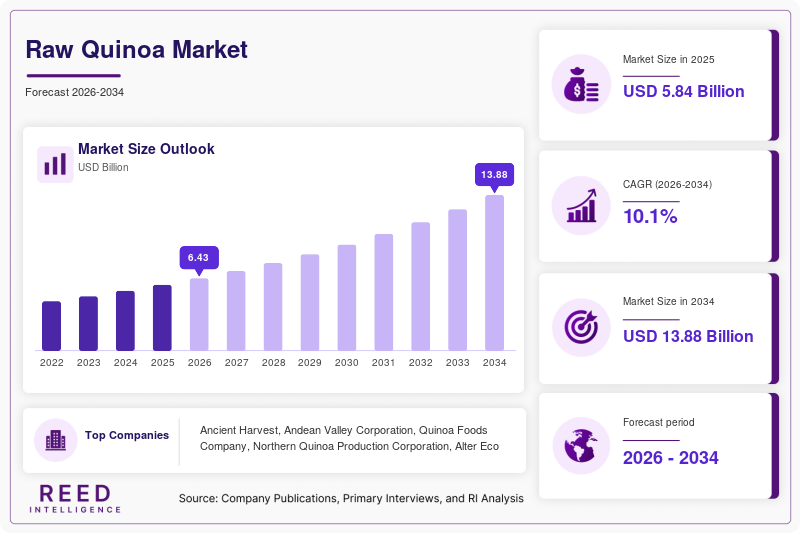
The global Raw Quinoa Market size was valued at approximately USD 5.84 billion in 2026 and is projected to reach USD 12.67 billion by 2034, expanding at a CAGR of 10.1% during 2026–2034. The market continues to gain momentum due to the increasing demand for nutrient-dense grains and plant-based food ingredients across developed and emerging economies. Raw quinoa has become an important component in healthy diets because of its high protein content, essential amino acids, dietary fiber, vitamins, and minerals. Rising consumer awareness regarding balanced nutrition and clean-label food products has accelerated adoption across retail, foodservice, and industrial food manufacturing channels.
The growing popularity of vegan and vegetarian lifestyles has significantly contributed to market expansion. Food manufacturers are increasingly incorporating raw quinoa into snacks, breakfast cereals, bakery products, nutrition bars, and meal kits to satisfy demand for functional ingredients. The product's gluten-free characteristics also support growth among consumers seeking alternatives to traditional grains such as wheat and barley.
Key Highlights
- North America dominated the market with a 35.1% share in 2025, while Asia Pacific is expected to grow at the fastest CAGR of 11.8% during 2026–2034.
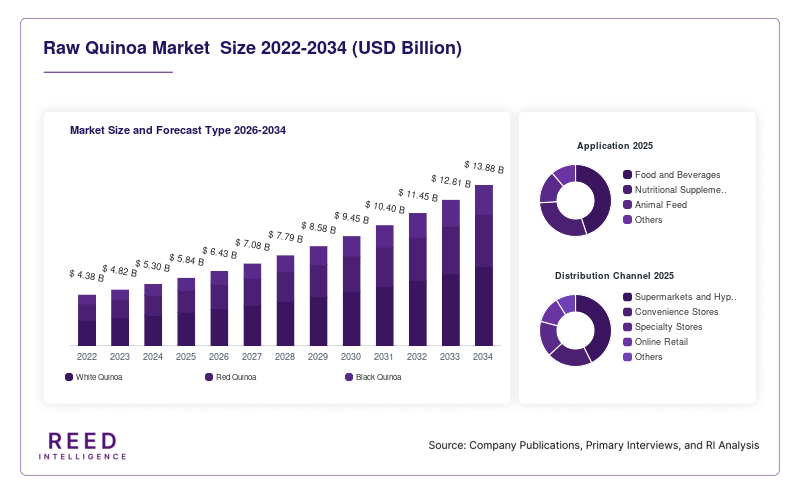
- By type, white quinoa accounted for the largest share of 46.7%, while black quinoa is projected to grow at a CAGR of 11.9%.
- By application, food and beverages led with a 58.4% share, whereas nutritional supplements are expected to expand at a CAGR of 12.1%.
- By distribution channel, supermarkets and hypermarkets held the largest share of 43.8%, while online retail is anticipated to grow at a CAGR of 13.2%.
- The United States remained the dominant country, with market values of USD 1.43 billion in 2024 and USD 1.56 billion in 2025.
Market Trends
Expansion of Functional and Plant-Based Food Products
The integration of raw quinoa into functional food formulations continues to influence the market landscape. Food manufacturers are increasingly utilizing quinoa as a key ingredient in products designed to support digestive health, protein intake, and overall wellness. Demand for plant-based alternatives has encouraged companies to develop quinoa-based snacks, ready-to-cook meals, bakery products, cereals, and beverages. Consumers increasingly prefer ingredients with transparent nutritional profiles, supporting the use of quinoa in premium food categories. As health-conscious purchasing behavior expands globally, food producers are investing in innovative formulations that highlight quinoa’s nutritional benefits and versatility across multiple consumption occasions.
Growth of Organic and Sustainable Agricultural Practices
Sustainability has emerged as a major purchasing factor within the raw quinoa industry. Consumers are showing greater interest in products sourced through environmentally responsible farming methods. Organic quinoa cultivation has expanded across several producing regions, supported by increasing certification programs and retailer commitments toward sustainable sourcing. Agricultural producers are also implementing water-efficient farming techniques and regenerative agriculture practices to improve long-term productivity. These developments have strengthened consumer trust while enabling suppliers to access premium market segments. The growing emphasis on ethical sourcing and environmental responsibility is expected to influence purchasing decisions and product positioning throughout the forecast period.
Market Drivers
Rising Consumer Demand for Nutrient-Rich Foods
The increasing prevalence of health-conscious lifestyles remains a major driver for the Raw Quinoa Market. Consumers are actively seeking foods that provide nutritional value while supporting dietary goals related to weight management, heart health, and digestive wellness. Quinoa contains high-quality protein, essential amino acids, fiber, iron, magnesium, and antioxidants, making it attractive across various demographic groups. The shift toward preventive healthcare has encouraged individuals to incorporate nutrient-rich grains into daily diets. Retailers and food manufacturers have responded by expanding quinoa-based product portfolios, creating wider availability and enhancing consumer awareness across both developed and emerging economies.
Increasing Adoption of Gluten-Free Diets
The growing popularity of gluten-free dietary patterns has significantly supported market growth. Consumers diagnosed with gluten intolerance and celiac disease require alternatives to conventional grains, while many health-conscious individuals voluntarily reduce gluten consumption. Raw quinoa offers a naturally gluten-free solution without compromising nutritional quality. Food manufacturers increasingly use quinoa flour and whole grains in bakery products, cereals, and packaged foods targeted toward gluten-free consumers. Improved labeling practices and expanding product availability have strengthened market penetration. As awareness regarding digestive health and food sensitivities continues to increase, demand for quinoa-based products is expected to remain strong throughout the forecast period.
Market Restraint
Price Volatility and Supply Chain Dependence
One of the primary challenges affecting the Raw Quinoa Market is the fluctuation in pricing caused by agricultural uncertainties and supply chain limitations. Although quinoa cultivation has expanded geographically, a significant portion of global production remains concentrated in a limited number of countries. Weather variability, drought conditions, transportation disruptions, and changes in agricultural output can affect supply availability and market pricing. Higher production costs compared with conventional grains often result in premium retail prices, limiting adoption among price-sensitive consumers. Food manufacturers may also face procurement challenges when raw material costs increase unexpectedly. For example, unfavorable climatic conditions in major producing regions can reduce harvest yields, creating temporary shortages and increasing procurement expenses across global supply chains. These factors may restrict market expansion in certain developing regions where affordability remains a critical purchasing consideration.
Market Opportunities
Expansion Across Emerging Asian Markets
Rapid urbanization and changing dietary preferences across Asia Pacific present substantial opportunities for market participants. Rising disposable income levels and growing awareness regarding healthy eating habits have increased demand for premium grains and functional foods. Countries such as China, India, Japan, South Korea, and Southeast Asian nations are witnessing stronger adoption of quinoa-based products through retail and online distribution channels. Manufacturers are introducing localized product formats and marketing campaigns tailored to regional tastes. The expanding middle-class population and growing interest in plant-based nutrition are expected to create significant long-term growth opportunities for producers and distributors operating within these markets.
Development of Value-Added Quinoa Products
The introduction of value-added quinoa products offers another significant growth avenue. Companies are increasingly investing in product innovation to create differentiated offerings such as quinoa flour, quinoa flakes, ready-to-eat meals, protein blends, and fortified nutritional products. These innovations allow manufacturers to target specific consumer segments, including athletes, busy professionals, and health-focused families. Product diversification also helps companies improve profit margins while strengthening brand positioning. As consumer demand shifts toward convenience and functional nutrition, value-added quinoa applications are expected to contribute substantially to revenue growth across both developed and emerging markets during the forecast period.
Segmental Analysis
By Type
White quinoa remained the dominant subsegment within the type category, accounting for approximately 46.7% of market share in 2024. Its mild flavor, soft texture, and broad culinary compatibility have made it the preferred choice among consumers and food manufacturers. White quinoa is extensively utilized in salads, side dishes, breakfast bowls, and processed food applications. The segment benefits from widespread retail availability and consumer familiarity. Manufacturers favor white quinoa because of its versatility and ability to blend easily into various recipes without significantly altering flavor profiles. Growing consumer demand for nutrient-dense staple foods has further supported the segment's leading position across developed and emerging markets.
Black quinoa is expected to emerge as the fastest-growing subsegment, registering a CAGR of 11.9% during the forecast period. The segment is gaining attention due to its distinctive appearance, slightly sweeter taste, and perceived premium nutritional profile. Consumers increasingly seek unique and visually appealing ingredients that support healthy eating habits. Foodservice operators and premium food brands are incorporating black quinoa into innovative meal offerings and specialty products. Growing interest in gourmet cuisine, clean-label ingredients, and product differentiation is expected to drive continued demand. Increasing awareness of antioxidant-rich foods further supports the expansion of black quinoa across global markets.
By Application
Food and beverages represented the largest application segment, accounting for approximately 58.4% of market share in 2024. Raw quinoa is widely used across packaged foods, bakery products, cereals, snacks, ready meals, and beverages. Its nutritional value and adaptability make it suitable for a broad range of formulations targeting health-conscious consumers. Manufacturers continue to incorporate quinoa into mainstream food categories to enhance protein content and improve product positioning. Growing demand for natural ingredients and minimally processed foods has further strengthened adoption. The segment also benefits from expanding distribution networks and increasing availability of quinoa-based products in supermarkets and specialty retail outlets.
Nutritional supplements are projected to record the fastest growth rate, with a CAGR of 12.1% during the forecast period. Rising interest in preventive health management and active lifestyles has increased demand for plant-based nutritional products. Supplement manufacturers are integrating quinoa-derived ingredients into protein powders, meal replacements, and functional nutrition formulations. Consumers increasingly prefer natural protein sources over synthetic alternatives, creating favorable conditions for segment expansion. The growing fitness industry, combined with rising awareness of balanced nutrition, continues to support innovation within this category. Product development efforts focused on convenience and targeted health benefits are expected to accelerate growth further.
By Distribution Channel
Supermarkets and hypermarkets held the dominant position within the distribution channel segment, accounting for approximately 43.8% of market share in 2024. These retail formats offer extensive product visibility, competitive pricing, and convenient access for consumers. Large retail chains frequently dedicate shelf space to health foods and specialty grain products, supporting quinoa sales. Consumers often prefer purchasing quinoa through physical stores where they can compare brands, packaging formats, and product varieties. Promotional activities, in-store marketing campaigns, and growing consumer trust in organized retail have contributed significantly to the segment's leadership position across global markets.
Online retail is anticipated to be the fastest-growing distribution channel, expanding at a CAGR of 13.2% through 2034. Digital commerce platforms provide consumers with access to a wide variety of quinoa products, including organic and specialty options that may not be readily available in traditional stores. The convenience of home delivery and subscription-based purchasing models continues to attract health-conscious buyers. Manufacturers and retailers increasingly invest in digital marketing strategies to reach targeted consumer segments. Growing internet penetration, smartphone adoption, and preference for convenient shopping experiences are expected to support sustained growth in online quinoa sales.
Regional Analysis
North America
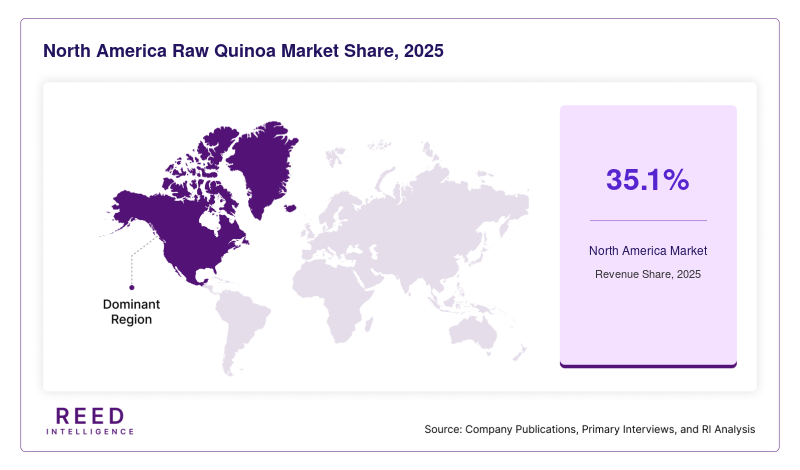
North America accounted for approximately 35.1% of the global Raw Quinoa Market in 2025 and maintained its position as the largest regional market. The region benefits from strong consumer awareness regarding healthy eating habits, plant-based nutrition, and gluten-free food products. Retail penetration remains extensive, with quinoa products widely available across supermarkets, specialty stores, and digital commerce platforms. The regional market is projected to expand at a CAGR of 9.6% through 2034, supported by ongoing product innovation and premium food consumption patterns.
The United States represents the dominant country within North America. Strong demand for functional foods and protein-rich grain alternatives continues to support market growth. Food manufacturers frequently introduce quinoa-based snacks, cereals, and meal solutions targeting health-conscious consumers. Increasing interest in sustainable sourcing and clean-label products has further strengthened quinoa adoption. Investments in domestic quinoa cultivation have also contributed to improved supply security and reduced dependence on imported products.
Europe
Europe captured approximately 27.8% of global market revenue in 2025 and remains a major consumer of raw quinoa products. The region benefits from growing awareness regarding balanced nutrition and increasing demand for organic food products. Consumers actively seek plant-based ingredients that align with sustainable lifestyles, supporting quinoa adoption across multiple food categories. The regional market is expected to register a CAGR of 9.4% during the forecast period, driven by expanding health-focused retail offerings and favorable consumer preferences.
Germany remains the leading country within the European market. The country's strong organic food sector and growing vegan population have contributed significantly to quinoa consumption. Consumers increasingly prefer foods with transparent sourcing and nutritional value, encouraging retailers to expand quinoa product portfolios. In addition, the presence of established health food brands and specialty retailers has improved product visibility and accessibility throughout the country.
Asia Pacific
Asia Pacific accounted for approximately 19.6% of the global market in 2025 and is expected to record the fastest CAGR of 11.8% through 2034. Increasing disposable incomes, urbanization, and changing dietary patterns are supporting market growth across the region. Consumers are becoming more aware of the health benefits associated with superfoods and nutrient-rich grains. Food manufacturers are also expanding quinoa-based product offerings to cater to evolving consumer preferences and wellness-focused lifestyles.
China represents the dominant country within Asia Pacific. The growing middle-class population and increasing focus on preventive healthcare continue to stimulate demand for nutritious food products. E-commerce platforms have played an important role in increasing quinoa availability and consumer awareness. Additionally, local cultivation initiatives and government support for agricultural diversification have enhanced supply capabilities, contributing to stronger market development across the country.
Middle East & Africa
The Middle East & Africa region held approximately 7.9% of global market revenue in 2025. Although market penetration remains lower than in developed regions, demand is gradually increasing due to growing awareness of healthy eating habits and nutritional wellness. Rising investments in premium food retail and expanding availability of imported health foods have supported quinoa consumption. The region is anticipated to grow at a CAGR of 8.7% through the forecast period as consumer preferences continue to evolve.
The United Arab Emirates serves as the dominant country within the regional market. The country's diverse expatriate population and strong demand for premium imported food products have contributed to increased quinoa consumption. Health-conscious consumers actively seek nutrient-rich ingredients suitable for balanced diets. Growth in modern retail infrastructure and specialty food stores has improved accessibility, supporting broader adoption of quinoa-based products throughout the market.
Latin America
Latin America accounted for approximately 9.6% of global market revenue in 2025 and remains an important production as well as consumption region. The market benefits from established cultivation expertise and strong regional familiarity with quinoa as a traditional food ingredient. Growing export opportunities and increasing domestic consumption continue to support market development. The region is expected to expand at a CAGR of 9.1% during the forecast period, driven by evolving dietary preferences and food industry innovation.
Brazil represents the dominant country within Latin America. Rising consumer awareness regarding healthy nutrition and increasing demand for functional foods have strengthened quinoa consumption. Food manufacturers are incorporating quinoa into various packaged food products to meet changing dietary preferences. The country's expanding retail network and growing health-conscious population have created favorable conditions for continued market growth and product diversification.
Competitive Landscape
The Raw Quinoa Market is characterized by a mix of global food ingredient suppliers, agricultural producers, organic food specialists, and regional distributors. Market participants focus on product quality, organic certification, sustainable sourcing practices, and supply chain expansion to strengthen competitive positioning. Strategic partnerships with retailers and food manufacturers remain common growth strategies across the industry.
Ancient Harvest continues to maintain a strong position due to its extensive quinoa product portfolio and established brand recognition within the health food sector. The company recently expanded its sourcing network to improve supply stability and support growing international demand. Other major participants are investing in product innovation, packaging improvements, and geographic expansion to capture emerging opportunities.
Key Players
- Ancient Harvest
- Andean Valley Corporation
- Quinoa Foods Company
- Northern Quinoa Production Corporation
- Alter Eco
- Arrowhead Mills
- Territorial Seed Company
- Big Oz Industries
- The British Quinoa Company
- Quinola Mothergrain
- Irupana Andean Organic Food
- Nature's Path Foods
- Organic Farmers Co.
- Adaptive Seeds
- Viva Naturals
Recent Developments
- In 2025, Ancient Harvest expanded its organic quinoa sourcing network across North America to strengthen supply chain resilience and meet increasing consumer demand for premium grain products.
- In 2025, Andean Valley Corporation introduced a new line of sustainably sourced raw quinoa products with enhanced traceability features aimed at health-conscious consumers and specialty food retailers.
- In 2024, The British Quinoa Company increased domestic cultivation acreage and implemented advanced farming practices to improve crop yields and support growing demand for locally produced quinoa.
- In 2024, Quinola Mothergrain launched innovative ready-to-cook quinoa product formats designed to enhance convenience and expand adoption among busy urban consumers.
- In 2025, Nature's Path Foods expanded its quinoa-based product portfolio by introducing new breakfast and snack offerings focused on plant-based nutrition and clean-label ingredients.
Raw Quinoa Market Segments
Type
- White Quinoa
- Red Quinoa
- Black Quinoa
Application
- Food and Beverages
- Nutritional Supplements
- Animal Feed
- Others
Distribution Channel
- Supermarkets and Hypermarkets
- Convenience Stores
- Specialty Stores
- Online Retail
- Others
By Region
- North America
- Europe
- APAC
- Middle East and Africa
- LATAM