Rectangular LED Market Size, Share & Demand Report By Type (Surface-Mount Rectangular LEDs, Through-Hole Rectangular LEDs, Mini Rectangular LEDs, High-Brightness Rectangular LEDs), By Application (Consumer Electronics, Automotive Lighting, Industrial Displays, Signage and Advertising, Smart Lighting Systems), By End-Use (Electronics Manufacturing, Automotive Industry, Industrial Automation, Smart Infrastructure, Commercial Applications) By Region & Segment Forecasts, 2026–2034
USD 3950
Market Overview
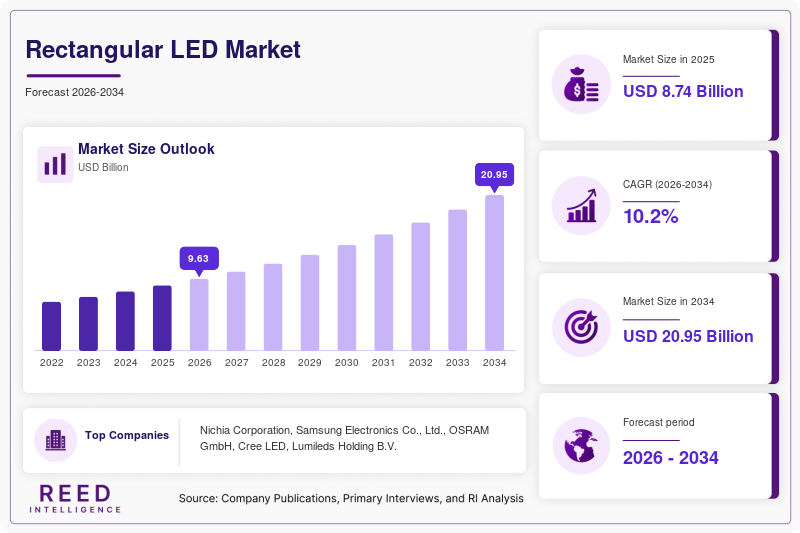
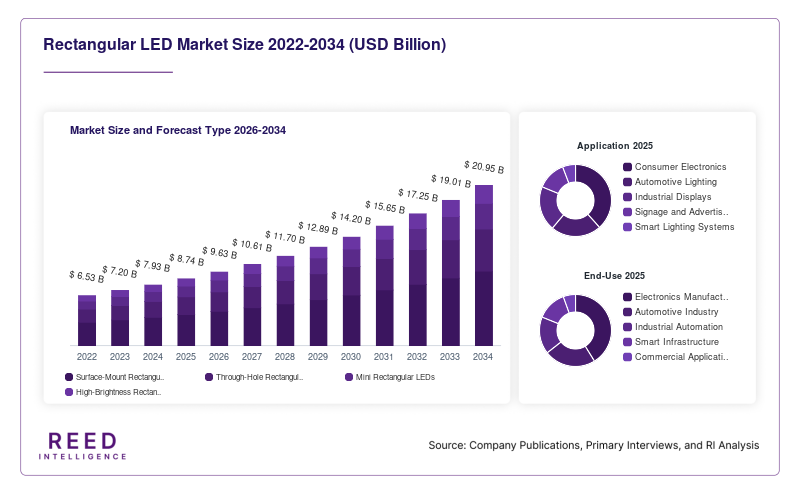
The global Rectangular LED Market size was valued at USD 8.74 billion in 2026 and is projected to reach USD 18.96 billion by 2034, expanding at a CAGR of 10.2% during the forecast period from 2026 to 2034. The market continues to witness stable expansion due to the increasing integration of LED-based lighting systems across automotive, consumer electronics, industrial displays, and smart infrastructure applications. Rectangular LEDs are widely preferred because of their compact structure, directional illumination, energy efficiency, and compatibility with advanced circuit designs. Their use in digital signboards, display indicators, automotive dashboards, wearable devices, and architectural lighting systems has increased significantly over the last few years.
One major global factor supporting market growth is the accelerated adoption of energy-efficient lighting technologies under sustainability initiatives implemented by governments and private organizations. Several countries are promoting LED-based solutions through energy conservation regulations, carbon reduction targets, and smart city development programs. Rectangular LEDs are becoming a preferred option in industrial automation systems and consumer devices due to their lower power consumption and long operational life. In addition, advancements in semiconductor manufacturing and miniaturization technologies are helping manufacturers improve brightness levels while reducing production costs. Growing investments in smart displays and connected electronic devices are also contributing to broader market penetration across both developed and emerging economies.
Key Highlights
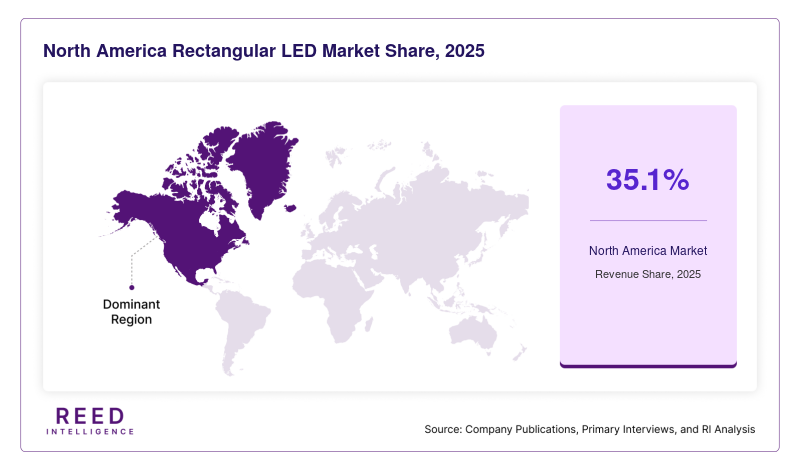
- North America dominated the market with a 35.1% share in 2025, while Asia Pacific is expected to grow at the fastest CAGR of 11.8% during 2026–2034.
- By type, surface-mount rectangular LEDs accounted for the largest share of 42.6%, while mini rectangular LEDs are projected to grow at a CAGR of 12.7%.
- By application, consumer electronics led with a 39.4% share, whereas automotive lighting is expected to expand at a CAGR of 11.9%.
- By end-use, electronics manufacturing held the dominant share of 36.8%, while smart infrastructure is projected to witness a CAGR of 12.1% during the forecast period.
- The United States remained the dominant country, with market values of USD 1.42 billion in 2024 and USD 1.56 billion in 2025.
Market Trends
Rising Integration of Mini and Micro LED Technologies
The Rectangular LED Market is experiencing increased adoption of mini and micro LED technologies across consumer electronics and high-resolution display applications. Manufacturers are focusing on compact rectangular LED packages that provide higher brightness efficiency, improved thermal performance, and lower energy consumption. The demand for ultra-thin televisions, gaming monitors, wearable electronics, and automotive displays is encouraging companies to introduce smaller LED modules with better pixel density. Mini rectangular LEDs are increasingly being integrated into backlighting systems for premium display products because they improve image contrast and support enhanced color accuracy. Furthermore, the shift toward advanced display systems in commercial advertising and digital signage applications is contributing to sustained market expansion. Companies are investing in production automation and semiconductor innovation to improve manufacturing efficiency and reduce packaging limitations associated with conventional LED systems.
Growing Demand for Smart and Connected Lighting Systems
Smart lighting infrastructure is becoming an important trend influencing the Rectangular LED Market across residential, commercial, and industrial environments. The integration of IoT-enabled lighting systems with rectangular LED modules is expanding due to the need for automated brightness control, remote monitoring, and energy optimization. Smart city projects across several economies are supporting the deployment of LED-based traffic systems, streetlights, and intelligent display panels. Commercial facilities are increasingly adopting connected lighting systems that use rectangular LEDs because of their flexibility in compact electronic designs. The rise of intelligent buildings and automated industrial facilities is also increasing demand for programmable LED indicators and panel lighting systems. Additionally, improvements in wireless connectivity technologies and sensor integration are encouraging manufacturers to develop advanced rectangular LED products that support adaptive lighting functions and data communication capabilities.
Market Drivers
Expansion of Consumer Electronics Manufacturing
The rapid growth of the consumer electronics industry is a major factor driving the Rectangular LED Market. Rectangular LEDs are widely used in televisions, laptops, smartphones, gaming devices, wearable electronics, and home appliances because they offer reliable illumination and compact integration capabilities. The growing demand for advanced electronic devices with slim designs and high-performance display systems is encouraging manufacturers to use smaller and brighter LED components. Increasing disposable income and rising adoption of smart electronic devices in emerging economies are further strengthening product demand. In addition, manufacturers are focusing on energy-efficient electronic products to comply with sustainability standards and consumer preferences. Rectangular LEDs support lower power consumption while maintaining consistent brightness levels, making them suitable for modern electronics manufacturing. The increasing popularity of OLED-compatible backlighting systems and high-definition display panels is also contributing to sustained demand across global markets.
Increasing Adoption of LED Lighting in Automotive Applications
The automotive sector is significantly contributing to market growth through the increasing use of rectangular LEDs in vehicle lighting systems and dashboard displays. Automotive manufacturers are integrating LED technologies into headlamps, taillights, interior ambient lighting, and digital instrument clusters to improve energy efficiency and vehicle aesthetics. Rectangular LEDs are preferred because they provide precise illumination patterns, longer operating life, and improved vibration resistance compared to conventional lighting technologies. The growing production of electric vehicles is also creating additional opportunities for LED manufacturers, as EV producers prioritize lightweight and energy-saving components. Furthermore, advancements in adaptive lighting technologies and intelligent driver assistance systems are encouraging the use of programmable LED modules. Automotive brands are increasingly using customizable rectangular LED configurations to differentiate vehicle designs and improve user experience, supporting long-term market expansion.
Market Restraint
High Initial Manufacturing and Packaging Costs
The Rectangular LED Market faces challenges related to the high manufacturing and packaging costs associated with advanced LED technologies. Producing compact rectangular LED modules with superior brightness, thermal management, and durability requires sophisticated semiconductor fabrication processes and precision assembly techniques. Smaller manufacturers often face difficulties investing in advanced production equipment, limiting their ability to compete with established industry participants. In addition, fluctuations in raw material prices, including semiconductor wafers and rare earth materials, can affect production costs and supply chain stability. High-performance rectangular LEDs designed for automotive and industrial applications require extensive testing and certification procedures, increasing overall operational expenses. The market also experiences pricing pressure due to strong competition among manufacturers, particularly in low-cost regional markets. These factors can reduce profit margins and slow adoption among price-sensitive end users, especially in developing economies where budget constraints remain a significant purchasing factor.
Market Opportunities
Increasing Development of Smart Cities and Digital Infrastructure
The expansion of smart city projects and intelligent urban infrastructure presents significant opportunities for the Rectangular LED Market. Governments worldwide are investing in energy-efficient public lighting systems, digital traffic management solutions, and connected display networks to improve urban efficiency and sustainability. Rectangular LEDs are increasingly used in traffic signals, outdoor digital signboards, information kiosks, and smart surveillance systems due to their reliability and long operational lifespan. The growing emphasis on reducing electricity consumption in public infrastructure is encouraging municipalities to replace traditional lighting systems with LED-based alternatives. In addition, smart transportation projects are creating demand for advanced LED display panels integrated with real-time communication technologies. Manufacturers are expected to benefit from increasing procurement contracts related to urban modernization initiatives, particularly across Asia Pacific and Middle Eastern economies where smart infrastructure investments continue to rise steadily.
Rising Demand for Industrial Automation and Machine Interfaces
Industrial automation is emerging as another major opportunity area for the Rectangular LED Market. Manufacturing facilities increasingly rely on automated control systems, robotic equipment, and intelligent monitoring devices that use LED indicators and display components for operational efficiency. Rectangular LEDs are widely integrated into machine interfaces, industrial control panels, and signal indicators because they provide clear visibility and long-term reliability under demanding conditions. The transition toward Industry 4.0 technologies is encouraging companies to adopt connected manufacturing systems with advanced visual communication features. In addition, the increasing deployment of automated warehouses and logistics systems is supporting demand for programmable LED modules used in operational displays and tracking systems. Industrial operators are prioritizing durable and low-maintenance lighting components to reduce downtime and maintenance costs. This trend is expected to create long-term growth opportunities for LED manufacturers specializing in industrial-grade rectangular LED products.
Segmental Analysis
By Type
Surface-mount rectangular LEDs accounted for the largest share of 42.6% in 2024 due to their extensive usage in compact electronic devices and display systems. These LEDs are widely preferred because they support automated assembly processes and provide high efficiency in limited circuit board space. Consumer electronics manufacturers use surface-mount rectangular LEDs in smartphones, laptops, televisions, and wearable devices to achieve thinner product designs and better energy performance. The growing demand for miniaturized electronic components has further strengthened adoption across global manufacturing industries. Additionally, these LEDs offer improved thermal management and consistent illumination performance, making them suitable for automotive dashboards and industrial indicators. Their compatibility with advanced semiconductor packaging technologies also contributes to their dominance within the market.
Mini rectangular LEDs are expected to witness the fastest CAGR of 12.7% during the forecast period because of increasing demand for advanced display systems and high-resolution backlighting applications. These LEDs are gaining popularity in gaming monitors, premium televisions, and automotive digital displays due to their superior brightness control and enhanced contrast capabilities. Manufacturers are investing heavily in mini LED technologies to improve display quality while maintaining energy efficiency. The growing adoption of augmented reality devices and next-generation wearable electronics is also supporting segment growth. In addition, mini rectangular LEDs enable more precise lighting control in smart display systems, making them suitable for intelligent advertising panels and industrial visualization applications. Technological advancements in chip packaging and semiconductor integration are expected to further accelerate adoption rates.
By Application
Consumer electronics represented the dominant application segment with a 39.4% market share in 2024. The widespread integration of rectangular LEDs in smartphones, televisions, laptops, gaming devices, and smart home appliances has significantly contributed to segment growth. Manufacturers prefer rectangular LED components because they offer compact dimensions, efficient illumination, and lower power consumption. Rising global demand for connected electronic devices and high-performance display systems is supporting sustained expansion across this segment. In addition, the increasing popularity of ultra-high-definition displays and energy-efficient consumer products has encouraged electronics brands to adopt advanced LED technologies. Rectangular LEDs are also increasingly used in wearable electronics and portable devices where space optimization and battery efficiency remain critical design considerations.
Automotive lighting is projected to register the fastest CAGR of 11.9% during 2026–2034 due to increasing integration of LED technologies in modern vehicle systems. Automotive manufacturers are using rectangular LEDs in headlamps, rear lighting systems, dashboard displays, ambient lighting, and adaptive lighting technologies to improve functionality and vehicle aesthetics. The rapid growth of electric vehicle production is creating additional demand for lightweight and energy-efficient lighting components. Furthermore, consumers increasingly prefer vehicles with advanced digital interiors and customizable lighting features, encouraging manufacturers to expand LED integration. Rectangular LEDs are also gaining traction in autonomous driving systems and intelligent driver assistance technologies where high-performance lighting and display systems are essential. Continued advancements in automotive electronics are expected to sustain long-term growth within this segment.
By End-Use
Electronics manufacturing accounted for the largest end-use share of 36.8% in 2024 owing to the growing production of consumer devices and display equipment worldwide. Rectangular LEDs are extensively utilized in printed circuit boards, display modules, signal indicators, and compact lighting assemblies used across various electronic products. The expansion of global semiconductor manufacturing and increasing demand for smart electronic devices continue to support segment dominance. Manufacturers are focusing on integrating energy-efficient LED technologies into compact devices to improve operational efficiency and reduce power consumption. Additionally, the increasing popularity of IoT-enabled electronics and connected devices is driving demand for durable and high-brightness rectangular LED components suitable for long-term operational performance.
Smart infrastructure is anticipated to expand at the fastest CAGR of 12.1% during the forecast period because of rising investments in intelligent urban development projects and connected public systems. Governments and private organizations are deploying LED-based traffic systems, digital signboards, public information displays, and automated lighting solutions across urban environments. Rectangular LEDs are particularly suitable for smart infrastructure applications due to their durability, energy efficiency, and flexible integration capabilities. Increasing implementation of smart transportation systems and intelligent surveillance networks is also contributing to segment growth. In addition, public authorities are replacing traditional lighting infrastructure with LED-based alternatives to reduce electricity costs and improve sustainability performance. Continued development of connected cities and digital public infrastructure is expected to create long-term growth opportunities for manufacturers operating in this segment.
Regional Analysis
North America
North America accounted for 35.1% of the global Rectangular LED Market share in 2025 and is expected to maintain a stable growth trajectory during the forecast period. The region is projected to register a CAGR of 9.4% between 2026 and 2034 due to the widespread adoption of energy-efficient lighting technologies and advanced display systems. Demand for rectangular LEDs remains strong across consumer electronics, automotive manufacturing, and smart infrastructure applications. The region also benefits from high technological adoption rates and strong investment in research and development activities related to semiconductor technologies.
The United States dominates the regional market because of its well-established electronics manufacturing industry and increasing deployment of smart lighting systems. One major growth factor is the strong expansion of electric vehicle production across the country. Automotive manufacturers are integrating advanced LED systems into vehicle interiors and exterior lighting modules to improve energy efficiency and design flexibility. In addition, government incentives supporting sustainable energy technologies continue to encourage wider LED adoption across commercial and industrial facilities.
Europe
Europe represented 27.3% of the Rectangular LED Market in 2025 and is anticipated to expand at a CAGR of 9.1% through 2034. The region continues to benefit from strict environmental regulations promoting energy-efficient lighting systems and reduced carbon emissions. Several European countries are implementing policies aimed at replacing traditional lighting technologies with LED-based solutions across public infrastructure and industrial facilities. Demand for compact rectangular LEDs is also increasing in automotive applications, particularly in luxury and premium vehicle segments where advanced lighting systems are becoming standard features.
Germany remains the dominant country within the European market due to its strong automotive manufacturing base and industrial automation sector. A unique growth factor supporting regional demand is the increasing use of advanced LED modules in smart factory environments. Manufacturers are integrating rectangular LEDs into machine interfaces, industrial indicators, and automated assembly systems to improve operational efficiency. Additionally, investments in connected transportation systems and intelligent public lighting projects are supporting market expansion throughout the region.
Asia Pacific
Asia Pacific held 24.8% of the global Rectangular LED Market in 2025 and is projected to record the fastest CAGR of 11.8% during the forecast period. Rapid industrialization, expanding electronics manufacturing, and increasing urban infrastructure investments are supporting strong market growth across the region. Countries including China, Japan, South Korea, and India are major producers and consumers of LED technologies. The rising popularity of consumer electronics and smart home devices is also contributing to higher demand for compact rectangular LED components used in display and lighting applications.
China dominates the Asia Pacific market due to its extensive semiconductor manufacturing ecosystem and large-scale electronics production capacity. One significant growth factor is the government's continued investment in smart city and digital infrastructure development projects. Large urban modernization programs are increasing demand for LED-based traffic systems, outdoor displays, and connected lighting solutions. Furthermore, the presence of cost-effective manufacturing facilities and strong export capabilities allows regional producers to maintain competitive pricing advantages in global markets.
Middle East & Africa
The Middle East & Africa region accounted for 6.4% of the Rectangular LED Market in 2025 and is forecast to expand at a CAGR of 8.7% during 2026–2034. Market growth is being driven by infrastructure modernization projects, increasing urbanization, and rising investments in commercial construction activities. Governments across Gulf countries are focusing on sustainable energy initiatives that encourage the use of LED-based lighting technologies in public and private facilities. Rectangular LEDs are increasingly being used in digital advertising displays, transportation systems, and smart lighting networks across major urban centers.
Saudi Arabia leads the regional market due to ongoing smart city developments and large-scale infrastructure investments. A distinctive growth factor in the country is the rapid expansion of tourism and entertainment infrastructure under economic diversification programs. Hotels, shopping complexes, stadiums, and public entertainment venues are increasingly integrating LED display systems and architectural lighting solutions. The demand for durable and energy-efficient rectangular LED products is expected to increase steadily as commercial development activities continue across the region.
Latin America
Latin America captured 6.4% of the global Rectangular LED Market share in 2025 and is expected to witness a CAGR of 8.9% during the forecast period. The market is expanding gradually due to increasing adoption of energy-efficient lighting technologies and improving industrial automation capabilities. Several countries in the region are investing in urban infrastructure upgrades and public transportation modernization projects that support LED deployment. In addition, the growing popularity of digital advertising boards and commercial display systems is contributing to demand for rectangular LED components.
Brazil remains the leading country in the Latin American market owing to its expanding consumer electronics and automotive industries. One unique growth factor is the increasing replacement of traditional commercial lighting systems with LED-based alternatives in retail and industrial facilities. Businesses are adopting rectangular LED lighting products to reduce operational energy costs and improve lighting performance. Furthermore, supportive government initiatives promoting energy conservation are encouraging wider adoption of LED technologies across commercial establishments and public infrastructure projects.
Competitive Landscape
The Rectangular LED Market is moderately competitive, with global and regional manufacturers focusing on product innovation, manufacturing efficiency, and strategic partnerships to strengthen their market positions. Companies are investing in advanced semiconductor fabrication technologies to improve LED brightness, thermal management, and miniaturization capabilities. The market also experiences growing competition related to pricing strategies, particularly among Asian manufacturers with large-scale production facilities.
Nichia Corporation remains one of the leading participants in the global market due to its strong portfolio of high-performance LED products and continuous investment in research and development activities. The company recently expanded its advanced LED packaging capabilities to support automotive and smart display applications. Other major companies are also increasing investments in mini LED and micro LED technologies to address growing demand from consumer electronics and automotive industries.
Key Players
- Nichia Corporation
- Samsung Electronics Co., Ltd.
- OSRAM GmbH
- Cree LED
- Lumileds Holding B.V.
- Everlight Electronics Co., Ltd.
- Seoul Semiconductor Co., Ltd.
- Toyoda Gosei Co., Ltd.
- Stanley Electric Co., Ltd.
- Kingbright Electronic Co., Ltd.
- ROHM Semiconductor
- Broadcom Inc.
- Vishay Intertechnology, Inc.
- Dialight plc
- Harvatek Corporation
Recent Developments
- In March 2026, Nichia Corporation introduced an advanced mini rectangular LED series designed for automotive dashboards and premium display applications with improved brightness efficiency.
- In January 2026, Samsung Electronics Co., Ltd. expanded its LED manufacturing facility in South Korea to strengthen production capacity for smart display and consumer electronics applications.
- In October 2025, OSRAM GmbH launched a new industrial-grade rectangular LED portfolio focused on smart factory automation and intelligent machine interface systems.
- In August 2025, Lumileds Holding B.V. announced the development of energy-efficient rectangular LED modules for outdoor digital signage and smart advertising installations.
- In December 2025, Cree LED partnered with automotive electronics manufacturers to accelerate the adoption of adaptive rectangular LED lighting technologies in next-generation electric vehicles.
Rectangular LED Market Segments
Type
- Surface-Mount Rectangular LEDs
- Through-Hole Rectangular LEDs
- Mini Rectangular LEDs
- High-Brightness Rectangular LEDs
Application
- Consumer Electronics
- Automotive Lighting
- Industrial Displays
- Signage and Advertising
- Smart Lighting Systems
End-Use
- Electronics Manufacturing
- Automotive Industry
- Industrial Automation
- Smart Infrastructure
- Commercial Applications
By Region
- North America
- Europe
- APAC
- Middle East and Africa
- LATAM