Rectocele Treatment Market Size, Share Demand Report By Treatment Type (Surgical Repair Procedures, Conservative Therapy, Biologic and Implant-Based Repair), By Procedure Type (Posterior Colporrhaphy, Laparoscopic Rectocele Repair, Robotic-Assisted Procedures), By End User (Hospitals, Specialty Pelvic Health Clinics, Ambulatory Surgical Centers), By Region & Segment Forecasts, 2026–2034
USD 3950
Market Overview
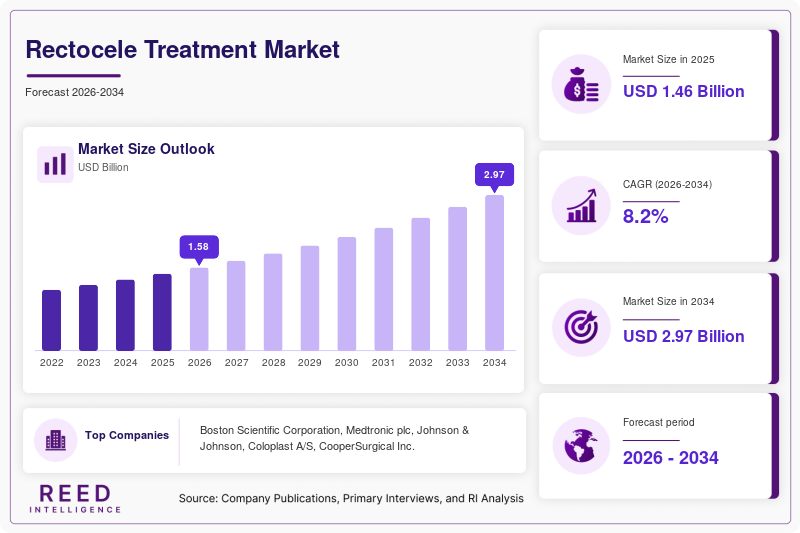
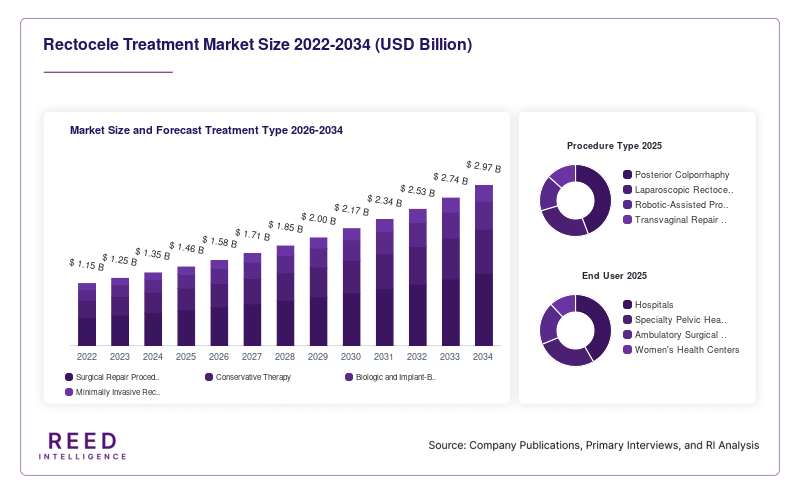
The Rectocele Treatment Market size was valued at USD 1.46 billion in 2026 and is projected to reach USD 2.74 billion by 2034, expanding at a CAGR of 8.2% during the forecast period (2026–2034). Market expansion is being supported by the growing prevalence of pelvic floor disorders associated with aging populations, childbirth-related complications, and rising awareness regarding women’s health conditions. Increased diagnosis rates, wider adoption of minimally invasive procedures, and advancements in pelvic reconstructive therapies have also contributed to steady market penetration.
A major global factor supporting the Rectocele Treatment Market has been the growing access to urogynecological care supported by healthcare infrastructure improvements across developed and emerging economies. Hospitals and specialty clinics have expanded treatment pathways involving conservative therapies, surgical interventions, and biologic repair materials, supporting demand across multiple treatment categories.
Key Highlights
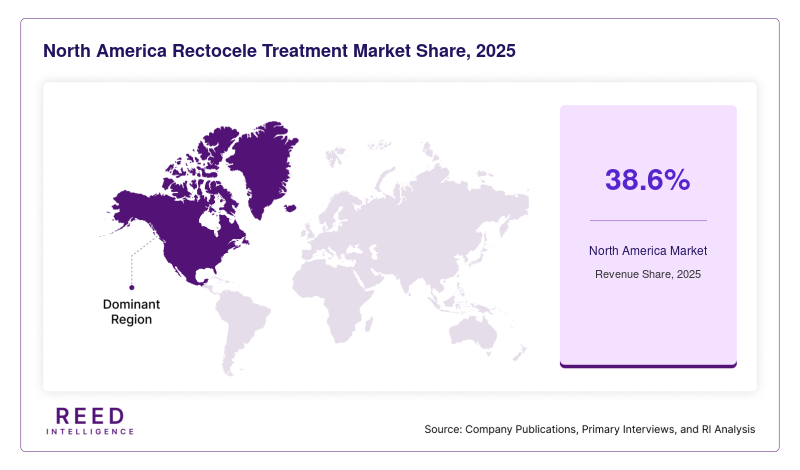
- North America accounted for 38.6% of the global Rectocele Treatment Market share in 2025 and remained the dominant regional market.
- Asia Pacific is projected to register the fastest growth at a 9.7% CAGR through 2034.
- Among treatment types, Surgical Repair Procedures held the leading share of 46.8% in 2025.
- Minimally Invasive Rectocele Repair is projected to be the fastest-growing treatment segment at 9.5% CAGR.
- By end user, Hospitals accounted for 52.4% share in 2025.
- Specialty Pelvic Health Clinics are expected to expand at 8.9% CAGR.
- The U.S. Rectocele Treatment Market was valued at USD 432 million in 2024 and USD 458 million in 2025.
Market Trends
Rising Adoption of Minimally Invasive Treatment Approaches
The Rectocele Treatment Market is witnessing increased demand for minimally invasive interventions including transvaginal repairs, laparoscopic procedures, and tissue-sparing reconstructive techniques. These approaches are gaining attention due to shorter recovery periods, reduced postoperative complications, and improved patient outcomes. Healthcare providers are increasingly integrating minimally invasive procedures into standard treatment protocols, particularly in developed healthcare systems.
Expansion of Non-Surgical Management Solutions
Conservative treatment options including pessary devices, pelvic floor rehabilitation, and biofeedback therapies are gaining wider acceptance. Demand for non-surgical management has grown as more patients seek early-stage intervention before progressing to operative procedures. This trend is influencing treatment pathway diversification and supporting product innovation in supportive devices and therapy services.
Market Drivers
Growing Prevalence of Pelvic Floor Disorders
Increasing incidence of pelvic organ prolapse among aging women is driving demand in the Rectocele Treatment Market. Risk factors such as multiple childbirths, obesity, chronic constipation, and connective tissue weakness continue to increase the addressable patient population. This trend has strengthened treatment volumes across both conservative and surgical segments.
Advancements in Surgical Repair Technologies
Continuous improvements in surgical instruments, absorbable materials, biologic grafts, and precision repair techniques have contributed to broader treatment adoption. These advancements have improved procedural outcomes while supporting physician confidence in recommending advanced rectocele treatment options.
Market Restraint
Limited Diagnosis in Underserved Populations
Underdiagnosis and delayed treatment remain a key restraint for the Rectocele Treatment Market. Social stigma, limited specialist availability, and low awareness in underserved areas continue to restrict early intervention and reduce treatment uptake.
Market Opportunities
Growth Potential in Office-Based Pelvic Therapies
Expanding adoption of outpatient pelvic rehabilitation programs presents opportunities for service providers and device manufacturers. The shift toward non-hospital management models is expected to support growth in therapy equipment and supportive treatment solutions.
Emerging Demand for Biologic Repair Materials
The growing use of biologic grafts and regenerative repair materials presents future opportunities. Demand for materials designed to improve tissue support while reducing recurrence risks is expected to create growth avenues in advanced treatment portfolios.
Segmental Analysis
By Treatment Type
Surgical Repair Procedures: Surgical repair procedures held the largest share of 46.8% in 2025 due to their widespread use in moderate to severe rectocele cases. Demand was supported by established physician preference and strong clinical outcomes.
Minimally Invasive Rectocele Repair will be the fastest-growing subsegment at 9.5% CAGR. Growth will be supported by increased demand for reduced hospitalization and lower complication risks.
Conservative Therapy: Conservative therapy accounted for 31.2% share in 2025, supported by use in early-stage management and symptom control.
Pelvic Floor Rehabilitation will grow at 8.8% CAGR due to expanding integration into preventive and long-term treatment plans.
Biologic and Implant-Based Repair: Biologic and implant-based treatments represented 22.0% of market revenue in 2025.
Biologic Grafts are projected to grow at 8.9% CAGR, supported by increasing demand for alternatives designed to improve repair durability.
By Procedure Type
Posterior Colporrhaphy: Posterior colporrhaphy accounted for 43.5% share in 2025 and remained the dominant procedure due to broad use across healthcare settings.
Laparoscopic Rectocele Repair is projected to grow at 9.4% CAGR, driven by expanding adoption of minimally invasive pelvic reconstructive approaches.
By End User
Hospitals: Hospitals held 52.4% of the Rectocele Treatment Market in 2025 due to higher surgical procedure concentration and broader treatment availability.
Specialty Pelvic Health Clinics are expected to grow at 8.9% CAGR, supported by rising patient preference for specialized treatment pathways.
By Distribution Channel
Direct Institutional Sales: Direct institutional sales accounted for 58.1% share in 2025, driven by hospital procurement of devices, materials, and treatment systems.
Specialized Distribution Providers will grow at 8.6% CAGR, supported by expanding access to niche pelvic treatment products.
Regional Analysis
North America
North America held 38.6% of the Rectocele Treatment Market share in 2025. Regional leadership was supported by strong specialist availability, structured reimbursement systems, and higher procedure volumes. The market in this region is projected to grow at a 7.8% CAGR through 2034.
The United States remained the dominant country due to strong adoption of pelvic reconstructive surgeries. Growth will be supported by increasing procedural shifts toward minimally invasive interventions and expanding women’s health specialty networks.
Europe
Europe accounted for 28.2% market share in 2025. Demand was supported by established urogynecology services, aging demographics, and growing access to conservative treatment alternatives. The regional market is projected to expand at a 7.9% CAGR during the forecast period.
Germany led the regional market due to integrated pelvic health treatment pathways. Future growth will be supported by expanded adoption of advanced reconstructive materials and increasing procedure volumes in specialized care centers.
Asia Pacific
Asia Pacific represented 21.7% of the Rectocele Treatment Market in 2025. Rising diagnosis rates and expanding women’s healthcare access contributed to regional demand. The market is projected to grow at a 9.7% CAGR, the fastest globally.
China dominated the region due to expanding hospital infrastructure and growing access to pelvic floor disorder treatment. Growth will be supported by increasing investment in minimally invasive gynecological procedures.
Middle East & Africa
Middle East & Africa held 6.4% share in 2025. Market demand was supported by improving tertiary care capacity and growing access to specialist services. The region is projected to grow at a 7.4% CAGR through 2034.
Saudi Arabia led regional demand due to healthcare modernization initiatives. Future expansion will be supported by increasing integration of women’s specialty care services.
Latin America
Latin America accounted for 5.1% of the Rectocele Treatment Market share in 2025. Growth was driven by expanding access to gynecological surgeries and improving diagnosis pathways. The market is expected to grow at 7.6% CAGR over the forecast period.
Brazil dominated the regional market due to increasing procedure volumes in urban healthcare systems. Growth will be supported by rising penetration of outpatient pelvic disorder management.
Competitive Landscape
The Rectocele Treatment Market remains moderately consolidated with competition centered on surgical technologies, biologic repair products, and pelvic health treatment solutions. Leading companies are focusing on product development, geographic expansion, and partnerships with specialty care providers. Boston Scientific Corporation maintained a leading position through its pelvic floor treatment portfolio and continued investment in reconstructive device innovation.
A recent development included expansion of advanced pelvic repair solutions aimed at supporting minimally invasive procedures. Other major participants such as Medtronic, Johnson & Johnson, Coloplast, and CooperSurgical continue strengthening their market presence through product enhancements and broader distribution strategies. Competitive activity is increasingly focused on biologic materials, physician training support, and expansion of conservative therapy portfolios. Companies are also pursuing opportunities in emerging markets where diagnosis rates and treatment accessibility continue to improve, supporting broader commercial growth potential in the Rectocele Treatment Market.
Key Players List
- Boston Scientific Corporation
- Medtronic plc
- Johnson & Johnson
- Coloplast A/S
- CooperSurgical Inc.
- Becton, Dickinson and Company
- Cook Medical
- C.R. Bard Inc.
- Stryker Corporation
- Ethicon Inc.
- Integra LifeSciences
- Olympus Corporation
- MedGyn Products Inc.
- Richard Wolf GmbH
- Promedon Group
Recent Developments
- Several manufacturers expanded investment in minimally invasive rectocele repair systems designed for shorter procedure duration and improved surgical precision.
- Multiple healthcare providers increased adoption of integrated pelvic floor rehabilitation programs to strengthen non-surgical treatment pathways.
- Biologic repair material developers introduced next-generation tissue support products focused on reducing recurrence concerns.
- Leading market participants expanded physician training initiatives centered on advanced pelvic reconstructive procedures.
- Specialty clinics increased deployment of outpatient rectocele treatment pathways, supporting broader access to conservative therapies.
- Companies advanced partnerships with hospitals to strengthen distribution of pelvic floor treatment devices.
- Product developers increased research activity related to regenerative treatment approaches for tissue restoration.
- Several market participants expanded presence in Asia Pacific through regional distribution agreements and localized product strategies.
- Technology providers introduced procedural enhancements aimed at supporting laparoscopic rectocele repair adoption.
- Healthcare systems expanded women’s pelvic health service integration, supporting broader diagnosis and treatment volumes.
Rectocele Treatment Market Segments
Treatment Type
- Surgical Repair Procedures
- Conservative Therapy
- Biologic and Implant-Based Repair
- Minimally Invasive Rectocele Repair
Procedure Type
- Posterior Colporrhaphy
- Laparoscopic Rectocele Repair
- Robotic-Assisted Procedures
- Transvaginal Repair Procedures
End User
- Hospitals
- Specialty Pelvic Health Clinics
- Ambulatory Surgical Centers
- Women's Health Centers
Distribution Channel
- Direct Institutional Sales
- Specialized Distributors
- Hospital Procurement Networks
- Online Procurement Channels
By Region
- North America
- Europe
- APAC
- Middle East and Africa
- LATAM