Reflux Testing Product Market Size, Share & Demand Report By Type (pH Monitoring Devices, Impedance-pH Monitoring Systems, Wireless Capsule Systems), By Application (GERD Diagnosis, Laryngopharyngeal Reflux Diagnosis, Others), By End-Use (Hospitals, Diagnostic Centers, Ambulatory Surgical Centers, Home Care Settings), By Region & Segment Forecasts, 2025–2034
USD 3950
Market Overview
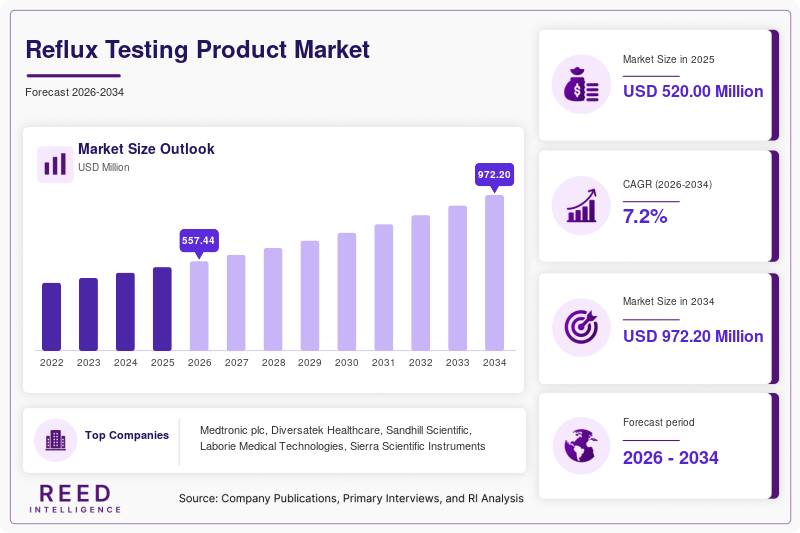
The Reflux Testing Product Market size is experiencing steady expansion driven by the rising global prevalence of gastroesophageal reflux disease (GERD), growing awareness regarding digestive health, and increasing adoption of advanced diagnostic technologies. In 2025, the global market size is estimated at approximately USD 520 million, and it is projected to reach USD 565 million in 2026. Over the forecast period from 2025 to 2034, the market is expected to grow at a compound annual growth rate (CAGR) of 7.2%, ultimately reaching USD 1050 million by 2034.
The market encompasses a range of diagnostic tools and devices used to evaluate acid reflux conditions, including pH monitoring systems, impedance testing devices, and wireless capsule-based technologies. Increasing patient volumes suffering from lifestyle-related gastrointestinal disorders have significantly contributed to demand. Additionally, the integration of digital health platforms with diagnostic tools has enhanced accuracy and convenience, supporting broader adoption across healthcare settings.
Key Highlights
- Market size projected to reach USD 1.05 billion by 2034
- CAGR of 7.2% during 2025–2034
- Increasing prevalence of GERD driving demand
- Technological advancements improving diagnostic accuracy
- Growing adoption of minimally invasive testing solutions
Market Trends
Adoption of Wireless and Capsule-Based Diagnostic Systems
The market is witnessing a shift toward wireless and capsule-based reflux testing technologies, which offer improved patient comfort and convenience compared to traditional catheter-based systems. These advanced systems allow continuous monitoring of esophageal pH levels without causing significant discomfort, leading to better patient compliance. Healthcare providers are increasingly adopting such technologies due to their ability to provide accurate and long-term data for diagnosis. Additionally, the integration of Bluetooth and mobile applications enables real-time data tracking and remote monitoring, enhancing clinical decision-making. This trend is expected to reshape the diagnostic landscape by reducing hospital visits and promoting home-based testing solutions.
Integration of Artificial Intelligence in Diagnostic Analysis
Artificial intelligence (AI) is playing an increasing role in the reflux testing product market by enhancing data interpretation and diagnostic precision. AI-driven algorithms can analyze large volumes of patient data, identify patterns, and provide actionable insights for clinicians. This integration helps reduce diagnostic errors and improves treatment outcomes. Moreover, AI-enabled platforms can assist in predictive analysis, allowing early detection of severe conditions related to acid reflux. The growing adoption of digital health technologies and electronic medical records is further supporting the integration of AI in reflux diagnostics, making it a significant trend shaping the future of the market.
Market Drivers
Rising Prevalence of Gastroesophageal Reflux Disease (GERD)
The increasing incidence of GERD across the globe is a major driver for the reflux testing product market. Factors such as obesity, poor dietary habits, smoking, and high stress levels have contributed to the growing number of patients experiencing acid reflux symptoms. As awareness regarding the complications of untreated GERD rises, more individuals are seeking diagnostic testing. Healthcare professionals are also recommending early testing to prevent complications such as esophagitis and Barrett’s esophagus. This growing patient pool is significantly boosting the demand for advanced reflux testing products across hospitals and diagnostic centers.
Advancements in Diagnostic Technologies
Technological advancements have significantly improved the efficiency and accuracy of reflux testing products, thereby driving market growth. Innovations such as impedance-pH monitoring systems and wireless capsule technologies have enhanced diagnostic capabilities while reducing patient discomfort. These advancements enable healthcare providers to obtain detailed insights into esophageal function and acid exposure. Additionally, the development of portable and user-friendly devices has expanded the use of reflux testing in outpatient and home settings. Continuous investment in research and development by medical device manufacturers is expected to further accelerate innovation in this market.
Market Restraints
High Cost of Advanced Diagnostic Devices
One of the key restraints in the reflux testing product market is the high cost associated with advanced diagnostic devices and procedures. Technologies such as wireless pH monitoring systems and impedance-based testing devices require significant investment, making them less accessible in low- and middle-income regions. This cost barrier limits adoption among smaller healthcare facilities and restricts patient access to advanced diagnostic solutions. Additionally, reimbursement policies for reflux testing procedures vary across regions, further impacting market penetration. For instance, in developing countries, limited insurance coverage and out-of-pocket expenses discourage patients from undergoing diagnostic testing. This restraint can slow market growth despite increasing demand, particularly in emerging economies where healthcare budgets remain constrained.
Market Opportunities
Expansion in Emerging Markets
Emerging economies present significant growth opportunities for the reflux testing product market due to improving healthcare infrastructure and rising awareness of gastrointestinal disorders. Countries in Asia Pacific, Latin America, and parts of Africa are investing in modern diagnostic facilities and expanding access to healthcare services. Increasing disposable incomes and government initiatives aimed at improving public health are also contributing to market expansion. Manufacturers can capitalize on these opportunities by introducing cost-effective diagnostic solutions tailored to local needs. Partnerships with regional healthcare providers and distributors can further enhance market penetration in these regions.
Growth of Home-Based Diagnostic Solutions
The increasing demand for home-based healthcare solutions offers a promising opportunity for the reflux testing product market. Patients are seeking convenient and non-invasive diagnostic options that can be used outside traditional clinical settings. The development of portable and easy-to-use reflux testing devices has enabled patients to monitor their condition from home. This trend is supported by advancements in telemedicine and digital health platforms, which allow remote consultation and data sharing with healthcare providers. As the healthcare industry continues to shift toward patient-centric care, the adoption of home-based reflux testing solutions is expected to rise significantly.
Segmental Analysis
By Type
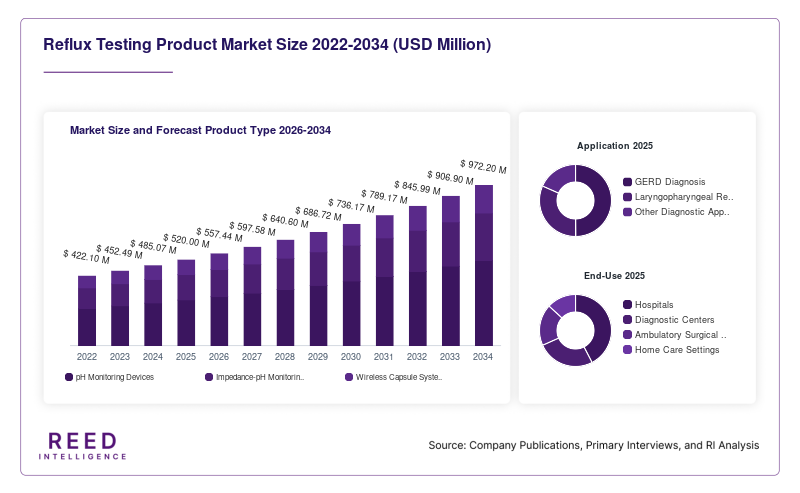
The pH monitoring devices segment dominated the reflux testing product market in 2024, accounting for approximately 46% of the total market share. These devices are widely used due to their effectiveness in measuring acid exposure in the esophagus. Healthcare providers prefer pH monitoring systems for their reliability and ability to provide accurate diagnostic results. The increasing prevalence of GERD has further driven demand for these devices, particularly in hospitals and specialized diagnostic centers.
The impedance-pH monitoring systems segment is expected to be the fastest-growing, with a CAGR of 8.3% during the forecast period. These systems provide comprehensive insights by measuring both acid and non-acid reflux, making them more effective for complex cases. The growing adoption of advanced diagnostic technologies and increasing awareness among healthcare professionals are key factors driving the growth of this segment.
By Application
The GERD diagnosis segment held the largest market share in 2024, accounting for approximately 52% of the total market. The high prevalence of GERD and the need for accurate diagnosis have significantly contributed to the dominance of this segment. Reflux testing products are widely used to confirm the presence of GERD and assess its severity, enabling effective treatment planning.
The laryngopharyngeal reflux (LPR) diagnosis segment is expected to grow at the fastest CAGR of 7.9% during the forecast period. Increasing awareness of LPR and its symptoms is driving demand for specialized diagnostic tools. Healthcare providers are increasingly using advanced reflux testing products to diagnose LPR accurately and provide targeted treatment.
By End-Use
Hospitals dominated the market in 2024, accounting for approximately 48% of the total share. The availability of advanced diagnostic equipment and skilled healthcare professionals makes hospitals the primary setting for reflux testing. Additionally, the increasing number of patients seeking medical care for digestive disorders has contributed to the dominance of this segment.
Ambulatory surgical centers and home care settings are expected to grow at the fastest CAGR of 8.1% during the forecast period. The shift toward outpatient care and the increasing availability of portable diagnostic devices are driving growth in this segment. Patients prefer convenient and cost-effective diagnostic options, which is boosting the adoption of reflux testing products in non-hospital settings.
Regional Analysis
North America
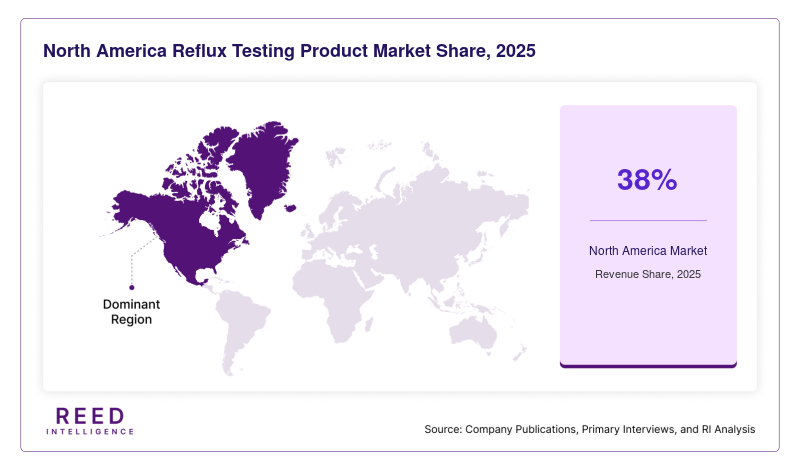
North America accounted for approximately 38% of the global reflux testing product market share in 2025 and is expected to maintain its dominance with a CAGR of 6.8% during the forecast period. The region benefits from advanced healthcare infrastructure, high awareness levels, and widespread adoption of innovative diagnostic technologies. The presence of leading medical device manufacturers further supports market growth. Additionally, favorable reimbursement policies and strong healthcare spending contribute to the steady demand for reflux testing products.
The United States dominates the North American market due to its large patient population and high prevalence of GERD. A unique growth factor in this region is the rapid adoption of digital health technologies, including AI-based diagnostic tools. These technologies enhance diagnostic accuracy and efficiency, making reflux testing more accessible and reliable for patients and healthcare providers.
Europe
Europe held around 27% of the global market share in 2025 and is projected to grow at a CAGR of 6.5% through 2034. The region’s growth is supported by increasing awareness of gastrointestinal disorders and the availability of advanced diagnostic facilities. Government initiatives aimed at improving healthcare access and early disease detection are also contributing to market expansion.
Germany is a leading country in the European market due to its well-established healthcare system and strong focus on medical innovation. A unique growth factor in this region is the increasing emphasis on preventive healthcare, which encourages early diagnosis and regular monitoring of conditions such as acid reflux.
Asia Pacific
Asia Pacific accounted for approximately 20% of the market share in 2025 and is expected to grow at the fastest CAGR of 8.5% during the forecast period. Rapid urbanization, changing lifestyles, and increasing healthcare expenditure are driving demand for reflux testing products in this region. The expansion of private healthcare facilities is also supporting market growth.
China dominates the Asia Pacific market due to its large population and rising prevalence of GERD. A unique growth factor is the increasing investment in healthcare infrastructure, which is improving access to advanced diagnostic technologies across urban and rural areas.
Middle East & Africa
The Middle East & Africa region held around 8% of the global market share in 2025 and is projected to grow at a CAGR of 6.2%. The market is driven by improving healthcare infrastructure and increasing awareness of digestive health. Government initiatives to modernize healthcare systems are also supporting growth.
Saudi Arabia is a key contributor to the regional market due to its growing healthcare sector. A unique growth factor in this region is the increasing adoption of private healthcare services, which offer advanced diagnostic solutions and attract a growing patient base.
Latin America
Latin America accounted for approximately 7% of the global market share in 2025 and is expected to grow at a CAGR of 6.4%. The region is witnessing gradual improvements in healthcare infrastructure and rising awareness of gastrointestinal disorders. Increasing investments in healthcare are supporting market expansion.
Brazil leads the Latin American market due to its large population and expanding healthcare sector. A unique growth factor is the growing focus on public health initiatives aimed at early diagnosis and treatment of chronic conditions, including GERD.
Competitive Landscape
The reflux testing product market is moderately competitive, with several global and regional players focusing on innovation and product development. Companies are investing in research and development to introduce advanced diagnostic technologies that improve accuracy and patient comfort. Strategic partnerships, mergers, and acquisitions are also common as companies aim to expand their market presence.
One of the leading players in the market is Medtronic plc, which has established a strong presence through its advanced diagnostic solutions and global distribution network. The company recently introduced an upgraded wireless pH monitoring system that enhances patient comfort and data accuracy. Other major players are also focusing on expanding their product portfolios and strengthening their distribution channels to gain a competitive edge.
Key Players List
- Medtronic plc
- Diversatek Healthcare
- Sandhill Scientific
- Laborie Medical Technologies
- Sierra Scientific Instruments
- Koninklijke Philips N.V.
- GE Healthcare
- Medica S.p.A.
- Alpine Biomed
- MMS (Medical Measurement Systems)
- Cook Medical
- Boston Scientific Corporation
- Nihon Kohden Corporation
- Fujifilm Holdings Corporation
- EndoStim Inc.
Recent Developments
- A leading medical device company launched a next-generation wireless reflux monitoring system with improved battery life and data transmission capabilities.
- A strategic partnership between two diagnostic firms aimed to expand the availability of impedance-pH monitoring systems in emerging markets.
- A healthcare technology company introduced an AI-powered diagnostic platform to enhance the analysis of reflux testing data and improve clinical outcomes.
Reflux Testing Product Market Segments
Product Type
- pH Monitoring Devices
- Impedance-pH Monitoring Systems
- Wireless Capsule Systems
Application
- GERD Diagnosis
- Laryngopharyngeal Reflux Diagnosis
- Other Diagnostic Applications
End-Use
- Hospitals
- Diagnostic Centers
- Ambulatory Surgical Centers
- Home Care Settings
By Region
- North America
- Europe
- APAC
- Middle East and Africa
- LATAM