Renewable Based Shunt Reactor Market Size, Share & Demand Report By Type (Oil-Immersed Shunt Reactor, Dry-Type Shunt Reactor), By Application (Transmission Line, Renewable Energy Integration), By End-Use (Utilities, Industrial), By Region & Segment Forecasts, 2025–2034
USD 3950
Market Overview
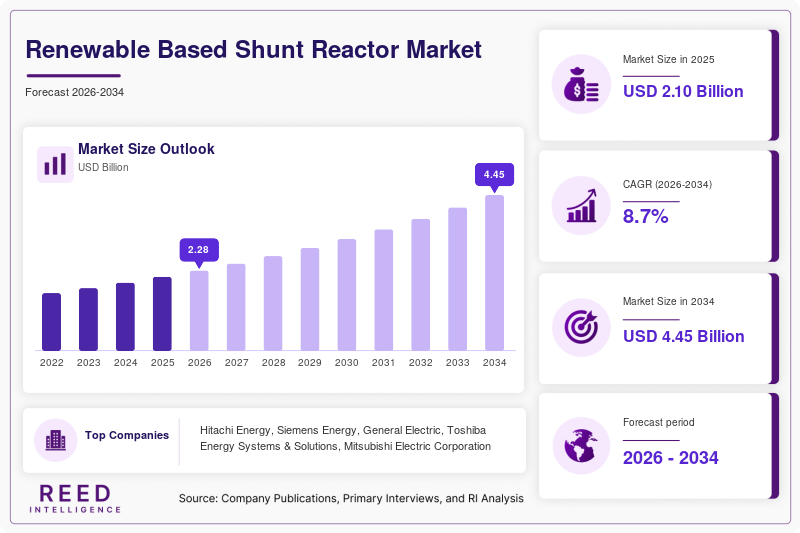
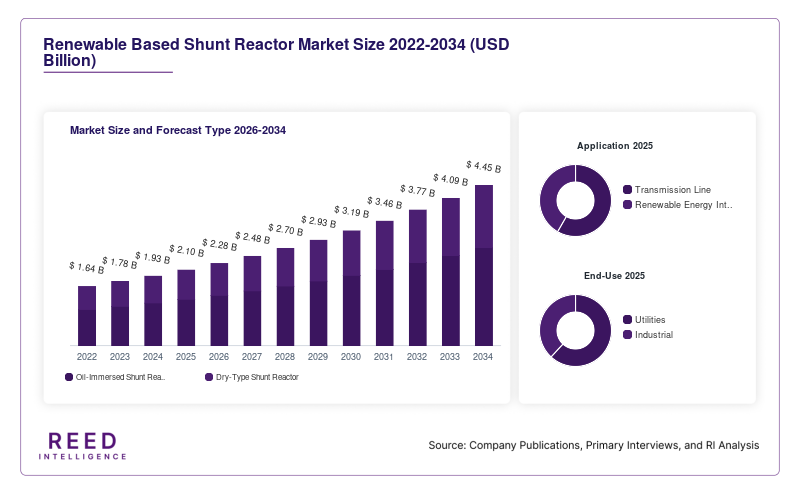
The Renewable Based Shunt Reactor Market size was estimated at USD 2.1 billion in 2025 and is projected to reach USD 2.3 billion in 2026. With increasing integration of renewable energy sources such as wind and solar into transmission networks, the market is forecast to reach approximately USD 4.8 billion by 2034, expanding at a CAGR of 8.7% during the forecast period from 2025 to 2034. Renewable-based shunt reactors play a critical role in voltage regulation, reactive power compensation, and grid stability, especially in high-voltage transmission lines associated with renewable energy projects.
One of the primary growth factors is the rapid deployment of renewable energy infrastructure globally. As countries aim to meet carbon neutrality targets, grid operators are investing in technologies that can stabilize intermittent power generation. Secondly, the expansion of ultra-high voltage (UHV) transmission systems is increasing the demand for shunt reactors to manage voltage fluctuations over long distances. Thirdly, supportive government policies and funding programs aimed at modernizing aging grid infrastructure are accelerating the adoption of advanced shunt reactors designed for renewable integration.
Key Highlights
- The market size reached USD 2.1 billion in 2025 and is projected to grow significantly, reaching approximately USD 4.8 billion by 2034
- The market is expected to expand at a CAGR of 8.7% from 2025 to 2034.
- Rising integration of renewable energy sources such as wind and solar is a major growth driver. These energy systems require effective voltage control solutions, boosting demand for renewable-based shunt reactors.
- Increasing investments in grid modernization and ultra-high voltage (UHV) transmission systems are accelerating market expansion. Utilities are upgrading networks to handle long-distance power transmission and fluctuating energy loads.
Market Trends
Increasing Adoption of Smart Grid Technologies
The adoption of smart grid infrastructure is significantly influencing the Renewable Based Shunt Reactor Market. Utilities are integrating digital monitoring systems with shunt reactors to enable real-time voltage regulation and predictive maintenance. These smart systems help reduce downtime and enhance operational efficiency. With the increasing penetration of renewable energy, grid operators require dynamic solutions that can adapt to fluctuations in power generation. Digital shunt reactors equipped with sensors and communication technologies provide actionable insights, allowing utilities to manage reactive power more effectively. This trend is particularly strong in developed regions where grid automation investments are high.
Shift Toward Eco-Friendly and Dry-Type Reactors
Another notable trend is the growing preference for environmentally friendly reactor designs, particularly dry-type and oil-free shunt reactors. Traditional oil-filled reactors pose environmental risks due to potential leakage and disposal challenges. As sustainability becomes a priority, manufacturers are focusing on eco-friendly alternatives that offer lower environmental impact and improved safety. Dry-type reactors are gaining popularity in urban and renewable installations due to their compact design and reduced maintenance requirements. This shift aligns with global environmental regulations and sustainability goals, making eco-friendly reactors a key trend shaping the market landscape.
Market Drivers
Expansion of Renewable Energy Capacity
The rapid expansion of renewable energy capacity is a key driver for the Renewable Based Shunt Reactor Market. Solar and wind power generation often produce variable output, leading to voltage instability in transmission networks. Shunt reactors are essential for absorbing reactive power and maintaining voltage levels within acceptable limits. As countries continue to invest in large-scale renewable projects, especially offshore wind farms and solar parks, the demand for reliable grid stabilization solutions is increasing. This trend is particularly evident in regions with aggressive renewable energy targets, where grid infrastructure must evolve to accommodate fluctuating energy inputs.
Growing Investments in Transmission Infrastructure
Increasing investments in transmission infrastructure are also driving market growth. Governments and utilities are upgrading existing grids and constructing new high-voltage transmission lines to support renewable energy integration. Long-distance transmission lines often generate excess reactive power, necessitating the use of shunt reactors for voltage control. Additionally, cross-border electricity trade and interconnection projects are further boosting demand. These investments are creating opportunities for manufacturers to supply advanced shunt reactors tailored for renewable-based systems, contributing to overall market expansion.
Market Restraint
High Initial Investment and Installation Costs
One of the primary restraints affecting the Renewable Based Shunt Reactor Market is the high initial investment required for procurement and installation. Renewable-based shunt reactors, particularly those designed for high-voltage applications, involve significant capital expenditure. This includes costs associated with design, manufacturing, transportation, and installation. For developing regions with limited financial resources, these high costs can hinder adoption. Additionally, maintenance and operational expenses add to the overall lifecycle cost, making it challenging for smaller utilities to justify investments.
The impact of this restraint is evident in regions where grid modernization projects are delayed due to budget constraints. For example, utilities in emerging economies may prioritize basic infrastructure development over advanced grid stabilization technologies. This can lead to inefficiencies in power transmission and limit the integration of renewable energy. To address this challenge, market players are exploring cost-effective solutions and financing models, such as public-private partnerships, to make shunt reactors more accessible.
Market Opportunities
Integration with Offshore Wind Projects
The growing number of offshore wind projects presents a significant opportunity for the Renewable Based Shunt Reactor Market. Offshore wind farms require extensive transmission infrastructure to connect to onshore grids, often involving long subsea cables that generate reactive power. Shunt reactors are essential in these systems to maintain voltage stability and ensure efficient power transmission. As countries expand their offshore wind capacity, particularly in Europe and Asia Pacific, the demand for specialized shunt reactors designed for marine environments is expected to increase.
Development of Hybrid Energy Systems
The development of hybrid energy systems combining solar, wind, and energy storage is another emerging opportunity. These systems require advanced grid management solutions to balance variable energy inputs. Renewable-based shunt reactors can play a crucial role in stabilizing voltage and improving power quality in hybrid setups. As energy systems become more decentralized and complex, the need for flexible and efficient reactive power compensation solutions will grow. This trend is expected to drive innovation and create new revenue streams for market participants.
Market Segmental Analysis
By Type
The oil-immersed shunt reactor segment dominated the Renewable Based Shunt Reactor Market in 2024, accounting for approximately 58% of the total share. These reactors are widely used in high-voltage applications due to their superior cooling efficiency and reliability. Oil-immersed reactors are capable of handling large power loads, making them suitable for utility-scale renewable energy projects. Their robust design and long operational lifespan contribute to their widespread adoption. Additionally, advancements in insulation materials and cooling technologies have improved their performance, further strengthening their position in the market.
The dry-type shunt reactor segment is expected to be the fastest-growing, with a projected CAGR of 9.6% during the forecast period. The growth is driven by increasing demand for environmentally friendly and low-maintenance solutions. Dry-type reactors eliminate the risk of oil leakage and are ideal for installations in urban and environmentally sensitive areas. Their compact design and ease of installation make them suitable for renewable energy projects with space constraints. As sustainability becomes a priority, the adoption of dry-type reactors is expected to accelerate.
By Application
The transmission line application segment held the largest share in 2024, accounting for around 62% of the market. Shunt reactors are extensively used in transmission lines to control voltage levels and improve power quality. With the expansion of renewable energy projects, the need for efficient transmission infrastructure is increasing. Shunt reactors play a critical role in managing reactive power generated by long transmission lines, ensuring stable and reliable power delivery. Their ability to enhance grid performance makes them indispensable in modern power systems.
The renewable energy integration segment is projected to be the fastest-growing, with a CAGR of 10.2%. This growth is driven by the increasing penetration of renewable energy sources into power grids. As solar and wind power generation continues to rise, the demand for advanced voltage control solutions is increasing. Shunt reactors designed for renewable applications offer improved performance under variable load conditions, making them essential for maintaining grid stability. This segment is expected to witness significant growth as countries accelerate their transition to clean energy.
By End-Use
The utilities segment dominated the market in 2024, accounting for approximately 65% of the total share. Utilities are the primary users of shunt reactors, as they are responsible for managing transmission and distribution networks. The increasing demand for electricity and the need to integrate renewable energy sources are driving utilities to invest in advanced grid technologies. Shunt reactors help utilities maintain voltage stability and improve power quality, making them a critical component of modern power systems.
The industrial segment is expected to be the fastest-growing, with a CAGR of 8.9%. Industries with high power consumption require efficient voltage control solutions to ensure stable operations. The adoption of renewable energy in industrial applications is increasing, creating demand for shunt reactors that can handle variable power inputs. Additionally, industries are focusing on energy efficiency and cost optimization, further driving the adoption of advanced shunt reactors. This trend is expected to support the growth of the industrial segment during the forecast period.
Regional Analysis
North America
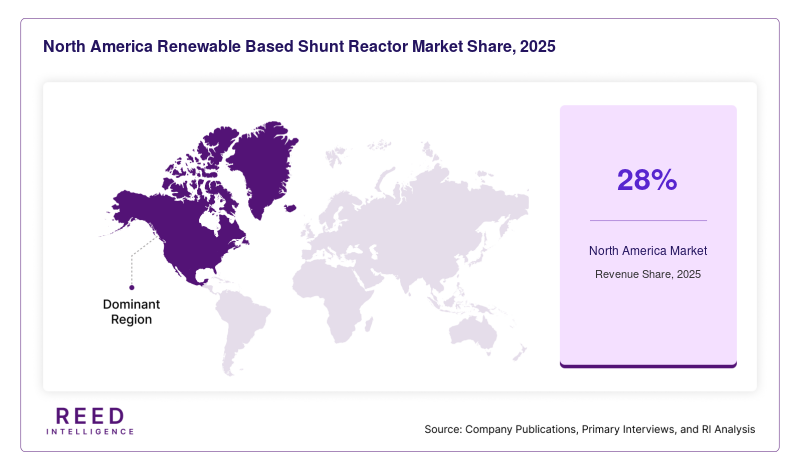
North America accounted for a significant share of the Renewable Based Shunt Reactor Market in 2025, contributing approximately 28% of the global revenue. The region is expected to grow at a CAGR of around 7.9% during the forecast period. The presence of advanced grid infrastructure and increasing investments in renewable energy projects are key factors driving market growth. Utilities are focusing on enhancing grid resilience and reliability, leading to increased adoption of shunt reactors.
The United States dominates the regional market due to its large-scale renewable energy deployment and ongoing grid modernization initiatives. A unique growth factor in this region is the increasing adoption of battery storage systems, which require efficient voltage regulation solutions. This is driving demand for advanced shunt reactors capable of supporting complex grid operations.
Europe
Europe held a market share of approximately 26% in 2025 and is projected to grow at a CAGR of 8.3% through 2034. The region’s strong commitment to renewable energy and carbon reduction targets is a major driver. Countries are investing heavily in wind and solar energy, necessitating robust grid stabilization technologies.
Germany leads the European market, supported by its extensive renewable energy infrastructure. A unique growth factor is the expansion of offshore wind projects in the North Sea, which require specialized shunt reactors for voltage control. This is creating significant demand for advanced solutions tailored to marine environments.
Asia Pacific
Asia Pacific emerged as the largest regional market in 2025, accounting for nearly 32% of global revenue, and is expected to grow at a CAGR of 9.5%. Rapid urbanization, industrialization, and increasing electricity demand are driving investments in transmission infrastructure and renewable energy.
China dominates the region due to its massive renewable energy capacity and extensive UHV transmission network. A unique growth factor is the government’s focus on ultra-high voltage projects, which require advanced shunt reactors to manage voltage stability over long distances.
Middle East & Africa
The Middle East & Africa region accounted for around 8% of the market share in 2025 and is projected to grow at a CAGR of 8.1%. Increasing investments in renewable energy and grid infrastructure are supporting market growth.
Saudi Arabia leads the region due to its ambitious renewable energy targets under national development plans. A unique growth factor is the development of large-scale solar projects in desert regions, which require efficient voltage control solutions to ensure stable power transmission.
Latin America
Latin America held a market share of approximately 6% in 2025 and is expected to grow at a CAGR of 7.6%. The region is witnessing increased adoption of renewable energy, particularly in wind and hydropower.
Brazil dominates the market due to its strong renewable energy base and expanding transmission network. A unique growth factor is the integration of hydropower with other renewable sources, which creates demand for shunt reactors to manage variable power flows and maintain grid stability.
Competitive Landscape
The Renewable Based Shunt Reactor Market is moderately consolidated, with several global and regional players competing based on technology, pricing, and product reliability. Leading companies are focusing on innovation, strategic partnerships, and expansion into emerging markets to strengthen their position. The market is characterized by continuous advancements in reactor design, including digital monitoring and eco-friendly solutions.
One of the leading players in the market is Hitachi Energy, known for its advanced grid solutions and strong global presence. The company has recently introduced digitally enabled shunt reactors that offer real-time monitoring and predictive maintenance capabilities. Other major players are also investing in research and development to enhance product efficiency and meet the evolving needs of renewable energy integration.
Key Players
- Hitachi Energy
- Siemens Energy
- General Electric
- Toshiba Energy Systems & Solutions
- Mitsubishi Electric
- CG Power and Industrial Solutions
- Hyosung Heavy Industries
- Fuji Electric
- TBEA Co., Ltd.
- Nissin Electric
- SGB-SMIT Group
- Hyundai Electric
- Arteche Group
- Hilkar
- Zaporozhtransformator
Recent Developments
- A major manufacturer launched a digital shunt reactor with advanced monitoring features to improve grid reliability and reduce maintenance costs.
- A strategic partnership between two energy companies aimed to develop eco-friendly shunt reactors for renewable energy applications.
- A leading player expanded its production capacity to meet increasing demand from offshore wind projects and high-voltage transmission systems.
Renewable Based Shunt Reactor Market Segments
Type
- Oil-Immersed Shunt Reactor
- Dry-Type Shunt Reactor
Application
- Transmission Line
- Renewable Energy Integration
End-Use
- Utilities
- Industrial
By Region
- North America
- Europe
- APAC
- Middle East and Africa
- LATAM