Residential Surge Arrester Market Size, Share & Demand Report By Type (Plug-in Surge Arresters, Hard-wired Surge Arresters, Power Strip Surge Protectors), By Application (Appliance Protection, Whole-house Protection, Data Line Protection), By End-Use (Individual Homeowners, Residential Construction Developers, Property Management Companies) By Region & Segment Forecasts, 2025–2034
USD 3950
Market Overview
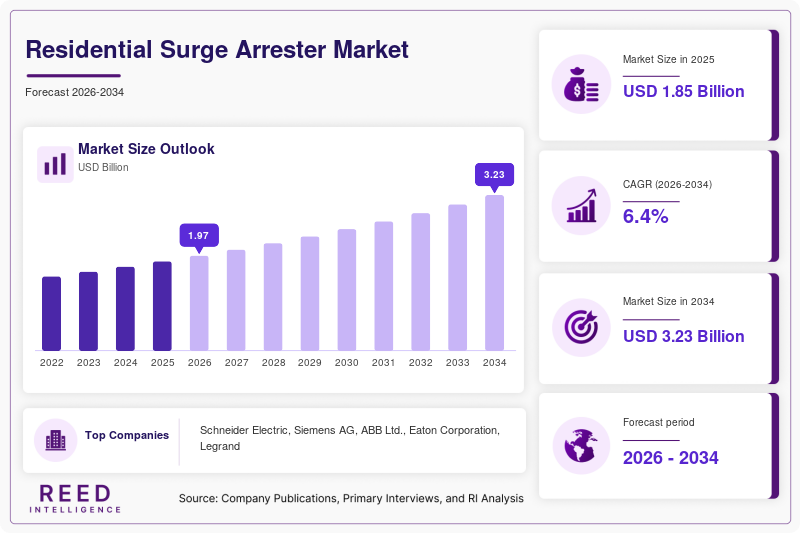
The Residential Surge Arrester Market size was estimated at approximately USD 1.85 billion in 2025 and is projected to reach USD 1.98 billion in 2026, reflecting consistent adoption across developed and emerging economies. By 2034, the market is forecast to reach nearly USD 3.25 billion, growing at a compound annual growth rate (CAGR) of 6.4% from 2025 to 2034. This growth trajectory is supported by increasing residential electrification, expansion of smart home infrastructure, and growing awareness of electrical safety systems among homeowners.
One of the primary growth factors is the rapid proliferation of sensitive electronic devices in households, including smart TVs, home automation systems, and IoT-enabled appliances. These devices are highly vulnerable to voltage fluctuations, driving the need for reliable surge protection solutions. Additionally, the rising frequency of power outages and lightning-related electrical surges, particularly in regions with unstable grid infrastructure, has further amplified the adoption of residential surge arresters.
Key Highlights
- The market size was estimated at USD 1.85 billion in 2025 and reached USD 1.98 billion in 2026.
This growth reflects steady adoption of residential electrical protection systems across regions. - The market is projected to reach USD 3.25 billion by 2034, growing at a CAGR of 6.4%.
This expansion is supported by increasing demand for reliable power protection solutions. - The rising adoption of smart home devices is significantly driving market demand.
These devices require consistent voltage protection, increasing the need for surge arresters. - Increasing safety regulations are supporting market penetration globally.
Governments are enforcing stricter electrical standards to improve residential safety.
Market Trends
Integration of Smart Surge Protection Systems
The integration of smart technologies into surge arresters is emerging as a significant trend in the residential segment. Modern surge arresters are increasingly being equipped with monitoring capabilities that allow homeowners to track voltage fluctuations, surge events, and device health through mobile applications. This trend aligns with the broader growth of smart homes, where interconnected devices require advanced protection systems. Smart surge arresters provide real-time alerts and diagnostics, enabling preventive maintenance and reducing the risk of equipment failure. Manufacturers are also incorporating IoT-based features that allow integration with home automation systems, creating a seamless user experience. This shift toward intelligent protection solutions is expected to reshape consumer preferences and drive premium product adoption in the coming years.
Rising Adoption in Renewable Energy-Enabled Homes
The increasing installation of residential renewable energy systems, particularly rooftop solar panels, is significantly influencing the demand for surge arresters. Solar power systems are highly sensitive to voltage fluctuations and lightning-induced surges, making surge protection a critical component of system design. Homeowners investing in solar installations are prioritizing surge protection to safeguard inverters, batteries, and connected appliances. This trend is particularly prominent in regions promoting clean energy adoption through subsidies and incentives. Additionally, the integration of electric vehicle (EV) charging stations in residential settings is further driving the need for robust surge protection solutions. As renewable energy adoption continues to expand, surge arresters are becoming an essential part of modern residential electrical infrastructure.
Market Drivers
Increasing Dependence on Electronic Appliances
The growing reliance on electronic devices in residential environments is a major driver for the Residential Surge Arrester Market. Modern households are equipped with a wide range of sensitive electronics, including computers, smart home devices, entertainment systems, and kitchen appliances. These devices are highly susceptible to voltage spikes and electrical surges, which can cause permanent damage or reduce their lifespan. As a result, homeowners are increasingly investing in surge protection solutions to safeguard their valuable equipment. The rising trend of remote work and digital lifestyles has further amplified the need for uninterrupted and secure power supply, thereby boosting the demand for residential surge arresters across both urban and semi-urban areas.
Expansion of Residential Construction and Infrastructure
The rapid growth of residential construction, particularly in emerging economies, is significantly contributing to market expansion. Urbanization and population growth are driving the development of new housing projects, including apartments, gated communities, and smart homes. Developers are incorporating advanced electrical safety systems, including surge arresters, as part of modern building standards. Additionally, renovation and retrofitting activities in older homes are creating opportunities for upgrading electrical infrastructure with surge protection devices. Government initiatives promoting affordable housing and infrastructure development are further accelerating market growth. As residential construction continues to expand globally, the demand for surge arresters is expected to rise steadily.
Market Restraint
Limited Awareness in Developing Regions
Despite the growing importance of electrical safety, limited awareness about surge protection solutions remains a key restraint in the Residential Surge Arrester Market, particularly in developing regions. Many homeowners are unaware of the risks associated with voltage fluctuations and the benefits of installing surge arresters. This lack of awareness often leads to low adoption rates, especially in rural and semi-urban areas where electrical safety is not prioritized. Additionally, cost sensitivity among consumers in these regions further hinders market growth, as surge arresters are often perceived as non-essential investments. For example, in regions with frequent power outages, households may prioritize backup power solutions such as inverters over surge protection devices. This imbalance in awareness and prioritization continues to limit market penetration, highlighting the need for educational campaigns and government support.
Market Opportunities
Growth of Smart Home Ecosystems
The rapid expansion of smart home ecosystems presents a significant opportunity for the Residential Surge Arrester Market. As consumers adopt connected devices such as smart lighting, security systems, and voice-controlled assistants, the need for reliable surge protection becomes increasingly critical. Smart homes rely on continuous power supply and data connectivity, making them highly vulnerable to electrical disturbances. Surge arresters designed specifically for smart home applications can offer integrated protection and monitoring capabilities, enhancing their value proposition. Manufacturers have the opportunity to develop innovative products that cater to this growing segment, including compact designs and plug-and-play solutions. The increasing penetration of smart homes across developed and emerging markets is expected to create substantial growth opportunities.
Increasing Electrification in Emerging Economies
The ongoing electrification of rural and underserved regions in emerging economies is creating new avenues for market growth. Governments and international organizations are investing in expanding electricity access, leading to the development of new residential connections. As these regions transition to modern electrical infrastructure, there is a growing need for safety solutions, including surge arresters. The introduction of affordable and easy-to-install products can help manufacturers tap into this underserved market. Additionally, partnerships with utility providers and housing developers can facilitate the integration of surge protection devices into new installations. This trend is expected to significantly contribute to market expansion over the forecast period.
Segmental Analysis
By Type
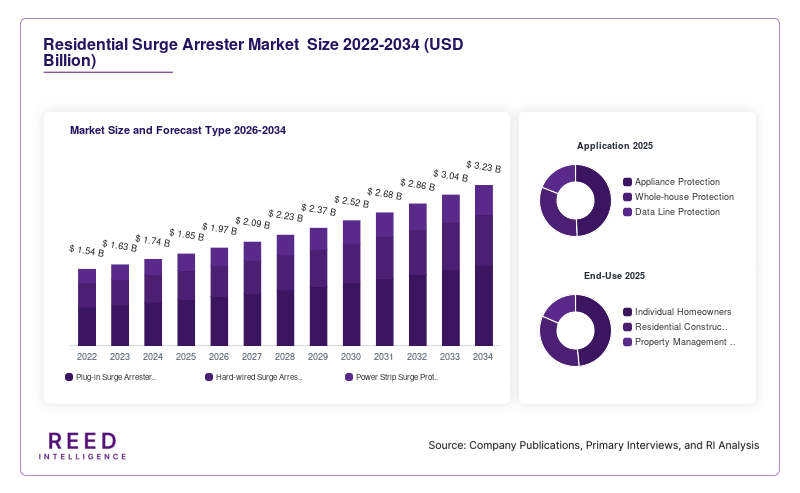
The Type segment is dominated by plug-in surge arresters, which accounted for approximately 46% of the market share in 2024. These devices are widely preferred due to their ease of installation, affordability, and compatibility with a variety of household appliances. Plug-in surge arresters are commonly used for protecting individual devices such as televisions, computers, and home entertainment systems. Their portability and user-friendly design make them a popular choice among residential consumers. Additionally, the increasing availability of multi-outlet surge protectors with enhanced safety features is further driving the dominance of this subsegment in the market.
The fastest-growing subsegment is hard-wired surge arresters, expected to grow at a CAGR of 7.2% during the forecast period. These devices are installed directly into the electrical panel, providing comprehensive protection for the entire household. The growth of this subsegment is driven by increasing adoption in newly constructed homes and smart residential buildings. Homeowners are recognizing the benefits of whole-house surge protection, which safeguards all connected devices from voltage spikes. The rising trend of smart homes and integrated electrical systems is further supporting the growth of hard-wired surge arresters.
By Application
The Application segment is dominated by appliance protection, which held around 52% of the market share in 2024. This subsegment focuses on safeguarding individual household appliances from electrical surges. The growing use of high-value electronic devices in homes has increased the demand for targeted surge protection solutions. Consumers are increasingly investing in surge arresters to protect expensive appliances such as refrigerators, washing machines, and air conditioners. The availability of specialized surge protection devices designed for specific appliances is further contributing to the dominance of this subsegment.
The fastest-growing subsegment is whole-house protection, projected to grow at a CAGR of 6.9%. This growth is driven by the increasing awareness of comprehensive electrical safety solutions. Whole-house surge protection systems are gaining popularity as they provide centralized protection for all electrical circuits within a home. The integration of these systems into modern residential construction and renovation projects is a key growth factor. Additionally, the rising adoption of renewable energy systems and smart home technologies is further boosting demand for whole-house surge protection solutions.
By End-Use
The End-Use segment is dominated by individual homeowners, accounting for approximately 58% of the market share in 2024. This dominance is attributed to the increasing awareness of electrical safety and the growing number of residential properties worldwide. Homeowners are investing in surge protection devices to safeguard their electronic equipment and ensure uninterrupted power supply. The availability of affordable and easy-to-install products has made surge arresters accessible to a wide range of consumers. Additionally, the rising trend of home automation is further driving demand among individual homeowners.
The fastest-growing subsegment is residential construction developers, expected to grow at a CAGR of 7.0%. This growth is driven by the integration of surge protection systems into new housing projects. Developers are incorporating advanced electrical safety solutions as part of modern building standards. The increasing demand for smart homes and energy-efficient housing is encouraging developers to include surge arresters in their projects. This trend is particularly prominent in urban areas, where consumers prioritize safety and convenience.
Regional Analysis
North America
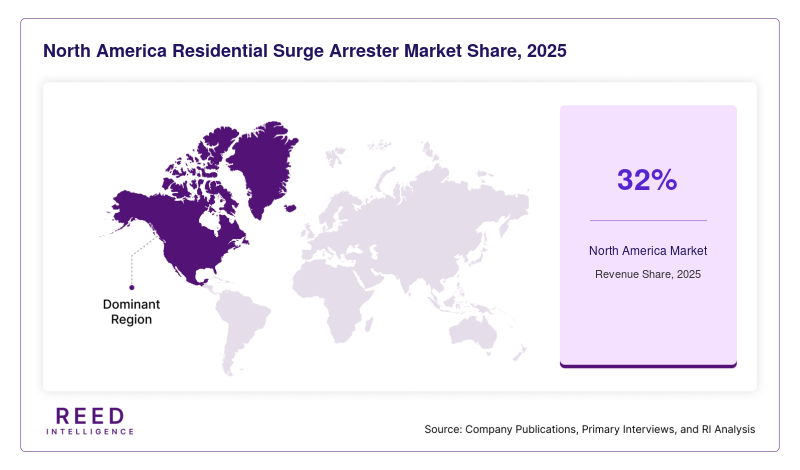
North America accounted for a significant share of the Residential Surge Arrester Market in 2025, contributing approximately 32% of the global market. The region is expected to grow at a CAGR of 5.8% during the forecast period. High adoption of advanced electrical systems and stringent safety regulations are key factors supporting market growth. The presence of well-established infrastructure and increasing demand for smart home solutions further contribute to the region’s steady expansion.
The United States dominates the regional market, driven by widespread adoption of smart home technologies. A unique growth factor is the increasing integration of EV charging stations in residential properties, which require surge protection. This trend is encouraging homeowners to invest in advanced surge arresters, boosting market demand.
Europe
Europe held around 25% of the market share in 2025 and is projected to grow at a CAGR of 5.6%. The region benefits from strong regulatory frameworks and high awareness of electrical safety standards. Increasing investments in energy-efficient housing and renovation projects are driving the adoption of surge protection devices across residential sectors.
Germany leads the European market, supported by its focus on sustainable housing and renewable energy adoption. A unique growth factor is the widespread use of rooftop solar systems, which require surge protection to ensure system reliability. This trend is significantly contributing to market growth.
Asia Pacific
Asia Pacific is the fastest-growing region, accounting for approximately 28% of the market share in 2025 and expected to grow at a CAGR of 7.5%. Rapid urbanization, increasing disposable income, and expanding residential construction are key drivers of market growth. The region’s large population base further amplifies demand for electrical safety solutions.
China dominates the market in this region, driven by massive infrastructure development and urban housing projects. A unique growth factor is the government’s push for smart city initiatives, which include advanced electrical systems and safety measures, boosting the adoption of surge arresters.
Middle East & Africa
The Middle East & Africa region held around 8% of the market share in 2025 and is projected to grow at a CAGR of 6.1%. Increasing investments in residential infrastructure and electrification projects are driving market growth. The region is gradually adopting modern electrical safety solutions.
Saudi Arabia leads the market, supported by large-scale residential development projects. A unique growth factor is the extreme weather conditions, including frequent lightning storms, which increase the need for surge protection systems in residential areas.
Latin America
Latin America accounted for approximately 7% of the market share in 2025 and is expected to grow at a CAGR of 6.0%. The region is witnessing steady growth due to increasing urbanization and improvements in electrical infrastructure. Rising awareness of electrical safety is also contributing to market expansion.
Brazil dominates the regional market, driven by its growing residential sector. A unique growth factor is the frequent occurrence of power fluctuations, which encourages homeowners to adopt surge protection solutions to safeguard their appliances.
Competitive Landscape
The Residential Surge Arrester Market is moderately competitive, with several global and regional players operating in the industry. Key companies are focusing on product innovation, strategic partnerships, and expansion into emerging markets to strengthen their market position. The market is characterized by the presence of established electrical equipment manufacturers that offer a wide range of surge protection solutions.
One of the leading players in the market is Schneider Electric, which holds a significant market share due to its extensive product portfolio and strong global presence. The company has recently introduced advanced surge protection devices with smart monitoring capabilities, enhancing its competitive edge. Other major players are also investing in research and development to introduce innovative and energy-efficient products. The increasing focus on smart home integration and renewable energy compatibility is shaping the competitive landscape, encouraging companies to differentiate their offerings.
Key Players List
- Schneider Electric
- Siemens AG
- ABB Ltd.
- Eaton Corporation
- Legrand
- Mitsubishi Electric
- General Electric
- Panasonic Corporation
- Hager Group
- L&T Electrical & Automation
- Havells India Ltd.
- CG Power and Industrial Solutions
- Phoenix Contact
- Littelfuse Inc.
- Belkin International
Recent Developments
- In 2024, a major manufacturer launched smart surge arresters with IoT-enabled monitoring features for residential applications.
- In 2023, a leading company expanded its production capacity in Asia Pacific to meet growing demand.
- In 2025, a global player introduced eco-friendly surge protection devices designed for renewable energy systems.
Residential Surge Arrester Market Segments
Type
- Plug-in Surge Arresters
- Hard-wired Surge Arresters
- Power Strip Surge Protectors
Application
- Appliance Protection
- Whole-house Protection
- Data Line Protection
End-Use
- Individual Homeowners
- Residential Construction Developers
- Property Management Companies
By Region
- North America
- Europe
- APAC
- Middle East and Africa
- LATAM