Retinoblastoma Treatment Market Size, Share & Demand Report By Treatment Type (Chemotherapy, Radiation Therapy, Laser Therapy, Cryotherapy, Targeted Therapy, Surgery), By Route of Administration (Intravenous, Intra-Arterial, Intravitreal, Oral), By End User (Hospitals, Specialty Cancer Clinics, Ambulatory Surgical Centers, Research Institutes), By Region & Segment Forecasts, 2026–2034
USD 3950
Market Overview
The global Retinoblastoma Treatment Market size was valued at USD 1.42 billion in 2026 and is projected to reach USD 2.71 billion by 2034, expanding at a CAGR of 8.4% during the forecast period from 2026 to 2034. The market is witnessing steady expansion due to increasing awareness regarding pediatric ocular cancers, rising access to specialized oncology centers, and broader adoption of targeted treatment approaches across developed and emerging healthcare systems. Improvements in diagnostic imaging, early-stage screening, and multidisciplinary treatment planning have also strengthened market penetration in both public and private healthcare institutions.
One of the primary global factors supporting market growth is the increasing investment in pediatric cancer care infrastructure. Governments, nonprofit healthcare organizations, and private pharmaceutical companies are focusing on expanding access to advanced oncology therapies for rare childhood cancers. This has resulted in greater availability of chemotherapy, laser therapy, cryotherapy, intra-arterial chemotherapy, and focal treatment methods in multiple regions. In addition, healthcare providers are emphasizing eye-preserving therapies to improve long-term quality of life for pediatric patients. The expansion of healthcare reimbursement programs in developed countries and the emergence of pediatric oncology networks in middle-income economies are further contributing to demand growth.
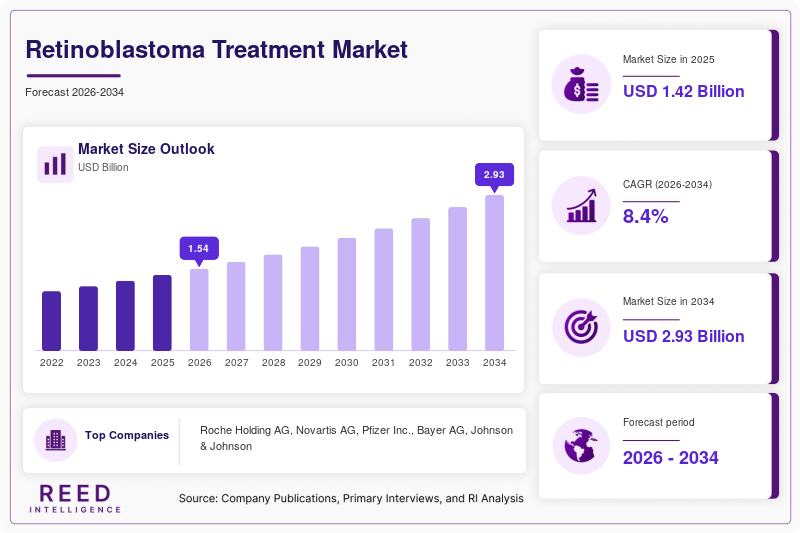
Key Highlights
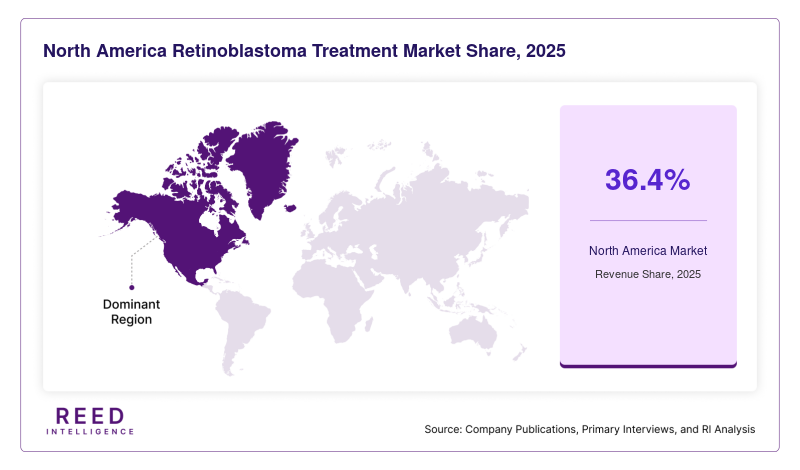
- North America dominated the market with a 36.4% share in 2025.
- Asia Pacific is expected to grow at the fastest CAGR of 10.8% during 2026–2034.
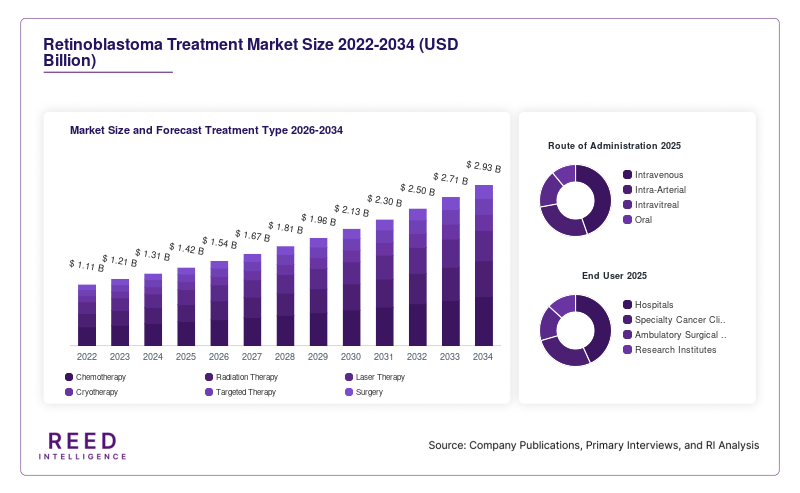
- By treatment type, chemotherapy accounted for the largest share of 39.1%.
- while targeted therapy is projected to grow at a CAGR of 11.6%.
- By route of administration, intravenous treatment led with a 44.8% share.
- whereas intra-arterial therapy is expected to expand at a CAGR of 12.2%.
- By end user, hospitals represented the leading segment with a 57.3% share.
- while specialty cancer clinics are anticipated to grow at a CAGR of 10.9%.
- The United States remained the dominant country, with market values of USD 482 million in 2024 and USD 528 million in 2025.
Market Trends
Expansion of Eye-Preserving Therapeutic Approaches
The Retinoblastoma Treatment Market is experiencing a noticeable shift toward eye-preserving therapeutic approaches as healthcare providers prioritize long-term patient quality of life. Historically, advanced cases frequently resulted in enucleation, particularly in regions with limited access to specialized care. However, recent advances in focal therapies, intra-arterial chemotherapy, and intravitreal chemotherapy are improving tumor control while preserving visual function in a larger proportion of pediatric patients. Hospitals and oncology centers are increasingly adopting integrated treatment protocols that combine chemotherapy with laser therapy or cryotherapy to reduce invasive procedures. This transition is supporting market growth by increasing demand for advanced treatment equipment, localized drug delivery systems, and specialized ophthalmic oncology services across both developed and emerging healthcare markets.
Rising Integration of Precision Oncology and Molecular Diagnostics
Precision oncology and molecular diagnostic technologies are becoming increasingly important within the Retinoblastoma Treatment Market. Healthcare providers are utilizing genetic testing and molecular profiling to identify hereditary mutations associated with retinoblastoma, enabling earlier diagnosis and more personalized treatment planning. Several oncology centers are implementing genomic screening programs for families with inherited cancer risks, which is improving disease detection rates in infants and young children. In addition, pharmaceutical companies are expanding investments in targeted therapies designed to improve treatment response while reducing systemic side effects. The adoption of digital retinal imaging and artificial intelligence-supported diagnostic systems is also enhancing clinical decision-making. These developments are contributing to broader industry transformation by improving treatment efficiency, reducing recurrence risks, and strengthening patient monitoring capabilities.
Market Drivers
Increasing Incidence of Pediatric Ocular Cancer Cases
The growing incidence of pediatric ocular cancers is one of the major factors driving the Retinoblastoma Treatment Market. Although retinoblastoma remains a relatively rare disease, the number of diagnosed cases has increased due to improved awareness programs, expanded neonatal screening, and greater access to pediatric ophthalmology services. Healthcare organizations are encouraging early eye examinations for infants, particularly in families with hereditary risk factors. Early diagnosis significantly improves survival rates and treatment success, leading to greater adoption of chemotherapy, focal therapies, and targeted treatment procedures. In several developing countries, public healthcare authorities are investing in childhood cancer screening campaigns to reduce delayed diagnosis rates. This broader awareness and healthcare accessibility are strengthening demand for innovative treatment solutions and specialized oncology services.
Growth in Healthcare Expenditure and Oncology Infrastructure
Rising healthcare expenditure and the expansion of oncology infrastructure are contributing significantly to the growth of the Retinoblastoma Treatment Market. Governments in developed economies are increasing investments in pediatric cancer research, hospital modernization, and advanced treatment technologies. At the same time, private healthcare providers are establishing specialized pediatric oncology units equipped with retinal imaging systems, laser therapy devices, and advanced chemotherapy delivery platforms. Emerging economies are also witnessing improvements in healthcare accessibility through public insurance programs and international healthcare partnerships. These developments are enabling more patients to access timely diagnosis and comprehensive treatment services. Pharmaceutical manufacturers and medical device companies are benefiting from stronger hospital procurement activities, while healthcare providers are expanding multidisciplinary treatment programs to improve long-term patient outcomes.
Market Restraint
High Treatment Costs and Limited Access in Low-Income Regions
High treatment costs remain a major restraint for the Retinoblastoma Treatment Market, particularly in low-income and underserved regions. Advanced therapies such as intra-arterial chemotherapy, targeted therapy, and precision diagnostic testing require specialized medical infrastructure and trained oncology professionals, increasing overall treatment expenses. Many families in developing countries face financial challenges related to travel, prolonged hospitalization, and repeated treatment cycles. In addition, limited availability of pediatric ophthalmology specialists in rural healthcare systems often delays diagnosis and treatment initiation.
The economic burden associated with retinoblastoma management also affects healthcare institutions and government reimbursement systems. Several hospitals in lower-income regions continue to rely on traditional treatment methods due to budget limitations and insufficient access to advanced therapeutic technologies. This gap in healthcare accessibility contributes to unequal treatment outcomes across geographic markets. For example, patients diagnosed in urban oncology centers may receive eye-preserving therapies and targeted treatments, while patients in rural areas often undergo more invasive procedures due to late-stage diagnosis and infrastructure shortages. These challenges may slow market penetration for premium therapies in emerging economies during the forecast period.
Market Opportunities
Development of Targeted and Gene-Based Therapies
The growing focus on targeted and gene-based therapies presents substantial opportunities for the Retinoblastoma Treatment Market. Biotechnology companies and pharmaceutical manufacturers are investing in research programs aimed at developing treatments that directly target tumor cells while minimizing damage to surrounding healthy tissue. Advances in molecular biology and genetic profiling are supporting the identification of biomarkers associated with hereditary retinoblastoma, creating opportunities for precision medicine approaches. Gene-editing technologies and localized drug delivery systems are also gaining attention in clinical research.
Healthcare providers are increasingly seeking therapies that reduce long-term complications and preserve visual function in pediatric patients. As clinical trials continue to demonstrate improved safety and treatment effectiveness, demand for innovative targeted therapies is expected to increase across hospitals and specialty oncology centers. Partnerships between pharmaceutical firms, academic institutions, and pediatric research organizations are further accelerating product development activities. This expanding innovation landscape is expected to create long-term commercial opportunities for companies operating within the global market.
Expansion of Pediatric Oncology Services in Emerging Economies
Emerging economies are creating new growth opportunities for the Retinoblastoma Treatment Market due to ongoing expansion in pediatric oncology services and healthcare infrastructure. Countries across Asia Pacific, Latin America, and parts of the Middle East are increasing investments in specialized cancer treatment centers to address growing healthcare demands. Public health initiatives focused on childhood cancer awareness are improving diagnosis rates and encouraging earlier treatment intervention.
International healthcare organizations are also supporting training programs for pediatric ophthalmologists and oncology specialists in underserved regions. This is improving treatment accessibility and increasing the adoption of advanced therapeutic procedures. In addition, rising healthcare insurance coverage and expanding medical tourism activities are strengthening patient access to specialized cancer care services. Several multinational pharmaceutical companies are entering emerging markets through strategic collaborations with local hospitals and distributors, enabling broader product availability. These developments are expected to create favorable growth conditions for both treatment providers and medical technology companies throughout the forecast period.
Segmental Analysis
By Treatment Type
Chemotherapy represented the dominant treatment type within the Retinoblastoma Treatment Market and accounted for 39.1% of the global market share in 2024. The widespread adoption of chemotherapy is linked to its established clinical effectiveness in managing both unilateral and bilateral retinoblastoma cases. Healthcare providers frequently utilize systemic chemotherapy in combination with focal therapies such as laser photocoagulation and cryotherapy to reduce tumor size while preserving vision. Hospitals across developed healthcare markets continue to rely on chemotherapy as a first-line treatment approach due to its broad availability and strong integration into pediatric oncology protocols. In addition, pharmaceutical companies are focusing on the development of improved chemotherapy formulations that minimize toxicity and enhance treatment tolerance in pediatric patients.
Targeted therapy is expected to emerge as the fastest-growing subsegment, expanding at a CAGR of 11.6% during the forecast period. Increasing investment in molecular oncology research and personalized medicine is supporting the rapid adoption of targeted treatment approaches. Pharmaceutical manufacturers are developing therapies that directly target cancer-specific pathways, reducing systemic exposure and improving long-term patient outcomes. Healthcare institutions are also showing greater interest in therapies that preserve ocular function and reduce recurrence rates. Clinical research related to gene-based treatment technologies and localized drug delivery systems is further strengthening the growth outlook for this subsegment. As precision oncology becomes more integrated into pediatric cancer care, demand for targeted retinoblastoma therapies is expected to increase significantly.
By Route of Administration
Intravenous administration accounted for the largest share of the Retinoblastoma Treatment Market in 2024, representing 44.8% of total revenue. Intravenous chemotherapy remains widely utilized because it enables controlled systemic delivery of anticancer drugs for patients with advanced or bilateral retinoblastoma. Hospitals and oncology centers prefer intravenous treatment methods due to established treatment protocols and broad availability of infusion infrastructure. In several healthcare systems, intravenous chemotherapy continues to serve as the primary therapeutic option for pediatric cancer patients, especially in regions where advanced localized delivery systems are not yet widely accessible. The strong presence of established chemotherapy drugs within hospital formularies also contributes to continued segment dominance across both developed and developing healthcare markets.
Intra-arterial therapy is projected to register the fastest CAGR of 12.2% between 2026 and 2034 due to its ability to deliver chemotherapy directly to the ophthalmic artery with reduced systemic toxicity. This treatment approach is gaining traction among specialized oncology centers seeking improved tumor control and greater eye preservation rates. Healthcare providers are increasingly adopting intra-arterial chemotherapy for patients with advanced intraocular tumors who require targeted drug delivery. Technological advancements in catheterization systems and imaging guidance are also improving procedural safety and treatment precision. Furthermore, growing awareness regarding minimally invasive treatment options among healthcare professionals and parents is expected to support long-term demand growth for intra-arterial therapy procedures.
By End User
Hospitals held the dominant share of the Retinoblastoma Treatment Market in 2024, accounting for 57.3% of global revenue. The dominance of hospitals is attributed to their ability to provide comprehensive pediatric oncology services, advanced diagnostic imaging, and multidisciplinary treatment planning within a single healthcare setting. Large hospitals often maintain specialized oncology departments equipped with laser therapy systems, retinal imaging devices, and chemotherapy administration facilities. In addition, hospitals are typically the primary centers for surgical intervention, inpatient monitoring, and emergency pediatric care. Government healthcare funding and reimbursement programs also favor hospital-based treatment delivery, particularly in developed healthcare systems. These factors continue to support strong patient inflow toward hospital-based retinoblastoma treatment services.
Specialty cancer clinics are expected to witness the fastest growth, registering a CAGR of 10.9% during the forecast period. The expansion of specialty clinics is driven by increasing demand for focused pediatric oncology care, shorter treatment waiting times, and personalized patient management services. Many specialty clinics are integrating advanced diagnostic technologies and minimally invasive treatment approaches to improve treatment outcomes and patient experience. In emerging economies, private healthcare providers are establishing dedicated oncology centers to address growing demand for specialized cancer treatment services. These facilities often collaborate with international research institutions and pharmaceutical companies to access innovative therapies and clinical trial programs. As healthcare systems continue emphasizing specialized care delivery, the role of dedicated cancer clinics is expected to expand steadily.
Regional Analysis
North America
North America accounted for 36.4% of the global Retinoblastoma Treatment Market in 2025 and is expected to maintain a stable growth trajectory with a forecast CAGR of 7.9% through 2034. The region benefits from advanced healthcare infrastructure, strong pediatric oncology networks, and high adoption of precision medicine technologies. Hospitals across the United States and Canada are increasingly utilizing intra-arterial chemotherapy, focal laser therapy, and targeted treatment systems to improve patient outcomes. In addition, the presence of established pharmaceutical manufacturers and medical research institutions supports continuous innovation within the regional market.
The United States remains the dominant country within the North American market due to strong healthcare spending and high awareness regarding early pediatric cancer diagnosis. A unique growth factor supporting the market is the widespread integration of genetic counseling and hereditary cancer screening programs. Healthcare providers are emphasizing early intervention for children with inherited retinoblastoma risk, leading to increased treatment adoption rates. Furthermore, collaborations between pediatric hospitals and research organizations are supporting clinical trials associated with targeted therapies and localized drug delivery technologies.
Europe
Europe represented 27.1% of the global Retinoblastoma Treatment Market in 2025 and is anticipated to expand at a CAGR of 7.6% during the forecast period. The market is supported by favorable healthcare reimbursement systems, increasing pediatric oncology investments, and broad access to advanced ophthalmology services. Countries across Western Europe are focusing on early disease diagnosis and multidisciplinary treatment planning to improve survival outcomes and reduce invasive procedures. In addition, regulatory support for orphan drugs and rare disease therapies is encouraging pharmaceutical innovation within the region.
Germany continues to dominate the European market due to its advanced healthcare infrastructure and extensive network of specialized oncology hospitals. One unique growth factor driving the German market is the increasing adoption of hospital-based retinal imaging technologies for pediatric cancer screening. Healthcare institutions are implementing advanced imaging systems to identify retinal abnormalities at earlier stages, improving treatment effectiveness and patient survival rates. Furthermore, collaborations between biotechnology companies and university hospitals are contributing to the development of precision treatment solutions across the country.
Asia Pacific
Asia Pacific held 22.8% of the global Retinoblastoma Treatment Market in 2025 and is projected to register the fastest CAGR of 10.8% between 2026 and 2034. Rapid healthcare infrastructure development, rising healthcare expenditure, and growing awareness regarding childhood cancer are supporting regional market expansion. Governments across China, India, Japan, and Southeast Asian countries are increasing investments in pediatric oncology services and public healthcare programs. In addition, expanding urban healthcare networks are improving access to advanced treatment procedures and specialized ophthalmology centers.
China represents the leading country in the Asia Pacific market due to its large patient population and expanding healthcare modernization initiatives. A unique growth factor in China is the increasing establishment of regional pediatric cancer centers equipped with advanced chemotherapy and retinal imaging systems. Public healthcare reforms are improving patient access to specialized oncology services, while domestic pharmaceutical companies are expanding production of oncology drugs to meet growing demand. Rising collaborations with international healthcare organizations are also supporting training programs for pediatric oncology specialists across the country.
Middle East & Africa
The Middle East & Africa accounted for 7.2% of the global Retinoblastoma Treatment Market in 2025 and is expected to grow at a CAGR of 8.1% during the forecast period. The regional market is benefiting from gradual improvements in healthcare infrastructure and increasing investments in specialized cancer treatment facilities. Several Gulf countries are expanding pediatric healthcare programs and introducing advanced oncology technologies to improve treatment accessibility. International healthcare partnerships and medical training initiatives are also supporting the development of specialized ophthalmology services throughout the region.
Saudi Arabia remains the dominant country in the Middle East & Africa market due to significant healthcare investments and the expansion of public oncology institutions. One unique growth factor supporting the Saudi Arabian market is the increasing adoption of centralized pediatric referral systems for rare cancers. These systems are improving patient coordination and enabling faster access to specialized treatment centers. In addition, government-led healthcare modernization initiatives are encouraging hospitals to adopt advanced diagnostic imaging systems and targeted treatment technologies for pediatric cancer care.
Latin America
Latin America captured 6.5% of the global Retinoblastoma Treatment Market in 2025 and is anticipated to expand at a CAGR of 8.3% through 2034. Market growth is being supported by improving public healthcare systems, increasing awareness regarding childhood cancers, and rising investments in hospital infrastructure. Countries across the region are gradually improving access to pediatric oncology treatment through government-funded healthcare programs and international medical collaborations. The expansion of urban healthcare facilities is also enabling greater access to chemotherapy and focal treatment procedures.
Brazil dominates the Latin American market due to its comparatively developed healthcare infrastructure and expanding pediatric oncology services. A unique growth factor contributing to market expansion in Brazil is the increasing role of nonprofit healthcare organizations in supporting childhood cancer diagnosis and treatment accessibility. Several organizations are partnering with hospitals to improve patient screening, provide financial assistance, and expand treatment outreach programs in underserved communities. In addition, regional healthcare institutions are adopting modern retinal imaging technologies to strengthen early diagnosis capabilities.
Competitive Landscape
The Retinoblastoma Treatment Market is moderately consolidated, with several pharmaceutical companies, medical device manufacturers, and specialized oncology providers competing through product innovation, strategic partnerships, and clinical research initiatives. Market participants are focusing on expanding their pediatric oncology portfolios and strengthening access to advanced treatment technologies. Companies are increasingly investing in targeted therapies, precision diagnostic systems, and localized chemotherapy delivery solutions to improve treatment outcomes and differentiate their market positions.
Leading companies are also pursuing collaborations with research institutes and pediatric hospitals to accelerate clinical development programs. In addition, manufacturers are expanding their geographic presence in emerging economies through distribution partnerships and regional healthcare agreements. The competitive environment is further influenced by rising demand for minimally invasive treatment options and eye-preserving therapeutic approaches.
Novartis AG remains one of the leading companies in the market due to its strong oncology portfolio and ongoing investments in targeted pediatric cancer therapies. A recent market development includes the expansion of collaborative oncology research initiatives focused on precision medicine and rare pediatric cancers. Other major participants are also increasing research expenditure to strengthen product pipelines and improve treatment accessibility across underserved healthcare markets.
Key Players
- Roche Holding AG
- Novartis AG
- Pfizer Inc.
- Bayer AG
- Johnson & Johnson
- Merck & Co., Inc.
- AstraZeneca PLC
- Bristol Myers Squibb
- AbbVie Inc.
- GlaxoSmithKline plc
- Sanofi S.A.
- Eli Lilly and Company
- Teva Pharmaceutical Industries Ltd.
- Hikma Pharmaceuticals PLC
- Amgen Inc.
Recent Developments
- Novartis AG expanded its pediatric oncology research collaboration network in 2025 to accelerate development of targeted therapies for rare childhood cancers, including retinoblastoma.
- Roche Holding AG introduced an advanced retinal imaging integration program with selected oncology hospitals in Europe during 2024 to improve early-stage ocular cancer diagnosis.
- Pfizer Inc. announced additional investment in localized oncology drug delivery research in 2025, focusing on pediatric applications and reduced systemic toxicity.
- Santen Pharmaceutical Co., Ltd. partnered with regional ophthalmology centers in Asia Pacific in 2024 to strengthen pediatric retinal disease treatment accessibility.
Retinoblastoma Treatment Market Segments
Treatment Type
- Chemotherapy
- Radiation Therapy
- Laser Therapy
- Cryotherapy
- Targeted Therapy
- Surgery
Route of Administration
- Intravenous
- Intra-Arterial
- Intravitreal
- Oral
End User
- Hospitals
- Specialty Cancer Clinics
- Ambulatory Surgical Centers
- Research Institutes
By Region
- North America
- Europe
- APAC
- Middle East and Africa
- LATAM