Rhabdomyosarcoma Market Size, Share & Demand Report By Therapy Type (Chemotherapy, Targeted Therapy, Immunotherapy, Radiation Therapy), By Disease Type (Embryonal Rhabdomyosarcoma, Alveolar Rhabdomyosarcoma, Pleomorphic Rhabdomyosarcoma), By End-User (Hospitals, Specialty Cancer Centers, Research Institutes), By Route of Administration (Intravenous, Oral), By Region & Segment Forecasts, 2025–2034
USD 3950
Market Overview
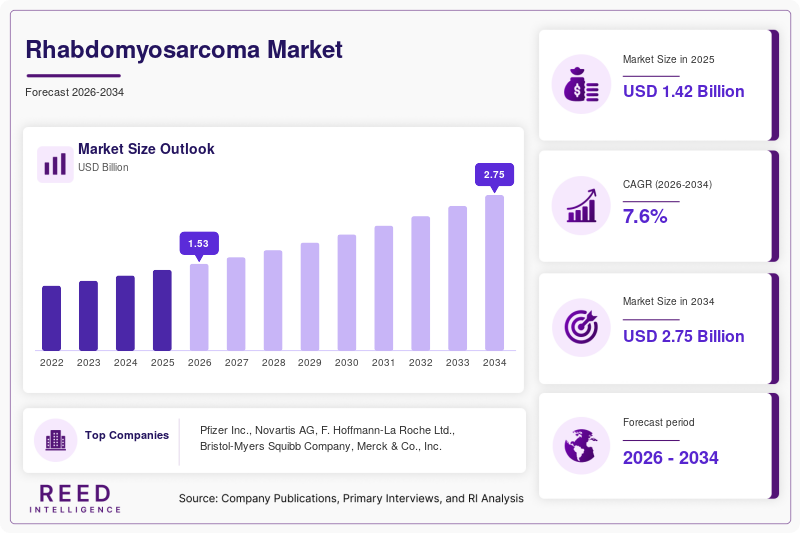
The global Rhabdomyosarcoma Market size was valued at USD 1.42 billion in 2025 and is projected to reach approximately USD 2.76 billion by 2034, expanding at a compound annual growth rate (CAGR) of 7.6% during the forecast period (2025–2034). This growth reflects increasing advancements in oncology therapeutics, particularly in rare pediatric cancers, alongside rising investments in targeted and precision medicine.
One of the primary global factors supporting the expansion of the Rhabdomyosarcoma Market is the growing emphasis on early cancer diagnosis and personalized treatment approaches. Improvements in genomic profiling and biomarker-based therapies have enhanced treatment accuracy, enabling clinicians to tailor therapies based on tumor biology. Additionally, collaborations between pharmaceutical companies and research institutions have accelerated the development of novel treatment options, contributing to market expansion.
Key Highlights:
- North America dominated the market with a share of 41.8% in 2025, while Asia Pacific is projected to grow at the fastest CAGR of 9.2% during the forecast period.
- By therapy type, chemotherapy remained the leading subsegment with a 46.5% share in 2024, whereas targeted therapy is expected to grow at the fastest CAGR of 10.1%.
- By end-user, hospitals led with a 52.3% share in 2024, while specialty cancer centers are projected to expand at a CAGR of 8.8%.
- The United States remained the dominant country, with market values of USD 520 million in 2024 and USD 545 million in 2025.
Market Trends
Shift Toward Targeted and Immunotherapy-Based Treatments
The Rhabdomyosarcoma Market is witnessing a transition from conventional chemotherapy toward targeted therapies and immunotherapy. These advanced treatment modalities aim to improve survival rates while minimizing adverse effects. Increasing adoption of monoclonal antibodies, checkpoint inhibitors, and gene-based therapies is transforming treatment protocols. This trend is particularly significant in pediatric oncology, where reducing toxicity is critical. As clinical trials demonstrate improved outcomes, healthcare providers are gradually integrating these therapies into standard treatment regimens.
Expansion of Clinical Trials and Rare Disease Research
Another notable trend in the Rhabdomyosarcoma Market is the surge in clinical research focused on rare cancers. Governments and private organizations are increasing funding for orphan drug development, leading to a growing pipeline of innovative therapies. Pharmaceutical companies are prioritizing niche oncology segments to address unmet medical needs. Additionally, regulatory incentives such as fast-track approvals and orphan drug designations are encouraging research activities. This expansion of clinical trials is expected to enhance treatment availability and drive long-term market growth.
Market Drivers
Increasing Incidence of Pediatric Soft Tissue Sarcomas
The rising incidence of pediatric cancers, including rhabdomyosarcoma, is a key driver of the Rhabdomyosarcoma Market. Although considered rare, the disease represents a significant proportion of soft tissue sarcomas in children. Improved diagnostic awareness and screening capabilities have led to earlier detection, increasing the number of diagnosed cases. This rise in patient population is directly contributing to the demand for effective treatment solutions and boosting overall market growth.
Advancements in Precision Medicine and Oncology Research
Technological progress in molecular diagnostics and genomics has enabled a deeper understanding of tumor biology. This has facilitated the development of personalized therapies tailored to individual genetic profiles. The integration of artificial intelligence in drug discovery and clinical decision-making has further accelerated innovation. As a result, pharmaceutical companies are introducing novel treatment options with improved efficacy, supporting the expansion of the Rhabdomyosarcoma Market.
Market Restraint
High Cost of Treatment and Limited Accessibility
A significant challenge in the Rhabdomyosarcoma Market is the high cost associated with advanced therapies, including targeted drugs and immunotherapies. These treatments often require extended hospital stays, specialized care, and continuous monitoring, leading to substantial healthcare expenses. In many low- and middle-income regions, access to such therapies remains limited due to inadequate healthcare infrastructure and lack of reimbursement policies.
Furthermore, the rarity of rhabdomyosarcoma reduces the availability of specialized treatment centers and experienced healthcare professionals. This creates disparities in treatment outcomes across different regions. Patients in underserved areas often rely on conventional therapies, which may not offer optimal results. Additionally, limited awareness and delayed diagnosis further hinder timely intervention.
The combination of high costs and restricted accessibility poses a barrier to widespread adoption of advanced treatment options, potentially slowing the growth of the Rhabdomyosarcoma Market during the forecast period.
Market Opportunities
Development of Orphan Drugs and Regulatory Incentives
The increasing focus on orphan drug development presents a significant opportunity in the Rhabdomyosarcoma Market. Regulatory authorities are offering incentives such as tax credits, market exclusivity, and expedited approval processes to encourage innovation in rare diseases. These benefits reduce development risks for pharmaceutical companies and promote investment in novel therapies. As more orphan drugs enter the market, patients gain access to improved treatment options, driving market growth.
Emerging Markets and Healthcare Infrastructure Expansion
Rapid improvements in healthcare infrastructure across emerging economies are creating new growth avenues for the Rhabdomyosarcoma Market. Countries in Asia Pacific, Latin America, and the Middle East are investing in oncology care facilities and expanding access to advanced treatments. Increasing healthcare expenditure and rising awareness about cancer are further supporting market penetration. Pharmaceutical companies are also focusing on these regions to expand their global footprint, contributing to long-term market expansion.
Segmental Analysis
By Therapy Type
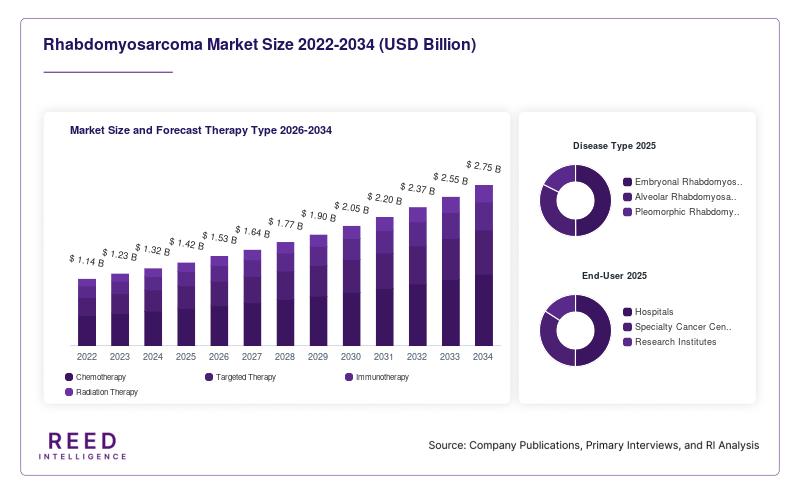
Chemotherapy dominated the Rhabdomyosarcoma Market with a share of 46.5% in 2024. This dominance was attributed to its widespread use as a first-line treatment option. Chemotherapy remains a standard approach due to its effectiveness in reducing tumor size and controlling disease progression, particularly in early-stage cases.
Targeted therapy is expected to be the fastest-growing subsegment, with a projected CAGR of 10.1% during the forecast period. This growth will be driven by increasing adoption of precision medicine and advancements in molecular diagnostics. Targeted therapies offer improved efficacy and reduced side effects, making them a preferred choice for advanced-stage patients.
By Disease Type
Embryonal rhabdomyosarcoma accounted for the largest share of 58.2% in 2024, primarily due to its higher prevalence compared to other subtypes. This subtype is more commonly diagnosed in younger patients, contributing to its significant market share.
Alveolar rhabdomyosarcoma is projected to grow at the fastest CAGR of 8.7%. The growth will be driven by increasing research efforts focused on aggressive cancer subtypes and the development of targeted treatment approaches.
By End-User
Hospitals held the largest share of 52.3% in 2024, supported by the availability of comprehensive treatment facilities and skilled healthcare professionals. Hospitals serve as primary treatment centers for cancer patients, offering a wide range of diagnostic and therapeutic services.
Specialty cancer centers are expected to grow at the fastest CAGR of 8.8%. These centers focus exclusively on oncology care, providing advanced treatment options and personalized care plans. The increasing preference for specialized treatment facilities will drive this segment’s growth.
By Route of Administration
Intravenous administration dominated the market with a share of 61.4% in 2024. This method is widely used for delivering chemotherapy and targeted therapies, ensuring rapid drug absorption and effectiveness.
Oral administration is expected to grow at the fastest CAGR of 9.3%, driven by the development of oral targeted therapies and patient preference for convenient treatment options.
Regional Analysis
North America
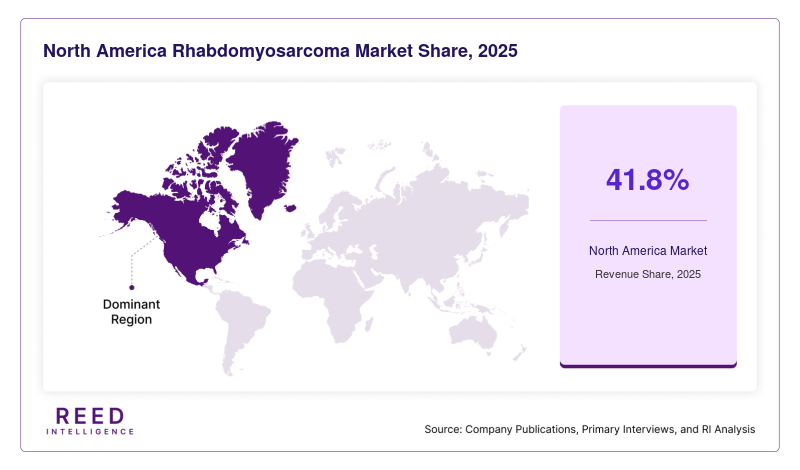
North America accounted for 41.8% of the Rhabdomyosarcoma Market share in 2025 and is expected to grow at a CAGR of 6.9% during the forecast period. The region benefited from well-established healthcare systems, high adoption of advanced oncology treatments, and strong research infrastructure.
The United States dominated the regional market due to extensive clinical research activities and early adoption of innovative therapies. The presence of leading pharmaceutical companies and specialized cancer treatment centers has enhanced treatment accessibility. Additionally, supportive reimbursement policies and government initiatives aimed at rare disease management have contributed to sustained market growth.
Europe
Europe held a 26.4% share of the Rhabdomyosarcoma Market in 2025 and is projected to grow at a CAGR of 7.1%. The region demonstrated steady growth supported by increasing healthcare investments and expanding research collaborations.
Germany emerged as the dominant country, driven by its advanced healthcare infrastructure and strong focus on oncology research. The country’s emphasis on precision medicine and availability of specialized treatment centers has improved patient outcomes. Furthermore, government-backed healthcare programs have facilitated access to advanced therapies.
Asia Pacific
Asia Pacific represented 18.7% of the Rhabdomyosarcoma Market in 2025 and is anticipated to register the fastest CAGR of 9.2% over the forecast period. The region showed rapid growth due to increasing healthcare awareness and improving diagnostic capabilities.
China dominated the regional market, supported by rising healthcare expenditure and expanding oncology treatment facilities. The country’s growing focus on cancer research and increasing adoption of advanced therapies have contributed to market expansion. Additionally, a large patient population and government initiatives aimed at improving healthcare access are expected to drive growth.
Middle East & Africa
The Middle East & Africa accounted for 7.1% of the Rhabdomyosarcoma Market in 2025 and is expected to grow at a CAGR of 6.5%. The region experienced gradual growth due to improving healthcare infrastructure and rising awareness of rare cancers.
Saudi Arabia emerged as the leading country, driven by increasing investments in healthcare modernization. The development of specialized cancer treatment centers and government initiatives to enhance healthcare services have supported market growth. However, limited access to advanced therapies remains a challenge in certain areas.
Latin America
Latin America held a 6.0% share of the Rhabdomyosarcoma Market in 2025 and is projected to grow at a CAGR of 6.8%. The region showed moderate growth supported by improving healthcare systems and increasing cancer awareness.
Brazil dominated the regional market, benefiting from a growing network of oncology centers and rising healthcare expenditure. The country’s efforts to expand access to cancer treatments and improve diagnostic capabilities have contributed to market development.
Competitive Landscape
The Rhabdomyosarcoma Market is characterized by the presence of several global and regional players focusing on research and development of innovative therapies. Companies are actively investing in clinical trials and strategic collaborations to strengthen their market position.
A leading player in the market is Pfizer Inc., which continues to expand its oncology portfolio through advanced drug development initiatives. The company recently announced progress in clinical trials for targeted therapies aimed at improving treatment outcomes for rare cancers, including rhabdomyosarcoma.
Other key players are focusing on partnerships, mergers, and acquisitions to enhance their product offerings and geographic reach. The competitive environment remains dynamic, with companies striving to address unmet medical needs and improve patient outcomes.
Key Players
- Pfizer Inc.
- Novartis AG
- F. Hoffmann-La Roche Ltd.
- Bristol-Myers Squibb Company
- Merck & Co., Inc.
- AstraZeneca plc
- GlaxoSmithKline plc
- Sanofi S.A.
- Eli Lilly and Company
- Bayer AG
Recent Developments
- In 2025, Pfizer Inc. advanced its targeted therapy pipeline with new clinical trial phases focused on pediatric sarcomas.
- Novartis AG expanded its oncology research collaborations to accelerate rare cancer drug development.
- Roche announced new biomarker-driven treatment studies aimed at improving early diagnosis.
- Bristol-Myers Squibb strengthened its immunotherapy portfolio through strategic partnerships.
- AstraZeneca increased investment in precision oncology research targeting rare tumor types.
Rhabdomyosarcoma Market Segments
Therapy Type
- Chemotherapy
- Targeted Therapy
- Immunotherapy
- Radiation Therapy
Disease Type
- Embryonal Rhabdomyosarcoma
- Alveolar Rhabdomyosarcoma
- Pleomorphic Rhabdomyosarcoma
End-User
- Hospitals
- Specialty Cancer Centers
- Research Institutes
Route of Administration
- Intravenous
- Oral
By Region
- North America
- Europe
- APAC
- Middle East and Africa
- LATAM