Riboflavin Market Size, Share & Demand Report By Type (Feed Grade Riboflavin, Food Grade Riboflavin, Pharmaceutical Grade Riboflavin), By Application (Animal Feed, Pharmaceuticals, Food & Beverages), By End-Use (Food & Beverage Industry, Nutraceutical Industry, Pharmaceutical Industry), By Region & Segment Forecasts, 2026–2034
USD 3950
Market Overview
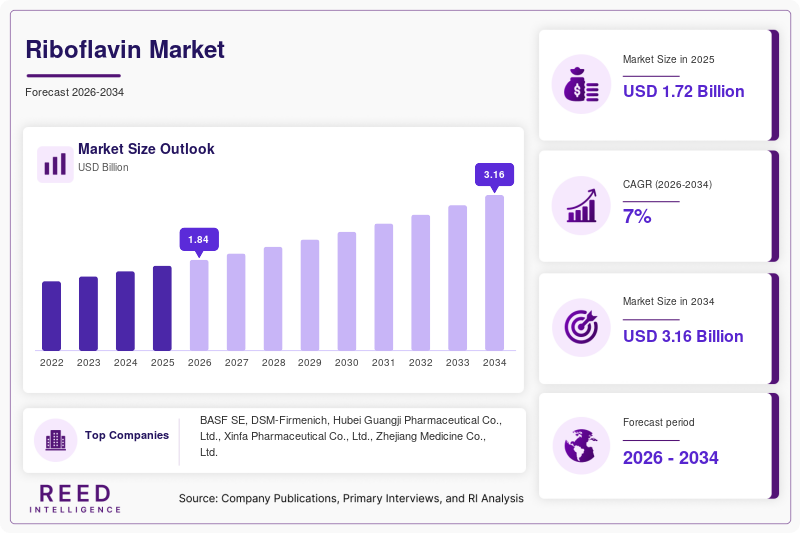
The global Riboflavin Market was valued at approximately USD 1.72 billion in 2026 and is projected to reach USD 2.96 billion by 2034, growing at a compound annual growth rate (CAGR) of 7.0% during the forecast period from 2026 to 2034. Riboflavin, also known as vitamin B2, is widely used in pharmaceuticals, animal feed, and food & beverage applications due to its essential role in energy metabolism and cellular function. Increasing awareness regarding nutritional deficiencies and the rising demand for fortified food products are key contributors to the steady expansion of this market.
A major global factor supporting market growth is the increasing prevalence of micronutrient deficiencies, particularly in developing economies. Governments and health organizations are emphasizing food fortification programs, which include riboflavin supplementation in staple foods such as flour and dairy products. This trend has resulted in increased production and consumption of riboflavin across various industries.
Key Highlights
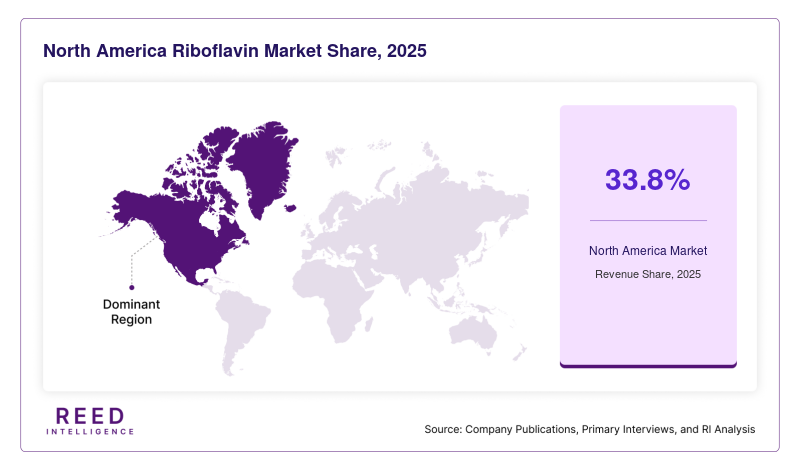
- North America dominated the market with a 33.8% share in 2025.
- Asia Pacific is expected to grow at the fastest CAGR of 8.6% during 2026–2034.
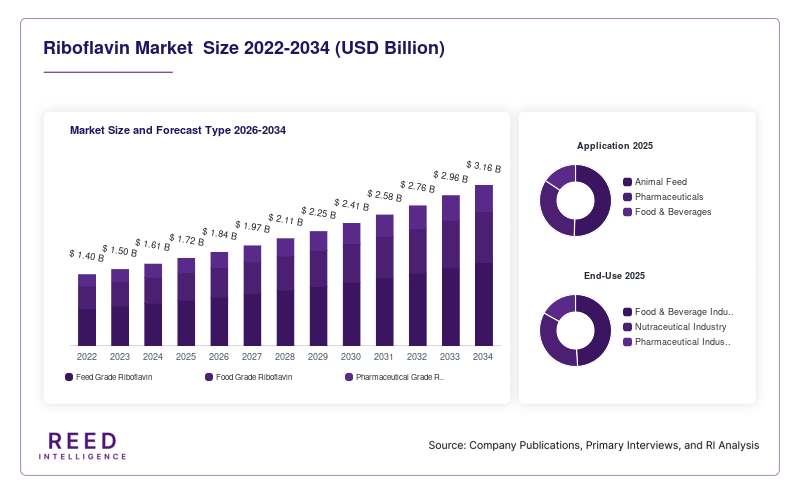
- By type, feed grade riboflavin accounted for the largest share of 44.5%, while pharmaceutical grade is projected to grow at a CAGR of 8.9%.
- By application, animal feed led with a 46.2% share, whereas pharmaceuticals are expected to expand at a CAGR of 9.1%.
- China remained the dominant country, with market values of USD 290 million in 2024 and USD 315 million in 2025.
Market Trends
Rising Demand for Fortified Food and Functional Nutrition
The Riboflavin Market is experiencing a consistent shift toward fortified food products and functional nutrition solutions. Consumers are increasingly prioritizing health and wellness, leading to higher demand for food products enriched with essential vitamins, including riboflavin. Food manufacturers are incorporating riboflavin into dairy products, cereals, beverages, and nutritional supplements to meet evolving dietary preferences. This trend is particularly evident in urban populations where lifestyle changes and dietary imbalances have increased reliance on fortified foods. Additionally, clean-label and transparency trends are encouraging producers to highlight vitamin content, further driving demand for riboflavin-enriched formulations.
Expansion of Animal Nutrition Industry
Another notable trend shaping the Riboflavin Market is the expansion of the global animal nutrition sector. Riboflavin is widely used as a feed additive to improve livestock health, growth performance, and productivity. With the increasing demand for high-quality meat, dairy, and poultry products, livestock producers are adopting advanced feed formulations that include essential vitamins. The shift toward industrial-scale farming and precision nutrition is further supporting this trend. Moreover, regulatory frameworks in several regions mandate the inclusion of vitamins in animal feed, which has reinforced the demand for riboflavin in this segment.
Market Drivers
Increasing Prevalence of Vitamin Deficiencies
One of the primary drivers of the Riboflavin Market is the growing prevalence of vitamin deficiencies worldwide. Riboflavin deficiency can lead to various health issues, including skin disorders, anemia, and neurological complications. As awareness of these health risks increases, consumers are actively seeking dietary supplements and fortified foods containing essential vitamins. Governments and healthcare organizations are also promoting nutritional awareness programs, which have significantly boosted demand for riboflavin. This driver is particularly strong in developing regions where nutritional gaps remain a major concern.
Growth of Pharmaceutical and Nutraceutical Industries
The expansion of pharmaceutical and nutraceutical industries is another key factor driving the Riboflavin Market. Riboflavin is widely used in the production of vitamin supplements, multivitamin formulations, and therapeutic products. The increasing focus on preventive healthcare and self-medication has fueled the demand for nutraceutical products containing riboflavin. Additionally, advancements in pharmaceutical formulations have enabled the development of high-quality riboflavin-based drugs, further supporting market growth. The rising aging population and increasing healthcare expenditure also contribute to the sustained demand for riboflavin in this segment.
Market Restraint
Fluctuations in Raw Material Prices and Production Costs
A major restraint affecting the Riboflavin Market is the fluctuation in raw material prices and the associated production costs. Riboflavin production involves complex fermentation processes that require significant investment in infrastructure, technology, and skilled labor. Variations in the cost of raw materials, such as glucose and other fermentation substrates, can directly impact production expenses. Additionally, energy costs and environmental compliance requirements further increase operational costs for manufacturers.
These challenges can lead to price volatility in the market, making it difficult for manufacturers to maintain stable profit margins. Smaller producers, in particular, may struggle to compete with large-scale manufacturers that benefit from economies of scale. For example, sudden increases in feedstock prices can force companies to adjust product pricing, which may affect demand in price-sensitive markets. This restraint highlights the importance of efficient supply chain management and cost optimization strategies within the industry.
Market Opportunities
Growth in Emerging Markets
Emerging markets present significant growth opportunities for the Riboflavin Market. Countries in Asia Pacific, Latin America, and Africa are witnessing rapid urbanization, rising disposable incomes, and increasing awareness of nutritional health. These factors are driving the demand for dietary supplements and fortified food products. Governments in these regions are also implementing food fortification initiatives to address malnutrition, creating a favorable environment for riboflavin manufacturers. The expansion of retail and e-commerce channels further supports market penetration in these regions.
Advancements in Biotechnology and Fermentation Processes
Technological advancements in biotechnology and fermentation processes offer another promising opportunity for the Riboflavin Market. Innovations in microbial fermentation have improved production efficiency, reduced costs, and enhanced product quality. Companies are investing in research and development to develop sustainable and eco-friendly production methods. These advancements not only increase profitability but also align with environmental regulations and sustainability goals. The adoption of advanced production technologies is expected to drive long-term growth in the market.
Segmental Analysis
By Type
Feed grade riboflavin dominated the Riboflavin Market in 2024, accounting for approximately 44.5% of the total market share. This dominance is primarily attributed to the extensive use of riboflavin in animal nutrition. Feed grade riboflavin is essential for improving growth rates, feed efficiency, and overall health of livestock. The increasing demand for high-quality meat and dairy products has driven the adoption of fortified animal feed. Additionally, regulatory requirements in several countries mandate the inclusion of essential vitamins in feed formulations, further supporting this segment’s growth.
Pharmaceutical grade riboflavin is expected to be the fastest-growing subsegment, with a projected CAGR of 8.9% during the forecast period. This growth is driven by the rising demand for vitamin supplements and therapeutic products. Pharmaceutical grade riboflavin is widely used in the treatment of deficiencies and various health conditions. The increasing focus on preventive healthcare and the growing aging population are key factors contributing to this segment’s expansion. Moreover, advancements in pharmaceutical formulations enhance the efficacy and bioavailability of riboflavin-based products.
By Application
The animal feed segment led the Riboflavin Market in 2024, holding a share of approximately 46.2%. Riboflavin plays a critical role in animal metabolism and growth, making it an essential component of feed formulations. The increasing demand for high-quality animal products has driven the adoption of fortified feed. Additionally, the expansion of industrial livestock farming and the implementation of strict regulations regarding animal nutrition have further boosted this segment.
The pharmaceutical application segment is projected to grow at the fastest CAGR of 9.1% during the forecast period. This growth is driven by the increasing prevalence of vitamin deficiencies and the rising demand for dietary supplements. Riboflavin is widely used in multivitamin formulations and therapeutic products. The growing awareness of health and wellness, along with the increasing adoption of preventive healthcare practices, supports the expansion of this segment. Furthermore, ongoing research and development activities contribute to the development of innovative pharmaceutical products.
By End-Use
The food and beverage industry emerged as the dominant end-use segment in 2024, accounting for approximately 39.8% of the market share. Riboflavin is widely used in the fortification of food products such as cereals, dairy products, and beverages. The increasing demand for functional foods and nutritional supplements has driven the adoption of riboflavin in this industry. Additionally, regulatory initiatives promoting food fortification have further supported market growth.
The nutraceutical industry is expected to be the fastest-growing end-use segment, with a projected CAGR of 8.7%. This growth is driven by the rising demand for dietary supplements and health products. Consumers are increasingly focusing on preventive healthcare and wellness, leading to higher adoption of nutraceutical products. Riboflavin is a key ingredient in many supplements, contributing to energy metabolism and overall health. The expansion of e-commerce platforms and increasing consumer awareness further support this segment’s growth.
Regional Analysis
North America
North America held a significant share of the Riboflavin Market, accounting for approximately 33.8% in 2025, with a projected CAGR of 6.5% during the forecast period. The region’s well-established food and pharmaceutical industries contribute to strong demand for riboflavin. High consumer awareness regarding nutritional health and dietary supplements further supports market growth. Additionally, the presence of advanced manufacturing facilities and strong regulatory frameworks ensures consistent product quality and supply.
The United States dominates the North American market, driven by high consumption of fortified foods and dietary supplements. A unique growth factor in this region is the increasing adoption of preventive healthcare practices. Consumers are actively incorporating vitamins into their daily diets, leading to sustained demand for riboflavin. Furthermore, continuous innovation in nutraceutical products enhances market expansion.
Europe
Europe accounted for a substantial share of the Riboflavin Market in 2025, contributing around 27.4%, with a forecast CAGR of 6.2%. The region’s stringent food safety regulations and emphasis on quality standards drive the use of riboflavin in food and pharmaceutical applications. The growing trend of clean-label products also encourages manufacturers to use essential vitamins such as riboflavin in their formulations.
Germany leads the European market, supported by its strong pharmaceutical and food processing industries. A key growth factor in this region is the increasing demand for organic and natural food products. Consumers are seeking healthier alternatives, which has led to higher adoption of vitamin-enriched foods. This trend is expected to continue driving market growth.
Asia Pacific
Asia Pacific is the fastest-growing region in the Riboflavin Market, with a CAGR of 8.6% during the forecast period and a market share of 24.1% in 2025. Rapid urbanization, population growth, and rising disposable incomes are key factors driving demand. The region also benefits from strong manufacturing capabilities and cost-effective production processes, making it a major hub for riboflavin production.
China dominates the Asia Pacific market due to its large-scale production capacity and extensive export activities. A unique growth factor in this region is government-led nutrition programs aimed at reducing micronutrient deficiencies. These initiatives have significantly increased the consumption of riboflavin in food and feed applications, supporting market expansion.
Middle East & Africa
The Middle East & Africa region accounted for approximately 7.2% of the Riboflavin Market in 2025 and is expected to grow at a CAGR of 6.8%. The region is witnessing gradual growth due to increasing awareness of nutritional health and the expansion of the food and beverage industry. Investments in healthcare infrastructure also contribute to market development.
Saudi Arabia is a leading country in this region, driven by rising demand for dietary supplements and fortified foods. A unique growth factor is the government’s focus on improving public health through nutrition programs. These initiatives encourage the use of essential vitamins, including riboflavin, in food products, thereby supporting market growth.
Latin America
Latin America held a market share of around 7.5% in 2025, with a projected CAGR of 7.3%. The region’s growing population and increasing demand for processed food products are key drivers of market growth. Rising awareness of nutritional deficiencies also supports the adoption of riboflavin in various applications.
Brazil dominates the Latin American market due to its large food processing industry and expanding agricultural sector. A unique growth factor in this region is the increasing demand for animal feed additives. Livestock producers are focusing on improving productivity and product quality, which has led to higher adoption of riboflavin in feed formulations.
Competitive Landscape
The Riboflavin Market is moderately consolidated, with a mix of global and regional players competing based on product quality, pricing, and technological capabilities. Leading companies are focusing on expanding their production capacities, investing in research and development, and adopting advanced manufacturing technologies to strengthen their market position. Strategic collaborations, mergers, and acquisitions are also common strategies used by market participants.
A leading player in the market is BASF SE, known for its extensive product portfolio and strong global presence. The company recently expanded its production capacity for vitamin B2 to meet growing demand from the animal nutrition and pharmaceutical sectors. Other key players are also investing in sustainable production methods and exploring new applications for riboflavin. The competitive landscape is expected to remain dynamic, with continuous innovation and strategic initiatives shaping market growth.
Key Players
- BASF SE
- DSM-Firmenich
- Hubei Guangji Pharmaceutical Co., Ltd.
- Xinfa Pharmaceutical Co., Ltd.
- NB Group Co., Ltd.
- Shanghai Acebright Pharmaceuticals Group Co., Ltd.
- Zhejiang Medicine Co., Ltd.
- Adisseo France SAS
- Lonza Group AG
- Archer Daniels Midland Company
- Glanbia plc
- Rabar Pty Ltd
- SternVitamin GmbH & Co. KG
- Taizhou Hisound Pharmaceutical Co., Ltd.
- Hebei Shengxue Dacheng Pharmaceutical Co., Ltd.
Recent Developments
- BASF SE announced an expansion of its vitamin B2 production facility to enhance supply chain efficiency.
- DSM-Firmenich introduced a new high-purity riboflavin formulation for pharmaceutical applications.
- Zhejiang Medicine Co., Ltd. invested in advanced fermentation technology to improve production efficiency and sustainability.
Riboflavin Market Segments
Type
- Feed Grade Riboflavin
- Food Grade Riboflavin
- Pharmaceutical Grade Riboflavin
Application
- Animal Feed
- Pharmaceuticals
- Food & Beverages
End-Use
- Food & Beverage Industry
- Nutraceutical Industry
- Pharmaceutical Industry
By Region
- North America
- Europe
- APAC
- Middle East and Africa
- LATAM