Global Rice Shampoo Bar Market Size, Share & Demand Report By Product Type (Moisturizing Rice Shampoo Bars, Anti-Dandruff Rice Shampoo Bars, Hair Growth Rice Shampoo Bars, Volumizing Rice Shampoo Bars), By Application (Personal Use, Commercial Use) By Distribution Channel (Online Retail, Supermarkets/Hypermarkets, Specialty Stores, Others), By Region & Segment Forecasts, 2025–2034
USD 3950
Market Overview
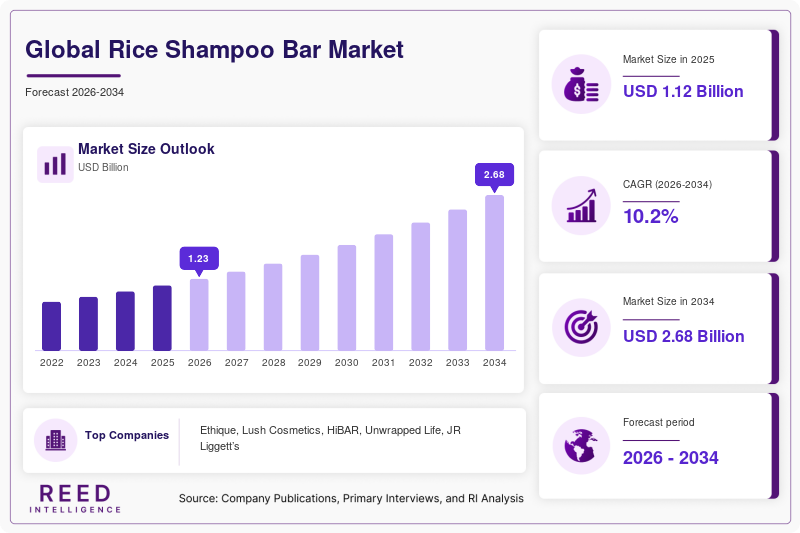
The Rice Shampoo Bar Market size is gaining steady traction as consumers shift toward sustainable and natural personal care products. In 2025, the global market size is estimated at USD 1.12 billion, with growth expected to reach USD 1.28 billion in 2026. By 2034, the market is projected to expand to approximately USD 3.05 billion, registering a compound annual growth rate (CAGR) of 10.2% from 2025 to 2034. This growth reflects increasing awareness of eco-friendly haircare solutions and the demand for plastic-free packaging alternatives.
Rice-based shampoo bars, formulated with rice water, rice protein, and fermented rice extracts, are widely recognized for strengthening hair, improving shine, and promoting scalp health. These benefits align with consumer demand for functional, plant-based beauty solutions. The rise of clean beauty trends and ingredient transparency has further strengthened market penetration across developed and emerging economies.
Key Highlights
- Market size projected to reach USD 3.05 billion by 2034
- CAGR of 10.2% from 2025 to 2034
- Strong demand for eco-friendly and plastic-free haircare solutions
- Rising influence of traditional rice-based haircare practices
- Increasing penetration of online retail channels
Market Trends
Rising Demand for Zero-Waste Personal Care Products
Consumers are increasingly adopting zero-waste lifestyles, which has significantly influenced purchasing behavior in the personal care industry. Rice shampoo bars fit well within this trend as they eliminate the need for plastic packaging and reduce water consumption during manufacturing. Brands are focusing on biodegradable packaging materials such as paper wraps and reusable tins, enhancing their sustainability appeal. Additionally, regulatory pressure on reducing single-use plastics in regions such as Europe and North America is accelerating product adoption. This shift is also supported by social media awareness campaigns and influencer endorsements that promote eco-conscious living, making rice shampoo bars a preferred choice among environmentally aware consumers.
Growth of Natural and Functional Haircare Formulations
Another key trend is the increasing preference for natural, plant-based ingredients that offer functional benefits beyond basic cleansing. Rice-derived ingredients are gaining attention due to their ability to strengthen hair strands, improve elasticity, and enhance shine. Manufacturers are incorporating complementary ingredients such as essential oils, herbal extracts, and vitamins to create multifunctional shampoo bars. This trend is particularly strong among consumers seeking chemical-free alternatives to sulfates and parabens. Product differentiation through unique formulations and targeted benefits, such as anti-dandruff or hair growth support, is helping brands capture niche segments and expand their market presence.
Market Drivers
Increasing Consumer Awareness of Sustainable Beauty
Sustainability has become a central factor influencing consumer decisions in the beauty and personal care sector. Rice shampoo bars offer a viable solution to reduce environmental impact, as they require less water in production and eliminate plastic packaging waste. Governments and environmental organizations are also promoting sustainable consumption, which indirectly supports market growth. Consumers are increasingly willing to pay a premium for eco-friendly products, especially in urban markets. This shift is encouraging both established brands and startups to introduce rice-based shampoo bars, thereby expanding product availability and driving market growth.
Influence of Traditional Haircare Practices and Cultural Trends
The growing global interest in traditional Asian beauty rituals has significantly contributed to the popularity of rice shampoo bars. Rice water has been used for centuries in countries such as Japan and China for hair nourishment and growth. Modern consumers are rediscovering these practices through digital platforms and incorporating them into their routines. Brands are leveraging this cultural heritage in their marketing strategies to build authenticity and trust. This driver is particularly strong among millennials and Gen Z consumers, who value both natural ingredients and cultural storytelling in product branding.
Market Restraints
Limited Consumer Familiarity and Product Adaptation Challenges
Despite growing awareness, a significant portion of consumers remains unfamiliar with shampoo bar usage and benefits. Many users perceive solid shampoo as less convenient compared to liquid alternatives, particularly in terms of lathering and storage. Additionally, improper usage can lead to issues such as residue buildup or uneven application, which may discourage repeat purchases. Retailers and brands must invest in consumer education and product demonstrations to address these concerns. For example, first-time users may struggle with transitioning from liquid shampoo, resulting in lower satisfaction levels. This restraint can slow market penetration, especially in regions where traditional liquid shampoos dominate the market.
Market Opportunities
Expansion in Emerging Markets
Emerging economies present significant growth opportunities due to increasing disposable income and rising awareness of sustainable products. Countries in Asia Pacific, Latin America, and parts of Africa are witnessing a growing middle-class population that is open to trying new personal care products. Local manufacturers can leverage cost-effective production and regional ingredients to create affordable rice shampoo bars. Additionally, government initiatives promoting eco-friendly products can further support market expansion. The combination of affordability and sustainability is expected to drive adoption in these regions over the forecast period.
Product Innovation and Premiumization
Continuous innovation in product formulations and packaging offers substantial growth potential. Brands are experimenting with advanced formulations that include fermented rice extracts, keratin boosters, and scalp-nourishing ingredients. Premiumization strategies, such as offering customized shampoo bars for different hair types, are also gaining traction. Furthermore, luxury packaging and branding can attract high-income consumers willing to invest in high-quality, sustainable products. This opportunity allows companies to differentiate themselves in a competitive market while increasing profit margins.
Segmental Analysis
By Type
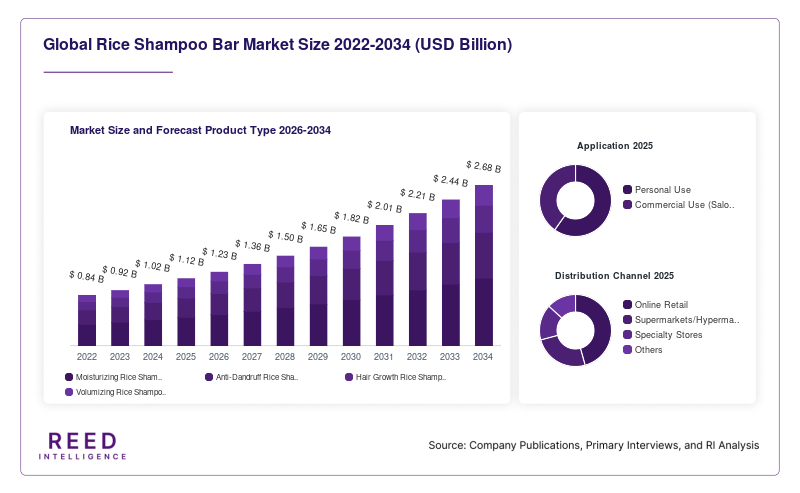
The moisturizing rice shampoo bar segment dominated the market in 2024, accounting for approximately 42% of total share. These products are widely preferred due to their ability to hydrate and nourish dry hair, making them suitable for a broad consumer base. The inclusion of ingredients such as rice protein and natural oils enhances their effectiveness. Consumers in both developed and emerging markets favor moisturizing variants as they address common hair concerns such as dryness and frizz, contributing to their strong market position.
The anti-dandruff rice shampoo bar segment is expected to grow at the fastest CAGR of 11.8% during the forecast period. This growth is driven by increasing awareness of scalp health and the demand for targeted haircare solutions. Products formulated with herbal extracts and antimicrobial properties are gaining popularity. The rising prevalence of scalp-related issues, particularly in urban areas, is further supporting segment growth.
By Application
The personal use segment held the largest share in 2024, accounting for over 65% of the market. Individual consumers are the primary users of rice shampoo bars, driven by increasing awareness of sustainable and natural haircare products. The convenience of online purchasing and the availability of a wide range of options further support this segment. Personal use products are often marketed with specific benefits, such as hair strengthening and scalp nourishment, which attract a diverse consumer base.
The commercial application segment is projected to grow at a CAGR of 10.9%. This includes usage in salons, spas, and hospitality sectors. The adoption of eco-friendly products by businesses is increasing as part of sustainability initiatives. Hotels and wellness centers are incorporating shampoo bars into their offerings to reduce plastic waste and appeal to environmentally conscious customers.
By Distribution Channel
The online retail segment dominated the market in 2024, accounting for approximately 48% share. E-commerce platforms provide easy access to a wide variety of products and enable consumers to compare features and prices. The presence of customer reviews and detailed product descriptions enhances purchasing confidence. Online channels also allow smaller brands to compete with established players, contributing to market growth.
The specialty stores segment is expected to grow at the fastest CAGR of 11.2%. These stores focus on natural and organic products, attracting a niche but loyal customer base. The personalized shopping experience and availability of expert advice encourage consumers to try new products. As awareness of sustainable beauty increases, specialty stores are expected to play a crucial role in market expansion.
Regional Analysis
North America
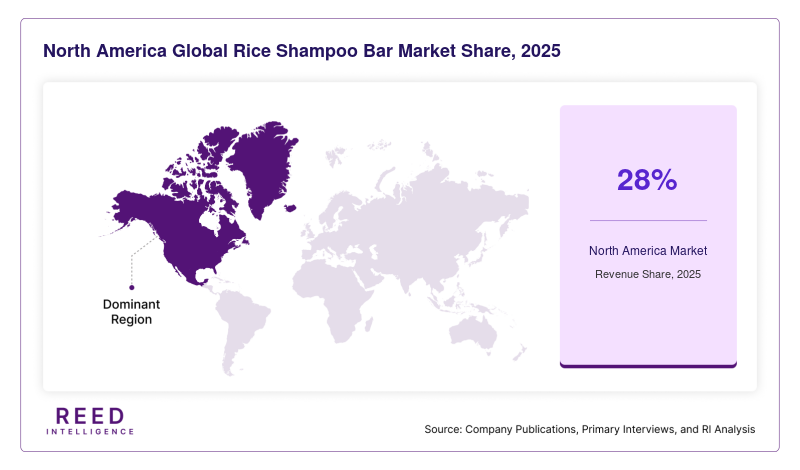
North America accounted for approximately 28% of the global market share in 2025, with a projected CAGR of 9.5% through 2034. The region’s growth is driven by increasing consumer awareness of sustainable beauty and the widespread adoption of eco-friendly products. The presence of established personal care brands and strong distribution networks further supports market expansion.
The United States dominates the regional market due to its large consumer base and high spending on premium personal care products. A key growth factor is the increasing popularity of zero-waste retail stores and subscription-based eco-friendly product services, which enhance accessibility and consumer engagement.
Europe
Europe held around 25% market share in 2025 and is expected to grow at a CAGR of 9.8% during the forecast period. Strict environmental regulations and bans on single-use plastics are encouraging the adoption of solid personal care products. Consumers in this region are highly conscious of sustainability and ingredient transparency.
Germany leads the European market, supported by strong demand for organic and natural cosmetics. A unique growth factor is the increasing availability of certified organic shampoo bars in retail chains, which boosts consumer trust and drives product adoption.
Asia Pacific
Asia Pacific accounted for approximately 30% market share in 2025, making it the largest regional market, with a CAGR of 11.5%. The region benefits from cultural familiarity with rice-based haircare practices and a large population base. Rapid urbanization and growing disposable incomes further contribute to market growth.
China dominates the region due to its strong manufacturing capabilities and growing e-commerce sector. A key growth factor is the integration of traditional ingredients into modern formulations, which appeals to both domestic and international consumers.
Middle East & Africa
The Middle East & Africa region held about 8% market share in 2025 and is expected to grow at a CAGR of 10.0%. Increasing awareness of sustainable products and the expansion of retail infrastructure are driving market growth. The region also benefits from a young and growing population.
The United Arab Emirates leads the market due to its high adoption of premium personal care products. A unique growth factor is the rising influence of international beauty trends through social media, which encourages consumers to try innovative products such as shampoo bars.
Latin America
Latin America accounted for around 9% market share in 2025, with a projected CAGR of 10.3%. The region’s growth is supported by increasing consumer interest in natural and affordable personal care products. Expanding retail channels also play a crucial role.
Brazil dominates the market due to its large population and strong beauty industry. A key growth factor is the availability of locally produced rice shampoo bars at competitive prices, which enhances accessibility and adoption.
Competitive Landscape
The Rice Shampoo Bar Market is moderately fragmented, with a mix of established personal care companies and emerging niche brands. Leading players focus on product innovation, sustainable packaging, and strategic partnerships to strengthen their market position. Companies are also investing in marketing campaigns that highlight the benefits of rice-based ingredients and eco-friendly formulations.
Ethique is recognized as a market leader due to its strong commitment to sustainability and wide product portfolio. The company recently introduced a new line of rice protein-based shampoo bars targeting specific hair types, enhancing its competitive edge. Other key players are expanding their presence through online platforms and collaborations with retailers. Continuous innovation and branding efforts are expected to intensify competition in the coming years.
Key Players List
- Ethique
- Lush Cosmetics
- HiBAR
- Unwrapped Life
- JR Liggett’s
- The Earthling Co.
- Chagrin Valley Soap & Salve
- Aspen Kay Naturals
- Friendly Soap
- Beauty and the Bees
- The Solid Bar Company
- Plaine Products
- Package Free Shop
- Basin
- Wildland Organics
Recent Developments
- In 2024, Ethique launched a new range of rice-based shampoo bars with enhanced moisturizing properties.
- In 2025, Lush Cosmetics expanded its solid haircare line by introducing rice protein formulations.
- In 2025, HiBAR partnered with online retailers to increase global distribution and improve accessibility.
Global Rice Shampoo Bar Market Segments
Product Type
- Moisturizing Rice Shampoo Bars
- Anti-Dandruff Rice Shampoo Bars
- Hair Growth Rice Shampoo Bars
- Volumizing Rice Shampoo Bars
Application
- Personal Use
- Commercial Use (Salons & Hospitality)
Distribution Channel
- Online Retail
- Supermarkets/Hypermarkets
- Specialty Stores
- Others
By Region
- North America
- Europe
- APAC
- Middle East and Africa
- LATAM