Ride Hailing App Market Size, Share & Demand Report By Service Type (E-Hailing, Carpooling, Rental Services), By Vehicle Type (Four-Wheelers, Two-Wheelers, Electric Vehicles), By Booking Mode (Mobile Application Booking, Web-Based Booking, Integrated Mobility Platform Booking), By Region & Segment Forecasts, 2026–2034
USD 3950
Market Overview
The global Ride Hailing App Market size was valued at USD 118.4 billion in 2026 and is projected to reach USD 268.7 billion by 2034, expanding at a CAGR of 10.8% during 2026–2034. The market continues to evolve as digital mobility platforms become an integral part of urban transportation systems. Consumers increasingly prefer app-based transportation services due to convenience, transparent pricing, real-time tracking, and flexible payment options. The integration of advanced technologies such as artificial intelligence, route optimization algorithms, and cloud-based fleet management solutions has further improved service efficiency and customer experience.
A major global factor supporting market growth is the continued rise of urbanization. Expanding urban populations have increased demand for affordable and accessible transportation alternatives, especially in cities experiencing traffic congestion and limited parking infrastructure. Ride hailing platforms provide a practical solution by enabling users to access transportation on demand while reducing the need for personal vehicle ownership. In addition, smartphone penetration, digital payment adoption, and expanding internet connectivity have strengthened the market ecosystem across both developed and emerging economies.
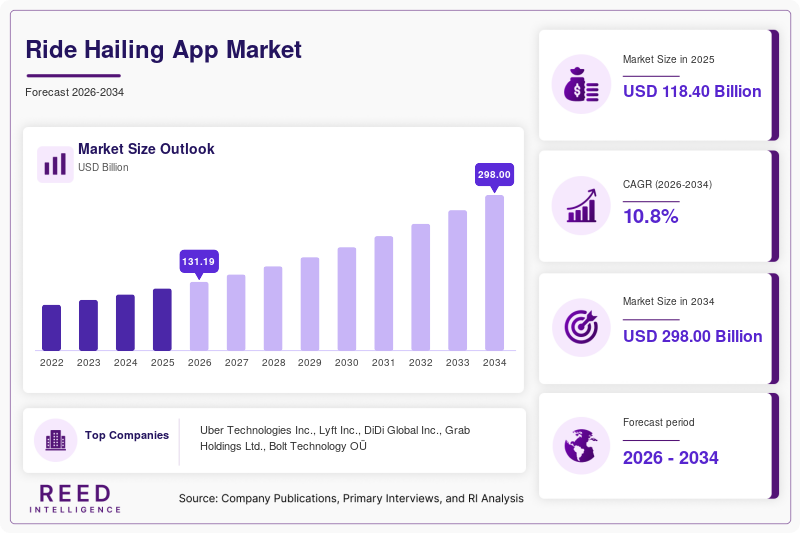
Key Highlights
- North America dominated the market with a 35.1% share in 2025.
- while Asia Pacific is expected to grow at the fastest CAGR of 12.6% during 2026–2034.
- By service type, e-hailing services accounted for the largest share of 63.8%.
- while carpooling services are projected to grow at a CAGR of 13.4%.
- By vehicle type, four-wheelers accounted for the largest share of 72.4%.
- while electric vehicles are projected to grow at a CAGR of 15.2%.
- By booking mode, mobile application booking led with a 91.6% share.
- whereas integrated mobility platform booking is expected to expand at a CAGR of 14.1%.
- The United States remained the dominant country, with market values of USD 29.8 billion in 2024 and USD 32.4 billion in 2025.
Market Trends
Expansion of Electric and Sustainable Mobility Services
The Ride Hailing App Market is experiencing a significant shift toward electric and sustainable transportation solutions. Fleet operators are increasingly partnering with electric vehicle manufacturers to reduce operating costs and comply with environmental regulations. The transition toward electric mobility is helping ride hailing companies improve energy efficiency while addressing growing consumer awareness regarding carbon emissions. Several platform operators have introduced sustainability programs that encourage drivers to adopt electric vehicles through financing assistance and charging incentives. As battery technology improves and charging networks expand, electric ride hailing services are becoming more economically viable across major metropolitan regions. This trend is expected to strengthen market competitiveness while supporting long-term environmental objectives.
Integration of Artificial Intelligence and Data Analytics
Artificial intelligence and advanced analytics are transforming operational performance across the Ride Hailing App Market. Companies are deploying AI-powered demand forecasting, dynamic pricing systems, route optimization tools, and customer behavior analytics to enhance service quality. These technologies help reduce waiting times, improve fleet utilization, and increase driver productivity. Predictive algorithms enable operators to allocate vehicles more efficiently during peak demand periods, improving customer satisfaction and profitability. Additionally, machine learning solutions assist in fraud detection, driver verification, and safety monitoring. As digital transformation continues across transportation ecosystems, the adoption of AI-driven mobility solutions is expected to become a critical factor influencing market growth and competitive differentiation.
Market Drivers
Rising Urban Population and Traffic Congestion
The rapid growth of urban populations worldwide is a major factor driving the Ride Hailing App Market. Increasing migration toward urban centers has intensified traffic congestion and placed greater pressure on public transportation networks. Consumers are seeking flexible transportation options that offer convenience without the responsibilities associated with vehicle ownership. Ride hailing services provide a practical alternative by enabling users to access transportation whenever needed through mobile applications. Urban residents increasingly value time efficiency, real-time ride availability, and cashless transactions. As cities continue expanding and transportation challenges become more complex, ride hailing platforms are expected to benefit from sustained demand across both developed and developing economies.
Growing Smartphone Penetration and Digital Payment Adoption
The widespread availability of smartphones and digital payment systems has accelerated the adoption of ride hailing applications globally. Mobile connectivity enables consumers to book rides instantly, track vehicles in real time, and complete transactions seamlessly. Digital wallets, online banking services, and contactless payment technologies have simplified the user experience and encouraged frequent platform usage. Emerging economies are witnessing particularly strong growth due to expanding internet access and affordable smartphone availability. Furthermore, platform operators continue investing in user-friendly interfaces and localized payment solutions to attract new customers. These technological advancements are creating a favorable environment for continued expansion of ride hailing services worldwide.
Market Restraint
Regulatory Uncertainty and Driver Classification Challenges
Regulatory complexity remains a significant challenge for the Ride Hailing App Market. Governments across different countries continue to evaluate policies related to driver classification, labor rights, licensing requirements, taxation, and passenger safety standards. Variations in regulations between cities and regions create operational uncertainty for platform operators seeking to expand geographically. Compliance costs can increase substantially when companies must adapt service models to meet local requirements. Driver classification disputes have become particularly important, as legal decisions regarding employee status may affect compensation structures, benefits, and operational expenses. For example, several metropolitan jurisdictions have introduced stricter labor regulations that require ride hailing companies to provide additional protections and benefits for drivers. These developments can influence profitability and slow market expansion, particularly in regions where regulatory frameworks remain under review. As a result, industry participants must continuously invest in compliance strategies while maintaining service affordability and operational efficiency.
Market Opportunities
Expansion into Tier-II and Tier-III Cities
Significant opportunities are emerging from the expansion of ride hailing services into smaller urban centers and developing regional markets. Many tier-II and tier-III cities are experiencing rapid economic growth, increasing smartphone adoption, and improving digital infrastructure. These locations often have limited public transportation options, creating demand for reliable and affordable mobility solutions. Ride hailing platforms are introducing localized pricing strategies and partnerships with regional drivers to penetrate these underserved markets. As disposable incomes rise and urbanization spreads beyond major metropolitan areas, service providers are expected to unlock substantial growth potential through broader geographic coverage and enhanced accessibility.
Development of Integrated Mobility Ecosystems
The evolution of integrated mobility ecosystems presents another promising opportunity for the Ride Hailing App Market. Transportation platforms are increasingly combining ride hailing, micro-mobility, public transit integration, and subscription-based mobility services within a single digital environment. This approach enables consumers to plan, book, and pay for multiple transportation modes through one application. Integrated mobility solutions improve convenience while supporting efficient urban transportation planning. Governments and city authorities are also encouraging mobility-as-a-service initiatives to reduce congestion and enhance transportation accessibility. As collaboration between technology providers, transportation operators, and public agencies expands, integrated mobility ecosystems are expected to create new revenue streams and strengthen long-term market growth.
Segmental Analysis
By Service Type
E-hailing services represented the dominant subsegment within the Ride Hailing App Market and accounted for approximately 63.8% market share in 2024. This segment includes traditional app-based ride booking services that connect passengers with nearby drivers in real time. The popularity of e-hailing services is driven by convenience, transparent fare structures, and broad geographic availability. Consumers increasingly prefer these services for daily commuting, business travel, and short-distance transportation needs. Continuous investments in mobile application functionality, route optimization technologies, and customer support systems have further strengthened market adoption. The ability to offer reliable transportation while minimizing vehicle ownership costs has supported the segment's leadership position across developed and emerging economies.
Carpooling services are projected to be the fastest-growing subsegment, expanding at a CAGR of 13.4% through 2034. Growth is primarily driven by increasing consumer interest in cost-effective and environmentally responsible transportation options. Carpooling enables multiple passengers traveling in similar directions to share rides, reducing transportation expenses and vehicle emissions. Governments and urban planners increasingly support shared mobility initiatives as part of broader sustainability strategies. Technological improvements in route matching algorithms and passenger coordination systems are enhancing service efficiency. As cities seek solutions to congestion and environmental challenges, carpooling services are expected to experience accelerated adoption across multiple regions.
By Vehicle Type
Four-wheelers accounted for the largest share of the Ride Hailing App Market, representing approximately 72.4% of total revenue in 2024. This dominance is attributed to widespread consumer preference for comfort, safety, and convenience. Passenger cars remain the primary mode of transportation used across ride hailing platforms due to their versatility and suitability for various travel purposes. Fleet operators continue expanding vehicle availability to meet rising demand in urban and suburban environments. Improvements in vehicle safety features, passenger comfort, and navigation systems have further strengthened consumer confidence. The segment also benefits from strong integration with premium ride services and business transportation solutions.
Electric vehicles are anticipated to be the fastest-growing subsegment, registering a CAGR of 15.2% during the forecast period. Rising fuel costs, environmental concerns, and supportive government policies are encouraging operators and drivers to transition toward electric mobility. Ride hailing companies are increasingly establishing partnerships with vehicle manufacturers and charging infrastructure providers to accelerate fleet electrification. Electric vehicles offer lower operating costs and support corporate sustainability objectives. Improvements in battery performance, charging speed, and vehicle affordability are expected to enhance adoption rates further. As regulatory pressures related to emissions continue increasing, electric vehicles are likely to become a central component of future ride hailing operations.
By Booking Mode
Mobile application booking emerged as the dominant booking mode, accounting for approximately 91.6% of market share in 2024. The widespread adoption of smartphones and mobile internet services has transformed consumer transportation behavior. Mobile applications provide users with convenient access to ride scheduling, fare estimation, driver information, and payment processing. Continuous enhancements in user interface design and application functionality have improved customer engagement and retention. Real-time tracking capabilities and integrated digital payment systems further contribute to the segment's leadership position. The ability to access transportation services instantly from virtually any location has made mobile application booking the preferred choice among consumers worldwide.
Integrated mobility platform booking is expected to record the fastest growth, achieving a CAGR of 14.1% through 2034. This subsegment includes transportation platforms that combine ride hailing with public transit, bike sharing, scooter rentals, and other mobility services. Consumers increasingly seek seamless transportation experiences that allow them to manage multiple travel modes through a single application. Urban transportation authorities are also promoting integrated mobility frameworks to improve accessibility and reduce congestion. Advances in data integration, digital ticketing, and route planning technologies are supporting adoption. As smart city initiatives expand globally, integrated mobility platform booking is expected to gain substantial market traction.
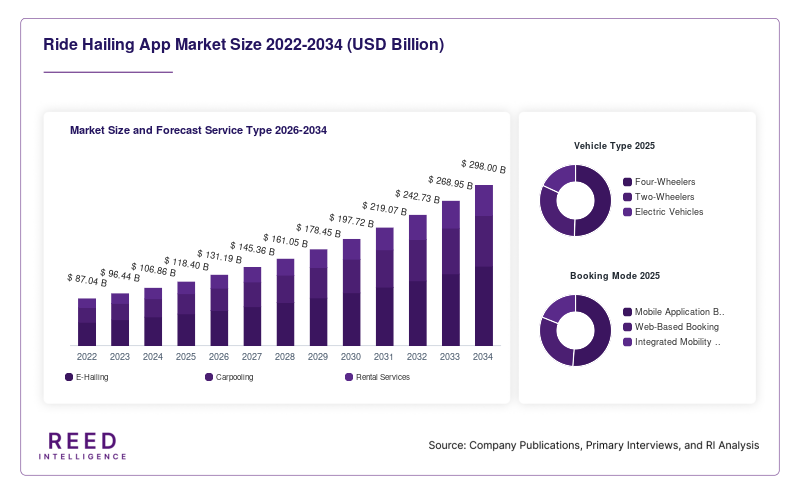
Regional Analysis
North America
North America accounted for approximately 35.1% of the global Ride Hailing App Market in 2025 and maintained its position as the leading regional market. The region benefits from strong smartphone penetration, advanced digital infrastructure, and high consumer acceptance of app-based transportation services. Market participants continue investing in platform innovation, driver engagement initiatives, and electric vehicle integration. The regional market is projected to expand at a CAGR of 9.8% through 2034, supported by ongoing technological developments and increasing demand for flexible mobility solutions.
The United States remains the dominant country within North America. A key growth factor is the widespread adoption of cashless payment technologies and subscription-based transportation programs. Consumers increasingly utilize ride hailing services for commuting, airport transfers, and urban travel. The presence of major technology companies and mobility innovators also contributes to market expansion by encouraging continuous investment in artificial intelligence, automation, and fleet optimization capabilities.
Europe
Europe represented approximately 24.6% of the global market in 2025 and continues to demonstrate stable growth prospects. Regulatory support for sustainable transportation and increasing investments in low-emission mobility solutions are influencing market development across the region. Consumers are increasingly adopting ride hailing services as part of broader multimodal transportation networks. The European market is forecast to expand at a CAGR of 9.9% during the forecast period, supported by urban mobility initiatives and technological advancements.
The United Kingdom remains the dominant country in the European market. A unique growth factor is the region’s strong emphasis on environmental sustainability and carbon reduction targets. Governments are encouraging the adoption of electric vehicles and cleaner transportation alternatives through incentives and infrastructure investments. These initiatives are creating favorable conditions for ride hailing operators seeking to modernize fleets and improve operational efficiency.
Asia Pacific
Asia Pacific held approximately 28.8% of the global Ride Hailing App Market in 2025 and is expected to record the fastest growth through 2034. Rapid urbanization, population growth, and increasing smartphone penetration are creating strong demand for app-based mobility solutions. The region is witnessing significant expansion in both metropolitan and secondary cities, supported by growing digital payment adoption. The market is projected to register a CAGR of 12.6% during the forecast period, making it the fastest-growing regional market.
China remains the dominant country within Asia Pacific. One distinctive growth factor is the widespread integration of ride hailing applications into comprehensive digital ecosystems that include payment services, e-commerce platforms, and social applications. Consumers benefit from seamless user experiences and high platform engagement levels. Continuous investments in transportation technology and smart city initiatives further support long-term market expansion across the country.
Middle East & Africa
The Middle East & Africa accounted for approximately 5.9% of the global market in 2025 and is gradually emerging as a promising growth region. Rising internet penetration, increasing urban populations, and expanding smartphone adoption are encouraging greater utilization of ride hailing services. Governments are also investing in digital transformation programs that improve transportation accessibility and support technology-driven mobility solutions. The regional market is expected to grow at a CAGR of 10.7% through 2034.
The United Arab Emirates remains the leading country within the region. A unique growth factor is the government's focus on smart city development and advanced transportation infrastructure. Investments in digital mobility solutions, intelligent transportation systems, and innovation-friendly policies have created favorable conditions for ride hailing operators. These initiatives continue attracting both regional and international mobility providers seeking growth opportunities.
Latin America
Latin America captured approximately 5.6% of the global Ride Hailing App Market in 2025 and continues to demonstrate expanding demand for digital transportation services. Urban congestion, limited parking availability, and increasing smartphone ownership are encouraging consumers to adopt ride hailing platforms. Operators are expanding service coverage and introducing flexible pricing models to attract a broader customer base. The regional market is projected to achieve a CAGR of 10.3% during the forecast period.
Brazil represents the dominant country in Latin America. A key growth factor is the increasing demand for affordable transportation alternatives in densely populated urban areas. Consumers value the convenience, reliability, and accessibility offered by ride hailing applications. The growing availability of digital payment solutions and expanding internet connectivity further support market penetration across major cities and surrounding metropolitan regions.
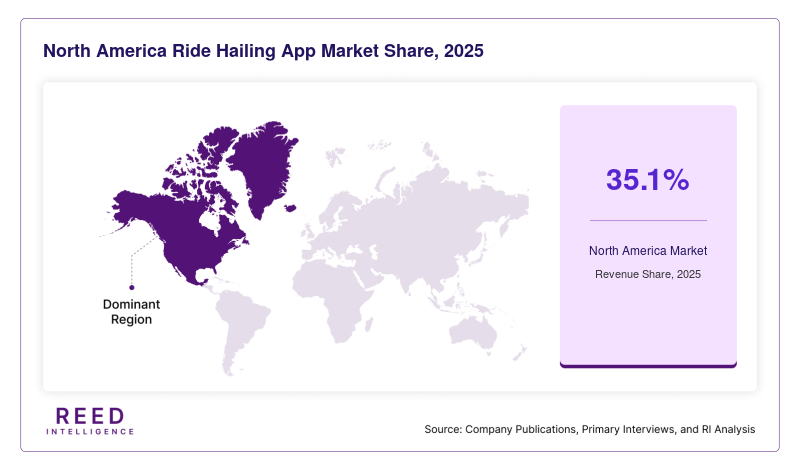
Competitive Landscape
The Ride Hailing App Market is characterized by strong competition among global and regional mobility platform providers. Companies focus on technological innovation, geographic expansion, strategic partnerships, and fleet optimization to strengthen market positioning. The competitive environment is influenced by evolving consumer preferences, regulatory developments, and increasing investments in sustainable transportation solutions.
Uber Technologies maintains a leading position due to its extensive global presence, diversified service portfolio, and continuous investment in platform enhancements. Lyft, DiDi Global, Grab Holdings, and Bolt also hold significant market shares across key regions. These companies compete through pricing strategies, customer loyalty programs, and investments in artificial intelligence-driven operational improvements.
A recent industry development involved leading operators expanding electric vehicle adoption programs through partnerships with automotive manufacturers and charging infrastructure providers. Such initiatives reflect the growing importance of sustainability and operational efficiency within the market. Competitive intensity is expected to remain strong as companies pursue innovation, integrated mobility services, and expansion into emerging urban markets.
Key Players
- Uber Technologies Inc.
- Lyft Inc.
- DiDi Global Inc.
- Grab Holdings Ltd.
- Bolt Technology OÜ
- Ola Consumer
- Gojek
- Cabify
- Careem
- Yandex Go
- inDrive
- FREE NOW
- Kakao Mobility
- Curb Mobility
- Via Transportation
Recent Developments
- Uber expanded its electric vehicle partnership program to increase EV adoption among drivers across multiple international markets.
- Lyft introduced enhanced artificial intelligence tools for ride matching and demand forecasting to improve fleet utilization.
- Grab strengthened its integrated mobility ecosystem by expanding multimodal transportation services within its application platform.
- DiDi Global invested in advanced safety monitoring technologies and driver verification systems to enhance passenger security.
- Bolt expanded operations into additional urban markets while introducing new sustainability-focused transportation initiatives.
Ride Hailing App Market Segments
Service Type
- E-Hailing
- Carpooling
- Rental Services
Vehicle Type
- Four-Wheelers
- Two-Wheelers
- Electric Vehicles
Booking Mode
- Mobile Application Booking
- Web-Based Booking
- Integrated Mobility Platform Booking
By Region
- North America
- Europe
- APAC
- Middle East and Africa
- LATAM