Rubber Roller Cleaner Market Size, Share, Demand & Growth Report By Type (Solvent-Based Cleaners, Water-Based Cleaners), By Application (Printing, Packaging, Textile, Others), By End-Use Industry (Manufacturing, Food & Beverage, Automotive, Others), By Regional Outlook & Segment Forecasts, 2025–2034
USD 3950
Market Overview
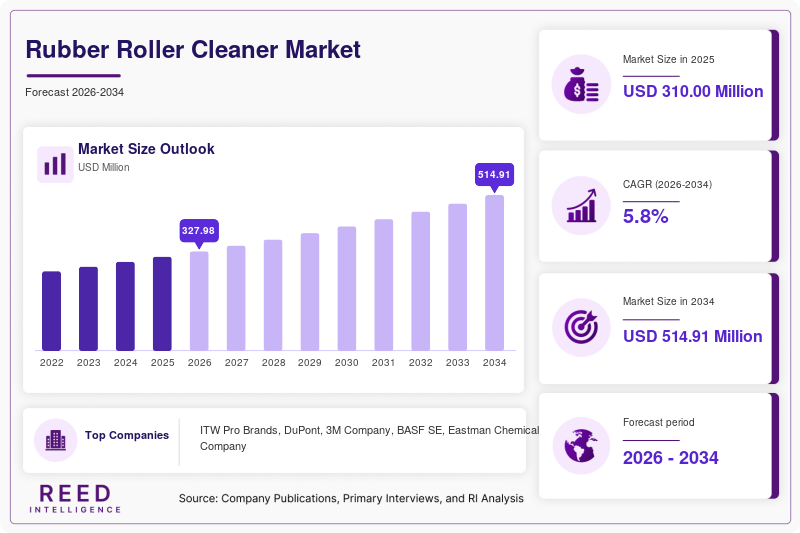
The Rubber Roller Cleaner Market size is estimated at approximately USD 310 million and is expected to reach around USD 335 million in 2026. Over the forecast period from 2025 to 2034, the market is projected to grow at a CAGR of 5.8%, reaching an estimated value of USD 565 million by 2034. This growth reflects rising demand for maintenance solutions that enhance the lifespan and efficiency of rubber rollers used in diverse industrial applications such as printing presses, textile machinery, laminating equipment, and food processing lines.
One of the primary growth factors is the increasing emphasis on operational efficiency across manufacturing industries. Rubber rollers are critical components in various machinery, and their cleanliness directly affects output quality. Cleaner products reduce downtime, minimize defects, and improve productivity, which supports consistent demand. Another factor contributing to growth is the expansion of the packaging industry, especially flexible packaging, where rollers are widely used. As packaging production scales globally, maintenance solutions like rubber roller cleaners are becoming essential. Additionally, environmental regulations are pushing manufacturers toward eco-friendly cleaning formulations, which is driving innovation and adoption of water-based and biodegradable cleaners.
Key Highlights
- Market size valued at USD 310 million in 2025 and USD 335 million in 2026; projected to reach USD 565 million by 2034 at a CAGR of 5.8%
- Asia Pacific dominated the global market with a 34% share in 2025, driven by strong manufacturing and packaging demand
- Asia Pacific is also the fastest-growing region, expected to register a CAGR of 6.5% during 2025–2034
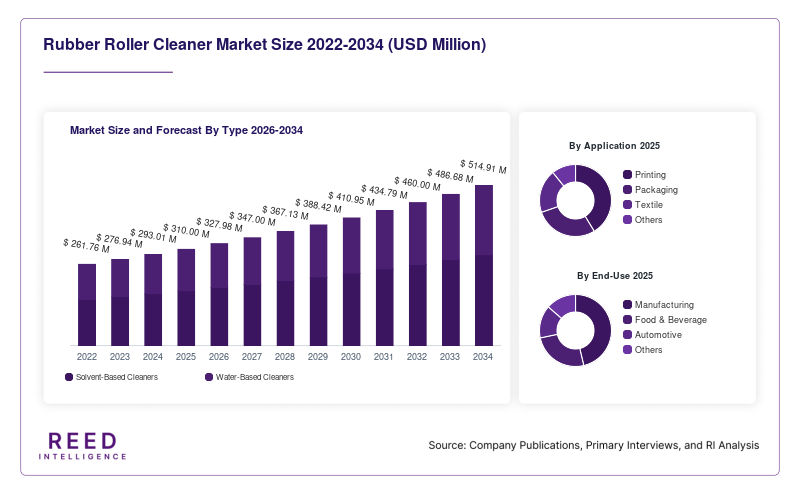
- By type, solvent-based cleaners held the largest share at 58% in 2024, while water-based cleaners are the fastest-growing segment
- By application, printing accounted for the highest share, whereas packaging is projected to grow at the fastest rate
- Market growth is supported by automation trends, eco-friendly product adoption, and increasing focus on reducing machine downtime and improving productivity
Market Trends
Shift Toward Eco-Friendly Cleaning Solutions
The Rubber Roller Cleaner Market is experiencing a gradual shift toward environmentally sustainable cleaning formulations. Regulatory pressure and corporate sustainability goals are prompting manufacturers to develop water-based, low-VOC, and biodegradable cleaning agents. Traditional solvent-based cleaners are being replaced due to their environmental and health concerns. End-use industries such as printing and packaging are actively adopting green solutions to comply with regulations and improve workplace safety. Additionally, customers are becoming more aware of environmental impact, leading to increased demand for sustainable products. This trend is also encouraging innovation in formulation chemistry, where companies are focusing on maintaining cleaning efficiency while reducing ecological footprint.
Integration with Automated Maintenance Systems
Another notable trend is the integration of rubber roller cleaning processes into automated maintenance systems. Industrial automation is expanding rapidly, and maintenance procedures are increasingly being incorporated into automated workflows. Advanced machinery now includes built-in cleaning modules or compatibility with automated cleaning equipment. This trend is particularly evident in high-speed printing and packaging lines where downtime is costly. Automated cleaning ensures consistent performance, reduces human error, and enhances operational efficiency. As industries continue to adopt Industry 4.0 technologies, the demand for cleaners that are compatible with automated systems is expected to grow, further shaping the market landscape.
Market Drivers
Growth of the Packaging and Printing Industries
The rapid growth of the global packaging and printing industries is a major driver for the Rubber Roller Cleaner Market. With the rise in e-commerce, food delivery services, and consumer goods manufacturing, the demand for high-quality packaging has increased significantly. Rubber rollers play a critical role in printing and laminating processes, and their maintenance is essential for ensuring print clarity and consistency. As production volumes increase, the need for efficient cleaning solutions becomes more prominent. Companies are investing in regular maintenance to avoid production disruptions, which directly supports the demand for rubber roller cleaners. This trend is expected to continue as packaging innovations expand globally.
Increasing Focus on Equipment Longevity and Efficiency
Industries are placing greater emphasis on extending the lifespan of machinery and reducing maintenance costs. Rubber rollers are subject to wear and contamination during operations, which can affect performance and lead to costly replacements. Effective cleaning solutions help maintain roller integrity, improve performance, and reduce operational downtime. As companies aim to optimize their return on investment in machinery, the adoption of specialized cleaning products is increasing. Additionally, preventive maintenance practices are gaining importance, further driving the demand for high-performance rubber roller cleaners across various industrial sectors.
Market Restraint
Availability of Alternative Cleaning Methods and Cost Sensitivity
One of the primary restraints affecting the Rubber Roller Cleaner Market is the availability of alternative cleaning methods and the cost sensitivity of end users. Some industries rely on manual cleaning techniques or generic cleaning agents that are less expensive than specialized rubber roller cleaners. While these alternatives may not offer the same level of efficiency, they are often preferred by small and medium enterprises with limited budgets. Additionally, the cost of advanced cleaning formulations can be relatively high, which may deter adoption in price-sensitive markets. This restraint is particularly evident in developing regions where cost considerations outweigh performance benefits. As a result, manufacturers must balance pricing strategies while maintaining product effectiveness to remain competitive.
Market Opportunities
Expansion in Emerging Economies
Emerging economies present significant growth opportunities for the Rubber Roller Cleaner Market. Rapid industrialization in regions such as Asia Pacific, Latin America, and parts of Africa is driving demand for manufacturing equipment and maintenance solutions. As industries expand, the need for efficient cleaning products becomes more critical. Governments in these regions are also investing in infrastructure and manufacturing capabilities, further supporting market growth. Additionally, the increasing presence of multinational companies in emerging markets is boosting the adoption of standardized maintenance practices, including the use of specialized cleaners. This trend is expected to create new revenue streams for market players over the forecast period.
Development of Multi-Functional Cleaning Solutions
Another promising opportunity lies in the development of multi-functional cleaning solutions that can be used across different types of rollers and machinery. End users are increasingly seeking products that offer versatility and cost efficiency. Manufacturers can capitalize on this demand by introducing cleaners that provide multiple benefits, such as anti-static properties, corrosion resistance, and compatibility with various materials. Such innovations can reduce the need for multiple cleaning products, simplifying maintenance processes and lowering costs. This approach is likely to attract a broader customer base and enhance market penetration.
Segmental Analysis
By Type
The solvent-based cleaner segment dominated the market in 2024, accounting for approximately 58% of the total share. These cleaners are widely used due to their high effectiveness in removing tough residues such as ink, adhesives, and contaminants. Industries such as printing and packaging rely heavily on solvent-based cleaners for maintaining roller performance. Their quick drying properties and strong cleaning capabilities make them suitable for high-speed production environments. However, concerns related to environmental impact and worker safety are gradually influencing the market dynamics, prompting manufacturers to explore alternative solutions.
The water-based cleaner segment is expected to be the fastest-growing, registering a CAGR of 6.7% during the forecast period. Growth is driven by increasing environmental awareness and regulatory pressures. Water-based cleaners offer a safer and more sustainable alternative to traditional solvents, making them attractive to industries seeking eco-friendly solutions. Additionally, advancements in formulation technology have improved their cleaning efficiency, making them suitable for a wider range of applications.
By Application
The printing segment held the largest market share in 2024, accounting for approximately 45%. Rubber rollers are essential components in printing presses, and their maintenance is critical for ensuring print quality. The increasing demand for high-quality printing in packaging, advertising, and publishing industries is driving the use of specialized cleaning solutions. Regular cleaning helps prevent defects and ensures consistent output, making it a key requirement in this segment.
The packaging segment is expected to be the fastest-growing, with a CAGR of 6.3% during the forecast period. The growth of e-commerce and consumer goods industries is driving demand for packaging materials. As production volumes increase, the need for efficient maintenance solutions becomes more critical. Rubber roller cleaners play a vital role in maintaining the performance of packaging machinery, supporting the growth of this segment.
By End-Use
The manufacturing sector dominated the market in 2024, accounting for around 52% of the total share. This segment includes industries such as textiles, plastics, and food processing, where rubber rollers are widely used. The need for efficient maintenance solutions to ensure smooth operations and reduce downtime is driving demand for rubber roller cleaners. Companies in this sector are increasingly adopting preventive maintenance practices to improve productivity and reduce costs.
The food and beverage sector is projected to be the fastest-growing, with a CAGR of 6.1% during the forecast period. Stringent hygiene standards and the need for contamination-free production processes are key factors driving growth. Rubber roller cleaners are essential for maintaining cleanliness and ensuring compliance with safety regulations. The expansion of the food processing industry is further supporting demand in this segment.
Regional Analysis
North America
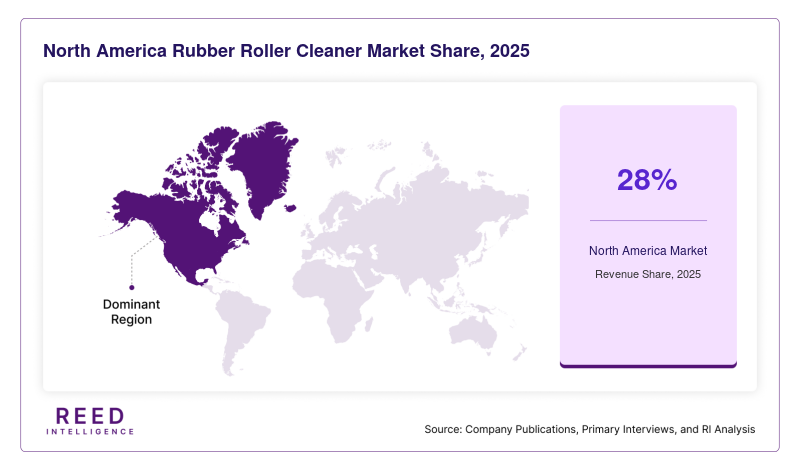
North America accounted for approximately 28% of the Rubber Roller Cleaner Market share in 2025 and is expected to grow at a CAGR of 5.2% through 2034. The region benefits from a well-established industrial base, particularly in printing, packaging, and manufacturing sectors. High adoption of advanced machinery and automation technologies is driving demand for efficient maintenance solutions. Companies in the region are also focusing on reducing downtime and improving operational efficiency, which supports the use of specialized cleaning products.
The United States dominates the regional market due to its strong industrial infrastructure and technological advancements. A unique growth factor in the country is the increasing adoption of sustainable manufacturing practices. Companies are investing in eco-friendly cleaning solutions to meet regulatory requirements and corporate sustainability goals, which is driving innovation and demand for advanced rubber roller cleaners.
Europe
Europe held a market share of around 24% in 2025 and is projected to grow at a CAGR of 5.0% during the forecast period. The region’s growth is supported by stringent environmental regulations and a strong focus on sustainable industrial practices. Industries such as packaging, textiles, and printing are adopting advanced cleaning solutions to comply with regulatory standards and improve efficiency.
Germany is the leading country in the European market, driven by its robust manufacturing sector. A unique growth factor is the emphasis on precision engineering and high-quality production standards. This focus requires consistent maintenance of machinery, including rubber rollers, thereby increasing the demand for specialized cleaning products.
Asia Pacific
Asia Pacific dominated the Rubber Roller Cleaner Market with a share of 34% in 2025 and is expected to register the highest CAGR of 6.5% through 2034. Rapid industrialization, expanding manufacturing activities, and growing demand for packaging solutions are key factors driving market growth. The region is witnessing increased investments in automation and advanced machinery, which further supports demand.
China leads the market in this region due to its large-scale manufacturing base. A unique growth factor is the rapid expansion of the e-commerce sector, which is driving demand for packaging materials and related machinery. This, in turn, increases the need for maintenance solutions such as rubber roller cleaners.
Middle East & Africa
The Middle East & Africa region accounted for approximately 7% of the market share in 2025 and is expected to grow at a CAGR of 4.8% during the forecast period. The region’s growth is supported by increasing industrial activities and investments in infrastructure development. Industries such as packaging and textiles are gradually adopting advanced cleaning solutions.
Saudi Arabia is a key contributor to the regional market. A unique growth factor is the diversification of the economy away from oil dependency, leading to increased investments in manufacturing sectors. This shift is driving demand for industrial maintenance solutions, including rubber roller cleaners.
Latin America
Latin America held a market share of around 7% in 2025 and is projected to grow at a CAGR of 5.1% through 2034. The region is experiencing gradual growth in industrial activities, particularly in packaging and printing sectors. Increasing demand for consumer goods is driving the need for efficient production processes.
Brazil dominates the market in this region. A unique growth factor is the expansion of the food and beverage industry, which relies heavily on packaging solutions. This growth is increasing the demand for machinery maintenance products, including rubber roller cleaners, to ensure consistent production quality.
Competitive Landscape
The Rubber Roller Cleaner Market is moderately fragmented, with several global and regional players competing based on product quality, innovation, and pricing strategies. Leading companies are focusing on developing eco-friendly formulations and expanding their product portfolios to meet evolving customer demands. Strategic partnerships, mergers, and acquisitions are also common as companies aim to strengthen their market presence.
One of the leading players in the market is ITW Pro Brands, known for its extensive range of industrial cleaning solutions. The company has recently introduced a new line of water-based rubber roller cleaners designed to meet environmental regulations while maintaining high performance. Other key players are also investing in research and development to enhance product efficiency and expand their global footprint.
Key Players
- ITW Pro Brands
- DuPont
- 3M Company
- BASF SE
- Eastman Chemical Company
- Dow Inc.
- Croda International Plc
- Chem-Trend L.P.
- FUCHS Group
- Klüber Lubrication
- Petrofer Chemie
- Zeller+Gmelin GmbH
- RS Clare & Co Ltd
- Ultra Clean Systems
- American Chemical Technologies
Recent Developments
- In 2024, a leading manufacturer introduced a biodegradable rubber roller cleaner aimed at reducing environmental impact and meeting regulatory standards.
- In 2025, a major industry player expanded its production capacity in Asia Pacific to cater to rising demand from packaging and printing industries.
- In 2025, a new multi-functional cleaning solution was launched, offering compatibility with various roller materials and improved cleaning efficiency.
Rubber Roller Cleaner Market Segments
By Type
- Solvent-Based Cleaners
- Water-Based Cleaners
By Application
- Printing
- Packaging
- Textile
- Others
By End-Use
- Manufacturing
- Food & Beverage
- Automotive
- Others
By Region
- North America
- Europe
- APAC
- Middle East and Africa
- LATAM