Safflower Seeds Market Size, Share & Demand Report By Type (Oilseed Type, High Oleic Safflower Seeds, High Linoleic Safflower Seeds), By Application (Food, Animal Feed, Nutraceuticals, Industrial), By End-Use (Food Processing Industry, Cosmetics & Personal Care, Pharmaceutical Industry, Agriculture), By Distribution Channel (Direct Sales, Retail Stores, Online Channels), By Region & Segment Forecasts, 2025–2034
USD 3950
Market Overview
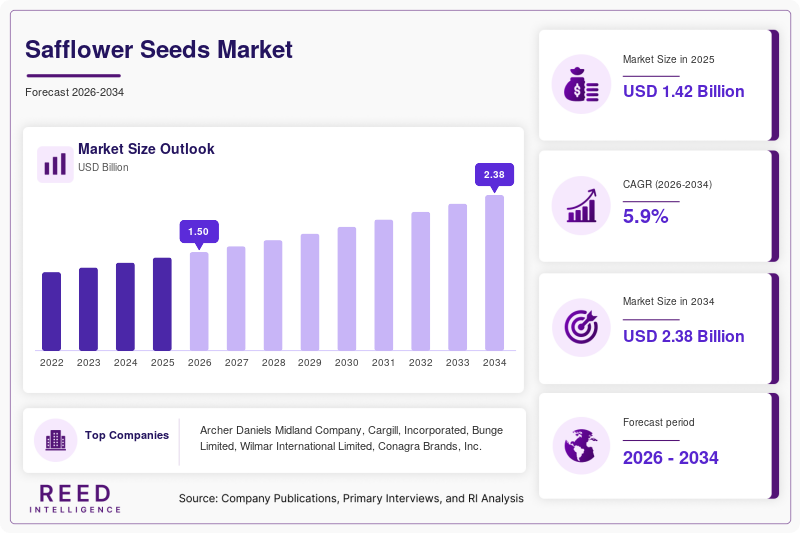
The global Safflower Seeds Market size was valued at approximately USD 1.42 billion in 2025 and is projected to reach USD 2.38 billion by 2034, expanding at a CAGR of 5.9% during the forecast period (2025–2034). The steady growth of this market is largely supported by increasing global demand for plant-based oils and functional food ingredients. Safflower seeds, known for their high linoleic acid content and versatile applications across food, animal feed, and industrial sectors, have gained traction as consumers shift toward healthier dietary choices.
One of the primary global factors driving market expansion is the rising preference for heart-healthy edible oils. Safflower oil, derived from these seeds, is widely recognized for its low saturated fat content and cholesterol-lowering properties, making it a preferred alternative to traditional cooking oils. Additionally, expanding applications in cosmetics and bio-based industrial products have further supported market development.
Key Highlights:
- North America dominated the market with a 34.2% share in 2025, while Asia Pacific is expected to register the fastest CAGR of 7.1% through 2034.
- The oilseed type segment led with a 61.5% share, while high oleic safflower seeds are projected to grow at a CAGR of 6.8%.
- The food application segment accounted for the largest share at 48.7%, while nutraceutical applications are expected to grow at a CAGR of 7.3%.
- The United States remained the dominant country, with market values of USD 382 million in 2024 and USD 401 million in 2025.
Market Trends
Rising Demand for Functional and Specialty Oils
The increasing consumer focus on health and wellness has led to a growing demand for functional oils derived from safflower seeds. These oils are widely used in dietary supplements and premium cooking products due to their beneficial fatty acid composition. Manufacturers are also promoting safflower oil as a clean-label ingredient, aligning with evolving consumer preferences for minimally processed foods.
Expansion in Non-Food Industrial Applications
Safflower seeds are gaining attention in non-food sectors such as cosmetics, paints, and bio-lubricants. The oil extracted from safflower seeds is used in skincare formulations due to its moisturizing and anti-inflammatory properties. Additionally, industrial applications such as eco-friendly coatings and biodegradable lubricants are emerging as important contributors to market expansion, diversifying revenue streams for producers.
Market Drivers
Increasing Adoption of Plant-Based Diets
The global shift toward plant-based nutrition has significantly boosted the demand for safflower seeds and their derivatives. Consumers are actively seeking plant-derived protein sources and oils that align with vegan and vegetarian lifestyles. This trend has encouraged food manufacturers to incorporate safflower-based ingredients into a wide range of products, including snacks, dressings, and supplements.
Growth in Health-Conscious Consumer Base
A growing awareness of lifestyle-related diseases such as cardiovascular disorders has led to increased consumption of healthier edible oils. Safflower oil, rich in unsaturated fats, has gained popularity among health-conscious consumers. This shift has driven both retail and industrial demand, encouraging producers to expand cultivation and processing capacities.
Market Restraint
Volatility in Raw Material Supply and Climatic Dependency
The production of safflower seeds is highly dependent on climatic conditions, making it vulnerable to fluctuations in weather patterns. Droughts, irregular rainfall, and temperature extremes can significantly impact crop yields, leading to supply instability. This volatility affects pricing structures and creates uncertainty for manufacturers and distributors.
Additionally, safflower cultivation is limited to specific geographic regions, restricting large-scale expansion. Farmers may also prefer alternative crops with higher yield stability or profitability, which can further constrain supply. These factors collectively pose challenges to consistent market growth and may hinder long-term investment in the safflower seeds industry.
Market Opportunities
Expansion in Emerging Economies
Emerging economies in Asia Pacific and Latin America present significant growth opportunities for the Safflower Seeds Market. Increasing disposable income and urbanization are driving demand for healthier food products. Governments in these regions are also promoting oilseed cultivation, creating favorable conditions for market expansion.
Innovation in Nutraceutical and Pharmaceutical Applications
Safflower seeds are increasingly being utilized in nutraceutical and pharmaceutical formulations due to their bioactive compounds. Research into their anti-inflammatory and antioxidant properties is opening new avenues for product development. Companies investing in value-added products such as safflower-based capsules and extracts are expected to benefit from this growing trend.
Segmental Analysis
By Type
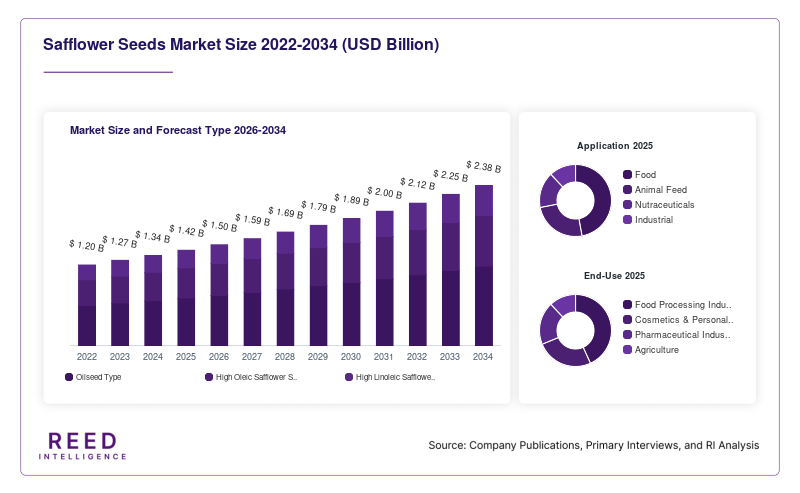
The oilseed type segment dominated the Safflower Seeds Market in 2024, accounting for 61.5% of the total share. This dominance was attributed to its widespread use in oil extraction for food and industrial applications. The high demand for safflower oil in cooking and processed foods contributed significantly to this segment’s growth.
The high oleic safflower seeds segment is projected to grow at the fastest CAGR of 6.8% during the forecast period. This growth will be driven by its superior oxidative stability and extended shelf life, making it suitable for high-temperature cooking and industrial applications.
By Application
The food segment held the largest share of 48.7% in 2024, driven by the increasing use of safflower oil in cooking and food processing. Its nutritional benefits and versatility made it a preferred choice among consumers and manufacturers.
The nutraceutical segment is expected to grow at a CAGR of 7.3%, supported by rising demand for dietary supplements and functional foods. The presence of bioactive compounds in safflower seeds will drive innovation in this segment.
By End-Use
The food processing industry dominated the market in 2024 with a share of 44.2%. The extensive use of safflower oil in packaged foods and snacks contributed to this dominance.
The cosmetics and personal care segment is projected to grow at a CAGR of 6.5%, driven by increasing demand for natural and organic ingredients in skincare products.
By Distribution Channel
The direct sales segment accounted for the largest share of 52.6% in 2024, supported by bulk purchasing by manufacturers and processors.
The online retail segment is expected to grow at a CAGR of 7.0%, driven by the rising popularity of e-commerce platforms and increasing consumer preference for convenient purchasing options.
Regional Analysis
North America
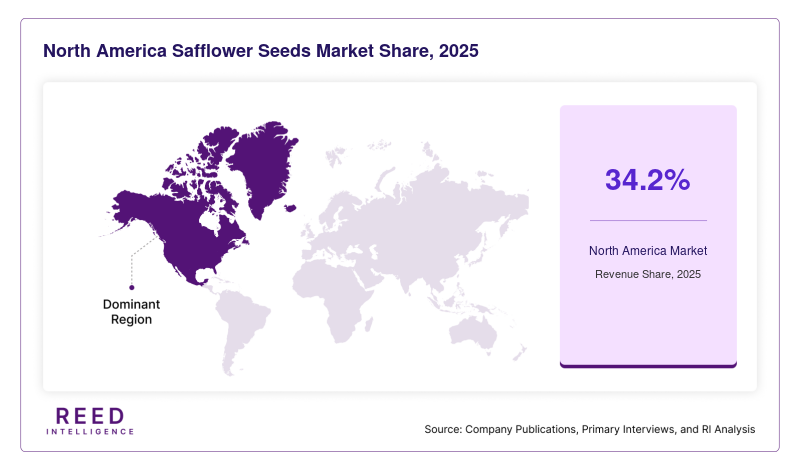
North America accounted for 34.2% of the Safflower Seeds Market share in 2025 and is projected to grow at a CAGR of 5.4% during the forecast period. The region’s established food processing industry and strong demand for premium edible oils contributed to its leading position. The United States dominated the regional market due to its advanced agricultural infrastructure and high consumer awareness of healthy dietary options. The presence of large-scale oil extraction facilities and well-developed distribution networks further supported growth.
Europe
Europe held a 24.8% share of the market in 2025 and is expected to expand at a CAGR of 5.2% through 2034. The region’s demand was driven by the increasing adoption of clean-label and organic food products. Germany emerged as the dominant country, supported by a strong preference for plant-based oils and sustainable sourcing practices. Regulatory frameworks promoting environmentally friendly agriculture also contributed to the growth of safflower seed cultivation.
Asia Pacific
Asia Pacific captured 21.6% of the market in 2025 and is anticipated to register the fastest CAGR of 7.1%. Rapid urbanization and changing dietary habits have fueled demand for healthier cooking oils. India led the regional market due to its favorable climatic conditions for safflower cultivation and government initiatives supporting oilseed production. Expanding domestic consumption and export potential further strengthened the region’s growth outlook.
Middle East & Africa
The Middle East & Africa region held a 10.3% share in 2025 and is projected to grow at a CAGR of 5.7%. The increasing demand for edible oils and animal feed contributed to market expansion. South Africa dominated the region, driven by its agricultural capabilities and growing food processing sector. Investments in modern farming techniques are expected to enhance production efficiency.
Latin America
Latin America accounted for 9.1% of the market in 2025 and is expected to grow at a CAGR of 6.0% during the forecast period. Brazil emerged as the dominant country due to its expanding agricultural sector and increasing focus on oilseed crops. The region’s favorable climate and availability of arable land are expected to support future growth.
Competitive Landscape
The Safflower Seeds Market is moderately fragmented, with several regional and global players competing based on product quality, pricing, and distribution capabilities. Leading companies are focusing on expanding their production capacities and investing in research and development to introduce high-quality seed varieties.
The market leader, Archer Daniels Midland Company, has strengthened its position through strategic partnerships and product innovation. The company recently introduced advanced safflower oil variants targeting premium food and industrial applications. Other key players are also emphasizing sustainable sourcing and organic certification to gain a competitive edge.
Key Players
- Archer Daniels Midland Company
- Cargill, Incorporated
- Bunge Limited
- Wilmar International Limited
- Conagra Brands, Inc.
- Adani Wilmar Limited
- Richardson International Limited
- Oilseeds International Ltd.
- Safflower Technologies International
- Spectrum Organic Products LLC
Recent Developments
- Archer Daniels Midland Company expanded its oilseed processing capacity in North America in 2024.
- Cargill, Incorporated launched a new range of high oleic safflower oil products for industrial use.
- Bunge Limited invested in sustainable safflower farming initiatives in South America.
- Wilmar International Limited strengthened its distribution network in Asia Pacific.
- Adani Wilmar Limited introduced safflower-based edible oil blends targeting health-conscious consumers.
Safflower Seeds Market Segments
Type
- Oilseed Type
- High Oleic Safflower Seeds
- High Linoleic Safflower Seeds
Application
- Food
- Animal Feed
- Nutraceuticals
- Industrial
End-Use
- Food Processing Industry
- Cosmetics & Personal Care
- Pharmaceutical Industry
- Agriculture
Distribution Channel
- Direct Sales
- Retail Stores
- Online Channels
By Region
- North America
- Europe
- APAC
- Middle East and Africa
- LATAM