Salpingitis Treatment Market Size, Share & Demand Report By Treatment Type (Antibiotic Therapy, Combination Therapy, Surgical Treatment, Supportive Care), By Route of Administration (Oral, Injectable, Topical), By End User (Hospitals, Specialty Gynecology Clinics, Ambulatory Surgical Centers, Homecare Settings), By Region & Segment Forecasts, 2026–2034
USD 3950
Market Overview
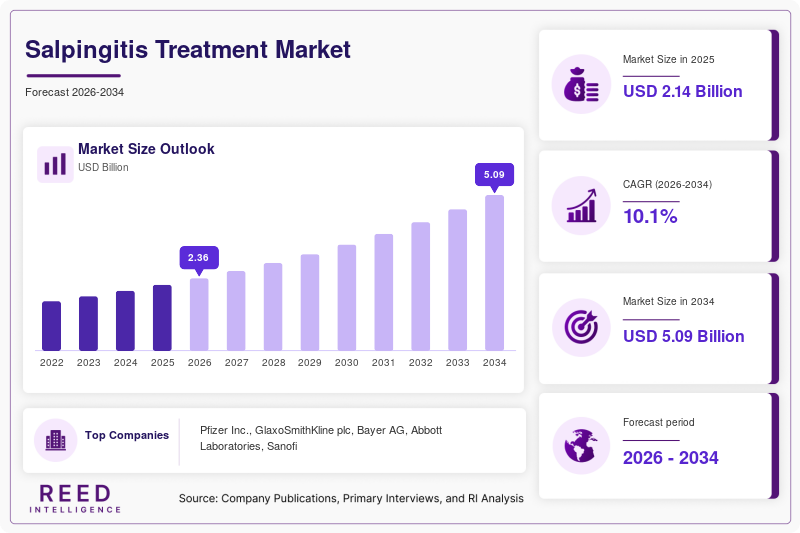
The global Salpingitis Treatment Market size was valued at USD 2.14 billion in 2026 and is projected to reach USD 4.62 billion by 2034, expanding at a CAGR of 10.1% during the forecast period from 2026 to 2034. The market growth is supported by the rising prevalence of pelvic inflammatory diseases, increasing awareness regarding reproductive health, and improved access to antibiotic therapies across both developed and developing economies. Healthcare providers are increasingly focusing on early diagnosis and combination treatment approaches to prevent infertility complications associated with untreated salpingitis. In addition, expanding women’s healthcare programs and growing investments in gynecological care infrastructure continue to create favorable market conditions.
One major global factor contributing to market expansion is the increasing incidence of sexually transmitted infections worldwide. The growing burden of infections caused by Chlamydia trachomatis and Neisseria gonorrhoeae has significantly increased the number of salpingitis cases, particularly among women aged 18–35 years. Public health agencies across several countries are also promoting routine reproductive health screenings and awareness campaigns, which has improved diagnosis rates and treatment adoption. Pharmaceutical companies are introducing advanced antibiotic combinations with improved efficacy and reduced resistance risks, further supporting industry growth. Moreover, telehealth consultations and digital prescription services are improving access to gynecological treatment in remote areas, contributing to broader market penetration.
Key Highlights
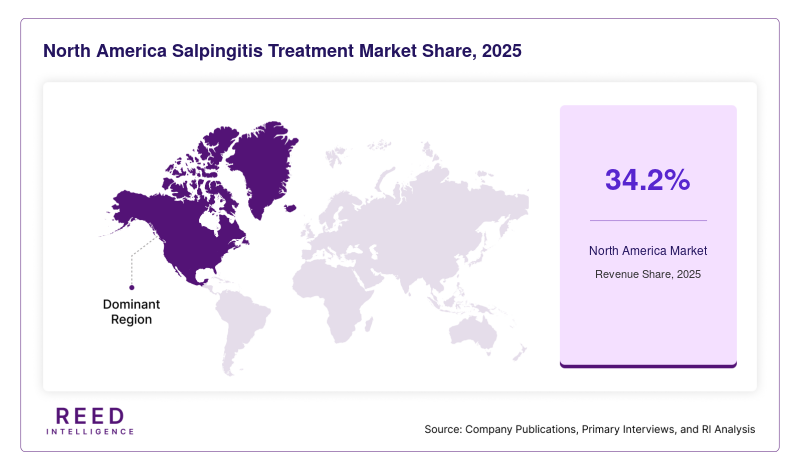
- North America dominated the market with a 34.2% share in 2025.
- Asia Pacific is expected to grow at the fastest CAGR of 11.8% during 2026–2034.
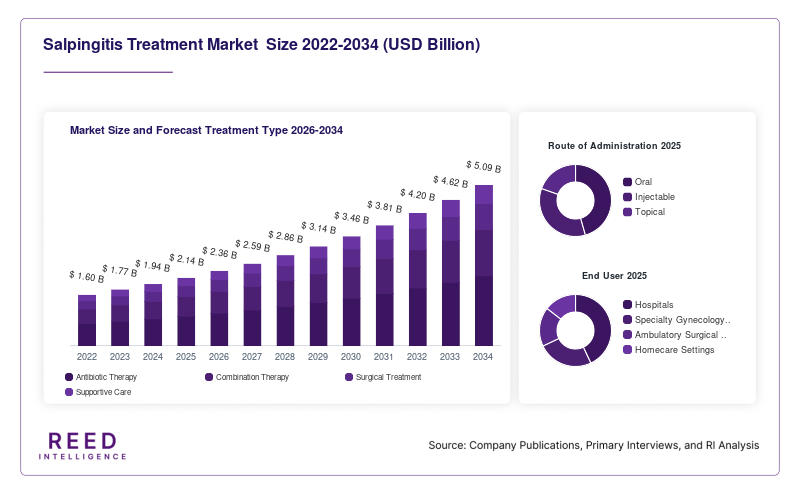
- By treatment type, antibiotic therapy accounted for the largest share of 46.3%, while combination therapy is projected to grow at a CAGR of 12.5%.
- By route of administration, oral treatment led with a 52.6% share, whereas injectable treatment is expected to expand at a CAGR of 11.7%.
- By end user, hospitals dominated with a 48.1% share, while specialty gynecology clinics are projected to grow at a CAGR of 12.1%.
- The United States remained the dominant country, with market values of USD 610 million in 2024 and USD 670 million in 2025.
Market Trends
Growing Adoption of Combination Antibiotic Therapies
The Salpingitis Treatment Market is witnessing increasing adoption of combination antibiotic therapies due to their ability to target multiple bacterial strains simultaneously. Healthcare providers are preferring dual-drug and broad-spectrum antibiotic regimens to reduce treatment failure and prevent recurrence. This trend has gained momentum because salpingitis cases are often associated with mixed bacterial infections linked to pelvic inflammatory disease. Combination therapies also help reduce hospitalization duration and improve patient recovery outcomes. Pharmaceutical companies are investing in research to develop therapies with improved compliance and lower side effects, particularly for younger women requiring outpatient care.
Expansion of Digital Women’s Healthcare Services
Digital healthcare services are becoming an important trend in the Salpingitis Treatment Market due to the increasing use of telemedicine and online reproductive health consultations. Women are increasingly seeking remote medical guidance for gynecological symptoms because of convenience, privacy, and reduced waiting times. Telehealth platforms now provide prescription management, symptom tracking, laboratory coordination, and follow-up consultations for patients diagnosed with salpingitis. This trend is particularly noticeable in urban populations where digital healthcare adoption rates are higher and smartphone penetration continues to expand.
Market Drivers
Rising Prevalence of Sexually Transmitted Infections
The increasing prevalence of sexually transmitted infections is one of the strongest growth drivers for the Salpingitis Treatment Market. Infections caused by chlamydia and gonorrhea continue to rise globally, particularly among younger women and sexually active populations. These infections are major causes of salpingitis and pelvic inflammatory disease, creating a growing demand for timely treatment solutions. Public health organizations are encouraging routine reproductive health screenings and awareness campaigns, which has improved diagnosis rates and increased treatment adoption across hospitals and clinics.
Increasing Focus on Women’s Reproductive Healthcare
Governments and healthcare organizations are increasing investments in women’s reproductive healthcare, which is significantly supporting the Salpingitis Treatment Market. National healthcare programs are emphasizing early diagnosis and treatment of gynecological infections to reduce infertility rates and long-term reproductive complications. Hospitals and specialty clinics are expanding women’s healthcare services, including pelvic examinations, diagnostic testing, and targeted antibiotic therapies. This broader focus on reproductive wellness is improving patient access to medical consultations and increasing overall treatment rates.
Market Restraint
Limited Awareness and Delayed Diagnosis in Low-Income Regions
Limited awareness regarding reproductive infections and delayed diagnosis remain major restraints for the Salpingitis Treatment Market. In many low-income and rural regions, women often avoid seeking gynecological care due to social stigma, inadequate healthcare infrastructure, and lack of educational programs. As a result, salpingitis cases frequently remain untreated until complications such as infertility, chronic pelvic pain, or ectopic pregnancy develop. Delayed treatment increases healthcare costs and reduces the effectiveness of standard antibiotic therapies, creating challenges for healthcare systems and pharmaceutical providers.
Market Opportunities
Expansion of Point-of-Care Diagnostic Technologies
The increasing adoption of point-of-care diagnostic technologies presents a major opportunity for the Salpingitis Treatment Market. Rapid diagnostic tools enable healthcare providers to identify infections more efficiently and begin treatment earlier, reducing the risk of severe reproductive complications. Hospitals and clinics are increasingly investing in portable diagnostic systems that can detect sexually transmitted infections associated with salpingitis within a shorter timeframe. These technologies are particularly beneficial in rural and resource-limited settings where laboratory access is restricted.
Growth Potential in Emerging Healthcare Markets
Emerging economies across Asia Pacific, Latin America, and parts of Africa offer strong growth opportunities for the Salpingitis Treatment Market due to improving healthcare infrastructure and increasing awareness regarding reproductive health. Governments are expanding women’s healthcare programs, increasing healthcare budgets, and strengthening access to essential medicines. Rising urbanization and improving healthcare insurance coverage are encouraging more women to seek professional gynecological care, creating favorable market conditions for pharmaceutical manufacturers and healthcare providers.
Segmental Analysis
By Treatment Type
Antibiotic therapy dominated the Salpingitis Treatment Market and accounted for 46.3% of the market share in 2024. This segment remains the preferred treatment approach because antibiotics are highly effective in controlling bacterial infections associated with salpingitis. Broad-spectrum antibiotics are widely prescribed in hospitals, clinics, and outpatient settings due to their accessibility and established clinical outcomes. Healthcare professionals often recommend oral antibiotic regimens during the early stages of infection to prevent complications such as infertility and chronic pelvic pain. The increasing prevalence of sexually transmitted infections and pelvic inflammatory disease has further strengthened demand for antibiotic-based treatment solutions. Generic antibiotic availability and favorable pricing structures also contribute to the segment’s dominant position, especially in middle-income economies where affordability remains an important factor in treatment adoption.
By Route of Administration
Oral treatment represented the largest share of the Salpingitis Treatment Market in 2024, accounting for 52.6% of total revenue. Oral antibiotics are commonly prescribed because they offer convenience, cost-effectiveness, and ease of administration for outpatient treatment. Most mild to moderate salpingitis cases are initially managed using oral medication regimens, reducing the need for hospitalization and lowering healthcare expenses. Patients generally prefer oral therapies due to greater comfort and easier adherence compared to injectable alternatives. The increasing availability of generic oral antibiotics and fixed-dose combinations has further strengthened market demand. Healthcare providers are also emphasizing early diagnosis and outpatient management strategies, which continue to support the widespread adoption of oral treatment options across hospitals, clinics, and telemedicine platforms.
By End User
Hospitals held the dominant position in the Salpingitis Treatment Market and accounted for 48.1% of the total market share in 2024. Hospitals remain the primary treatment centers for moderate to severe salpingitis cases because they offer comprehensive diagnostic services, emergency care, and multidisciplinary treatment support. Patients with advanced pelvic inflammatory disease or complications such as abscess formation often require inpatient treatment and continuous monitoring, increasing hospital-based demand. Hospitals also benefit from access to advanced laboratory testing, imaging technologies, and specialist gynecological teams. Government healthcare investments and the expansion of hospital infrastructure in emerging economies continue to strengthen the segment. In addition, rising hospitalization rates related to untreated reproductive infections are contributing to sustained demand for hospital-based salpingitis treatment services.
Regional Analysis
North America
North America accounted for 34.2% of the global Salpingitis Treatment Market share in 2025 and is expected to maintain a stable growth trajectory with a CAGR of 9.4% during the forecast period. The region benefits from advanced healthcare infrastructure, high awareness regarding reproductive health, and strong availability of diagnostic services. The presence of established pharmaceutical companies and increasing adoption of combination antibiotic therapies continue to support market expansion. Favorable reimbursement systems and rising investments in women’s healthcare programs also contribute to sustained demand across the region.
The United States remains the dominant country in North America due to its strong healthcare spending and widespread access to gynecological care services. One unique growth factor supporting the market is the increasing use of telehealth services for reproductive healthcare consultations. Women are increasingly using virtual healthcare platforms for early symptom assessment, prescription access, and follow-up care. This trend has improved treatment accessibility, particularly among younger populations and patients living in semi-urban areas.
Europe
Europe represented a significant share of the Salpingitis Treatment Market in 2025 and is projected to grow at a CAGR of 8.9% through 2034. The region benefits from comprehensive public healthcare systems, growing awareness regarding sexually transmitted infections, and improved access to diagnostic screening services. Governments across Europe continue to promote reproductive health education programs and preventive healthcare initiatives. Increasing research investments in gynecological infection management and antimicrobial resistance are also contributing to the regional market expansion.
Germany dominated the European market due to its strong healthcare infrastructure and extensive network of women’s healthcare facilities. A unique growth factor in the country is the increasing integration of reproductive health screenings into routine healthcare checkups. Healthcare providers are encouraging preventive examinations and early infection diagnosis to reduce long-term fertility complications. This proactive approach has increased patient engagement and improved treatment adoption rates across hospitals and specialty clinics.
Asia Pacific
Asia Pacific is expected to witness the fastest growth in the Salpingitis Treatment Market, with a projected CAGR of 11.8% during 2026–2034. The region is experiencing rapid healthcare infrastructure development, increasing urbanization, and rising awareness regarding women’s reproductive health. Growing healthcare expenditures and improving access to antibiotics and diagnostic technologies are supporting market growth. Public health campaigns focused on sexually transmitted infection prevention are also contributing to increasing diagnosis and treatment rates across several countries.
China remains the dominant country in the Asia Pacific market due to its large population base and expanding healthcare investment. One major growth factor is the rapid expansion of digital healthcare platforms and online pharmacy services. Women in urban areas are increasingly accessing reproductive healthcare consultations through mobile applications and telemedicine services. This digital transformation is improving treatment accessibility and encouraging earlier diagnosis, particularly among younger populations seeking confidential healthcare support.
Middle East & Africa
The Middle East & Africa region is projected to experience moderate growth in the Salpingitis Treatment Market with a CAGR of 8.1% through 2034. Market expansion is supported by gradual improvements in healthcare infrastructure and increasing awareness regarding reproductive infections. Governments and healthcare organizations are investing in women’s healthcare programs and infection prevention campaigns. However, limited healthcare accessibility in certain rural areas continues to affect treatment penetration and diagnosis rates across several countries.
Saudi Arabia emerged as the leading market within the region due to rising healthcare investments and growing adoption of advanced medical technologies. A unique growth factor supporting the market is the expansion of specialized women’s healthcare centers. These facilities provide dedicated gynecological services, infection management programs, and advanced diagnostic support. Increasing government initiatives aimed at improving women’s healthcare access are also contributing to higher treatment rates and stronger market development.
Latin America
Latin America accounted for a growing share of the Salpingitis Treatment Market in 2025 and is expected to expand at a CAGR of 9.1% during the forecast period. Increasing public healthcare spending and rising awareness regarding reproductive infections are supporting regional market growth. Several countries are strengthening infection screening programs and expanding access to affordable antibiotics. The growing presence of private healthcare providers and women’s specialty clinics is also improving treatment accessibility throughout the region.
Brazil remains the dominant country in Latin America due to its large healthcare network and increasing focus on women’s health awareness campaigns. One unique growth factor is the expansion of community healthcare initiatives targeting sexually transmitted infection prevention. Public healthcare agencies are conducting educational campaigns and offering subsidized reproductive health consultations in underserved communities. These programs are improving disease awareness and encouraging earlier medical intervention, contributing to increased treatment demand across the country.
Competitive Landscape
The Salpingitis Treatment Market is moderately fragmented, with several multinational pharmaceutical companies and regional healthcare providers competing through product innovation, strategic collaborations, and geographic expansion. Companies are focusing on developing advanced antibiotic formulations, improving drug efficacy, and addressing concerns related to antimicrobial resistance. Market participants are also investing in women’s healthcare awareness programs and expanding digital healthcare partnerships to improve treatment accessibility. Increasing research related to reproductive infection management continues to create opportunities for pharmaceutical manufacturers operating in this industry.
Pfizer Inc. remains one of the leading companies in the market due to its extensive antibiotic portfolio and strong global distribution network. The company recently expanded its women’s health research initiatives focused on infection management therapies and combination antibiotic development. Other major players including GlaxoSmithKline plc, Bayer AG, Abbott Laboratories, and Sanofi are strengthening their market presence through acquisitions, strategic collaborations, and product portfolio expansion. Several companies are also increasing investments in emerging markets where reproductive healthcare awareness and diagnostic access are improving steadily.
Key Players
- Pfizer Inc.
- GlaxoSmithKline plc
- Bayer AG
- Abbott Laboratories
- Sanofi
- Merck & Co., Inc.
- Novartis AG
- Cipla Limited
- Teva Pharmaceutical Industries Ltd.
- Sun Pharmaceutical Industries Ltd.
- AstraZeneca plc
- Lupin Limited
- Viatris Inc.
- Hikma Pharmaceuticals PLC
- Johnson & Johnson
Recent Developments
- Pfizer Inc. expanded its women’s infection treatment research program in 2025 to support the development of next-generation combination antibiotic therapies for pelvic inflammatory conditions.
- Bayer AG introduced a digital reproductive healthcare support platform in 2024 aimed at improving patient education, prescription management, and teleconsultation accessibility.
- GlaxoSmithKline plc partnered with regional healthcare providers in Asia Pacific during 2025 to improve access to reproductive infection diagnostics and outpatient antibiotic treatment programs.
Salpingitis Treatment Market Segments
Treatment Type
- Antibiotic Therapy
- Combination Therapy
- Surgical Treatment
- Supportive Care
Route of Administration
- Oral
- Injectable
- Topical
End User
- Hospitals
- Specialty Gynecology Clinics
- Ambulatory Surgical Centers
- Homecare Settings
By Region
- North America
- Europe
- APAC
- Middle East and Africa
- LATAM