Sarcoidosis Therapeutics Market Size, Share & Demand Report By Drug Class (Corticosteroids, Immunosuppressants, Biologics, Antimalarial Agents), By Disease Type (Pulmonary Sarcoidosis, Cutaneous Sarcoidosis, Cardiac Sarcoidosis, Ocular Sarcoidosis, Others), By Distribution Channel (Hospital Pharmacies, Retail Pharmacies, Online Pharmacies), By Region & Segment Forecasts, 2026–2034
USD 3950
Market Overview
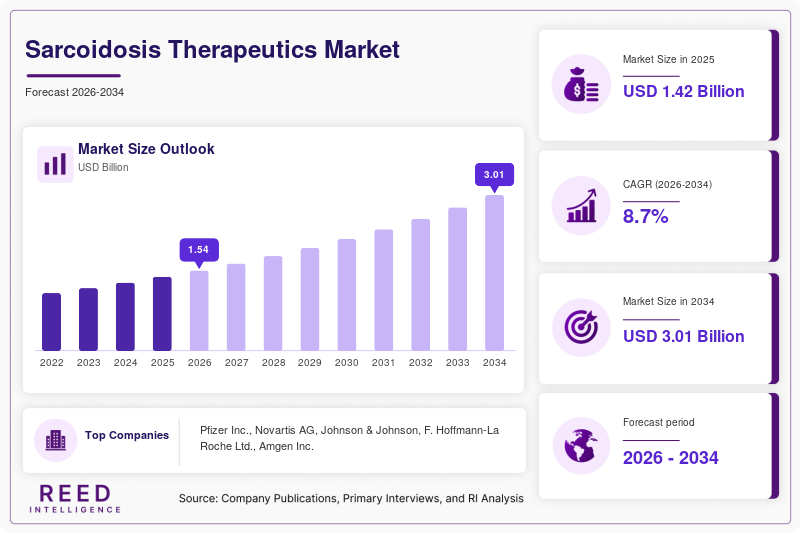
The Sarcoidosis Therapeutics Market size was valued at USD 1.42 billion in 2026 and is projected to reach USD 2.76 billion by 2034, expanding at a CAGR of 8.7% during the forecast period from 2026 to 2034. Sarcoidosis, a chronic inflammatory disease characterized by granuloma formation in multiple organs, continues to generate substantial demand for corticosteroids, immunosuppressants, biologics, and targeted therapies due to increasing diagnosis rates and expanding treatment accessibility. A major global factor supporting market expansion is the rising prevalence of autoimmune and inflammatory disorders, combined with advancements in precision diagnostics that improve early-stage detection of pulmonary and extrapulmonary sarcoidosis. Healthcare systems across developed and emerging economies are increasingly prioritizing rare disease management, while pharmaceutical companies are accelerating investments in novel biologic therapies focused on reducing long-term corticosteroid dependence. Growing awareness among pulmonologists, dermatologists, and rheumatologists has also improved patient referrals and treatment continuity. Clinical pipeline diversification, supported by regulatory incentives for orphan diseases, is creating a broader commercial landscape. Increasing healthcare spending, especially in respiratory disease therapeutics, further strengthens adoption rates. Improved reimbursement structures in major markets and expanding hospital-based specialty care networks continue to support product penetration.
Key Highlights
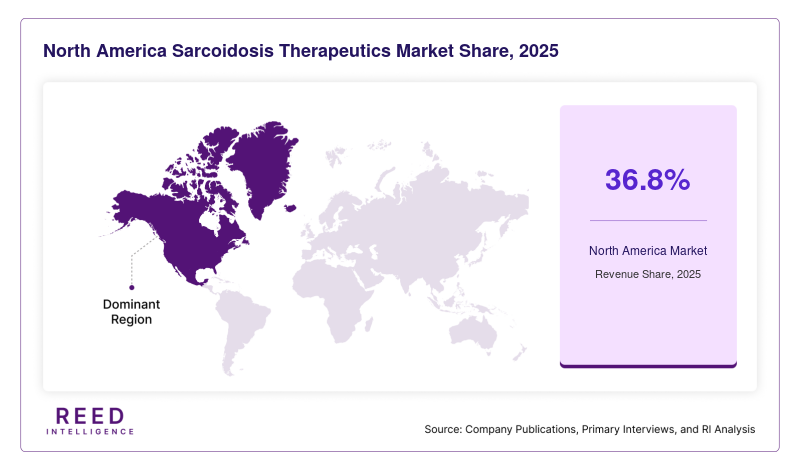
- North America dominated the market with a 36.8% share in 2025.
- Asia Pacific is expected to grow at the fastest CAGR of 10.9% during 2026–2034.
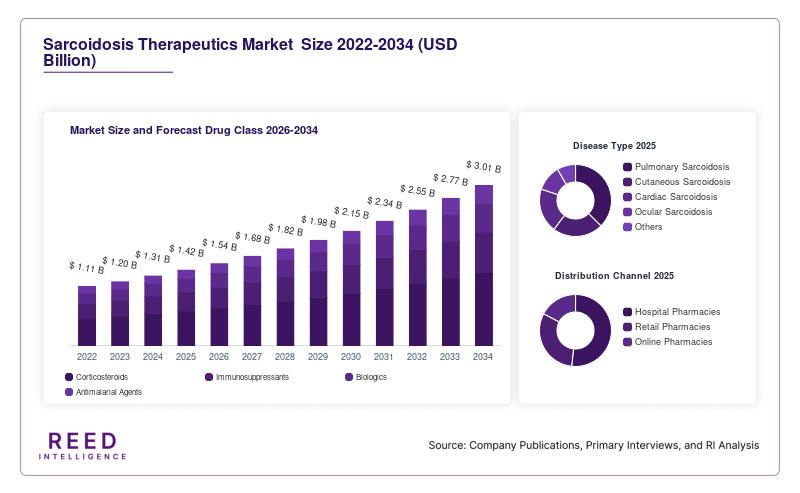
- By drug class, corticosteroids accounted for the largest share of 42.6%, while biologics are projected to grow at a CAGR of 12.8%.
- By disease type, pulmonary sarcoidosis led with a 58.4% share, whereas cardiac sarcoidosis is expected to expand at a CAGR of 11.6%.
- By distribution channel, hospital pharmacies held the dominant 48.3% share, while online pharmacies are forecast to grow at a CAGR of 13.1%.
- The United States remained the dominant country, with market values of USD 498 million in 2024 and USD 545 million in 2025.
Market Trends
Expansion of biologic and targeted immunotherapy development
The Sarcoidosis Therapeutics Market is witnessing a notable shift toward biologic therapies and targeted immunomodulators as healthcare providers seek alternatives to long-term corticosteroid exposure. Traditional corticosteroids remain first-line treatment, but chronic use often leads to diabetes, osteoporosis, and hypertension, encouraging clinicians to adopt steroid-sparing agents. Biologics targeting tumor necrosis factor-alpha and interleukin pathways are gaining momentum, particularly for refractory pulmonary and neurosarcoidosis cases. Pharmaceutical developers are also increasing investment in monoclonal antibodies and personalized inflammatory pathway inhibitors. This trend is reshaping treatment standards by improving efficacy in resistant cases while reducing systemic side effects. Regulatory support for orphan drug programs is further accelerating innovation, making biologics a strategic growth pillar in the market.
Rising integration of digital diagnostics and multidisciplinary care
Digital imaging, AI-assisted chest radiography interpretation, and biomarker-based diagnostic frameworks are transforming sarcoidosis management. Earlier diagnosis improves treatment timelines and supports better therapeutic outcomes, especially for pulmonary and cardiac manifestations. Multidisciplinary clinics involving pulmonology, cardiology, dermatology, and immunology specialists are increasingly common in developed healthcare systems. This integrated approach enhances therapeutic precision by matching disease severity with personalized treatment protocols. Telemedicine and remote symptom monitoring are also improving patient adherence in chronic disease settings. As healthcare providers increasingly rely on data-driven disease monitoring, therapeutic demand is shifting from generalized symptom suppression toward comprehensive disease progression control, supporting broader adoption of specialized treatment options across healthcare institutions.
Market Drivers
Increasing prevalence of pulmonary and systemic inflammatory diseases
The growing incidence of inflammatory and granulomatous disorders is a central growth driver for the Sarcoidosis Therapeutics Market. Improved awareness, advanced imaging technologies, and broader screening programs have increased diagnosis rates globally, particularly among high-risk populations. Pulmonary sarcoidosis remains the most common manifestation, but growing recognition of extrapulmonary forms such as cardiac and ocular sarcoidosis has widened treatment demand. Aging populations and environmental triggers, including occupational exposure to dust and pollutants, may also contribute to disease burden. As diagnosis expands beyond tertiary care centers into community hospitals, treatment volumes are increasing. This broader patient pool directly supports demand for corticosteroids, immunosuppressants, and emerging biologics across multiple healthcare settings.
Advancements in rare disease funding and pharmaceutical pipeline expansion
Governments and pharmaceutical organizations are increasing support for rare inflammatory diseases, creating favorable conditions for sarcoidosis therapeutic innovation. Orphan drug designations, accelerated approval pathways, and grants for immune-mediated disease research are encouraging clinical development. Companies are actively pursuing therapies with improved long-term safety profiles, especially for patients requiring chronic management. Expanded funding for biomarker research and disease-specific clinical trials is strengthening the evidence base for next-generation therapeutics. This environment supports commercialization of biologics and precision medicine approaches. As pharmaceutical competition intensifies, strategic collaborations between biotech firms and academic institutions are improving product development speed, creating stronger market growth through enhanced therapeutic diversity.
Market Restraint
Limited disease-specific therapeutics and complex diagnostic variability
A major restraint in the Sarcoidosis Therapeutics Market is the limited availability of therapies specifically approved for sarcoidosis, forcing clinicians to rely heavily on off-label immunosuppressants and generalized anti-inflammatory agents. Sarcoidosis presents highly variable symptoms depending on organ involvement, often leading to delayed or inaccurate diagnosis. This complexity can postpone treatment initiation and reduce market penetration, particularly in low-resource healthcare settings. Many patients are managed with corticosteroids despite long-term toxicity concerns because alternative therapies remain expensive or underdeveloped. Clinical trial recruitment is also challenging due to heterogeneous disease patterns. These limitations slow innovation adoption and create reimbursement barriers, especially in emerging markets where healthcare budgets are constrained and specialist care access remains uneven.
Market Opportunities
Growth potential in emerging economies through healthcare infrastructure expansion
Emerging markets across Asia Pacific, Latin America, and parts of the Middle East are presenting strong opportunities for the Sarcoidosis Therapeutics Market due to expanding healthcare access and improved diagnostic capabilities. Historically underdiagnosed populations are increasingly entering formal treatment pathways as respiratory disease screening improves. Government investments in specialty hospitals, insurance coverage, and rare disease awareness programs are strengthening treatment uptake. International pharmaceutical companies are also targeting these regions through strategic distribution partnerships and localized pricing models. As middle-income populations gain better healthcare access, demand for both generic corticosteroids and branded biologics is expected to rise, creating substantial long-term commercial opportunities for market participants.
Development of precision medicine and biomarker-guided therapies
Precision medicine represents a major future opportunity as researchers identify biomarkers that can classify sarcoidosis severity, predict progression, and guide treatment selection. Personalized therapeutic strategies could significantly reduce trial-and-error prescribing and improve outcomes for chronic or treatment-resistant patients. Biomarker-guided therapies may also help pharmaceutical companies differentiate products in a relatively narrow therapeutic field. Companion diagnostics and AI-based progression monitoring tools are likely to improve treatment timing and reduce hospitalization costs. As personalized medicine becomes more integrated into rare inflammatory disease care, manufacturers with biomarker-linked biologics or targeted therapies could secure premium positioning and stronger market share in advanced healthcare economies.
Segmental Analysis
By Drug Class
Corticosteroids held the dominant 42.6% market share in 2024 due to their longstanding role as first-line therapy for pulmonary and systemic sarcoidosis. Prednisone and related corticosteroids remain widely prescribed because they rapidly suppress inflammation and granuloma progression. Their affordability and broad accessibility across healthcare systems make them especially important in cost-sensitive markets. Despite safety concerns associated with prolonged use, corticosteroids remain clinically central because they are effective in controlling acute flare-ups. Hospital formularies globally continue to prioritize corticosteroids due to immediate therapeutic action and physician familiarity. Their dominance is also reinforced by established prescribing guidelines that position them as foundational therapy before escalation to steroid-sparing alternatives.
Biologics are projected to record the fastest CAGR of 12.8% during the forecast period due to rising demand for advanced treatment in refractory or corticosteroid-intolerant patients. TNF-alpha inhibitors and emerging monoclonal antibodies are increasingly used for complex pulmonary, neurological, and cardiac sarcoidosis. Their growth is driven by improved clinical trial outcomes and physician preference for therapies with targeted immune modulation. As pharmaceutical innovation expands, biologics are gaining stronger reimbursement support in developed economies. Precision medicine trends are also supporting biologic uptake by enabling more personalized therapeutic pathways. Though cost remains a barrier, increasing pipeline activity is expected to improve accessibility and diversify therapeutic options.
By Disease Type
Pulmonary sarcoidosis accounted for the largest 58.4% market share in 2024, reflecting its status as the most common clinical manifestation. The lungs are the primary organ affected in most sarcoidosis patients, making respiratory-focused therapies the largest commercial category. High rates of pulmonary imaging and specialist referral contribute to this dominance. Pulmonary disease management often requires long-term corticosteroids and immunosuppressants, reinforcing therapeutic demand. Healthcare providers prioritize pulmonary symptom management because respiratory impairment directly impacts quality of life. Established clinical pathways for chest imaging, bronchoscopy, and pulmonary function testing also support larger diagnosed patient volumes.
Cardiac sarcoidosis is anticipated to witness the fastest CAGR of 11.6% due to rising awareness of severe cardiovascular complications. Improved MRI and PET imaging technologies are increasing diagnosis rates for previously overlooked cases. Cardiac involvement requires aggressive therapeutic intervention because untreated inflammation can lead to arrhythmias and heart failure. This has increased demand for biologics and intensive immunosuppressive strategies. Growing physician awareness and better diagnostic protocols are transforming this segment from niche to strategically significant. The life-threatening nature of cardiac manifestations is expected to drive stronger investment in targeted therapies.
By Distribution Channel
Hospital pharmacies dominated with a 48.3% share in 2024 because sarcoidosis treatment often begins in specialized hospital environments where diagnosis and initial therapy are coordinated. Hospitals remain central for biologic administration, imaging-guided treatment decisions, and severe case management. Their role is especially significant for multisystem disease requiring multidisciplinary specialist oversight. Institutional procurement also ensures consistent corticosteroid and immunosuppressant supply. Hospital pharmacies maintain dominance due to physician-led treatment initiation and stronger reimbursement alignment for advanced therapies.
Online pharmacies are expected to grow at the fastest CAGR of 13.1% through 2034 due to increasing digital healthcare adoption and chronic medication refill demand. Patients managing long-term corticosteroid or maintenance immunosuppressive regimens increasingly prefer digital purchasing for convenience and pricing transparency. Telemedicine expansion also supports e-pharmacy growth by linking digital prescriptions with home delivery. This trend is particularly relevant in urban markets with mature digital health ecosystems. Expanding patient adherence tools and subscription refill services are likely to strengthen this segment further.
Regional Analysis
North America
North America accounted for 36.8% of the global Sarcoidosis Therapeutics Market share in 2025 and is projected to maintain leadership with a CAGR of 8.1% through 2034. High diagnosis rates, advanced pulmonary care systems, and favorable reimbursement structures continue to support regional dominance. The region benefits from widespread specialist availability and strong biologic adoption for refractory sarcoidosis cases. Pharmaceutical innovation pipelines are also concentrated here, supporting premium therapeutic commercialization.
The United States dominates the regional market due to high disease awareness and extensive rare disease clinical research infrastructure. Strong regulatory incentives for orphan therapeutics encourage innovation. A unique growth factor is the country’s integration of multidisciplinary sarcoidosis centers, which streamline diagnosis and treatment coordination. These centers enhance biologic therapy adoption while improving patient outcomes through personalized long-term disease management.
Europe
Europe captured 27.4% of the global market in 2025 and is forecast to grow at a CAGR of 8.4% during the study period. Universal healthcare systems in major economies support broad treatment access, while rising autoimmune disease awareness contributes to increasing diagnosis. Strong respiratory medicine frameworks in Western Europe also enhance pulmonary sarcoidosis treatment volumes.
Germany leads the European market due to advanced healthcare infrastructure and robust respiratory disease research. A distinctive regional growth factor is strong government-backed rare disease policy support, which facilitates reimbursement for advanced immunosuppressants and biologics. Academic hospital networks also contribute to expanded clinical trial activity, strengthening treatment innovation across the region.
Asia Pacific
Asia Pacific held 21.3% market share in 2025 and is expected to register the fastest CAGR of 10.9% through 2034. Increasing healthcare investments, improving diagnostic technologies, and rising urban pollution exposure are driving awareness. The region’s large patient base offers strong commercial potential for both established and emerging therapies.
Japan remains the dominant country due to advanced respiratory care and strong diagnostic adoption. A key growth factor is the country’s aging demographic, which increases chronic inflammatory disease management demand. Additionally, pharmaceutical firms are increasingly targeting Asia Pacific with regional clinical trials, supporting biologic and immunotherapy market penetration.
Middle East & Africa
Middle East & Africa represented 7.2% of the market in 2025 and is projected to grow at a CAGR of 7.9%. Growth remains moderate due to lower diagnosis rates but is improving through healthcare modernization. Wealthier Gulf nations are investing in specialty respiratory clinics and digital diagnostics.
Saudi Arabia leads regional growth through healthcare transformation programs focused on specialty care development. A unique factor is increased public investment in tertiary hospitals and advanced imaging systems, which improves sarcoidosis identification. Regional partnerships with global pharmaceutical firms are also improving treatment availability.
Latin America
Latin America accounted for 7.3% market share in 2025 and is forecast to grow at 8.3% CAGR through 2034. Market growth is supported by improving public healthcare frameworks and expanding access to respiratory specialists. Urban healthcare modernization is improving treatment access.
Brazil dominates the region due to its large healthcare network and growing chronic disease burden. A significant growth factor is expanding public-private pharmaceutical partnerships that improve access to corticosteroids and immunosuppressants. Diagnostic modernization is also supporting earlier pulmonary sarcoidosis detection.
Competitive Landscape
The Sarcoidosis Therapeutics Market remains moderately consolidated, with major pharmaceutical companies competing through immunology portfolios, corticosteroid formulations, and biologic innovation. Pfizer Inc. remains a leading player due to its broad inflammatory disease expertise and strategic investments in immunomodulatory therapeutics. Johnson & Johnson, Novartis AG, F. Hoffmann-La Roche Ltd., and Amgen Inc. are also prominent participants leveraging autoimmune therapy capabilities. Recent development activity includes expanded biologic trials for inflammatory granulomatous disorders and strategic partnerships focused on orphan disease therapeutics. Companies are increasingly prioritizing steroid-sparing innovation, biomarker-driven treatment development, and regional expansion strategies. Competitive intensity is expected to rise as biotech firms enter the market with specialized inflammatory pathway solutions.
Key Players
- Pfizer Inc.
- Novartis AG
- Johnson & Johnson
- F. Hoffmann-La Roche Ltd.
- Amgen Inc.
- AbbVie Inc.
- Bristol-Myers Squibb
- Sanofi
- GlaxoSmithKline plc
- Teva Pharmaceutical Industries Ltd.
- AstraZeneca plc
- Eli Lilly and Company
- Merck & Co., Inc.
- Gilead Sciences, Inc.
- Boehringer Ingelheim International GmbH
Recent Developments
- Pfizer expanded inflammatory disease biologic trials to include granulomatous respiratory disorders in 2025.
- Novartis strengthened its immunology portfolio through advanced monoclonal antibody research targeting chronic inflammatory pathways in 2024.
- Johnson & Johnson increased rare disease strategic partnerships to improve specialty immunotherapy commercialization for complex inflammatory diseases in 2025.
Sarcoidosis Therapeutics Market Segments
Drug Class
- Corticosteroids
- Immunosuppressants
- Biologics
- Antimalarial Agents
Disease Type
- Pulmonary Sarcoidosis
- Cutaneous Sarcoidosis
- Cardiac Sarcoidosis
- Ocular Sarcoidosis
- Others
Distribution Channel
- Hospital Pharmacies
- Retail Pharmacies
- Online Pharmacies
By Region
- North America
- Europe
- APAC
- Middle East and Africa
- LATAM