Scalp Cooling System Market Size, Share & Demand Report By Product Type (Automated Scalp Cooling Systems, Manual Scalp Cooling Systems), By Application (Chemotherapy-Induced Alopecia Prevention, Dermatological Treatments), By End-User (Hospitals, Ambulatory Care Centers, Specialty Clinics), By Distribution Channel (Direct Sales, Online Channels, Third-Party Distributors), By Region & Segment Forecasts, 2025–2034
USD 3950
Market Overview
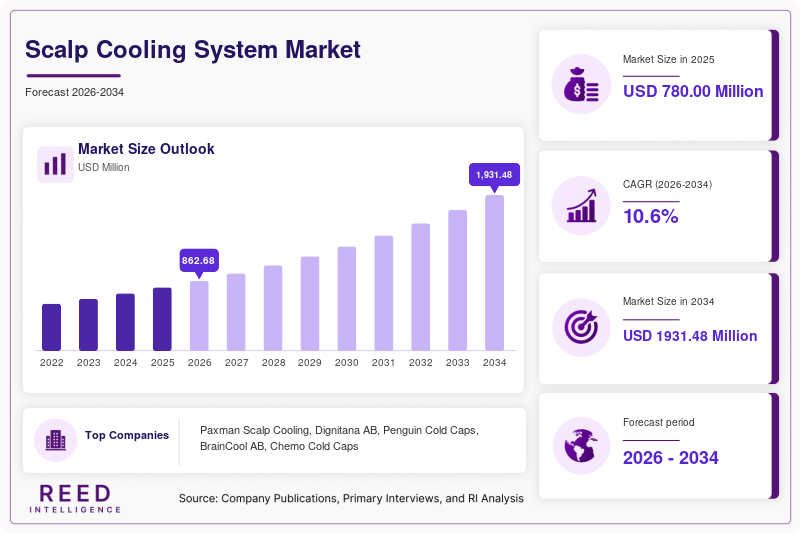
The global Scalp Cooling System Market size was valued at USD 780 million in 2025 and is projected to reach approximately USD 1.92 billion by 2034, expanding at a CAGR of 10.6% during the forecast period (2025–2034). The market growth is primarily attributed to the increasing prevalence of cancer globally and the rising adoption of chemotherapy, which has amplified the demand for supportive care solutions that improve patient quality of life. Scalp cooling systems have emerged as a clinically accepted method to reduce chemotherapy-induced alopecia, thereby supporting patient confidence and treatment adherence.
One key global factor driving the Scalp Cooling System Market growth is the increasing integration of patient-centric oncology care models. Healthcare providers are focusing on minimizing treatment side effects, which has led to the incorporation of scalp cooling technologies in hospitals and oncology centers worldwide. Additionally, advancements in cooling technologies, including automated temperature regulation and improved cap designs, have further enhanced system efficiency and patient comfort.
Key Highlights
- North America dominated the market with a 38% share in 2025, while Asia Pacific is expected to grow at the fastest CAGR of 12.8% during the forecast period.
- The automated scalp cooling systems segment led the market in 2025 with a 64% share, while manual systems are anticipated to grow at a CAGR of 11.9%.
- Chemotherapy-induced alopecia prevention was the dominant application segment, accounting for 72% share, while dermatological applications are projected to grow at a CAGR of 12.2%.
- The U.S. accounted for USD 240 million in 2025 and is expected to reach USD 262 million in 2026.
Market Trends
Integration of Advanced Temperature Control Technologies
A significant trend shaping the Scalp Cooling System Market is the integration of advanced temperature control and monitoring systems. Modern scalp cooling devices are increasingly equipped with automated cooling cycles, real-time temperature feedback, and digital interfaces that enhance treatment precision. These advancements ensure consistent cooling levels, improving efficacy in preventing hair loss during chemotherapy. Additionally, innovations in cap materials and ergonomic design are improving patient comfort, making prolonged use more feasible. The incorporation of IoT-enabled monitoring systems is also gaining traction, allowing clinicians to track treatment performance and optimize outcomes.
Expansion of Scalp Cooling Services in Outpatient Oncology Centers
Another notable trend is the expansion of scalp cooling systems in outpatient oncology centers and ambulatory care settings. As cancer treatments shift toward outpatient care, these facilities are increasingly adopting scalp cooling solutions to enhance patient experience. The availability of portable and compact systems has made it easier for smaller clinics to integrate these technologies. Furthermore, partnerships between device manufacturers and healthcare providers are facilitating broader access to scalp cooling services, particularly in emerging markets. This trend is expected to significantly contribute to the overall growth and accessibility of the market.
Market Drivers
Rising Cancer Incidence and Chemotherapy Adoption
The increasing global burden of cancer is a major driver of the Scalp Cooling System Market. With a growing number of patients undergoing chemotherapy, the demand for solutions that mitigate side effects such as hair loss has surged. Chemotherapy-induced alopecia is one of the most distressing side effects for patients, often affecting emotional well-being. Scalp cooling systems help reduce hair follicle exposure to chemotherapy drugs, thereby minimizing hair loss. As awareness regarding these benefits increases among patients and healthcare professionals, adoption rates are expected to rise steadily.
Growing Emphasis on Patient Quality of Life
Healthcare systems worldwide are placing greater emphasis on improving patient quality of life during cancer treatment. This shift has led to increased adoption of supportive care technologies, including scalp cooling systems. Hospitals and oncology centers are incorporating these systems as part of comprehensive cancer care programs. Additionally, rising patient awareness and willingness to invest in treatments that preserve physical appearance are further driving market growth. The availability of reimbursement policies in certain regions has also supported adoption, making these systems more accessible to a broader patient population.
Market Restraint
High Cost of Scalp Cooling Systems and Limited Reimbursement
A major restraint in the Scalp Cooling System Market is the high cost associated with these systems and the limited availability of reimbursement in many regions. The initial investment required for purchasing and maintaining scalp cooling equipment can be significant, particularly for smaller healthcare facilities. Additionally, the cost per treatment session can be prohibitive for patients in regions where insurance coverage is limited or nonexistent.
This financial barrier restricts widespread adoption, especially in developing economies where healthcare budgets are constrained. Furthermore, the lack of standardized reimbursement policies across different countries creates inconsistencies in access to these systems. While some developed markets have begun to include scalp cooling treatments under insurance coverage, many regions still lag behind, limiting market penetration. Addressing these cost-related challenges will be crucial for achieving broader adoption and sustained growth in the coming years.
Market Opportunities
Expansion in Emerging Markets
Emerging economies present significant growth opportunities for the Scalp Cooling System Market. Increasing healthcare investments, improving oncology infrastructure, and rising awareness about cancer care are driving demand in regions such as Asia Pacific and Latin America. Governments and private healthcare providers are expanding cancer treatment facilities, creating a favorable environment for the adoption of advanced supportive care technologies. Manufacturers are also focusing on cost-effective solutions tailored to these markets, which is expected to accelerate adoption rates.
Development of Portable and Home-Use Systems
The development of portable and home-use scalp cooling systems represents another promising opportunity. Technological advancements are enabling the creation of compact devices that can be used outside traditional clinical settings. These systems offer greater convenience and flexibility for patients undergoing long-term chemotherapy treatments. The increasing trend toward home-based healthcare is further supporting this opportunity. As manufacturers continue to innovate and improve device usability, the demand for portable scalp cooling systems is expected to grow significantly, opening new revenue streams in the market.
Segmental Analysis
By Product Type
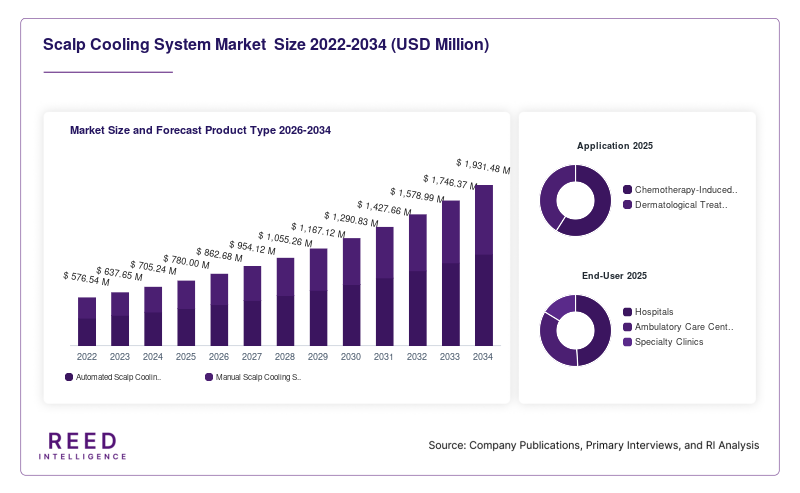
Automated scalp cooling systems dominated the Scalp Cooling System Market in 2025, accounting for 64% of the total market share. These systems are widely preferred due to their ability to maintain consistent temperature control and reduce manual intervention. Their integration into hospital settings has made them a standard choice for oncology departments.
Manual scalp cooling systems are expected to grow at a CAGR of 11.9% during the forecast period. Their lower cost and ease of use make them suitable for smaller healthcare facilities and emerging markets. Increasing demand for affordable solutions is expected to drive this segment’s growth.
By Application
Chemotherapy-induced alopecia prevention was the dominant application segment, holding a 72% share in 2025. The widespread use of chemotherapy treatments has driven the demand for scalp cooling systems to minimize hair loss.
Dermatological applications are anticipated to grow at a CAGR of 12.2% over the forecast period. The expanding use of cooling technologies in treating scalp conditions and improving hair health is expected to contribute to this growth.
By End-User
Hospitals accounted for the largest share of 58% in 2025 within the Scalp Cooling System Market. The availability of advanced infrastructure and skilled professionals has made hospitals the primary users of these systems.
Ambulatory care centers are projected to grow at a CAGR of 11.7% during the forecast period. The shift toward outpatient care and increasing number of specialized oncology clinics are key factors driving this segment’s growth.
By Distribution Channel
Direct sales dominated the market with a 61% share in 2025. Manufacturers prefer direct sales channels to establish strong relationships with healthcare providers and ensure proper system installation and training.
Online distribution channels are expected to grow at a CAGR of 12.5% during the forecast period. The increasing adoption of digital platforms and e-commerce in the healthcare sector is driving this segment’s expansion.
Regional Analysis
North America
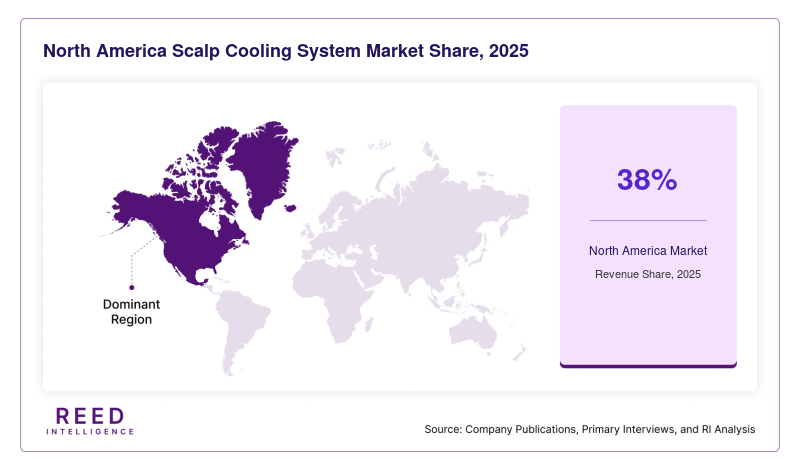
North America accounted for 38% of the Scalp Cooling System Market share in 2025 and is expected to grow at a CAGR of 9.8% during the forecast period. The region’s growth is driven by advanced healthcare infrastructure and high adoption of innovative medical technologies.
The United States dominated the regional market due to strong awareness regarding chemotherapy side-effect management. The presence of established oncology centers and favorable reimbursement scenarios has encouraged widespread adoption of scalp cooling systems.
Europe
Europe held a 27% market share in 2025 and is projected to expand at a CAGR of 10.2% from 2025 to 2034. The region benefits from strong healthcare systems and increasing focus on patient-centric care.
Germany emerged as the leading country in this region, supported by a robust healthcare system and growing adoption of advanced oncology treatments. The country’s emphasis on improving patient quality of life has contributed to the increased use of scalp cooling systems.
Asia Pacific
Asia Pacific captured 20% of the market share in 2025 and is anticipated to grow at the fastest CAGR of 12.8% during the forecast period. Rapidly improving healthcare infrastructure and rising cancer incidence are key factors driving growth.
China dominated the region due to its large patient population and increasing investments in healthcare facilities. Government initiatives to improve cancer care services have further supported market expansion.
Middle East & Africa
The Middle East & Africa region accounted for 8% of the market share in 2025 and is expected to grow at a CAGR of 9.5% through 2034. Growth in this region is driven by improving healthcare access and increasing awareness about cancer treatment options.
Saudi Arabia led the regional market, supported by ongoing healthcare reforms and investments in advanced medical technologies. The expansion of oncology centers has facilitated the adoption of scalp cooling systems.
Latin America
Latin America held a 7% share of the market in 2025 and is projected to grow at a CAGR of 10.1% during the forecast period. Increasing healthcare expenditure and growing awareness are key growth drivers.
Brazil dominated the region due to its expanding healthcare sector and rising cancer prevalence. The country’s focus on enhancing oncology care services has contributed to the adoption of scalp cooling technologies.
Competitive Landscape
The Scalp Cooling System Market is moderately consolidated, with several key players focusing on technological innovation and strategic partnerships. The market leader, Paxman Scalp Cooling, has established a strong presence through continuous product development and global expansion. The company recently introduced an advanced scalp cooling system with enhanced temperature control features, improving treatment efficiency.
Other major players such as Dignitana AB, Penguin Cold Caps, and BrainCool AB are also investing in research and development to strengthen their market positions. These companies are focusing on expanding their product portfolios and entering emerging markets to capture new growth opportunities. Strategic collaborations with healthcare providers and oncology centers are a common approach among market participants to increase product adoption and market reach.
Key Players
- Paxman Scalp Cooling
- Dignitana AB
- Penguin Cold Caps
- BrainCool AB
- Chemo Cold Caps
- Arctic Cold Caps
- Cool Caps
- Capelli Inc.
- Cold Cap International
- KOLMI-HOPEN
- Delta T Devices
- MedCap Solutions
- CryoCare Systems
- ThermoMed Technologies
- OncoCooling Solutions
Recent Developments
- In 2024, Paxman Scalp Cooling launched an upgraded system with improved cooling efficiency and patient comfort features.
- In 2023, Dignitana AB expanded its operations in Asia Pacific to strengthen its market presence.
- In 2024, BrainCool AB introduced a next-generation cooling cap with enhanced ergonomic design.
- In 2023, Penguin Cold Caps partnered with oncology clinics to expand service accessibility.
- In 2024, Chemo Cold Caps developed a cost-effective solution targeting emerging markets.
Scalp Cooling System Market Segments
Product Type
- Automated Scalp Cooling Systems
- Manual Scalp Cooling Systems
Application
- Chemotherapy-Induced Alopecia Prevention
- Dermatological Treatments
End-User
- Hospitals
- Ambulatory Care Centers
- Specialty Clinics
Distribution Channel
- Direct Sales
- Online Channels
- Third-Party Distributors
By Region
- North America
- Europe
- APAC
- Middle East and Africa
- LATAM