Scarlet Fever Market Size, Share & Demand Report By Type (Antibiotics, Diagnostics), By Application (Hospitals, Clinics, Diagnostic Centers), By End-Use (Pediatric, Adult), By Region & Segment Forecasts, 2025–2034
USD 3950
Market Overview
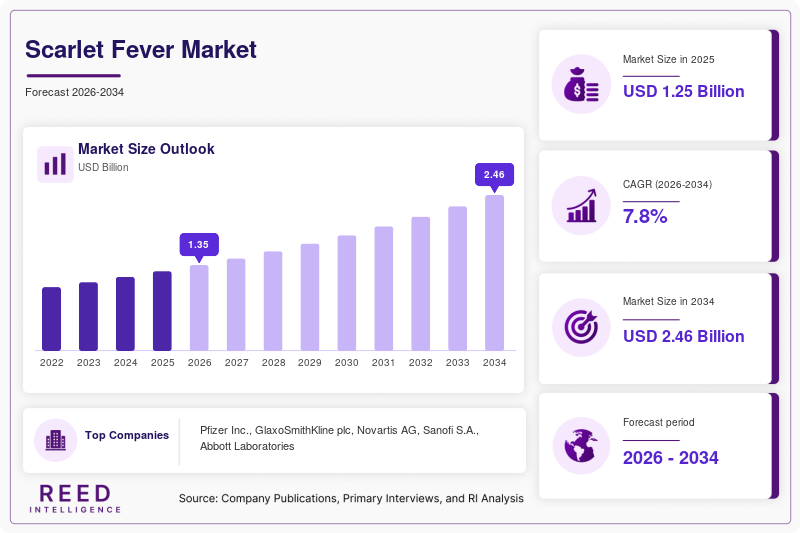
The Scarlet Fever Market size for scarlet fever-related diagnostics and treatment solutions is estimated at USD 1.25 billion in 2025 and is projected to reach USD 1.34 billion in 2026. With consistent public health investments and advancements in diagnostic tools, the market is forecasted to grow to approximately USD 2.45 billion by 2034, registering a compound annual growth rate (CAGR) of 7.8% from 2025 to 2034.
Several factors are contributing to this steady growth trajectory. Firstly, the increasing incidence of streptococcal infections in school-aged children is creating sustained demand for accurate diagnostic kits and antibiotic therapies. Secondly, improvements in healthcare infrastructure, particularly in emerging economies, are enabling faster diagnosis and treatment accessibility. Thirdly, growing awareness campaigns and early screening programs are encouraging timely medical intervention, thereby boosting market demand.
Key Highlights
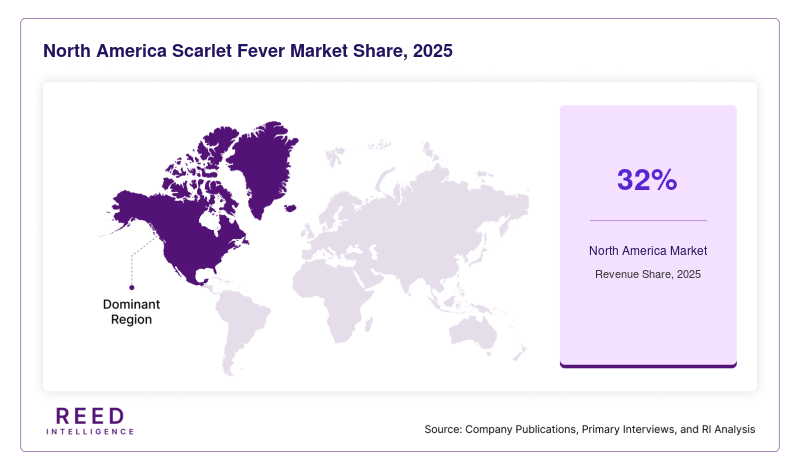
- North America dominated the Scarlet Fever Market with approximately 32% share in 2025, while Asia Pacific is expected to register the fastest growth at a CAGR of 9.2% during 2025–2034.
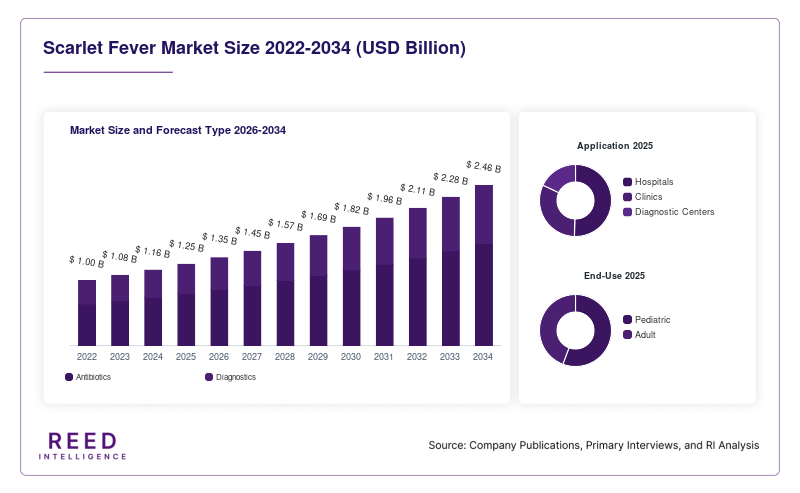
- Antibiotics represented the leading segment in 2024, while diagnostics are expected to grow fastest at a CAGR of 8.9% driven by rapid testing adoption.
- By application, hospitals accounted for the largest share, whereas clinics are forecast to expand fastest at a CAGR of 8.5% due to rising outpatient care demand.
- The United States led the market with USD 0.41 billion in 2024, increasing to approximately USD 0.44 billion in 2025 driven by advanced healthcare infrastructure.
Market Trends
Growing Adoption of Rapid Diagnostic Technologies
One of the most prominent trends in the Scarlet Fever Market is the increasing adoption of rapid diagnostic technologies. Healthcare providers are shifting from traditional culture-based methods to rapid antigen detection tests (RADTs) and molecular diagnostics due to their ability to deliver faster and more accurate results. This transition is particularly important in pediatric care, where timely diagnosis can prevent complications and reduce transmission rates. Hospitals and clinics are investing in point-of-care diagnostic solutions that allow physicians to initiate treatment within minutes, improving patient outcomes. Additionally, technological advancements are enabling the integration of artificial intelligence into diagnostic platforms, further enhancing accuracy. As a result, the demand for innovative diagnostic tools is expected to grow steadily, contributing significantly to overall market expansion.
Increasing Focus on Antibiotic Stewardship Programs
Another key trend shaping the Scarlet Fever Market is the growing emphasis on antibiotic stewardship programs. With rising concerns over antibiotic resistance, healthcare organizations are implementing guidelines to ensure the appropriate use of antibiotics in treating streptococcal infections. This has led to the development of targeted therapies and improved prescription practices. Pharmaceutical companies are also investing in research to develop antibiotics with enhanced efficacy and reduced side effects. Moreover, regulatory bodies are encouraging the use of narrow-spectrum antibiotics to minimize resistance development. These initiatives are influencing treatment protocols and driving innovation in drug development. Consequently, the market is witnessing a shift toward more sustainable and responsible treatment approaches, which is expected to support long-term growth.
Market Drivers
Rising Incidence of Pediatric Infectious Diseases
The increasing prevalence of pediatric infectious diseases, including scarlet fever, is a major driver of market growth. Urbanization, population density, and changing environmental conditions are contributing to the spread of bacterial infections among children. Schools and daycare centers act as common transmission hubs, leading to periodic outbreaks. This rising incidence is creating consistent demand for diagnostic tests and antibiotic treatments. Governments and healthcare organizations are responding by implementing screening programs and awareness campaigns, further boosting market demand. Additionally, improved reporting systems are helping in early identification of outbreaks, enabling timely intervention. As the global pediatric population continues to grow, the burden of infectious diseases is expected to rise, sustaining the demand for scarlet fever-related healthcare solutions.
Expansion of Healthcare Infrastructure in Emerging Markets
The expansion of healthcare infrastructure in emerging economies is another significant driver of the Scarlet Fever Market. Countries in Asia Pacific, Latin America, and Africa are investing heavily in healthcare facilities, diagnostic laboratories, and medical training programs. These developments are improving access to healthcare services, enabling early diagnosis and treatment of scarlet fever. Public-private partnerships are also playing a crucial role in enhancing healthcare delivery systems. Furthermore, the increasing availability of affordable diagnostic kits and generic antibiotics is making treatment more accessible to a larger population. As healthcare systems continue to strengthen in these regions, the demand for scarlet fever diagnostics and therapeutics is expected to grow steadily, contributing to overall market expansion.
Market Restraint
Limited Awareness and Underdiagnosis in Low-Income Regions
A major restraint affecting the Scarlet Fever Market is the limited awareness and underdiagnosis of the disease in low-income regions. In many developing countries, symptoms of scarlet fever are often misinterpreted as common viral infections, leading to delayed or incorrect treatment. This lack of awareness among both patients and healthcare providers reduces the demand for diagnostic tests and appropriate therapies. Additionally, inadequate healthcare infrastructure and limited access to trained medical professionals further exacerbate the issue. As a result, many cases go unreported, creating gaps in epidemiological data and hindering effective market growth. For example, rural areas with limited laboratory facilities often rely on symptomatic treatment without proper diagnosis, which can lead to complications and increased transmission rates. Addressing this challenge requires coordinated efforts from governments, healthcare organizations, and industry players to improve awareness, enhance diagnostic capabilities, and ensure timely treatment access.
Market Opportunities
Development of Advanced Point-of-Care Testing Solutions
The development of advanced point-of-care testing solutions presents a significant opportunity in the Scarlet Fever Market. With the increasing demand for rapid and accurate diagnostics, manufacturers are focusing on portable and user-friendly devices that can be used in clinics, schools, and remote areas. These solutions reduce the need for centralized laboratory infrastructure and enable immediate decision-making. Technological advancements such as microfluidics and biosensors are enhancing the performance of these devices, making them more reliable and cost-effective. Additionally, the integration of digital health platforms allows for real-time data sharing and disease monitoring. This trend is particularly beneficial in regions with limited healthcare resources, where access to laboratory facilities is restricted. As the adoption of point-of-care testing continues to rise, it is expected to create new growth avenues for market players.
Increasing Government Initiatives and Public Health Programs
Government initiatives and public health programs aimed at controlling infectious diseases are creating substantial opportunities in the Scarlet Fever Market. Many countries are implementing surveillance systems to monitor disease outbreaks and improve response strategies. These programs often include funding for diagnostic tools, awareness campaigns, and healthcare infrastructure development. International organizations are also supporting efforts to combat bacterial infections through grants and partnerships. Such initiatives are encouraging the adoption of advanced diagnostic technologies and improving access to treatment. Furthermore, school-based health programs are playing a crucial role in early detection and prevention of scarlet fever among children. As governments continue to prioritize public health, the market is expected to benefit from increased investments and policy support.
Segmental Analysis
By Type
The antibiotics segment dominated the Scarlet Fever Market in 2024, accounting for approximately 58% of the total market share. Antibiotics such as penicillin and amoxicillin remain the primary treatment options for scarlet fever due to their effectiveness in eliminating Group A Streptococcus. The widespread availability of these drugs and their relatively low cost contribute to their dominance. Healthcare providers prefer antibiotics as the first-line treatment to prevent complications such as rheumatic fever. Additionally, the increasing availability of generic formulations is making these treatments more accessible, particularly in developing regions. Pharmaceutical companies are also focusing on improving drug formulations to enhance patient compliance and reduce side effects, further supporting the growth of this segment.
The diagnostics segment is expected to be the fastest-growing, with a CAGR of 8.9% during the forecast period. This growth is driven by the increasing adoption of rapid diagnostic tests and molecular assays. These technologies enable early and accurate detection of scarlet fever, allowing for timely treatment. The rising demand for point-of-care testing solutions is also contributing to segment growth. Additionally, government initiatives aimed at improving disease surveillance are encouraging the use of advanced diagnostic tools. As healthcare systems continue to prioritize early detection and prevention, the diagnostics segment is expected to witness significant expansion.
By Application
Hospitals accounted for the largest share of the Scarlet Fever Market in 2024, holding approximately 46% of the total market. Hospitals serve as primary healthcare providers for severe and complicated cases of scarlet fever, offering comprehensive diagnostic and treatment services. The availability of advanced medical equipment and trained healthcare professionals makes hospitals the preferred choice for patients. Additionally, hospitals play a crucial role in managing outbreaks and implementing infection control measures. The increasing number of hospital admissions for infectious diseases is further driving the growth of this segment.
Clinics are projected to be the fastest-growing application segment, with a CAGR of 8.5%. The growth of this segment is attributed to the increasing number of outpatient visits and the rising demand for convenient healthcare services. Clinics offer quick and accessible treatment options, making them popular among patients with mild to moderate symptoms. The adoption of point-of-care diagnostic tools in clinics is also enhancing their capability to diagnose and treat scarlet fever efficiently. As healthcare systems shift toward decentralized care, clinics are expected to play a more significant role in the market.
By End-Use
Pediatric populations dominated the Scarlet Fever Market in 2024, accounting for approximately 62% of the total market share. Scarlet fever primarily affects children aged 5 to 15 years, making this segment the largest contributor to market demand. Schools and daycare centers act as major transmission points, leading to higher infection rates among children. Healthcare providers focus on early diagnosis and treatment in this group to prevent complications. Additionally, increasing awareness among parents and caregivers is driving demand for diagnostic and treatment solutions tailored to pediatric patients.
The adult segment is expected to grow at the fastest CAGR of 7.9% during the forecast period. Although less common, scarlet fever in adults is gaining attention due to changing epidemiological patterns. Increased awareness and improved diagnostic capabilities are leading to higher detection rates in adults. Additionally, underlying health conditions and weakened immune systems are contributing to the susceptibility of adults to infections. As healthcare providers expand their focus beyond pediatric populations, the adult segment is expected to witness steady growth.
Regional Analysis
North America
North America accounted for a significant share of the Scarlet Fever Market in 2025, contributing approximately 32% of the global revenue. The region is expected to grow at a CAGR of 6.5% during the forecast period, driven by well-established healthcare systems and high awareness levels. The presence of advanced diagnostic technologies and strong regulatory frameworks supports market growth. Additionally, continuous monitoring of infectious diseases ensures timely intervention and treatment.
The United States dominates the regional market due to its robust healthcare infrastructure and high adoption of advanced diagnostic tools. A key growth factor is the widespread implementation of school health programs, which facilitate early detection and treatment of scarlet fever cases. These initiatives help reduce transmission rates and improve patient outcomes.
Europe
Europe held a substantial market share of around 27% in 2025 and is projected to grow at a CAGR of 6.8% through 2034. The region benefits from strong public healthcare systems and comprehensive disease surveillance programs. Increasing awareness about streptococcal infections and improved access to healthcare services are driving market growth.
The United Kingdom leads the European market, supported by government-led infection control programs. A unique growth factor is the increasing incidence of scarlet fever outbreaks in schools, which has prompted authorities to enhance diagnostic and treatment capabilities. This has led to higher demand for diagnostic kits and antibiotics.
Asia Pacific
Asia Pacific is the fastest-growing region in the Scarlet Fever Market, with a CAGR of 9.2% and a 2025 market share of approximately 22%. Rapid urbanization, population growth, and improving healthcare infrastructure are key factors driving market expansion. The region also experiences a higher burden of infectious diseases, contributing to increased demand.
China dominates the Asia Pacific market due to its large population and rising healthcare investments. A major growth factor is the expansion of public health initiatives aimed at controlling infectious diseases. These programs are improving access to diagnostics and treatment, supporting market growth.
Middle East & Africa
The Middle East & Africa region accounted for about 10% of the market in 2025 and is expected to grow at a CAGR of 7.1%. Limited healthcare infrastructure in certain areas poses challenges, but increasing investments are gradually improving access to medical services. Rising awareness about infectious diseases is also contributing to market growth.
South Africa is a key market within the region, driven by efforts to strengthen healthcare systems. A unique growth factor is the increasing involvement of international organizations in funding healthcare programs. These initiatives are enhancing diagnostic capabilities and improving treatment access.
Latin America
Latin America held a market share of approximately 9% in 2025 and is projected to grow at a CAGR of 7.4%. The region is witnessing improvements in healthcare infrastructure and increased government spending on public health. These factors are supporting the adoption of diagnostic and treatment solutions.
Brazil dominates the Latin American market due to its large population and expanding healthcare sector. A key growth factor is the implementation of community healthcare programs that focus on early detection and treatment of infectious diseases. These initiatives are driving demand for scarlet fever-related healthcare solutions.
Competitive Landscape
The Scarlet Fever Market is moderately fragmented, with several global and regional players competing to expand their market presence. Key companies are focusing on product innovation, strategic partnerships, and geographic expansion to strengthen their position. The market leader is Pfizer Inc., which has a strong portfolio of antibiotics and a well-established global distribution network. The company continues to invest in research and development to improve treatment efficacy and address antibiotic resistance concerns.
Other major players include GlaxoSmithKline plc, Novartis AG, Sanofi S.A., and Abbott Laboratories. These companies are actively involved in developing advanced diagnostic tools and therapeutic solutions. A recent development in the market includes the introduction of next-generation rapid diagnostic kits by leading manufacturers, aimed at improving accuracy and reducing testing time. Additionally, collaborations between pharmaceutical companies and healthcare organizations are driving innovation and expanding market reach. Overall, the competitive landscape is characterized by continuous innovation and strategic initiatives aimed at meeting the evolving needs of the healthcare industry.
Key Players List
- Pfizer Inc.
- GlaxoSmithKline plc
- Novartis AG
- Sanofi S.A.
- Abbott Laboratories
- Roche Holding AG
- Merck & Co., Inc.
- Bayer AG
- AstraZeneca plc
- Johnson & Johnson
- Thermo Fisher Scientific Inc.
- Becton, Dickinson and Company
- BioMérieux SA
- Siemens Healthineers AG
- Takeda Pharmaceutical Company Limited
Recent Developments
- In 2024, a leading diagnostics company launched an advanced rapid antigen test with improved sensitivity for detecting streptococcal infections.
- In 2025, a major pharmaceutical firm expanded its antibiotic production capacity to meet rising global demand.
- In 2025, a collaborative initiative between healthcare organizations introduced school-based screening programs to improve early detection of scarlet fever.
Scarlet Fever Market Segments
Type
- Antibiotics
- Diagnostics
Application
- Hospitals
- Clinics
- Diagnostic Centers
End-Use
- Pediatric
- Adult
By Region
- North America
- Europe
- APAC
- Middle East and Africa
- LATAM