Schnitzler Syndrome Disease Treatment Market Size, Share & Demand Report By Treatment Type (Biologics, NSAIDs, Corticosteroids, Immunosuppressants), By Drug Class (IL-1 Inhibitors, Monoclonal Antibodies, Anti-inflammatory Drugs), By Route of Administration (Injectable, Oral), By Distribution Channel (Hospital Pharmacies, Retail Pharmacies, Online Pharmacies), By Region & Segment Forecasts, 2025–2034
USD 3950
Schnitzler Syndrome Disease Treatment Market Overview
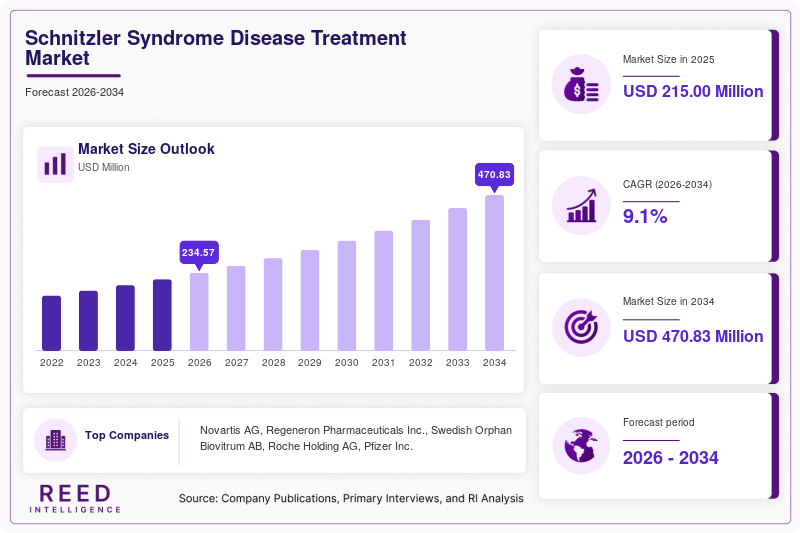
The global Schnitzler Syndrome Disease Treatment Market size was valued at approximately USD 215 million in 2025 and is projected to reach USD 468 million by 2034, expanding at a CAGR of 9.1% during 2025–2034. The market growth is primarily driven by the increasing recognition of rare autoinflammatory diseases and the growing adoption of targeted biologic therapies.
A key global factor supporting market expansion has been the advancement in biologics and immunomodulatory therapies, particularly interleukin-1 (IL-1) inhibitors. These therapies have significantly improved symptom management and patient outcomes, prompting healthcare providers to adopt more precise treatment protocols for Schnitzler Syndrome.
Key Highlights
- North America dominated the market with a 42% share in 2025, while Asia Pacific is expected to grow at the fastest CAGR of 10.6% through 2034.
- Among treatment types, biologics dominated with 58% share, while IL-1 inhibitors are projected to grow fastest at a CAGR of 9.8%.
- By distribution channel, hospital pharmacies led with 49% share, while online pharmacies are expected to expand at a CAGR of 10.2%.
- The U.S. market was valued at USD 82 million in 2025 and is expected to reach USD 88 million in 2026, maintaining its leadership position.
Market Trends
Increasing Adoption of Targeted Biologic Therapies
The Schnitzler Syndrome Disease Treatment Market is witnessing a strong shift toward targeted biologic therapies, particularly IL-1 inhibitors such as anakinra and canakinumab. These therapies offer more precise mechanisms of action compared to traditional treatments like corticosteroids and NSAIDs. As clinical evidence continues to support their effectiveness in reducing inflammation and improving patient quality of life, physicians are increasingly prescribing biologics as first-line treatments. This trend is further supported by regulatory approvals and expanded reimbursement frameworks for orphan drugs.
Rising Focus on Rare Disease Research and Orphan Drug Development
Another notable trend is the growing emphasis on rare disease research. Governments and private organizations are investing in orphan drug programs, encouraging pharmaceutical companies to develop therapies for conditions like Schnitzler Syndrome. Incentives such as tax credits, extended exclusivity, and accelerated approval pathways are fostering innovation. This trend is expected to drive the introduction of novel therapies, enhance clinical trial activity, and expand treatment options over the forecast period.
Market Drivers
Increasing Awareness and Early Diagnosis of Rare Diseases
Improved awareness among healthcare professionals regarding Schnitzler Syndrome has led to earlier diagnosis and timely intervention. Medical education programs, clinical guidelines, and patient advocacy initiatives have contributed to better disease recognition. Early diagnosis enables effective treatment, particularly with biologics, thereby boosting demand in the Schnitzler Syndrome Disease Treatment Market.
Expansion of Biopharmaceutical Pipeline
The expansion of the biopharmaceutical pipeline is a significant growth driver. Several companies are investing in research and development of targeted therapies, including monoclonal antibodies and cytokine inhibitors. This has resulted in a steady flow of innovative treatment options entering the market. Increased clinical trial activity and strategic collaborations between pharmaceutical companies and research institutions are further accelerating the availability of advanced therapies.
Market Restraints
High Cost of Biologic Therapies
One of the major challenges facing the Schnitzler Syndrome Disease Treatment Market is the high cost associated with biologic therapies. IL-1 inhibitors and other targeted treatments are often expensive, limiting their accessibility, particularly in low- and middle-income regions. The financial burden on patients and healthcare systems can restrict widespread adoption, especially in regions lacking comprehensive reimbursement policies.
Additionally, the rarity of the disease leads to limited patient populations, making it difficult for pharmaceutical companies to achieve economies of scale. This further contributes to higher pricing. Despite advancements in treatment options, cost-related barriers continue to hinder market growth and equitable access to care.
Market Opportunities
Development of Biosimilars
The emergence of biosimilars presents a significant opportunity for the Schnitzler Syndrome Disease Treatment Market. As patents for key biologics expire, biosimilar versions are expected to enter the market at lower costs. This will enhance treatment accessibility and drive adoption across emerging markets. Increased competition is also likely to encourage pricing optimization and broader distribution.
Expansion into Emerging Markets
Emerging economies in Asia Pacific, Latin America, and the Middle East & Africa offer substantial growth potential. Improving healthcare infrastructure, rising healthcare expenditure, and growing awareness of rare diseases are creating favorable conditions for market expansion. Pharmaceutical companies are increasingly focusing on these regions through strategic partnerships and distribution agreements, which will support long-term growth.
Segmental Analysis
By Treatment Type
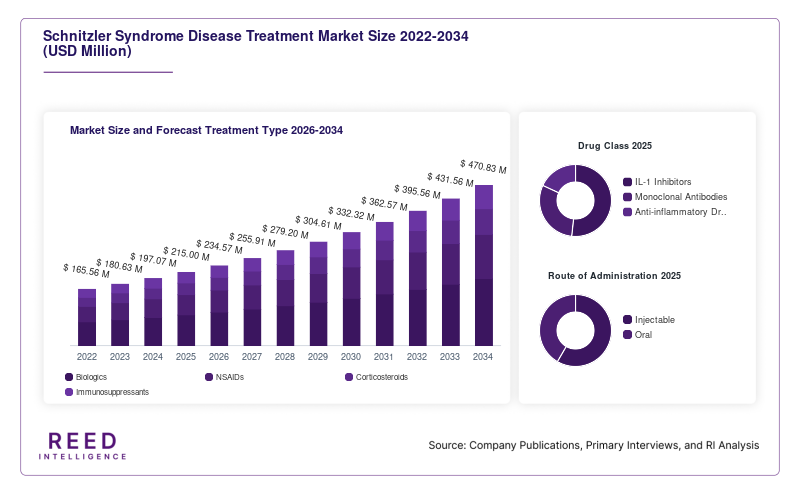
Biologics dominated the Schnitzler Syndrome Disease Treatment Market with a 58% share in 2025, driven by their effectiveness in targeting inflammatory pathways. These therapies have become the standard of care for managing symptoms and improving patient outcomes.
IL-1 inhibitors are expected to be the fastest-growing subsegment, expanding at a CAGR of 9.8%. Their ability to directly inhibit cytokine activity and provide rapid symptom relief will drive increased adoption.
By Drug Class
Anti-inflammatory drugs held a significant share of 34% in 2025, primarily due to their widespread use as initial treatment options. They are commonly prescribed to manage mild symptoms before transitioning to advanced therapies.
Monoclonal antibodies will witness the fastest growth at a CAGR of 10.1%, supported by ongoing research and development activities. Their targeted action and improved efficacy profiles will drive demand.
By Route of Administration
Injectable treatments dominated with a 67% share in 2025, as most biologics are administered via injections. This route ensures higher bioavailability and faster therapeutic effects.
Oral therapies are projected to grow at a CAGR of 8.5%, driven by patient preference for convenient treatment options and ongoing research into oral formulations.
By Distribution Channel
Hospital pharmacies accounted for 49% of the market share in 2025, due to the need for specialized handling and administration of biologics. Hospitals also serve as primary treatment centers for rare diseases.
Online pharmacies are expected to grow at the fastest CAGR of 10.2%, supported by digitalization and increasing patient preference for home delivery services.
Regional Analysis
North America
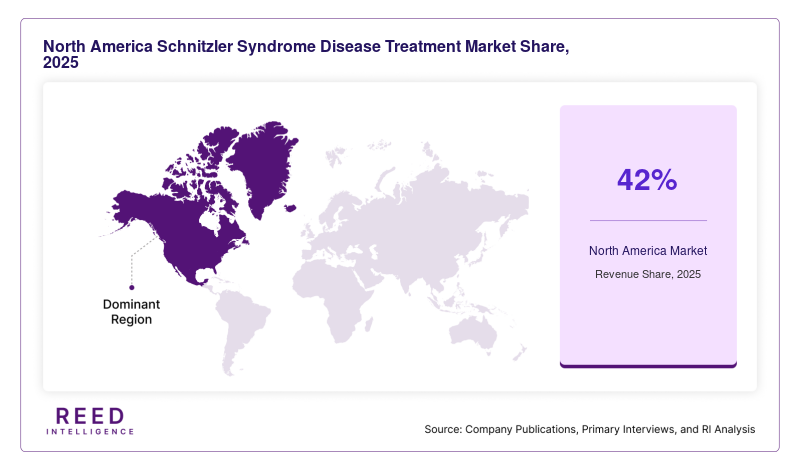
North America accounted for 42% of the Schnitzler Syndrome Disease Treatment Market share in 2025 and will grow at a CAGR of 8.7% through 2034. The region benefited from advanced healthcare systems, high adoption of biologic therapies, and strong reimbursement frameworks.
The United States dominated the regional market due to its robust biopharmaceutical industry and extensive clinical research infrastructure. The presence of specialized treatment centers and higher diagnostic rates contributed significantly to market growth.
Europe
Europe held 29% market share in 2025 and is expected to grow at a CAGR of 8.9% during the forecast period. The region’s growth was supported by favorable regulatory policies and strong government funding for rare disease research.
Germany emerged as the dominant country due to its advanced healthcare infrastructure and high awareness levels. National healthcare programs and early adoption of innovative therapies have driven demand for Schnitzler Syndrome treatments.
Asia Pacific
Asia Pacific captured 15% of the market share in 2025 and will expand at the fastest CAGR of 10.6%. The region is experiencing rapid improvements in healthcare access and diagnostic capabilities.
China led the region due to its large population base and increasing investments in healthcare infrastructure. Rising awareness of rare diseases and expanding access to biologics are expected to drive significant growth.
Middle East & Africa
The Middle East & Africa accounted for 8% market share in 2025 and is projected to grow at a CAGR of 9.3%. Growth in the region was supported by increasing healthcare investments and improving access to specialized treatments.
Saudi Arabia dominated due to its government-led healthcare initiatives and focus on modernizing medical facilities. Enhanced diagnostic capabilities and growing awareness are contributing to market expansion.
Latin America
Latin America held 6% of the market share in 2025 and will grow at a CAGR of 9.0%. The region is gradually adopting advanced treatment options for rare diseases.
Brazil emerged as the leading country, driven by improving healthcare infrastructure and government initiatives to support rare disease management. Increasing access to biologics is expected to support future growth.
Competitive Landscape
The Schnitzler Syndrome Disease Treatment Market is moderately consolidated, with several pharmaceutical companies focusing on biologic therapies and rare disease treatments. Key players are investing in research and development, strategic collaborations, and product innovation to strengthen their market position.
A leading player in the market is Novartis AG, which has demonstrated strong capabilities in developing IL-1 inhibitors. The company recently expanded its biologics portfolio through advanced clinical trials targeting rare autoinflammatory conditions. Other companies are also focusing on expanding their product pipelines and enhancing global distribution networks.
The competitive environment is characterized by innovation, regulatory approvals, and increasing emphasis on personalized medicine. Companies are leveraging orphan drug incentives to accelerate product development and gain market exclusivity.
Key Players List
- Novartis AG
- Regeneron Pharmaceuticals Inc.
- Swedish Orphan Biovitrum AB
- Roche Holding AG
- Pfizer Inc.
- AbbVie Inc.
- Amgen Inc.
- Sanofi S.A.
- Bristol-Myers Squibb Company
- AstraZeneca plc
- Johnson & Johnson
- Eli Lilly and Company
- GlaxoSmithKline plc
- Biogen Inc.
- Takeda Pharmaceutical Company Limited
Recent Developments
- Novartis expanded clinical trials for next-generation IL-1 inhibitors targeting rare autoinflammatory diseases.
- Regeneron announced new research initiatives focused on cytokine-targeting therapies.
- Swedish Orphan Biovitrum strengthened its rare disease portfolio through strategic collaborations.
- Roche invested in biologics manufacturing capacity to support global demand.
- Pfizer advanced pipeline candidates for inflammatory disease treatments.
Schnitzler Syndrome Disease Treatment Market Segments
Treatment Type
- Biologics
- NSAIDs
- Corticosteroids
- Immunosuppressants
Drug Class
- IL-1 Inhibitors
- Monoclonal Antibodies
- Anti-inflammatory Drugs
Route of Administration
- Injectable
- Oral
Distribution Channel
- Hospital Pharmacies
- Retail Pharmacies
- Online Pharmacies
By Region
- North America
- Europe
- APAC
- Middle East and Africa
- LATAM