Selenium Sulfide Market Size, Share & Demand Report By Type (Pharmaceutical Grade, Cosmetic Grade), By Application (Anti-Dandruff Treatment, Therapeutic Dermatology, Others), By End-Use Industry (Pharmaceutical Industry, Personal Care Industry), By Distribution Channel (Retail Pharmacies, Online Channels, Hospitals & Clinics) & Segment Forecasts, 2025–2034
USD 3950
Market Overview
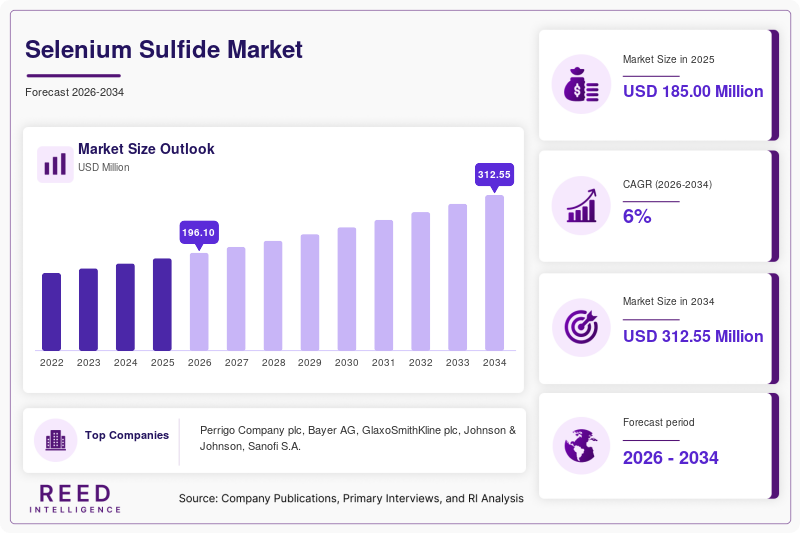
The global Selenium Sulfide Market size was valued at approximately USD 185 million in 2025 and is projected to reach USD 312 million by 2034, expanding at a CAGR of 6.0% during 2025–2034. The market growth has been supported by increasing demand for medicated personal care products, particularly anti-dandruff shampoos and dermatological treatments. Selenium sulfide, known for its antifungal and anti-seborrheic properties, has witnessed consistent utilization in pharmaceutical formulations and over-the-counter (OTC) products worldwide.
A key global factor driving market expansion is the rising awareness of scalp health and skin conditions, particularly in urban populations. Growing consumer preference for clinically proven and medicated formulations has boosted product adoption across both developed and emerging economies. Additionally, advancements in formulation technologies have improved product stability and safety, encouraging broader applications.
Key Highlights
- North America dominated the market with a 34% share in 2025, while Asia Pacific is expected to register the fastest CAGR of 7.2% through 2034.
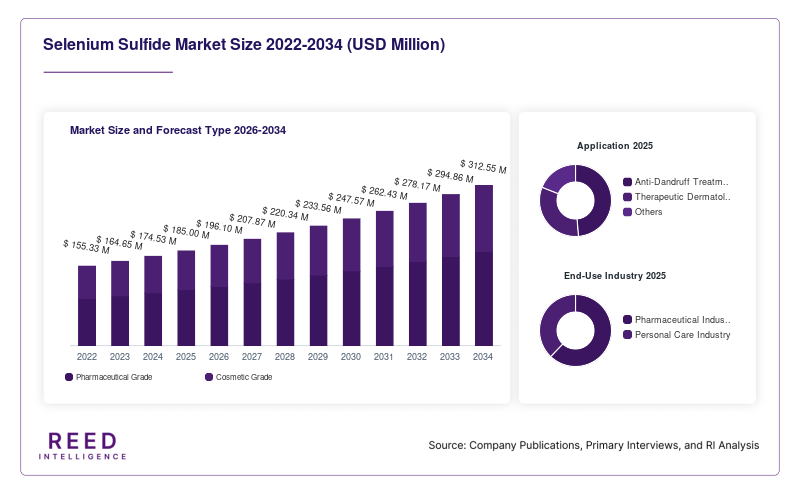
- The pharmaceutical-grade segment led by type with a 62% share, while cosmetic-grade selenium sulfide is projected to grow at a 6.8% CAGR.
- By application, anti-dandruff treatments dominated with 58% share, whereas therapeutic dermatology applications will grow at a 7.1% CAGR.
- The United States led country-level demand, with market values estimated at USD 52 million in 2025 and USD 55 million in 2026.
Market Trends
Increasing Demand for Medicated Personal Care Products
Consumers are shifting toward dermatologically tested and clinically backed personal care solutions. The Selenium Sulfide Market is benefiting from this trend, as selenium sulfide is widely used in anti-dandruff shampoos and seborrheic dermatitis treatments. Rising concerns about scalp infections and fungal conditions are encouraging consumers to choose medicated solutions over conventional cosmetic products. This shift is particularly evident in urban populations where pollution and lifestyle factors exacerbate scalp issues.
Expansion of OTC Dermatological Products
The growing availability of over-the-counter dermatology products is reshaping the market landscape. Pharmaceutical companies are increasingly launching selenium sulfide-based formulations that do not require prescriptions, improving accessibility. This trend is supported by regulatory relaxations in several regions and increased consumer awareness. E-commerce platforms are also playing a role in boosting visibility and accessibility of such products, enabling manufacturers to reach a broader audience and strengthen their market presence.
Market Drivers
Rising Prevalence of Scalp and Skin Disorders
The increasing incidence of conditions such as dandruff, seborrheic dermatitis, and fungal infections is a primary driver of the Selenium Sulfide Market. Environmental pollution, stress, and changing lifestyles contribute to scalp health issues, increasing the demand for effective treatments. Selenium sulfide’s antifungal properties make it a preferred ingredient in therapeutic formulations, supporting consistent market growth.
Growth in Pharmaceutical and Dermatology Sectors
The expansion of the global pharmaceutical industry has positively influenced the Selenium Sulfide Market. Increased investments in dermatology research and product development have led to innovative formulations that incorporate selenium sulfide. Additionally, the rise of telemedicine and digital healthcare platforms has improved diagnosis and treatment access, further driving demand for medicated products containing selenium sulfide.
Market Restraint
Safety Concerns and Regulatory Restrictions
Despite its effectiveness, selenium sulfide faces challenges related to safety concerns and regulatory scrutiny. Excessive or improper use may lead to skin irritation or sensitivity, which has prompted regulatory bodies to impose strict guidelines on formulation concentrations. Compliance with these regulations increases manufacturing complexity and costs for producers.
Additionally, the availability of alternative active ingredients, such as zinc pyrithione and ketoconazole, presents competitive pressure. These alternatives are often perceived as milder or more versatile, potentially limiting the growth of the Selenium Sulfide Market. Manufacturers must therefore focus on maintaining product safety and efficacy while adhering to regulatory standards to sustain market presence.
Market Opportunities
Growth in Emerging Economies
Emerging markets present significant opportunities for the Selenium Sulfide Market due to increasing healthcare awareness and rising disposable incomes. Countries in Asia Pacific, Latin America, and Africa are witnessing growing demand for personal care and pharmaceutical products. Expanding distribution networks and localized manufacturing can help companies tap into these high-growth regions.
Product Innovation and Combination Formulations
The development of combination therapies and advanced formulations offers new growth avenues. Manufacturers are exploring products that combine selenium sulfide with other active ingredients to enhance efficacy and reduce side effects. Innovations such as controlled-release formulations and improved delivery systems are expected to drive adoption. These advancements not only improve treatment outcomes but also differentiate products in a competitive market landscape.
Segmental Analysis
By Type
The pharmaceutical-grade segment dominated the Selenium Sulfide Market in 2025, accounting for 62% of the total share. This dominance is attributed to its widespread use in prescription and OTC medications for treating scalp and skin disorders. High purity levels and strict quality standards make pharmaceutical-grade selenium sulfide suitable for therapeutic applications.
The cosmetic-grade segment is expected to grow at a CAGR of 6.8% through 2034. This growth will be driven by increasing demand for medicated personal care products that combine therapeutic benefits with cosmetic appeal. Manufacturers will focus on improving formulation safety and enhancing product aesthetics to attract a broader consumer base.
By Application
The anti-dandruff treatment segment held the largest share of 58% in 2025. Selenium sulfide’s effectiveness in controlling dandruff and scalp infections has made it a preferred ingredient in shampoos and topical treatments. High consumer awareness and widespread product availability have supported segment growth.
The therapeutic dermatology segment is projected to grow at a CAGR of 7.1%. Increasing prevalence of skin conditions such as seborrheic dermatitis and tinea versicolor will drive demand. Advancements in dermatological research and improved treatment protocols will further enhance segment growth.
By End-Use Industry
The pharmaceutical industry segment dominated the market with a 55% share in 2025. This segment benefits from consistent demand for medicated formulations and strong regulatory frameworks ensuring product safety and efficacy.
The personal care industry segment is expected to grow at a CAGR of 6.9%. Rising consumer preference for multifunctional products that offer both cosmetic and therapeutic benefits will drive growth. Increased marketing and product innovation will also contribute to segment expansion.
By Distribution Channel
The retail pharmacies segment accounted for 48% of the market share in 2025, supported by easy accessibility and consumer trust in pharmacy-based products. Pharmacist recommendations play a crucial role in influencing purchasing decisions.
The online distribution segment is anticipated to grow at a CAGR of 7.5%, driven by the expansion of e-commerce platforms and increasing consumer preference for convenient purchasing options. Digital marketing strategies and improved logistics will further boost growth in this segment.
Regional Analysis
North America
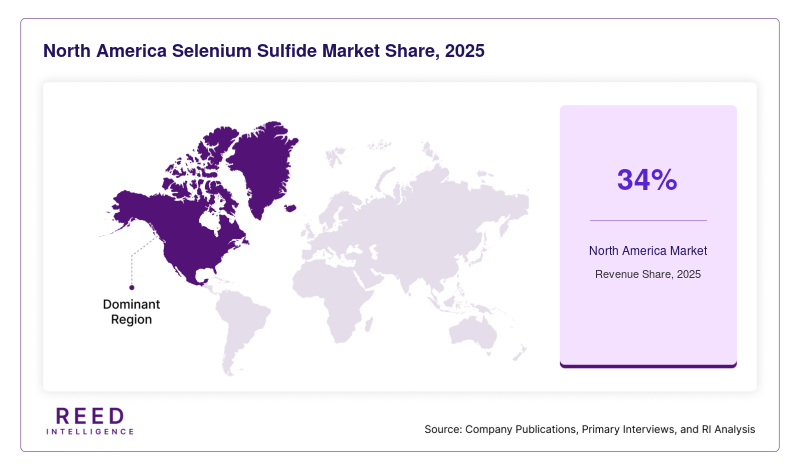
North America accounted for 34% of the Selenium Sulfide Market share in 2025 and is expected to grow at a CAGR of 5.4% through 2034. The region has a mature healthcare infrastructure and strong consumer awareness regarding scalp and skin health. High adoption of medicated shampoos and dermatological treatments has supported steady demand.
The United States dominated the regional market due to its advanced pharmaceutical sector and widespread availability of OTC products. Strong consumer preference for clinically validated treatments has encouraged manufacturers to introduce innovative formulations, supporting sustained growth.
Europe
Europe held approximately 27% share of the Selenium Sulfide Market in 2025 and will grow at a CAGR of 5.6% during the forecast period. The region’s growth is supported by stringent quality standards and increasing demand for dermatologically approved products. Consumers in Europe prioritize safety and efficacy, driving the adoption of regulated pharmaceutical-grade formulations.
Germany emerged as the leading country due to its robust pharmaceutical industry and focus on research and development. The presence of established manufacturers and emphasis on product innovation have strengthened market growth.
Asia Pacific
Asia Pacific represented 23% of the market share in 2025 and is projected to register the fastest CAGR of 7.2% through 2034. Rapid urbanization, rising disposable incomes, and increasing awareness of personal hygiene are key factors driving growth in this region. The expanding middle-class population is also contributing to higher spending on personal care and healthcare products.
China led the regional market due to its large population base and growing pharmaceutical manufacturing capabilities. Increasing demand for affordable and effective treatments has encouraged local production and market expansion.
Middle East & Africa
The Middle East & Africa accounted for 9% of the Selenium Sulfide Market in 2025 and is expected to grow at a CAGR of 6.1% during the forecast period. The region is witnessing gradual improvements in healthcare infrastructure and rising awareness of dermatological conditions. Increasing urbanization and access to healthcare services are supporting market growth.
Saudi Arabia dominated the region due to higher healthcare spending and growing demand for personal care products. Government initiatives to improve healthcare access have further contributed to market expansion.
Latin America
Latin America held around 7% share of the Selenium Sulfide Market in 2025 and is projected to grow at a CAGR of 6.3% through 2034. The region is experiencing increased demand for affordable healthcare solutions and OTC products. Rising consumer awareness and expanding retail networks are supporting growth.
Brazil emerged as the leading country in the region, driven by a strong personal care industry and increasing consumer preference for medicated shampoos. Local manufacturing and distribution capabilities have further enhanced market penetration.
Competitive Landscape
The Selenium Sulfide Market is moderately fragmented, with several global and regional players competing based on product quality, pricing, and innovation. Key companies are focusing on expanding their product portfolios and strengthening distribution networks to enhance market presence.
A leading player in the market is Perrigo Company plc, which has established a strong foothold through its extensive range of OTC healthcare products. The company recently introduced an advanced selenium sulfide-based formulation with improved efficacy and reduced irritation, strengthening its competitive position.
Other prominent players are investing in research and development to create innovative formulations and gain a competitive edge. Strategic partnerships, mergers, and acquisitions are also common strategies adopted to expand market reach and capabilities.
Key Players
- Perrigo Company plc
- Bayer AG
- GlaxoSmithKline plc
- Johnson & Johnson
- Sanofi S.A.
- Pfizer Inc.
- Teva Pharmaceutical Industries Ltd.
- Sun Pharmaceutical Industries Ltd.
- Cipla Limited
- Glenmark Pharmaceuticals Ltd.
- Alkem Laboratories Ltd.
- Mankind Pharma Ltd.
- Taro Pharmaceutical Industries Ltd.
- Amneal Pharmaceuticals Inc.
- Lupin Limited
Recent Developments
- 2024: Perrigo Company plc launched a new selenium sulfide shampoo with enhanced formulation stability.
- 2024: Sun Pharmaceutical Industries expanded its dermatology product line with selenium sulfide-based treatments.
- 2023: Cipla Limited introduced an OTC anti-dandruff product targeting emerging markets.
- 2023: Bayer AG invested in R&D for advanced dermatological formulations.
- 2023: Teva Pharmaceutical Industries strengthened its distribution network in North America.
Selenium Sulfide Market Segments
Type
- Pharmaceutical Grade
- Cosmetic Grade
Application
- Anti-Dandruff Treatment
- Therapeutic Dermatology
- Others
End-Use Industry
- Pharmaceutical Industry
- Personal Care Industry
Distribution Channel
- Retail Pharmacies
- Online Channels
- Hospitals & Clinics
By Region
- North America
- Europe
- APAC
- Middle East and Africa
- LATAM