Serine Amino Acid Market Size, Share, Demand Report By Type (L-Serine, D-Serine, Others), By Application (Pharmaceuticals, Nutraceuticals, Food & Beverages, Animal Feed, Cosmetics & Personal Care), By End-Use (Healthcare Companies, Sports Nutrition Manufacturers, Food Processing Companies, Cosmetic Manufacturers, Research Institutions) By Region & Segment Forecasts, 2026–2034
USD 3950
Market Overview
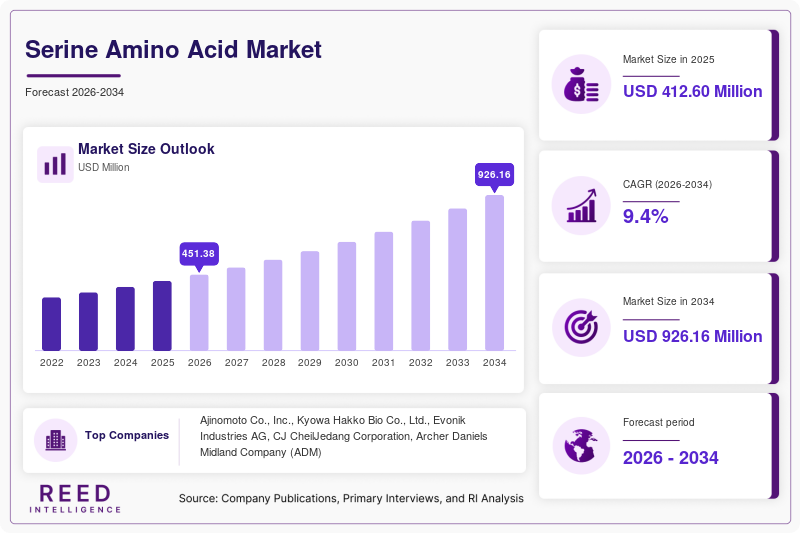
The global Serine Amino Acid Market size was valued at USD 412.6 million in 2026 and is projected to reach USD 846.3 million by 2034, expanding at a CAGR of 9.4% during the forecast period from 2026 to 2034. The market is experiencing steady expansion due to rising demand for amino acid-based nutritional ingredients across pharmaceutical, nutraceutical, personal care, and food processing industries. Serine amino acid plays a critical role in protein synthesis, cellular metabolism, and neurological function, making it an important ingredient in dietary supplements and clinical nutrition formulations. Increased consumer focus on preventive healthcare and wellness products has accelerated the use of amino acid ingredients in functional foods and fortified beverages.
The growing adoption of biotechnology and fermentation-based production technologies has also supported the market’s development. Manufacturers are investing in bio-based manufacturing methods to improve purity levels, production efficiency, and scalability. In addition, pharmaceutical companies are increasing the incorporation of serine amino acid into formulations intended for neurological disorders, metabolic health, and sports recovery products. Expanding research activities related to cognitive health and immune system support are further creating favorable conditions for long-term market growth.
Key Highlights
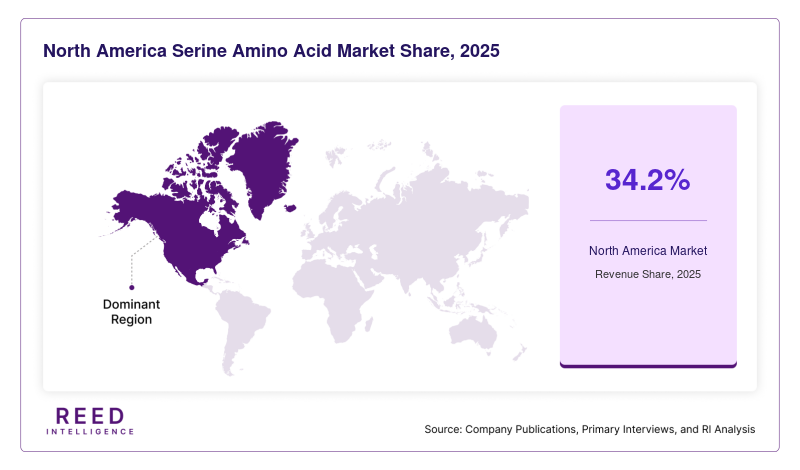
- North America dominated the market with a 34.2% share in 2025, while Asia Pacific is expected to grow at the fastest CAGR of 10.8% during 2026–2034.
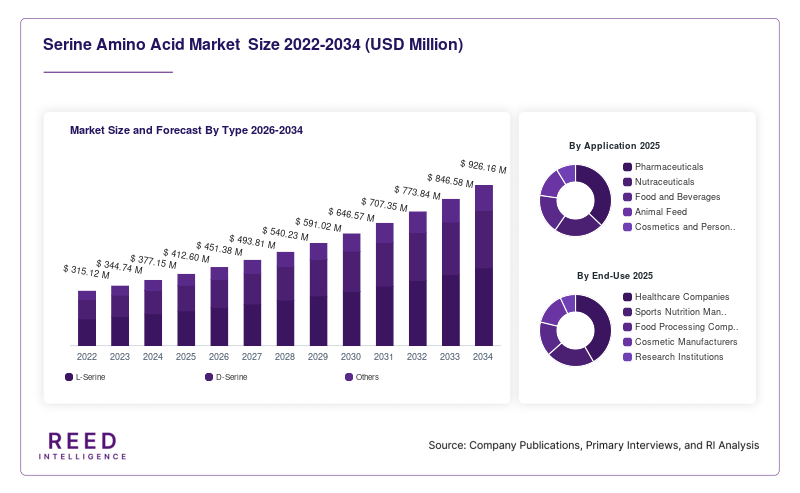
- By type, L-Serine accounted for the largest share of 63.7%, while D-Serine is projected to grow at a CAGR of 11.6%.
- By application, pharmaceuticals led with a 39.4% share, whereas nutraceuticals are expected to expand at a CAGR of 10.9%.
- By end-use, healthcare companies accounted for the largest share of 42.8%, while sports nutrition manufacturers are projected to grow at a CAGR of 11.3%.
- The United States remained the dominant country, with market values of USD 128 million in 2024 and USD 139 million in 2025.
Market Trends
Rising Integration of Serine Amino Acid in Functional Nutrition Products
The increasing popularity of functional nutrition products is emerging as a major trend in the Serine Amino Acid Market. Consumers are showing greater interest in health-oriented dietary supplements, fortified beverages, and protein-enriched food products that support cognitive wellness, muscle recovery, and metabolic health. Serine amino acid is being widely integrated into these products because of its role in neurotransmitter production and cellular function. Nutritional supplement manufacturers are launching advanced formulations that combine amino acids with vitamins, minerals, and herbal extracts to improve consumer appeal.
The trend is particularly visible in sports nutrition and healthy aging categories. Athletes and fitness-focused consumers are demanding clean-label recovery products with scientifically supported ingredients. At the same time, aging populations are increasing purchases of cognitive health supplements containing amino acid blends. Food manufacturers are also introducing convenient powdered and ready-to-drink formulations that include serine amino acid for enhanced nutritional value. This trend is expected to strengthen over the forecast period as health-conscious consumers continue to prioritize preventive wellness products and personalized nutrition solutions.
Expansion of Fermentation-Based Manufacturing Technologies
Biotechnology-driven production methods are transforming the competitive environment of the Serine Amino Acid Market. Manufacturers are increasingly shifting toward microbial fermentation processes to improve product purity, reduce waste generation, and support sustainable production practices. Fermentation technologies allow producers to manufacture amino acids with consistent quality while reducing dependence on traditional chemical synthesis methods. This transition is supporting the development of environmentally efficient production systems across major manufacturing regions.
Several companies are expanding investments in advanced bioprocessing facilities to increase output capacity and meet growing global demand. The use of genetically optimized microbial strains is improving production yields and lowering operational costs. In addition, regulatory agencies and end-use industries are encouraging the adoption of sustainable manufacturing methods, which is driving additional investments in biotechnology infrastructure. This trend is also supporting product innovation because manufacturers can customize amino acid formulations for pharmaceutical, nutraceutical, and cosmetic applications. As sustainability becomes a stronger purchasing factor across industries, fermentation-based serine amino acid production is expected to gain broader commercial acceptance.
Market Drivers
Increasing Demand from Pharmaceutical and Clinical Nutrition Industries
The expanding use of amino acids in pharmaceutical and clinical nutrition products is driving growth in the Serine Amino Acid Market. Serine amino acid is increasingly utilized in formulations related to neurological health, immune support, metabolic function, and tissue repair. Pharmaceutical companies are investing in amino acid-based therapies and nutritional solutions aimed at improving patient recovery and supporting chronic disease management. Growing research on amino acid supplementation for cognitive disorders and neurological conditions is further strengthening commercial demand.
Hospitals and clinical nutrition providers are also incorporating amino acid ingredients into medical nutrition products designed for elderly patients and individuals with protein deficiencies. Rising healthcare expenditure and increasing awareness regarding nutritional therapy are contributing to higher adoption rates. The pharmaceutical industry’s focus on precision medicine and targeted nutrition is encouraging companies to develop specialized formulations that include serine amino acid as a functional ingredient. As healthcare systems continue to emphasize preventive treatment and nutritional intervention, demand from pharmaceutical and clinical applications is expected to remain a key growth driver.
Growth of Sports Nutrition and Fitness-Oriented Consumer Markets
The rapid expansion of fitness culture and sports nutrition industries is contributing significantly to the growth of the Serine Amino Acid Market. Consumers are increasingly purchasing amino acid supplements to improve muscle recovery, physical endurance, and post-workout performance. Fitness professionals and athletes are adopting amino acid-enriched products because these ingredients support protein synthesis and cellular recovery processes. The rise of gym memberships, sports training programs, and active lifestyle trends is expanding the customer base for amino acid products.
Sports nutrition manufacturers are introducing innovative powders, capsules, and beverage formulations that include serine amino acid alongside branched-chain amino acids and plant-based proteins. Digital marketing campaigns and influencer-driven product promotions are also increasing consumer awareness regarding amino acid supplementation. In addition, younger consumers are showing greater interest in personalized fitness nutrition, which is creating opportunities for specialized product development. The combination of rising disposable income, growing health awareness, and expanding e-commerce distribution channels is expected to maintain strong demand momentum within the sports nutrition segment.
Market Restraint
Volatility in Raw Material Supply and Production Costs
Fluctuations in raw material availability and production costs remain a major restraint for the Serine Amino Acid Market. The manufacturing process for amino acids requires specialized fermentation inputs, energy-intensive operations, and advanced processing infrastructure. Changes in the prices of agricultural feedstocks, microbial cultures, and industrial energy sources can directly affect overall production expenses. Smaller manufacturers often face operational pressure because they have limited ability to absorb sudden cost increases.
Supply chain disruptions and transportation challenges can also create inconsistencies in product availability across regional markets. Regulatory compliance requirements related to food-grade and pharmaceutical-grade amino acid production further increase operational costs for manufacturers. In some developing economies, limited access to advanced biotechnology infrastructure restricts production efficiency and scalability. These factors may reduce profit margins and create pricing challenges for suppliers competing in highly price-sensitive markets.
The impact of production volatility is particularly significant for pharmaceutical and nutraceutical companies that require consistent purity standards and long-term supply agreements. Delays in raw material sourcing can affect manufacturing timelines and reduce inventory stability. Although companies are investing in local production facilities and supply diversification strategies, cost fluctuations remain an important challenge that may limit market expansion in certain regions during the forecast period.
Market Opportunities
Expansion of Personalized Nutrition and Preventive Healthcare Solutions
The increasing adoption of personalized nutrition solutions is creating new growth opportunities for the Serine Amino Acid Market. Consumers are becoming more interested in customized dietary products that align with their health goals, age groups, and lifestyle preferences. Serine amino acid is gaining attention as an ingredient used in targeted wellness products designed for cognitive support, energy metabolism, and muscle maintenance. Nutritional supplement companies are leveraging digital health platforms and health monitoring technologies to offer personalized amino acid formulations.
Preventive healthcare trends are also supporting higher demand for scientifically formulated nutritional products. Consumers are focusing more on maintaining long-term wellness instead of relying only on traditional treatment methods. This shift is encouraging healthcare providers and supplement brands to expand product portfolios containing functional amino acids. Growing demand for personalized health products among urban populations and aging consumers is expected to create strong commercial opportunities for manufacturers. Companies that invest in research-backed formulations and consumer education initiatives are likely to strengthen their market position over the coming years.
Emerging Demand Across Cosmetic and Personal Care Applications
The cosmetic and personal care industry is creating additional opportunities for the Serine Amino Acid Market. Serine amino acid is increasingly used in skincare and haircare formulations because of its moisturizing and conditioning properties. Cosmetic manufacturers are incorporating amino acids into premium beauty products aimed at improving skin hydration, elasticity, and overall texture. Rising consumer preference for bio-based and skin-friendly ingredients is encouraging brands to adopt amino acid-based formulations.
The growing popularity of clean-label cosmetics and functional beauty products is further expanding commercial potential. Consumers are increasingly choosing products with scientifically recognized ingredients that support both appearance and skin health. Personal care companies are also investing in product innovation and premium formulations to differentiate themselves in competitive beauty markets. Asia Pacific and Europe are emerging as important regions for amino acid-based cosmetic product development due to rising consumer spending on skincare products. As demand for multifunctional beauty ingredients continues to increase, serine amino acid manufacturers are expected to benefit from expanding partnerships with cosmetic and dermatology brands.
Segmental Analysis
By Type
L-Serine accounted for the largest share of the Serine Amino Acid Market in 2024, representing 63.7% of global revenue. The dominance of this subsegment is linked to its extensive use in pharmaceuticals, dietary supplements, and functional food products. L-Serine is widely recognized for its role in protein biosynthesis and neurological support, which has increased its application across healthcare and wellness industries. Pharmaceutical companies utilize L-Serine in formulations intended for cognitive support and metabolic health management. The food and beverage sector is also incorporating this amino acid into protein-enriched products aimed at health-conscious consumers. Increasing demand for clinical nutrition and preventive healthcare products continues to support strong commercial adoption of L-Serine across developed and emerging economies.
D-Serine is projected to grow at the fastest CAGR of 11.6% during the forecast period due to increasing research activities focused on neurological health and cognitive function. This amino acid is gaining attention for its potential role in supporting brain receptor functions and neurological therapies. Pharmaceutical research institutions and biotechnology companies are investing in studies related to neurological disorders and advanced treatment approaches involving D-Serine compounds. Growing interest in cognitive wellness among aging populations is further strengthening demand for innovative amino acid formulations. In addition, rising healthcare investments and improvements in pharmaceutical manufacturing technologies are enabling broader commercial development of D-Serine products. As clinical research advances and awareness regarding neurological health increases, the subsegment is expected to witness strong expansion.
By Application
Pharmaceuticals represented the leading application segment in the Serine Amino Acid Market in 2024, accounting for 39.4% of total revenue. The strong market presence of this segment is driven by the increasing use of amino acids in medical nutrition, neurological treatments, and metabolic support formulations. Pharmaceutical manufacturers are integrating serine amino acid into therapeutic products aimed at improving patient recovery and nutritional balance. Hospitals and clinical nutrition providers are also adopting amino acid-enriched products for elderly care and chronic disease management. Rising healthcare expenditure and expanding pharmaceutical research activities are supporting higher consumption of pharmaceutical-grade amino acid ingredients. The increasing prevalence of lifestyle-related health conditions is creating sustained demand for advanced nutritional therapies and preventive healthcare products.
Nutraceuticals are anticipated to register the fastest CAGR of 10.9% during the forecast period due to growing consumer interest in wellness-focused dietary supplements. Nutraceutical companies are launching innovative amino acid formulations targeting fitness, immunity, cognitive health, and healthy aging applications. Rising awareness regarding preventive healthcare and self-directed nutrition is contributing to stronger demand for amino acid-based products. E-commerce platforms and digital wellness marketing are further improving product visibility and consumer accessibility. Younger consumers are increasingly purchasing functional supplements to support active lifestyles and long-term health goals. In addition, manufacturers are introducing clean-label and plant-based supplement products that align with changing consumer preferences. The expanding popularity of personalized nutrition solutions is expected to create additional growth opportunities for nutraceutical applications.
By End-Use
Healthcare companies accounted for the largest share of the Serine Amino Acid Market in 2024, representing 42.8% of global revenue. This dominance is supported by the growing use of amino acid ingredients in pharmaceutical production, clinical nutrition products, and medical wellness solutions. Healthcare organizations are increasingly incorporating amino acid supplementation into patient nutrition programs and recovery treatments. The rise in chronic diseases, aging populations, and healthcare spending is contributing to stronger demand for advanced nutritional ingredients. Pharmaceutical manufacturers are also investing in research and product innovation to develop specialized amino acid formulations for neurological and metabolic health applications. The healthcare sector’s emphasis on preventive treatment and nutritional support continues to reinforce demand for high-purity serine amino acid products across multiple therapeutic areas.
Sports nutrition manufacturers are projected to expand at the fastest CAGR of 11.3% during the forecast period due to rising global interest in fitness and performance-focused nutrition products. Consumers are increasingly purchasing amino acid supplements to improve endurance, muscle recovery, and physical performance. Sports nutrition brands are responding by launching advanced formulations containing serine amino acid alongside protein blends, vitamins, and recovery compounds. Social media marketing and athlete endorsements are strengthening product awareness among younger consumer groups. In addition, the growth of gym chains, fitness applications, and online supplement retail channels is improving market penetration across developing regions. The trend toward personalized sports nutrition and functional recovery products is expected to support sustained expansion of this end-use segment over the coming years.
Regional Analysis
North America
North America accounted for 34.2% of the global Serine Amino Acid Market in 2025 and maintained its leading regional position due to strong demand from pharmaceutical, nutraceutical, and sports nutrition industries. The region is projected to expand at a CAGR of 8.9% during the forecast period. High healthcare expenditure, advanced biotechnology infrastructure, and rising awareness regarding nutritional supplementation are supporting consistent market growth. The United States and Canada continue to witness increasing adoption of amino acid-based dietary products among aging populations and fitness-focused consumers.
The United States remained the dominant country within the regional market because of its large pharmaceutical manufacturing sector and strong consumer spending on wellness products. The country recorded significant demand for amino acid supplements across sports nutrition, clinical nutrition, and preventive healthcare applications. One unique growth factor supporting the U.S. market is the rapid expansion of personalized nutrition platforms that use digital health data to recommend customized supplement products. This trend is encouraging manufacturers to launch premium amino acid formulations targeted toward specific consumer health goals.
Europe
Europe represented a significant share of the Serine Amino Acid Market in 2025 and is expected to grow at a CAGR of 8.4% between 2026 and 2034. The region benefits from strong regulatory standards, advanced food processing industries, and growing demand for sustainable nutritional ingredients. Consumers across European countries are increasingly adopting amino acid supplements as part of preventive healthcare routines. Demand for clean-label food products and naturally sourced ingredients is also supporting market development.
Germany emerged as the dominant country in the European market due to its established pharmaceutical and biotechnology sectors. The country is experiencing rising demand for amino acid ingredients in clinical nutrition and high-performance dietary supplements. A unique growth factor in Germany is the strong collaboration between biotechnology research institutions and commercial manufacturers focused on fermentation-based amino acid production. These partnerships are improving production efficiency and supporting the development of high-purity serine amino acid products for pharmaceutical and nutraceutical applications.
Asia Pacific
Asia Pacific is projected to register the fastest CAGR of 10.8% during the forecast period due to rapid industrialization, expanding healthcare investments, and growing consumer awareness regarding nutritional wellness. The region accounted for a substantial market share in 2025 and continues to attract investments from global amino acid manufacturers. Rising urbanization, changing dietary habits, and increasing demand for fortified food products are supporting regional market expansion.
China remained the leading country in the Asia Pacific market because of its large-scale amino acid manufacturing capabilities and expanding biotechnology industry. The country is also witnessing strong demand for sports nutrition products and pharmaceutical-grade amino acids. One unique growth factor supporting the Chinese market is the government-backed expansion of biotechnology manufacturing infrastructure aimed at improving domestic production capacity for high-value nutritional ingredients. This initiative is enabling local manufacturers to increase exports and strengthen regional supply chains.
Middle East & Africa
The Middle East & Africa region is gradually expanding within the Serine Amino Acid Market and is expected to grow at a CAGR of 7.6% during the forecast period. Rising healthcare awareness, improving retail distribution networks, and increasing demand for nutritional supplements are supporting regional market development. The adoption of amino acid-enriched dietary products is increasing among younger consumers and health-conscious urban populations. Growth in pharmaceutical imports and expanding private healthcare systems are also contributing to market progress.
Saudi Arabia emerged as the dominant country within the region due to increasing healthcare expenditure and rising consumer demand for wellness products. The country is experiencing higher adoption of nutritional supplements and protein-based dietary products among fitness-focused consumers. A unique growth factor supporting the Saudi Arabian market is the expansion of modern retail and e-commerce distribution channels for health supplements. Online health product platforms are improving product accessibility and encouraging broader consumer adoption of amino acid-based nutrition products.
Latin America
Latin America accounted for a moderate share of the global Serine Amino Acid Market in 2025 and is projected to grow at a CAGR of 7.9% through 2034. Rising disposable income, improving awareness regarding preventive healthcare, and growing demand for functional food products are supporting regional growth. The sports nutrition industry is also expanding steadily across several Latin American countries due to increasing participation in fitness activities and organized sports programs.
Brazil remained the dominant country in the regional market because of its large consumer base and growing nutraceutical manufacturing sector. Demand for amino acid supplements is increasing among athletes, gym users, and aging populations seeking wellness-focused products. One unique growth factor supporting the Brazilian market is the increasing integration of amino acid ingredients into locally produced fortified beverages and nutritional snack products. Domestic food manufacturers are expanding product portfolios to meet changing consumer preferences for functional nutrition.
Competitive Landscape
The Serine Amino Acid Market is characterized by the presence of multinational biotechnology companies, specialty ingredient manufacturers, and pharmaceutical raw material suppliers competing on the basis of product quality, purity standards, production efficiency, and regional distribution capabilities. Market participants are focusing on fermentation-based production technologies, strategic partnerships, and expansion of manufacturing facilities to strengthen their market position. Companies are also increasing investments in research and development activities aimed at improving amino acid functionality for pharmaceutical, nutraceutical, and cosmetic applications.
Ajinomoto Co., Inc. remained one of the leading companies in the market due to its strong biotechnology expertise, global distribution network, and diversified amino acid product portfolio. The company has continued expanding its fermentation-based amino acid manufacturing operations to support rising demand from pharmaceutical and nutrition industries. Other major players are also emphasizing sustainable production practices and high-purity ingredient development to improve competitiveness.
Key Players
- Ajinomoto Co., Inc.
- Kyowa Hakko Bio Co., Ltd.
- Evonik Industries AG
- CJ CheilJedang Corporation
- ADM
- Cargill, Incorporated
- Fufeng Group Company Limited
- Meihua Holdings Group Co., Ltd.
- Amino GmbH
- Global Bio-Chem Technology Group Company Limited
- Sichuan Tongsheng Amino Acid Co., Ltd.
- Shijiazhuang Donghua Jinlong Chemical Co., Ltd.
- Daesang Corporation
- Prinova Group LLC
- Bachem Holding AG
Recent Developments
- In March 2025, Ajinomoto Co., Inc. announced the expansion of its amino acid fermentation facility to increase production capacity for pharmaceutical-grade serine ingredients.
- In July 2025, Evonik Industries AG introduced a new high-purity amino acid ingredient portfolio targeting clinical nutrition and functional wellness applications.
- In January 2026, CJ CheilJedang Corporation entered a strategic partnership with a nutraceutical manufacturer to develop customized amino acid formulations for sports nutrition products.
- In September 2025, Kyowa Hakko Bio Co., Ltd. expanded its research investments focused on amino acid applications for neurological health and cognitive wellness solutions.
Serine Amino Acid Market Segments
By Type
- L-Serine
- D-Serine
- Others
By Application
- Pharmaceuticals
- Nutraceuticals
- Food and Beverages
- Animal Feed
- Cosmetics and Personal Care
By End-Use
- Healthcare Companies
- Sports Nutrition Manufacturers
- Food Processing Companies
- Cosmetic Manufacturers
- Research Institutions
By Region
- North America
- Europe
- APAC
- Middle East and Africa
- LATAM