Shredded Paper Filler Market Size, Share & Demand Report By Material Type (Recycled Kraft Paper, Colored Shredded Paper, Virgin Paper, Mixed Paper Blends), By Application (Protective Packaging, Decorative Packaging, Void Fill Packaging, Industrial Cushioning), By End Use Industry (E-Commerce & Retail, Food & Beverage, Cosmetics & Luxury Goods, Electronics, Industrial Manufacturing, Gifting & Crafts), By Region & Segment Forecasts, 2026–2034
USD 3950
Market Overview
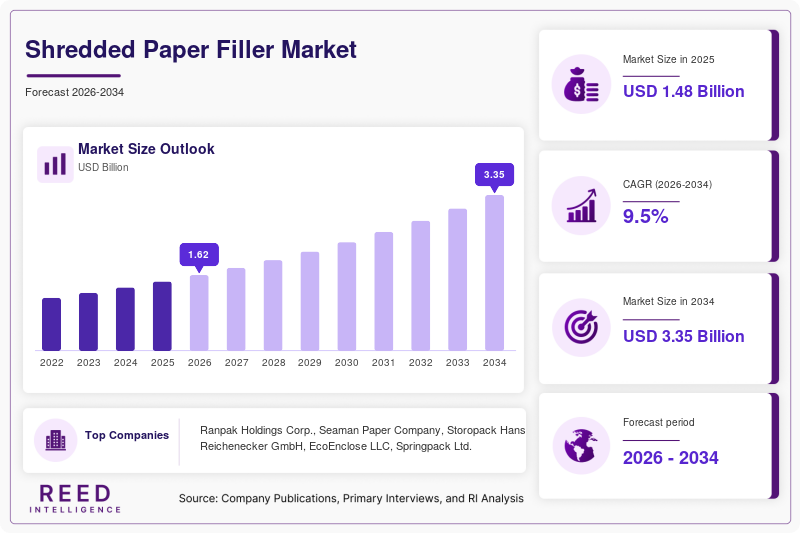
The global Shredded Paper Filler Market size was valued at approximately USD 1.48 billion in 2026 and is projected to reach nearly USD 3.05 billion by 2034, expanding at a CAGR of 9.5% during the forecast period from 2026 to 2034. The market is witnessing stable expansion due to increasing demand for sustainable protective packaging materials across e-commerce, consumer goods, cosmetics, gifting, and industrial packaging applications. Growing awareness regarding plastic waste reduction and corporate sustainability commitments has encouraged businesses to adopt recyclable and biodegradable void-fill packaging materials, creating favorable conditions for shredded paper filler manufacturers worldwide.
The rapid expansion of online retail and direct-to-consumer shipping models has significantly accelerated product adoption. Brands are increasingly using shredded paper filler to improve product presentation while protecting fragile goods during transportation. In addition, governments across several economies are implementing regulations aimed at limiting the use of single-use plastics and non-recyclable packaging materials. These initiatives are supporting demand for paper-based alternatives within logistics and packaging supply chains.
Key Highlights
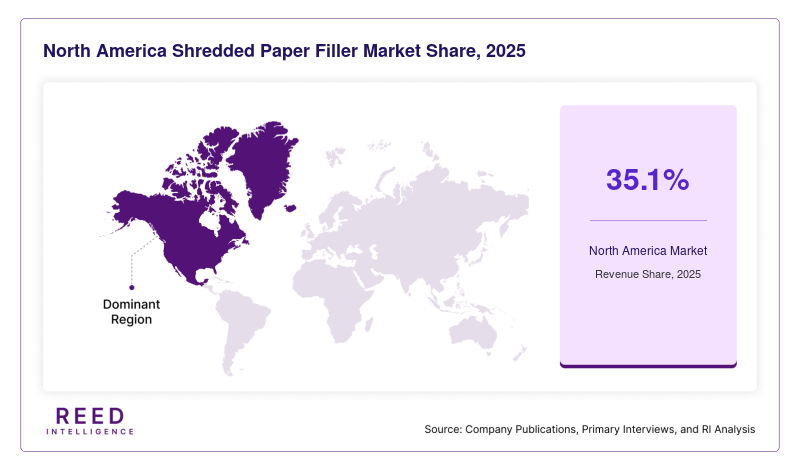
- North America dominated the market with a 35.1% share in 2025.
- Asia Pacific is expected to grow at the fastest CAGR of 10.9% during 2026–2034.
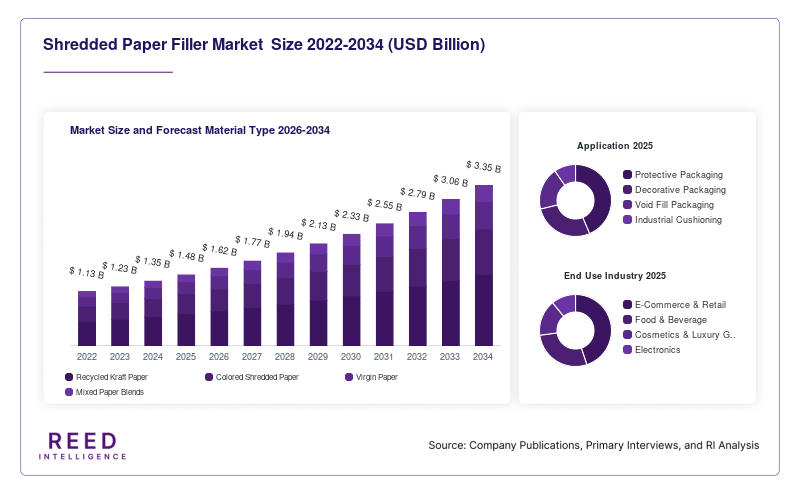
- By material type, recycled kraft paper accounted for the largest share of 42.8%, while colored shredded paper is projected to grow at a CAGR of 11.7%.
- By application, protective packaging led with a 46.3% share, whereas decorative packaging is expected to expand at a CAGR of 10.8%.
- The United States remained the dominant country, with market values of USD 410 million in 2024 and USD 448 million in 2025.
Market Trends
Growing Adoption of Eco-Friendly Packaging Solutions
Businesses across retail, food delivery, electronics, and cosmetics industries are rapidly shifting toward environmentally responsible packaging materials, creating strong momentum for the Shredded Paper Filler Market. Consumers increasingly prefer brands that use recyclable and biodegradable packaging components instead of plastic bubble wrap or foam fillers. This trend has encouraged retailers and logistics companies to integrate shredded paper filler into standard shipping operations. Several packaging providers are also promoting closed-loop recycling systems in which used filler materials are collected, processed, and reused in new packaging products.
The trend is particularly visible in premium gifting and subscription box services, where shredded paper filler provides both cushioning and visual appeal. Companies are introducing textured and colored paper fillers manufactured from recycled paper waste to attract environmentally conscious customers. In addition, retailers are using natural kraft paper filler to strengthen sustainable branding strategies. The growing use of minimalist and plastic-free packaging designs across global e-commerce channels is expected to maintain long-term demand growth for paper-based void-fill materials.
Expansion of Customized and Decorative Packaging Applications
The increasing importance of consumer experience and product presentation is driving demand for decorative shredded paper filler products. Businesses are investing in visually appealing packaging to improve customer engagement and encourage repeat purchases. Colored shredded paper filler, crinkle-cut filler, and themed packaging materials are becoming widely used in cosmetics, fashion accessories, gourmet foods, and seasonal gift packaging applications. The trend is especially strong among small online businesses and boutique brands seeking affordable ways to create premium unboxing experiences.
Digital printing and automated shredding technologies are supporting the expansion of customized paper filler products. Manufacturers are now offering branded filler designs, customized color combinations, and logo-integrated packaging materials to commercial buyers. Social media marketing and influencer-driven product promotions have further increased the importance of aesthetically appealing packaging. As companies compete to strengthen customer retention and improve product differentiation, demand for decorative and branded paper filler materials is expected to continue increasing across developed and emerging economies.
Market Drivers
Rapid Growth of E-Commerce and Protective Packaging Demand
The continued expansion of global e-commerce platforms is a major factor driving the Shredded Paper Filler Market. Online shopping growth has increased the need for protective packaging materials capable of preventing product damage during transportation and storage. Shredded paper filler is increasingly used for cushioning fragile products such as glassware, cosmetics, electronics, and handmade goods. Compared to synthetic alternatives, paper filler provides lightweight protection while supporting sustainability targets adopted by retailers and logistics providers.
Direct-to-consumer shipping models are also contributing to rising demand for flexible and affordable void-fill materials. Many small businesses and independent sellers prefer shredded paper filler because it is cost-effective, customizable, and easy to store. In addition, the growth of international shipping activities has encouraged companies to adopt packaging solutions that comply with environmental standards in multiple regions. As parcel delivery volumes continue increasing globally, the requirement for recyclable protective packaging products is expected to remain strong throughout the forecast period.
Government Regulations Supporting Sustainable Packaging
Environmental regulations targeting plastic packaging waste are significantly influencing product adoption across the packaging industry. Governments in North America, Europe, and Asia Pacific are implementing policies that encourage the use of recyclable and biodegradable materials in commercial packaging applications. These regulations are creating opportunities for paper-based filler manufacturers to replace plastic foam peanuts, air pillows, and bubble wrap in shipping operations.
Corporate sustainability initiatives are also accelerating market growth. Large retailers and consumer goods companies are publicly committing to reduce plastic usage and improve recyclability across packaging supply chains. As a result, shredded paper filler manufacturers are expanding production capacity for recycled kraft paper products and compostable filler materials. Packaging suppliers are also obtaining sustainability certifications to strengthen their market position and meet buyer requirements. The increasing alignment between environmental policy, corporate sustainability goals, and consumer preferences is expected to continue supporting market expansion during the coming years.
Market Restraint
Fluctuating Raw Material Costs and Supply Chain Challenges
Volatility in paper pulp prices and recycled paper availability remains a significant challenge for the Shredded Paper Filler Market. The industry depends heavily on consistent access to recyclable paper materials, kraft paper, and paperboard feedstock. Changes in raw material supply caused by global trade disruptions, transportation costs, or recycling inefficiencies can increase production expenses for manufacturers. Rising energy prices and labor shortages in paper processing industries also contribute to operational uncertainty.
The market is additionally affected by competition from alternative protective packaging materials such as molded pulp, corrugated inserts, and biodegradable foam products. Some industrial users continue preferring high-density protective materials for heavy or highly fragile products, limiting adoption in specific applications. Smaller packaging manufacturers may face difficulty maintaining competitive pricing during periods of raw material inflation. For example, sudden increases in recycled paper demand from the corrugated packaging sector can reduce raw material availability for shredded filler producers, leading to higher manufacturing costs and reduced profit margins across the value chain.
Market Opportunities
Increasing Demand from Luxury and Gift Packaging Industries
Luxury retail brands and premium gifting companies are creating significant opportunities for the Shredded Paper Filler Market. Decorative paper filler products are increasingly used to improve packaging aesthetics while maintaining environmental sustainability. Cosmetics brands, jewelry manufacturers, gourmet food companies, and artisan product sellers are adopting colored shredded paper filler to strengthen brand identity and improve customer satisfaction. Premium packaging has become an important marketing tool, particularly in online retail environments where unboxing experiences influence purchasing decisions and social media visibility.
Manufacturers are responding by developing customized filler products with enhanced textures, colors, and branding capabilities. Seasonal packaging collections and event-specific packaging solutions are also becoming popular among commercial buyers. The ability of shredded paper filler to combine visual appeal with protective functionality positions the product favorably within luxury packaging markets. As consumer spending on premium products and personalized gifting continues increasing globally, decorative paper filler applications are expected to create new revenue opportunities for suppliers.
Technological Advancements in Recycling and Automated Production
Advancements in paper recycling technologies and automated shredding systems are creating opportunities for operational efficiency and product innovation. Manufacturers are investing in advanced shredding equipment capable of producing uniform filler sizes with improved cushioning performance and reduced material waste. Automation is helping companies increase production capacity while lowering labor costs and improving product consistency.
Recycling technologies are also enabling the use of mixed paper waste streams for filler production, supporting circular economy initiatives. Several manufacturers are integrating smart monitoring systems and energy-efficient machinery into production facilities to reduce operational costs and improve sustainability performance. In addition, partnerships between recycling companies and packaging manufacturers are strengthening raw material supply chains. These technological developments are expected to improve product quality, reduce environmental impact, and support long-term profitability within the global shredded paper filler industry.
Segmental Analysis
By Material Type
Recycled kraft paper accounted for the largest share of the Shredded Paper Filler Market in 2024, representing approximately 42.8% of total revenue. The segment continues to dominate due to its affordability, recyclability, and strong cushioning performance across shipping and packaging applications. Recycled kraft paper filler is widely used by e-commerce companies, industrial packaging firms, and consumer goods manufacturers seeking environmentally responsible alternatives to plastic void-fill products. The material provides lightweight protection while supporting corporate sustainability goals and compliance with packaging regulations. Manufacturers are also favoring recycled kraft paper because it is compatible with existing recycling systems and readily available through established paper recovery networks. The growing emphasis on circular economy practices and waste reduction initiatives across global supply chains is expected to maintain strong demand for recycled kraft paper filler products over the coming years.
Colored shredded paper is projected to register the fastest CAGR of 11.7% during the forecast period. Demand is increasing rapidly among luxury retailers, gift packaging companies, boutique brands, and subscription box businesses focused on enhancing customer experience and visual presentation. Colored filler products are increasingly used in cosmetics, jewelry, gourmet food packaging, and seasonal promotional campaigns. Businesses are investing in customized packaging aesthetics to improve brand recognition and strengthen consumer engagement through social media marketing and unboxing experiences. Manufacturers are also introducing eco-friendly dyes and recyclable colored paper materials to address environmental concerns while meeting design requirements. Rising consumer preference for premium packaging and personalized gifting solutions is expected to support strong long-term growth for this subsegment across developed and emerging markets.
By Application
Protective packaging represented the dominant application segment in 2024, accounting for nearly 46.3% of the global market share. The segment benefits from rising demand for cushioning materials used in shipping fragile goods, electronics, glassware, and consumer products. Shredded paper filler is increasingly preferred for void filling and impact protection because it combines flexibility, lightweight handling, and environmental sustainability. E-commerce companies and logistics providers are using paper filler products to reduce product damage during transportation while improving packaging recyclability. The expansion of global parcel delivery networks and direct-to-consumer shipping models has further accelerated adoption across commercial packaging operations. Additionally, businesses are integrating shredded paper filler into automated packaging systems to improve operational efficiency and reduce packaging waste. These factors continue to support the strong position of protective packaging applications within the overall market landscape.
Decorative packaging is expected to witness the fastest growth, expanding at a CAGR of 10.8% during the forecast period. The segment is gaining momentum due to rising demand for premium presentation materials across gifting, cosmetics, fashion accessories, and artisanal product industries. Decorative shredded paper filler enhances product visibility and creates visually attractive packaging experiences that influence customer purchasing behavior. Small online retailers and luxury brands are increasingly adopting customized filler colors, textures, and themes to differentiate products in competitive retail environments. Social media platforms and influencer-driven marketing strategies are also increasing the importance of aesthetically appealing packaging. Manufacturers are responding with biodegradable decorative fillers and innovative design options suitable for seasonal promotions and branded packaging campaigns. The continued growth of personalized gifting and premium consumer goods markets is expected to drive significant expansion in this segment.
By End Use Industry
The e-commerce and retail sector dominated the Shredded Paper Filler Market in 2024, accounting for approximately 39.6% of total market revenue. Online retailers, third-party logistics providers, and consumer goods companies are major users of shredded paper filler products for shipping and product protection purposes. The sector benefits from increasing global online shopping activity and rising consumer expectations regarding sustainable packaging solutions. Retailers are integrating paper-based void-fill materials into shipping operations to improve recyclability and reduce plastic usage across supply chains. Shredded paper filler is also widely used for product presentation in subscription boxes, apparel packaging, and promotional kits. Growing investments in warehouse automation and packaging efficiency are further supporting segment expansion. The ability of shredded paper filler to provide cost-effective cushioning while supporting environmental objectives continues to strengthen its adoption across retail and e-commerce industries worldwide.
The cosmetics and luxury goods segment is expected to grow at the fastest CAGR of 11.3% during the forecast period. Premium beauty brands and luxury product manufacturers are increasingly investing in decorative and customized packaging materials to enhance customer engagement and reinforce brand identity. Shredded paper filler is becoming a preferred solution for packaging perfumes, skincare products, jewelry, and premium accessories because it combines visual appeal with protective functionality. The growing popularity of influencer marketing and social media-driven purchasing decisions has increased the importance of premium packaging aesthetics. In addition, consumers are increasingly associating sustainable packaging with higher product quality and responsible brand practices. Manufacturers are developing colored, textured, and biodegradable filler products specifically designed for luxury applications. These factors are expected to support strong growth across the cosmetics and luxury goods segment over the forecast period.
Regional Analysis
North America
North America accounted for the largest share of the Shredded Paper Filler Market in 2025, representing approximately 35.1% of global revenue. The region is projected to expand at a CAGR of 8.7% during the forecast period due to strong demand from e-commerce, retail packaging, and logistics industries. Businesses across the United States and Canada are increasingly replacing plastic packaging fillers with recyclable paper alternatives to comply with sustainability targets and consumer expectations. The presence of advanced recycling infrastructure and well-established packaging supply chains also supports consistent market growth across the region.
The United States remains the dominant country within North America due to its large e-commerce sector and strong adoption of sustainable packaging practices. Major retailers and subscription box companies are investing in paper-based packaging materials to strengthen environmentally responsible brand positioning. The growing popularity of handmade goods, luxury gifting, and direct-to-consumer shipping models is creating additional opportunities for decorative shredded paper filler suppliers. Increasing consumer awareness regarding waste reduction is expected to further support market expansion throughout the forecast period.
Europe
Europe represents a significant regional market for shredded paper filler products due to strict environmental regulations and high recycling rates across several countries. The region accounted for nearly 27.6% of global market revenue in 2025 and is forecast to grow at a CAGR of 8.9% between 2026 and 2034. Demand is increasing across food packaging, cosmetics, and industrial shipping applications as companies transition toward biodegradable packaging materials. Government restrictions on plastic waste and landfill usage are further supporting the adoption of paper-based void-fill products throughout the European packaging industry.
Germany remains the leading country in the European market owing to its advanced recycling infrastructure and strong industrial packaging sector. The country has witnessed growing investment in sustainable packaging innovation and circular economy initiatives. Retailers and manufacturing companies are increasingly using recycled kraft paper filler to align with national sustainability standards and consumer expectations. Additionally, the rise of environmentally focused consumer brands across Germany continues to generate demand for customized and decorative packaging materials.
Asia Pacific
Asia Pacific is expected to register the fastest CAGR of 10.9% during the forecast period due to rapid industrialization, expanding online retail activities, and increasing awareness regarding sustainable packaging solutions. The region accounted for approximately 23.4% of the global Shredded Paper Filler Market in 2025. Countries across Asia Pacific are witnessing rising demand for affordable protective packaging materials as cross-border e-commerce shipments continue increasing. The growing middle-class population and rising consumer spending are also supporting demand for premium packaging products across retail and gifting industries.
China dominates the Asia Pacific market due to its large manufacturing sector and rapidly expanding logistics industry. The country has become a major producer and consumer of recyclable packaging materials, supported by government policies aimed at reducing plastic waste. Domestic e-commerce platforms and export-oriented businesses are increasingly adopting shredded paper filler for product protection and sustainable branding purposes. In addition, the availability of low-cost recycled paper materials supports competitive manufacturing operations across the region.
Middle East & Africa
The Middle East & Africa region is gradually emerging as a growing market for shredded paper filler products, supported by increasing retail expansion and sustainability initiatives. The region accounted for nearly 6.8% of global revenue in 2025 and is expected to grow at a CAGR of 7.6% through 2034. Demand for paper-based protective packaging is increasing within luxury retail, cosmetics, and hospitality sectors, particularly in urban commercial centers. Rising awareness regarding environmentally responsible packaging solutions is encouraging businesses to reduce dependence on plastic packaging materials.
The United Arab Emirates represents the leading country in the regional market due to strong retail growth and expanding luxury goods industries. The country has experienced rising demand for premium decorative packaging solutions in tourism, gifting, and cosmetics sectors. Businesses are increasingly investing in visually appealing and recyclable packaging materials to improve customer experience and align with sustainability goals. Government initiatives promoting waste management and green business practices are also expected to support market growth over the coming years.
Latin America
Latin America is witnessing moderate growth in the Shredded Paper Filler Market due to increasing adoption of sustainable packaging materials across retail and industrial sectors. The region held approximately 7.1% of global market revenue in 2025 and is projected to grow at a CAGR of 7.9% during the forecast period. Expanding e-commerce operations and growing packaging demand from food and beverage companies are supporting product adoption across several countries. Businesses are gradually transitioning toward recyclable void-fill materials as environmental awareness improves among consumers and commercial buyers.
Brazil remains the dominant country within Latin America owing to its large retail sector and growing recycling industry. The country is experiencing rising demand for cost-effective protective packaging products used in online retail shipments and industrial logistics applications. Local manufacturers are increasingly investing in recycled paper processing capabilities to reduce production costs and improve sustainability performance. The expansion of small online businesses and handcrafted product markets is also contributing to increased consumption of decorative shredded paper filler products.
Competitive Landscape
The Shredded Paper Filler Market is moderately fragmented, with regional and international packaging companies competing through product innovation, sustainability initiatives, and customized packaging solutions. Market participants are focusing on expanding recycled paper sourcing capabilities and improving automated production efficiency to strengthen profitability and supply reliability. Companies are also investing in biodegradable decorative fillers and branded packaging products to meet evolving customer requirements across retail and e-commerce industries.
Ranpak Holdings Corp. remains one of the leading companies in the market due to its strong global packaging network and sustainable paper packaging portfolio. The company recently expanded its automated paper-based cushioning systems to improve packaging efficiency for e-commerce and industrial customers. Other notable players are strengthening market presence through acquisitions, partnerships, and investments in recycling technologies. Competitive strategies increasingly emphasize eco-friendly manufacturing practices, product customization, and supply chain integration to address rising demand for recyclable protective packaging solutions.
Key Players
- Ranpak Holdings Corp.
- Seaman Paper Company
- Storopack Hans Reichenecker GmbH
- EcoEnclose LLC
- Springpack Ltd.
- Papillon Ribbon & Bow Inc.
- Packaging Corporation of America
- International Paper Company
- WestRock Company
- Smurfit Westrock plc
- DS Smith Plc
- Uline Inc.
- Shredall SDS Group
- Geami by Ranpak
- Deluxe Packaging Inc.
Recent Developments
- In February 2026, Ranpak Holdings Corp. introduced a high-speed automated shredded paper dispensing system designed for large-scale e-commerce fulfillment centers.
- In October 2025, DS Smith Plc expanded its recycled paper packaging production capacity in Europe to support rising demand for sustainable void-fill materials.
- In July 2025, WestRock Company launched biodegradable colored paper filler products targeted at premium cosmetics and luxury gifting applications.
- In March 2025, Smurfit Westrock plc partnered with regional recycling firms in North America to improve recycled paper sourcing efficiency for packaging operations.
Shredded Paper Filler Market Segments
Material Type
- Recycled Kraft Paper
- Colored Shredded Paper
- Virgin Paper
- Mixed Paper Blends
Application
- Protective Packaging
- Decorative Packaging
- Void Fill Packaging
- Industrial Cushioning
End Use Industry
- E-Commerce & Retail
- Food & Beverage
- Cosmetics & Luxury Goods
- Electronics
By Region
- North America
- Europe
- APAC
- Middle East and Africa
- LATAM